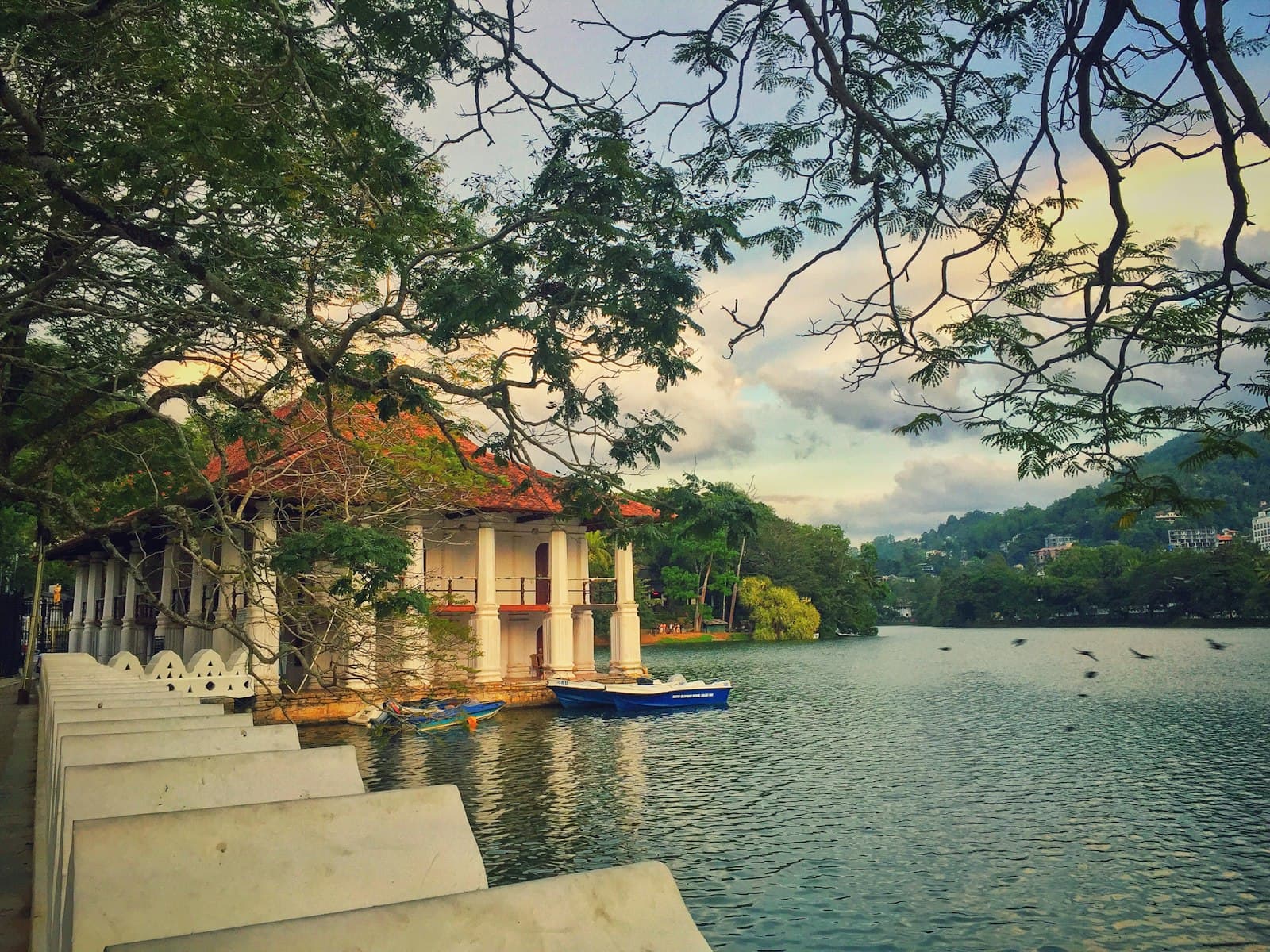
Kandy Lake
The calm waters of Kandy Lake, a central feature of the city, guard a royal secret beneath their placid surface.
Full story unlocks in the tour
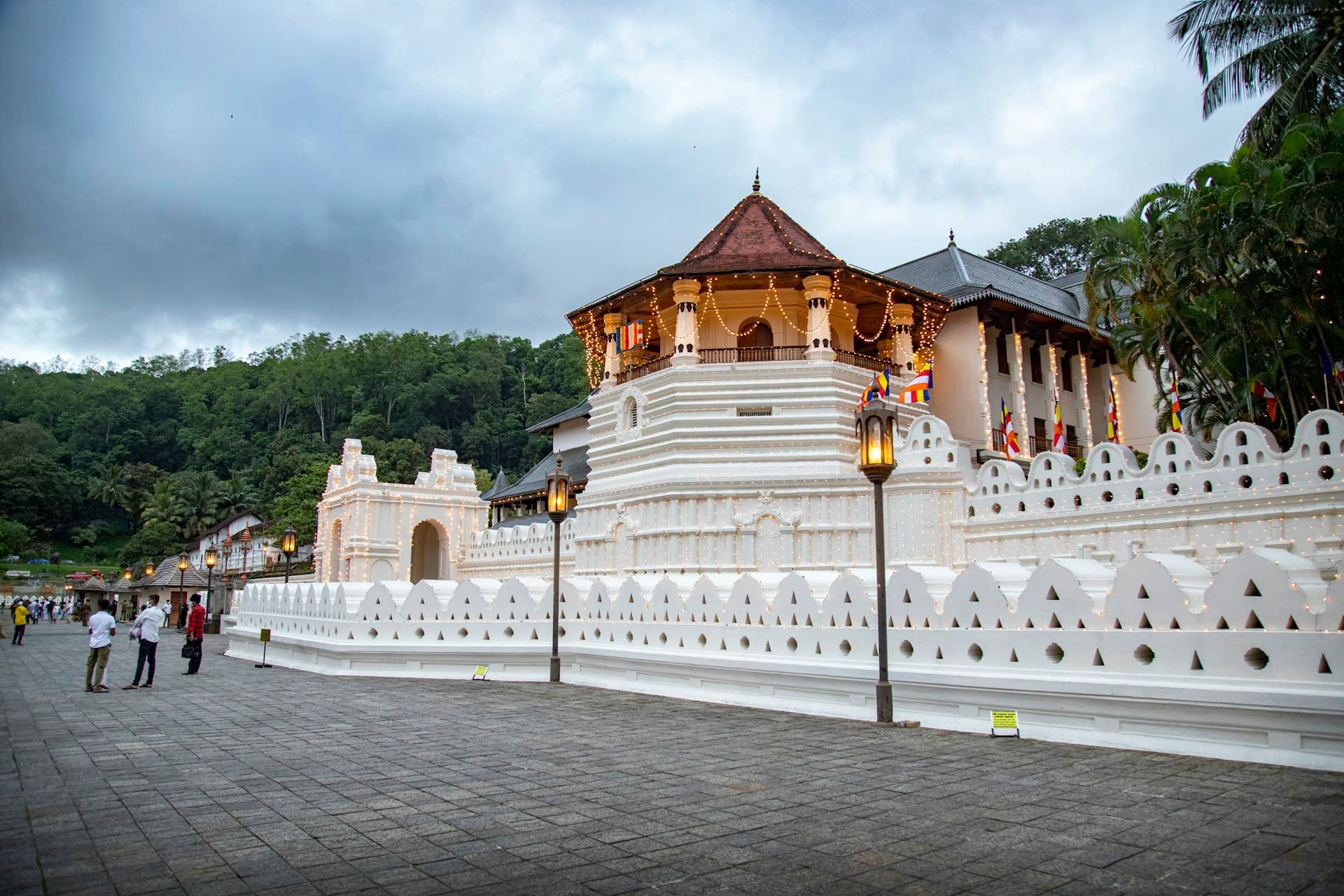 Photo: Chathura Anuradha Subasinghe / Unsplash
Self-guided audio walking tour of Kandy — GPS route, offline playback, story-driven narration in 32 languages.
“Kandy: Where ancient traditions echo through emerald hills.”
Not the postcards. The stories even locals don't know — whispered in your ear, right where they happened.
The calm waters of Kandy Lake, a central feature of the city, guard a royal secret beneath their placid surface.
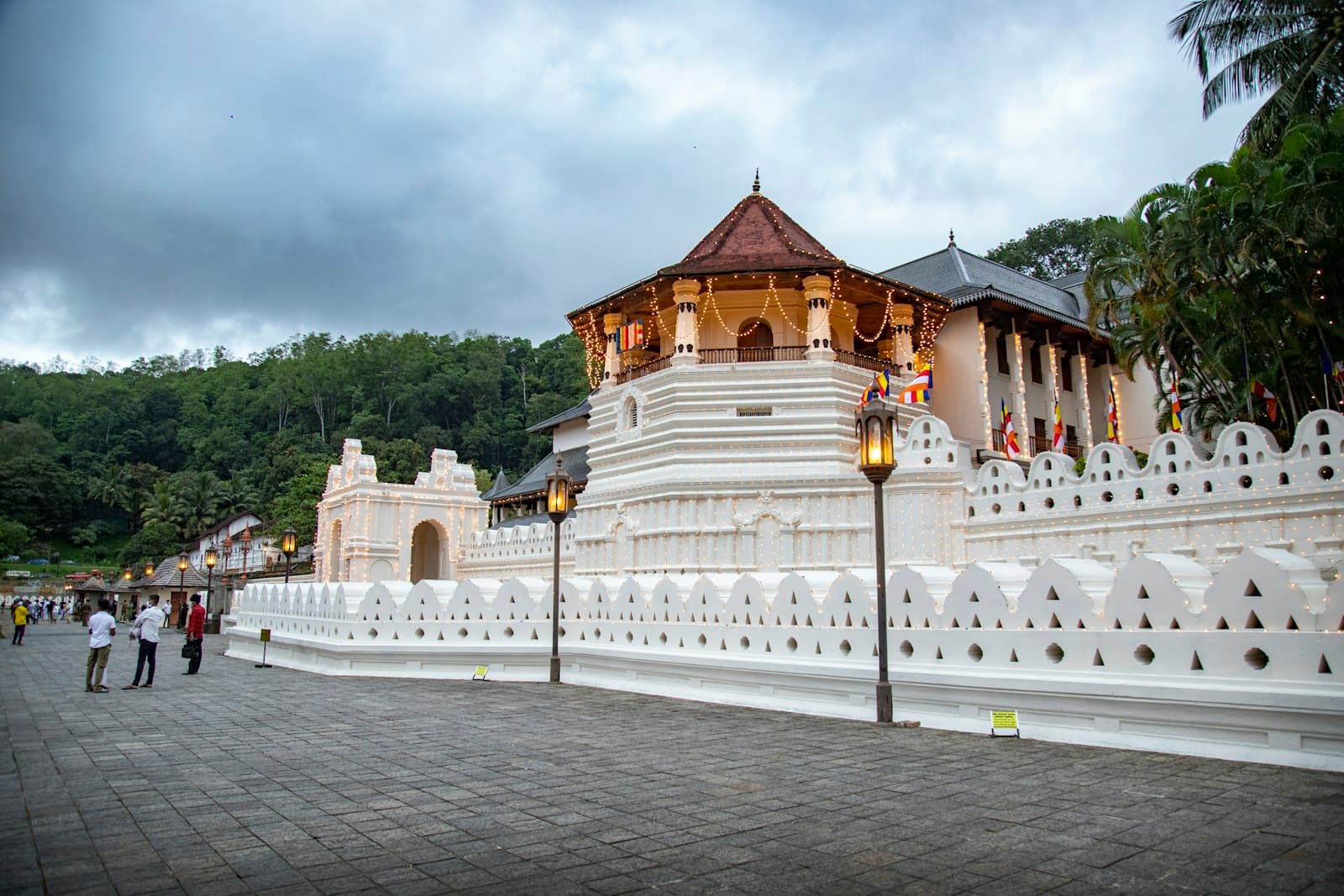
This revered temple protects a relic of immense spiritual power, but witnessing the actual tooth requires precise timing.
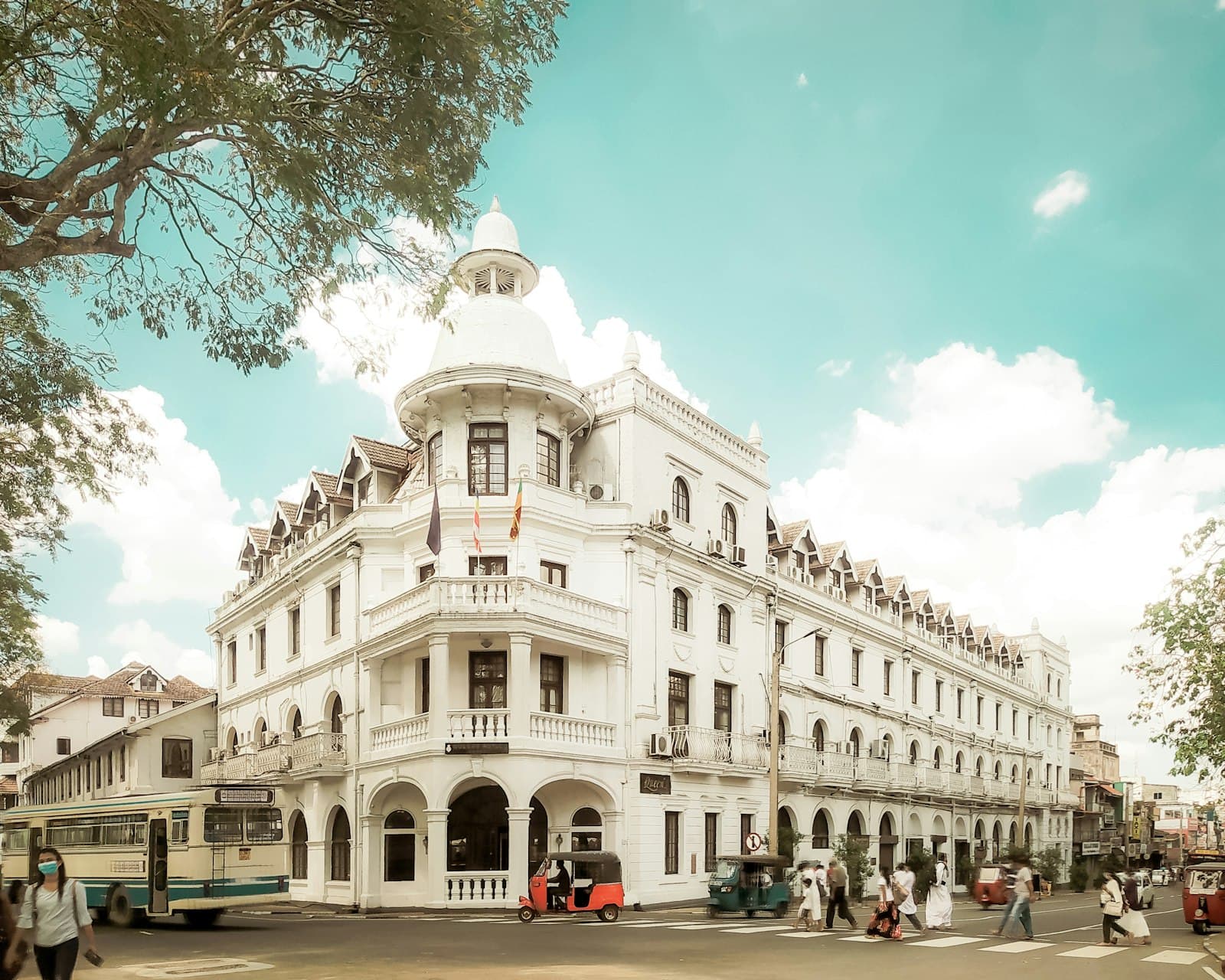
Despite its name, this establishment is not a lodging, but a bustling local eatery with a distinct culinary identity.
Discover every secret of Kandy
Every address, every reveal in full — in your ear, right where it happened.
You pick your stops. You walk. The voice reveals what the others miss.
Your self-guided audio tour of Kandy is ready — pick your landmarks, choose your language, and start the moment you arrive.
BuyLume has a built-in augmented-reality guide. Hold your phone up and its camera shows the street ahead of you, with a glowing arrow laid over the real view that always points to your next stop — no map to puzzle over, no wrong turns. Like everything in Lume, it works fully offline.
Kandy, the cultural capital of Sri Lanka, is a city that unfolds slowly, revealing its layers of history, spirituality, and natural beauty. Situated in the heart of the island's central highlands, Kandy is embraced by hills, rivers, and protected forests, offering a cooler, softer climate than the coastal regions. It's a place where ancient temples share narrow streets with government offices and lively markets, where daily rituals shape the city's rhythm, and where the echoes of a powerful kingdom still resonate.
More than just a stopover, Kandy provides a cultural grounding that enriches any journey through Sri Lanka. Whether you're drawn to its significant religious sites, its aristocratic gardens, or the energetic flow of its streets, Kandy invites observation and immersion. It's a city that asks you to slow down, to listen to the chanting before you see the shrine, and to notice ritual before you fully understand it.
Kandy's story is one of enduring independence and cultural preservation. It was the last capital of the Sinhalese monarchy, a kingdom that stood strong against the advancements of Portuguese and Dutch colonizers for centuries. While other Sinhalese kingdoms fell to European powers in the early 1600s, Kandy, protected by its mountainous terrain, maintained its autonomy until the early 19th century. This long resistance fostered a strong cultural identity, deeply rooted in its independence and continuity.
Historians suggest the city of Senkadagalapura, as Kandy was once known, may have been founded as early as the mid-14th century during the reign of Vikramabahu III. By the late 15th century, it had become a significant independent monarchy. The Kandyan kings were not just political leaders; they were also guardians of Buddhist heritage, a role that profoundly shaped the city's identity. They preserved local art, rituals, and governance systems, with the Temple of the Tooth symbolizing both spiritual authority and political legitimacy. The belief was that whoever safeguarded the tooth relic had the right to rule Sri Lanka.
In 1815, the British launched an invasion, meeting little resistance, and entered the city. The Kandyan Convention, signed that year at the Sri Dalada Maligawa, deposed the Kandyan king and vested sovereignty in the British Crown, marking the first time Sri Lanka fell entirely under foreign rule. Despite this, the British period added another layer to Kandy's architectural and historical fabric, with traces of colonial-era and Kandyan architecture coexisting in the city's lively streets. In 1988, UNESCO recognized Kandy as a World Heritage Site, acknowledging its religious importance, preserved architecture, and the continuity of its living traditions.
Kandy's strategic location in the central highlands made it a vital crossroads throughout history. The city's development around the Temple of the Tooth (Sri Dalada Maligawa) cemented its role as a religious capital. The last ruling dynasty of Kandy was the Nayaks, who were of South Indian descent. This influence, alongside the city's long history of trade, contributed to a diverse cultural landscape. Kandy's continued resistance to colonial powers meant that many traditions, which might have been lost elsewhere, were preserved here for nearly three centuries. Today, Kandy remains an active hub where daily life, history, and belief exist side by side, offering a unique glimpse into Sri Lanka's enduring heritage.
Begin your exploration with a walk around Kandy Lake, a man-made body of water from 1807, offering a calm respite from the city's energy. Adjacent to the lake is the Temple of the Sacred Tooth Relic (Sri Dalada Maligawa), the most significant Buddhist site in Sri Lanka, housing a tooth believed to belong to the Buddha. The temple complex also includes the Old Royal Palace and the Audience Hall, offering a glimpse into the Kandyan kings' rule.
For a sweeping city view, make your way to the Kandy Viewpoint, especially around sunrise or sunset. Just outside the city, the Royal Botanic Gardens in Peradeniya span 50 hectares and house over 4,000 plant species, including a notable orchid collection and the otherworldly Cannonball tree. A short tuk-tuk ride will take you to the Bahiravokanda Vihara Buddha Statue, a towering white Buddha offering another excellent vantage point over Kandy.
Consider a day trip to the Three-Temple Loop in the countryside of Gampola, visiting Gadaladeniya Viharaya, Embekke, and Lankathilaka temples, which display Kandyan-era craftsmanship. For those seeking nature, the Udawatta Kele Sanctuary, a forest reserve above the Temple of the Sacred Tooth Relic, offers walking trails and opportunities to spot wildlife like monkeys.
The best time to visit Kandy is during its dry season, from January to April. During these months, the weather is pleasantly cool and dry, with average temperatures ranging from 20 to 30 degrees Celsius, making it ideal for outdoor activities and exploration. The skies are generally clear, perfect for photography. The Sinhala and Tamil New Year celebrations often occur in April, adding a lively cultural dimension to your visit. While Kandy is accessible year-round, the Yala monsoon brings moderate rainfall from May to September, and the Maha monsoon brings more significant rain from September to November. However, even during the monsoon, the city's lush greenery is at its peak, and indoor attractions remain accessible.
Kandy is a walkable city, especially around the lake, the Temple of the Tooth, and the main market streets. However, the city is hilly, and traffic can be busy, so tuk-tuks are a convenient option for longer distances or when you need a break from walking. Always agree on a price before starting your journey, or use ride-hailing apps like PickMe. Buses are a very affordable alternative for getting around the city and to nearby suburbs.
For temple visits, respectful attire is essential: ensure your knees and shoulders are covered, and remove hats and footwear before entering. The local currency is Sri Lankan Rupees (LKR), though USD, Euros, and Sterling are often accepted in hotels and larger shops. ATMs are widely accessible. When dining, explore local eateries for authentic Sri Lankan cuisine, such as kottu roti, hoppers, and various curries. Many hotels and restaurants offer Wi-Fi.
Kandy in Korean, in Chinese or in Hebrew — and 29 more languages, every stop narrated by a native voice. The widest language range of any self-guided audio tour.
Available in: