Palácio de Karlsruhe
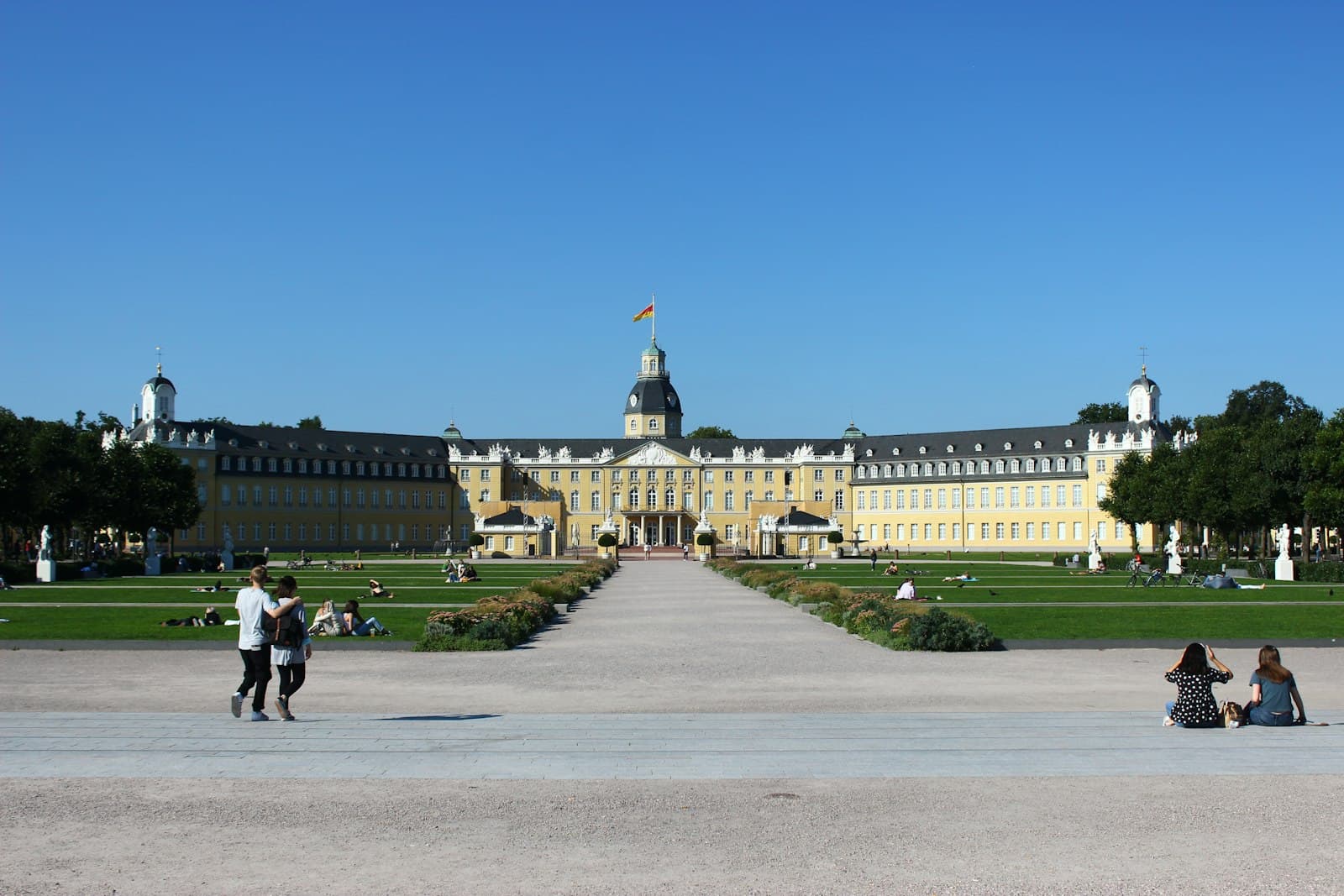
O distinto traçado em forma de leque de Karlsruhe, com ruas irradiando de seu palácio central, tem uma história de origem surpreendentemente humana.
História completa desbloqueada no tour
 Photo: Ruben Hanssen / Unsplash
Tour de áudio autoguiado por Karlsruhe — rota GPS a pé, reprodução offline, narração envolvente em 32 idiomas.
“Onde os ideais do Iluminismo encontram um engenhoso design urbano, Karlsruhe se desdobra como um projeto precisamente traçado.”
Não os postais. As histórias que nem os locais conhecem — sussurradas ao seu ouvido, exatamente onde aconteceram.
O distinto traçado em forma de leque de Karlsruhe, com ruas irradiando de seu palácio central, tem uma história de origem surpreendentemente humana.
No centro da movimentada praça do mercado de Karlsruhe, ergue-se um monumento inesperado: uma pirâmide de arenito vermelho.
O plano urbano único de Karlsruhe, uma "cidade leque" com ruas que se espalham a partir do palácio, influenciou uma cidade significativa do outro lado do Atlântico.
Descubra cada segredo de Karlsruhe
Cada endereço, cada revelação na íntegra — no seu ouvido, exatamente onde aconteceu.
Você escolhe as suas paragens. Você caminha. A voz revela o que os outros perdem.
O seu tour áudio autoguiado de Karlsruhe está pronto — escolha os seus pontos de interesse, selecione o seu idioma e comece no momento em que chegar.
ComprarA Lume inclui um guia de realidade aumentada. Levante o telemóvel: a câmara mostra a rua à sua frente, com uma seta luminosa sobreposta à imagem real que aponta sempre para a sua próxima paragem — sem mapa para decifrar, sem voltas erradas. Como tudo na Lume, funciona totalmente offline.
Karlsruhe, uma cidade no sudoeste da Alemanha, é um centro urbano meticulosamente planejado, celebrado por seu distinto traçado em forma de leque. Fundada em 1715 pelo Margrave Charles III William de Baden-Durlach, o design da cidade irradia do Palácio de Karlsruhe central, com 32 ruas se estendendo como raios de uma roda. Essa visão arquitetônica singular lhe rendeu o apelido de "Fächerstadt", ou "cidade leque".
Além de sua aparência visualmente marcante, Karlsruhe funciona como a capital legal da Alemanha, abrigando tanto o Tribunal Constitucional Federal quanto o Tribunal Federal de Justiça. É também um nexo para tecnologia, ciência e mídia, reconhecida como Cidade Criativa da UNESCO em Mídia desde 2019. Situada na Planície do Alto Reno, perto da fronteira francesa e da Floresta Negra, Karlsruhe beneficia-se de um clima ameno, tornando-a uma das cidades mais ensolaradas da Alemanha.
As origens de Karlsruhe remontam a um desentendimento em 1715 entre o Margrave Charles III William de Baden-Durlach e os cidadãos de sua antiga capital, Durlach. Essa disputa o levou a estabelecer uma residência totalmente nova na floresta de Hardtwald. Reza a lenda que o Margrave vislumbrou sua nova cidade em um sonho, seja como um assentamento em forma de estrela ou como um lugar onde ele poderia escapar da presença de sua esposa, vendo todas as abordagens de seu palácio. Em 17 de junho de 1715, a pedra fundamental do Palácio de Karlsruhe foi lançada, marcando o início oficial da cidade.
O Palácio de Karlsruhe inicial, projetado por Jakob Friedrich von Batzendorf, foi parcialmente construído em madeira. No entanto, foi reconstruído em pedra após danos em 1746, com alterações subsequentes por arquitetos como Balthasar Neumann e Friedrich von Kesslau, que adicionaram janelas maiores, portas, pavilhões e alas. A própria cidade cresceu em torno deste palácio central, com 32 ruas irradiando para fora, criando a icônica forma de leque. Este traçado único simbolizava o poder absoluto do governante. No final do século XVIII e início do século XIX, sob a influência do Classicismo, a cidade passou por mais transformações, com o arquiteto Friedrich Weinbrenner desempenhando um papel fundamental na construção de muitos edifícios neoclássicos.
Karlsruhe serviu como capital de várias entidades de Baden por quase dois séculos, incluindo o Margraviato de Baden-Durlach, a Baden unificada, o Eleitorado de Baden e o Grão-Ducado de Baden, até 1945. Em 1822, o Ständehaus, o primeiro edifício parlamentar da Alemanha em um estado alemão, foi construído em Karlsruhe, e um governo republicano foi eleito lá após a revolução de 1848. Embora grande parte do centro da cidade, incluindo o palácio, tenha sido severamente danificada durante os bombardeios da Segunda Guerra Mundial em 1944, foi meticulosamente reconstruída. Após a guerra, Karlsruhe tornou-se a capital judicial da Alemanha, lar do Tribunal Constitucional Federal e do Tribunal Federal de Justiça. Hoje, a cidade continua seu legado de inovação, reconhecida como Cidade Criativa da UNESCO em Mídia e um centro de tecnologia e ciência.
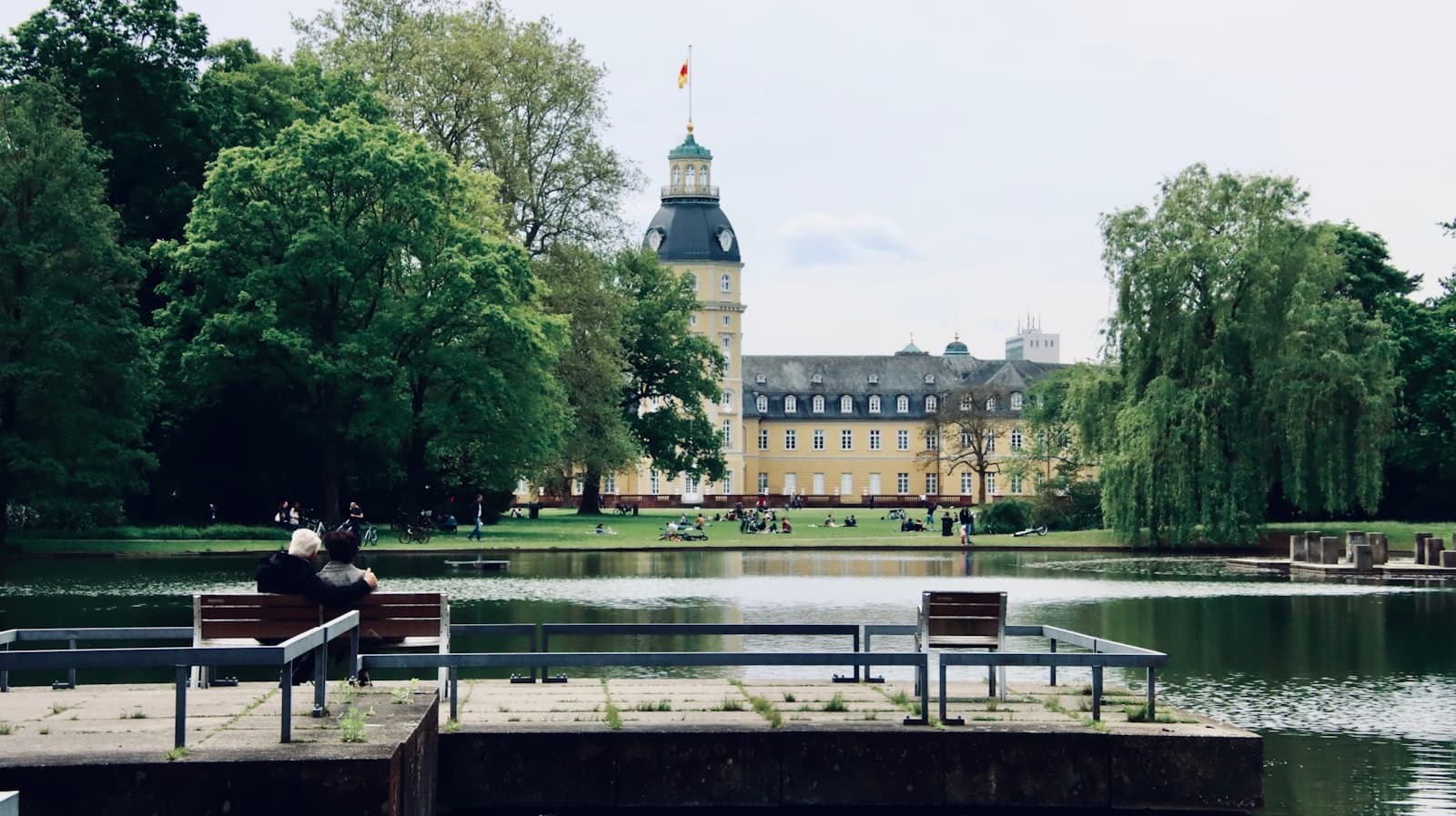
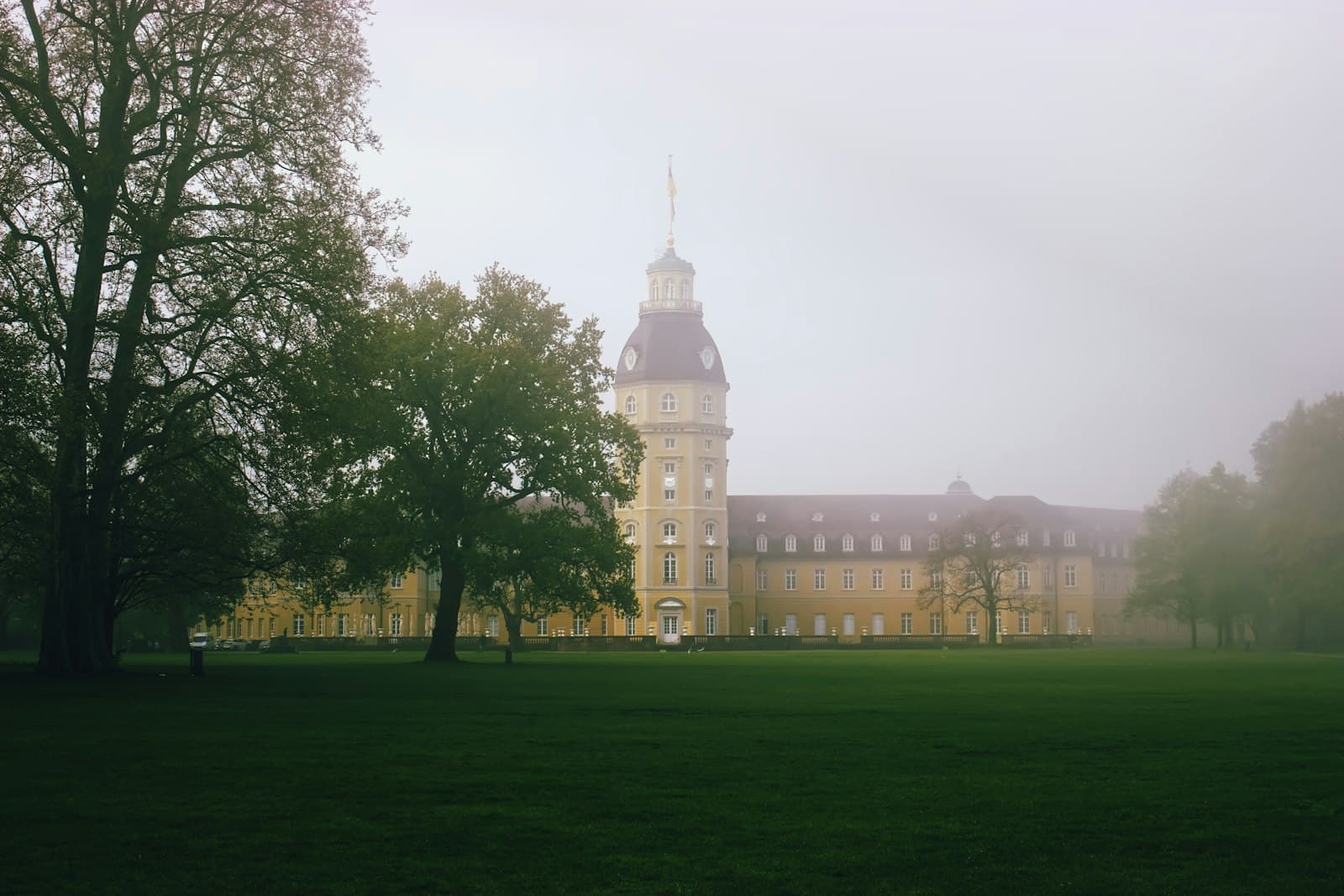
O coração de Karlsruhe é, sem dúvida, o Palácio de Karlsruhe (Karlsruher Schloss). Esta obra-prima barroca, reconstruída após a Segunda Guerra Mundial, abriga o Badisches Landesmuseum (Museu Estadual de Baden), oferecendo uma viagem pela história, arte e cultura regionais. Suba à torre do palácio para uma vista panorâmica do distinto traçado em forma de leque da cidade. O Schlossgarten Karlsruhe circundante oferece vastos espaços verdes, perfeitos para um passeio tranquilo, e inclui o Jardim Botânico de Karlsruhe.
Na Marktplatz (Praça do Mercado) da cidade, você encontrará a incomum Pirâmide de Karlsruhe, um monumento de arenito vermelho que marca o túmulo do fundador da cidade, o Margrave Charles III William. A praça também abriga a Prefeitura neoclássica e a Igreja Protestante da Cidade.
Para uma imersão em arte e tecnologia contemporâneas, o ZKM | Center for Art and Media Karlsruhe é uma visita essencial. Esta instituição, situada em uma antiga fábrica de munições, apresenta instalações interativas e foca em arte e mídia digitais. Outros espaços verdes incluem o Günther-Klotz-Anlage, um grande parque urbano ideal para atividades ao ar livre e sede do festival anual de música 'Das Fest', e o Jardim Zoológico de Karlsruhe.
Karlsruhe experimenta um clima ameno, tornando-a um destino agradável durante a maior parte do ano. A época mais agradável para visitar para atividades ao ar livre e exploração é de meados de maio a meados de setembro. Durante esses meses, as temperaturas médias são confortáveis, variando de 15-25°C (59-77°F), e a cidade desfruta de sol abundante. O final da primavera (maio-junho) oferece jardins floridos e menos visitantes, enquanto o início do outono (setembro-outubro) traz temperaturas agradáveis e cores de outono. Embora os verões sejam quentes, ondas de calor ocasionais podem ocorrer em julho e agosto.
Karlsruhe é bem conectada e facilmente acessível. A cidade fica a aproximadamente 120 km ao sul de Frankfurt e 80 km ao norte de Estrasburgo, França. O aeroporto mais próximo é o Aeroporto de Karlsruhe/Baden-Baden (FKB), a cerca de 40 km a sudoeste, com voos de vários destinos europeus. Aeroportos internacionais maiores como Frankfurt (FRA) e Stuttgart (STR) também estão a uma distância razoável, oferecendo excelentes conexões de trem e ônibus para Karlsruhe.
A eficiente rede Deutsche Bahn (DB) da Alemanha torna a viagem de trem uma opção conveniente, com trens ICE diretos de Frankfurt levando cerca de uma hora e trens regionais de Stuttgart cerca de 40 minutos. A estação principal de Karlsruhe (Hauptbahnhof) está localizada ao sul do centro da cidade, com excelentes conexões de bonde para as principais atrações. Dentro da cidade, um sistema de transporte público bem estabelecido, incluindo uma extensa rede de bondes, facilita a locomoção. Karlsruhe também é uma cidade amigável para bicicletas com ciclovias dedicadas.
Karlsruhe — coreano, chinês, hebraico e mais 29 idiomas, cada parada narrada por uma voz nativa. A maior variedade de idiomas entre os passeios de áudio autoguiados.
Disponível em: