Stora Torget
El símbolo de la ciudad de Karlstad, un sol sonriente, no se trata solo del clima.
La historia completa se desbloquea en el tour
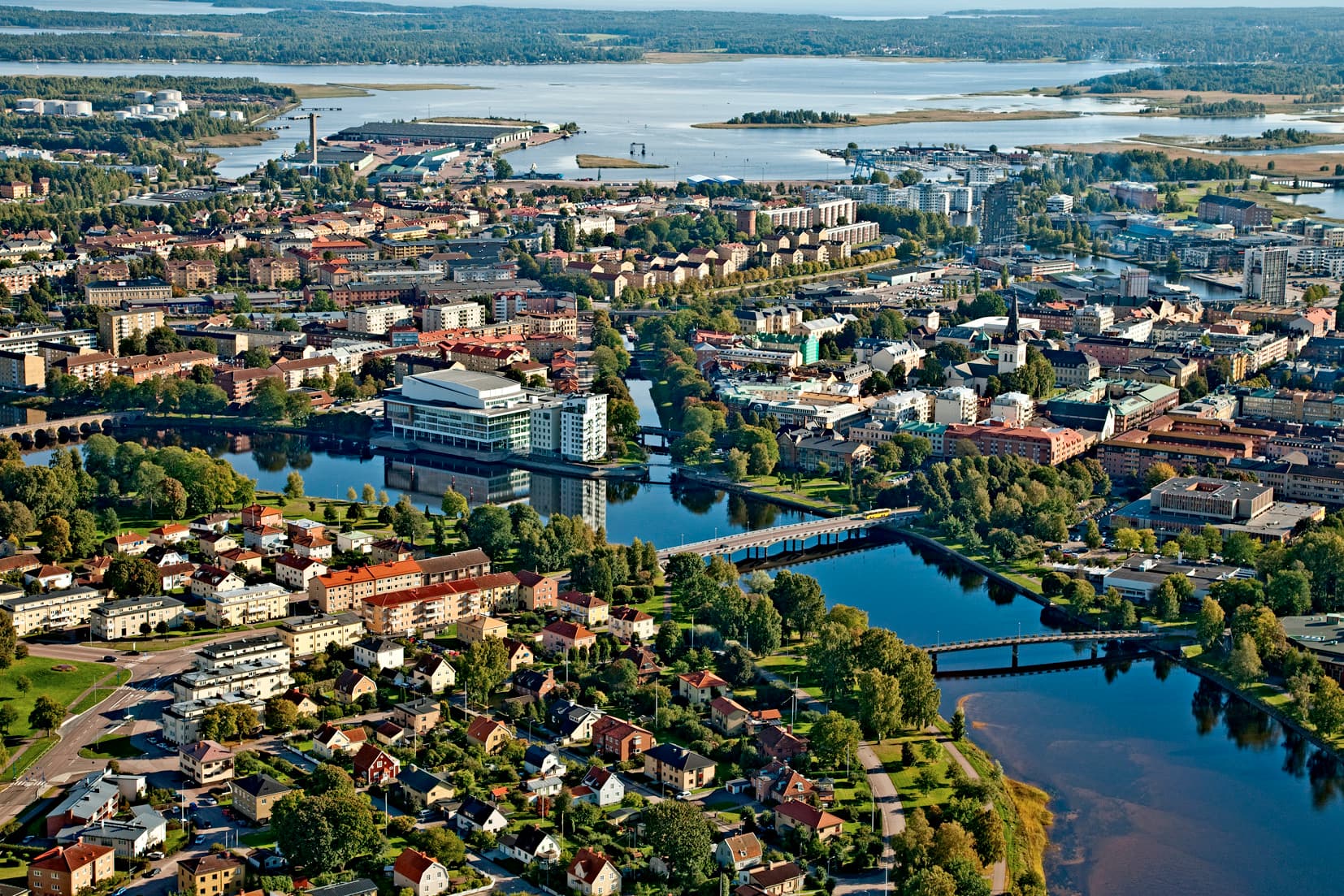 Visit Karlstad / CC BY 3.0, via Wikimedia Commons
Tour de audio autoguiado de Karlstad — ruta GPS a pie, reproducción offline, narración en 32 idiomas.
“Donde el río más largo de Suecia se une a su lago más grande, una ciudad de sol e historia pacífica.”
No las postales. Las historias que ni los locales conocen — al oído, justo donde ocurrieron.
El símbolo de la ciudad de Karlstad, un sol sonriente, no se trata solo del clima.
Este edificio aparentemente ordinario guarda un secreto que moldeó el mapa de Escandinavia.
La geografía única de Karlstad es más que solo pintoresca; fue una ventaja estratégica.
Descubre todos los secretos de Karlstad
Cada dirección, cada revelación al completo — a tu oído, justo donde ocurrió.
Eliges tus paradas. Caminas. La voz te revela lo que los demás ignoran.


Tu tour de audioguía por Karlstad te espera — elige tus lugares, tu idioma y empieza al llegar.
ComprarLume incluye una guía de realidad aumentada. Levanta el móvil y su cámara muestra la calle que tienes delante, con una flecha luminosa sobre la imagen real que siempre apunta a tu próxima parada — sin mapas que descifrar, sin giros equivocados. Como todo en Lume, funciona completamente sin conexión.
Karlstad, la capital del condado de Värmland, es una ciudad donde el río Klarälven se despliega con gracia en el lago más grande de Suecia, Vänern. Esta posición única en el delta ha moldeado su historia y carácter, ofreciendo una mezcla de vida urbana y belleza natural. A menudo llamada la 'Ciudad del Sol', Karlstad hace honor a su apodo con una reputación de abundante sol y un ambiente cálido y acogedor.
Con una población de alrededor de 74.000 residentes, Karlstad mantiene una sensación de ciudad pequeña animada pero encantadora. La ciudad es un centro de cultura y actividades al aire libre, desde explorar galerías de arte hasta navegar por las vías fluviales en autobús acuático. Su ubicación central, aproximadamente equidistante de Estocolmo, Oslo y Gotemburgo, la convierte en un destino accesible y atractivo para aquellos que buscan experimentar una ciudad sueca por excelencia.
Los orígenes de Karlstad se remontan a la era vikinga, antes del año 1000 d.C., cuando la isla de Tingvalla servía como mercado y lugar para las asambleas regionales, o 'tings'. Este papel temprano como punto de encuentro central presagió su futura importancia. La fecha oficial de nacimiento de la ciudad es el 5 de marzo de 1584, cuando el duque Carlos, quien más tarde se convertiría en el rey Carlos IX de Suecia, otorgó a la población privilegios de ciudad y la nombró Karlstad, que significa 'Ciudad de Carlos'. La decisión del duque de establecer Karlstad como centro administrativo de Värmland fue un momento crucial, sentando las bases para siglos de desarrollo.
En sus primeros siglos, Karlstad floreció como ciudad mercantil, con su economía basada en el comercio de hierro y madera. Su ubicación estratégica en el lago Vänern proporcionó a los comerciantes acceso al mar a través del río Göta Älv, facilitando el comercio y contribuyendo a la prosperidad de la ciudad. Para 1647, la importancia cultural de Karlstad creció, convirtiéndose en el centro de una nueva diócesis y consolidando su estatus como centro espiritual y educativo con la fundación de un gimnasio.
La ciudad ha soportado su cuota de desafíos, destacando cuatro incendios importantes. El más devastador ocurrió el 2 de julio de 1865, dejando solo la catedral y algunas otras estructuras en pie. Después de esto, Karlstad fue reconstruida con un patrón de cuadrícula moderno, presentando calles anchas y arboladas. El siglo XX trajo a Karlstad reconocimiento internacional cuando albergó las negociaciones para la disolución pacífica de la unión sueco-noruega en 1905, consolidando su reputación como un importante centro diplomático. Más recientemente, Karlstad ha evolucionado hasta convertirse en una ciudad universitaria, con la Universidad de Karlstad establecida en 1999, contribuyendo a su carácter dinámico y juvenil.
Comienza tu exploración en el centro de la ciudad en Stora Torget, una espaciosa plaza del mercado. Desde aquí, puedes encontrar fácilmente el Rådhuset (Ayuntamiento) neoclásico y el Monumento a la Paz. Un corto paseo te llevará a la Catedral de Karlstad, una grandiosa estructura del siglo XVIII construida entre 1724 y 1730 en el sitio del antiguo Kungsgården (Casa del Rey).
Aprovecha la oportunidad para ver el Gamla Stenbron, o Puente de Piedra Viejo, una impresionante estructura con 12 arcos que es uno de los puentes de piedra más largos de Suecia. Para los entusiastas del arte, la galería de arte Sandgrund Lars Lerin es una visita gratificante, que exhibe las obras de uno de los acuarelistas líderes de Escandinavia. Para experimentar el lado natural de Karlstad, dirígete a Mariebergsskogen, un popular parque urbano que combina un museo al aire libre, un zoológico de mascotas (Lillskogen) y tranquilos senderos para caminar. Durante el verano, considera un pintoresco paseo en los Båtbussarna (autobuses acuáticos), que ofrecen una forma única de ver la ciudad desde el agua.
La mejor época para visitar Karlstad es durante los meses de verano, de junio a agosto. Las temperaturas son suaves y agradables, oscilando típicamente entre 15°C y 25°C (59°F y 77°F), lo que la hace ideal para hacer turismo y actividades al aire libre. Julio es generalmente el mes más cálido, con máximas promedio de alrededor de 21°C (70°F). Aunque el verano ofrece buen sol, prepárate para algunos días lluviosos. Para aquellos que aprecian los paisajes nevados y las actividades invernales, los meses más fríos de diciembre a febrero ofrecen una experiencia mágica, aunque fría, con temperaturas a menudo bajo cero.
La moneda oficial en Karlstad, y en toda Suecia, es la Corona Sueca (SEK). Suecia es en gran parte una sociedad sin efectivo, por lo que las tarjetas de crédito y débito (Visa y Mastercard son ampliamente aceptadas) son preferidas y a menudo el único método de pago aceptado en la mayoría de las tiendas, cafeterías y restaurantes. Aunque no es estrictamente necesario, llevar una pequeña cantidad de efectivo para gastos menores puede ser útil. Los cajeros automáticos, conocidos como 'Bankomat' o 'Uttagsautomat', están fácilmente disponibles.
El sueco es el idioma oficial, pero el inglés es ampliamente hablado y entendido por la mayoría de la gente, por lo que la comunicación no debería ser un problema para los viajeros. Karlstad es considerada una ciudad muy segura para los turistas. En caso de emergencias, marca 112 para servicios de policía, ambulancia o bomberos. El agua del grifo es limpia y segura para beber.
Karlstad en coreano, en chino o en hebreo — y 29 idiomas más, cada parada narrada por una voz nativa. La mayor variedad de idiomas de cualquier audioguía autoguiada.
Disponible en: