Spodek Arena
Die ikonische, schalenförmige Spodek Arena wurde nicht nur für ein futuristisches Aussehen konzipiert.
Die ganze Geschichte wird in der Tour freigeschaltet
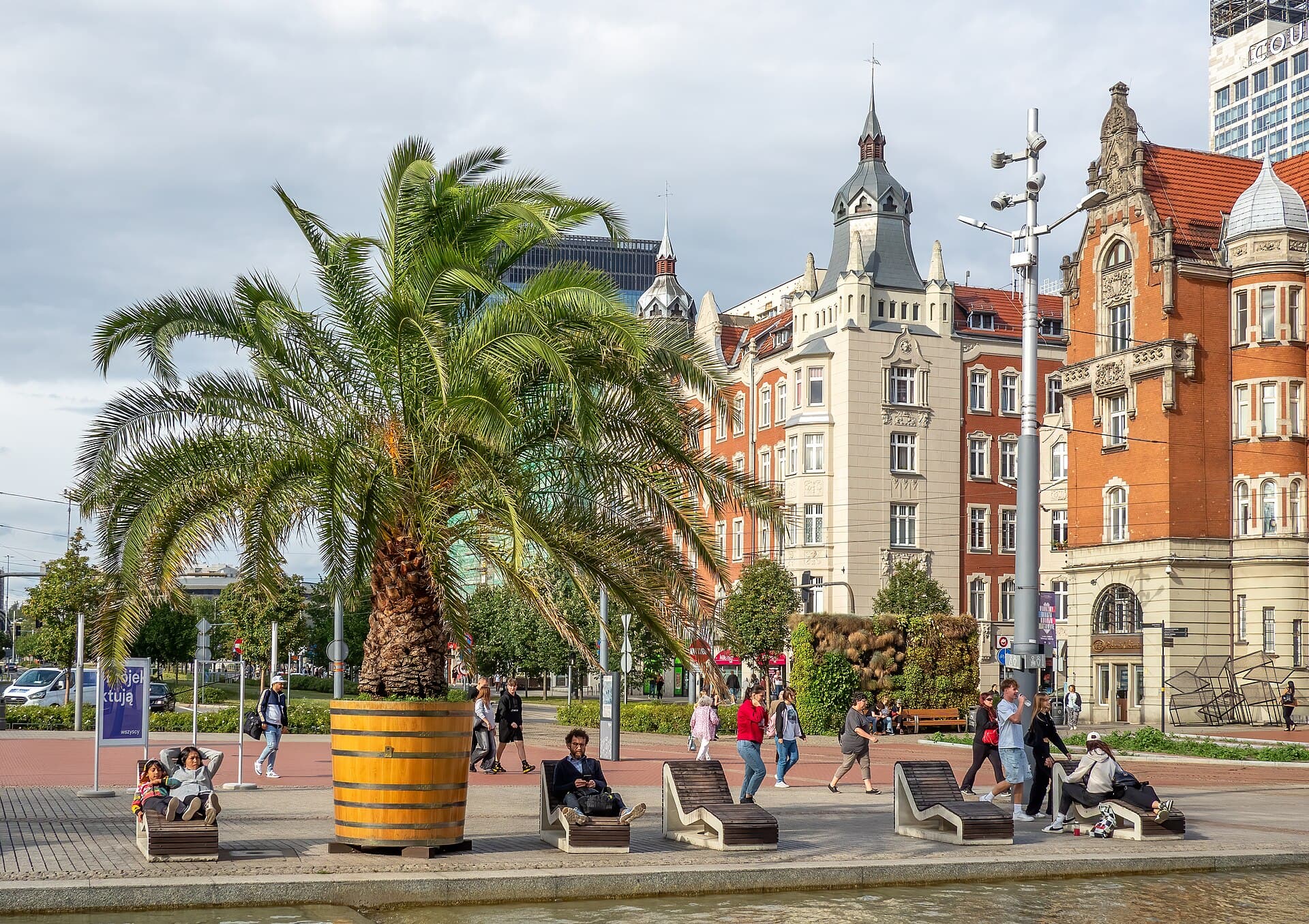 Rhododendrites / CC BY-SA 4.0, via Wikimedia Commons
Selbstgeführte Audio-Walking-Tour durch Katowice — GPS-Route, Offline-Wiedergabe, erzählerische Narration in 32 Sprachen.
“Wo industrielle Stärke auf einen resonanten kulturellen Puls trifft.”
Nicht die Postkarten. Die Geschichten, die selbst Einheimische nicht kennen – dir ins Ohr geflüstert, genau dort, wo sie geschahen.
Die ikonische, schalenförmige Spodek Arena wurde nicht nur für ein futuristisches Aussehen konzipiert.
Dieses historische Viertel aus rotem Backstein hat eine besondere Tradition, die die Bewohner an einem bestimmten Tag im Jahr mit einem Knall weckt.
Das Schlesische Museum, ein modernes architektonisches Wunderwerk, steht auf dem Gelände einer ehemaligen Kohlemine.
Entdecke jedes Geheimnis von Katowice
Jede Adresse, jede Enthüllung vollständig – in deinem Ohr, genau dort, wo es geschah.
Du wählst deine Stationen. Du gehst. Die Stimme enthüllt, was andere übersehen.


Deine selbstgeführte Audio-Tour durch Katowice ist bereit – wähle deine Sehenswürdigkeiten, deine Sprache und starte, sobald du ankommst.
KaufenLume enthält einen integrierten Augmented-Reality-Guide. Halten Sie Ihr Handy hoch: Die Kamera zeigt die Straße vor Ihnen, mit einem leuchtenden Pfeil über dem echten Bild, der immer auf Ihren nächsten Stopp zeigt — keine Karte zum Rätseln, keine falschen Abzweigungen. Wie alles bei Lume funktioniert es komplett offline.
Katowice, die Hauptstadt der polnischen Woiwodschaft Schlesien, hat eine bemerkenswerte Transformation durchlaufen und sich von seinen industriellen Ursprüngen zu einem dynamischen Kultur- und Wirtschaftszentrum entwickelt. Einst mit Kohlebergwerken und Schwerindustrie assoziiert, hat sich die Stadt neu erfunden und verbindet ihr tiefgreifendes Erbe mit zeitgenössischem Design und einer blühenden Kunstszene. Katowice ist heute als UNESCO City of Music anerkannt, ein Beweis für seine lebendige Musikkultur, zu der auch Großveranstaltungen wie das OFF Festival und das Rawa Blues Festival gehören.
Diese Stadtlandschaft, die oft als Stadt der Kontraste beschrieben wird, erzählt eine fesselnde Geschichte von Widerstandsfähigkeit und Innovation. Besucher treffen auf beeindruckende modernistische Architektur neben umgenutzten Industriegeländen, wo ehemalige Fabriken und Minen zu Galerien, Cafés und Kulturräumen umgestaltet wurden. Mit fast 50 % seiner Fläche, die von Grünflächen bedeckt ist, darunter der weitläufige Schlesische Park, bietet Katowice ein überraschendes Gleichgewicht zwischen städtischer Energie und natürlicher Ruhe.
Die Stadt dient als zentraler Knotenpunkt des Ballungsraums Katowice mit 2,5 Millionen Einwohnern und ist Teil einer noch größeren Metropolregion, die sich bis in die Tschechische Republik erstreckt. Seine strategische Lage und sein gut ausgebautes Verkehrsnetz machen es zu einem zugänglichen Tor zur Erkundung der weiteren schlesischen Region und darüber hinaus.
## Vom Dorf zum Industriestandort Die Ursprünge Katowices reichen bis in ein kleines Dorf zurück, das erstmals 1598 erwähnt wurde, obwohl mehrere seiner modernen Stadtteile bereits im Mittelalter als Dörfer existierten. Die Region wurde historisch von lechischen schlesischen Stämmen besiedelt und kam über Jahrhunderte unter die Herrschaft verschiedener Mächte, darunter das Königreich Böhmen, die Habsburgermonarchie Österreich und Preußen.
Der eigentliche Katalysator für Katowices Wachstum war die Entdeckung reicher Kohlevorkommen Mitte des 18. Jahrhunderts. Die erste Hälfte des 19. Jahrhunderts sah eine intensive Industrialisierung, die lokale Bauernhöfe und Mühlen in geschäftige Stahlwerke, Bergwerke und Gießereien verwandelte. Diese rasante Entwicklung führte dazu, dass Katowice am 11. September 1865 von König Wilhelm I. von Preußen den Stadtstatus erhielt.
## Die Schlesischen Aufstände und der Aufschwung zwischen den Weltkriegen Nach der Wiedererlangung der Unabhängigkeit Polens im Jahr 1918 wurde die Zukunft Oberschlesiens, einschließlich Katowices, durch drei Schlesische Aufstände zwischen 1919 und 1921 geprägt. Diese Konflikte sahen die lokale polnische Bevölkerung für den Anschluss der Region an Polen kämpfen. Aufgrund internationaler Entscheidungen und der Aufstände wurde Katowice 1922 Teil der Zweiten Polnischen Republik und diente als Hauptstadt der autonomen Woiwodschaft Schlesien. Die Zwischenkriegszeit markierte ein „goldenes Zeitalter“ für Katowice, mit einem Bauboom, der ihm wegen seiner modernistischen und funktionalistischen Architektur, einschließlich des Gebäudes des Schlesischen Parlaments und des ersten Wolkenkratzers Polens, „Drapacz Chmur“, den Spitznamen „Polnisches Chicago“ einbrachte.
## Zweiter Weltkrieg und Nachkriegstransformationen Während des Zweiten Weltkriegs wurde Katowice vom nationalsozialistischen Deutschland annektiert und wurde Hauptstadt des Gaus Oberschlesien. Die Besatzung sah die Zerstörung historischer Denkmäler, die Germanisierung von Straßennamen und ein Verbot der polnischen Sprache. Nach dem Krieg wurde die gesamte Region Oberschlesien Teil Polens. In einem umstrittenen Schritt wurde Katowice 1953 nach dem Tod von Josef Stalin kurzzeitig in Stalinogród umbenannt, ein Name, der von seinen Einwohnern nie wirklich akzeptiert wurde, und 1956 wurde der ursprüngliche Name wiederhergestellt.
Die jüngere Geschichte der Stadt umfasst die tragischen Ereignisse vom 16. Dezember 1981, als neun Bergleute im Kohlebergwerk „Wujek“ während der Verhängung des Kriegsrechts ums Leben kamen. Ein Denkmal steht nun zu ihrer Ehrung. Heute entwickelt sich Katowice weiter und wandelt seine Wirtschaft von der Schwerindustrie auf professionelle Dienstleistungen, Bildung und Gesundheitswesen um, während es seine Rolle als bedeutendes Kultur- und Wirtschaftszentrum in Mitteleuropa annimmt.
Katowice bietet eine fesselnde Mischung aus Industriegeschichte und moderner Kultur. Beginnen Sie Ihre Erkundung in der Kulturzone, einem bemerkenswerten Beispiel postindustrieller Revitalisierung auf dem Gelände einer ehemaligen Kohlemine. Hier finden Sie das Schlesische Museum mit seinen unterirdischen Galerien, die regionale Geschichte, polnische Kunst und interaktive Ausstellungen zeigen. Daneben befindet sich die ikonische Spodek Arena, ein schalenförmiges modernistische Gebäude, das wichtige Veranstaltungen und Konzerte beherbergt. Ebenfalls in der Kulturzone befinden sich das Polnische Nationale Radio-Symphonieorchester (NOSPR), bekannt für seine Akustik, und das Internationale Kongresszentrum (ICC).
Machen Sie einen Schritt zurück in die Zeit und besuchen Sie den Stadtteil Nikiszowiec, eine historische Bergarbeitersiedlung aus rotem Backstein, die zwischen 1908 und 1918 erbaut wurde. Seine unverwechselbare Architektur und das gemeinschaftliche Design bieten einen Einblick in das Leben der Arbeiterklasse Anfang des 20. Jahrhunderts. Für ein kontrastierendes Erlebnis erkunden Sie den weitläufigen Schlesischen Park (Park Śląski), einen der größten Stadtparks Europas. Er beherbergt ein Planetarium, einen Vergnügungspark, den Schlesischen Zoo und die Elka-Seilbahn.
Verpassen Sie nicht das Denkmal der Schlesischen Aufständischen, eine markante Struktur mit drei riesigen Flügeln, die die drei Schlesischen Aufstände symbolisieren. Für einen weiten Blick über die Stadt können Sie die Aussichtsplattform im Oberschlesischen Pantheon besuchen oder für einen Drink mit Aussicht die Bar im 27. Stock des Courtyard Katowice City Center Hotels.
Die angenehmste Zeit für einen Besuch in Katowice ist von Juni bis August, wenn das Wetter warm und die Niederschläge minimal sind. Juli ist typischerweise der wärmste Monat mit durchschnittlichen Tagestemperaturen um 25 °C. Für diejenigen, die milderes Wetter und weniger Menschenmassen bevorzugen, sind jedoch auch das späte Frühjahr (Mai) und der frühe Herbst (September) ideal. In diesen Monaten blühen die Parks der Stadt oder zeigen Herbstfarben, und kulturelle Veranstaltungen bleiben reichlich vorhanden. Die Winter sind kalt, mit Temperaturen oft unter dem Gefrierpunkt, und Schneefall ist üblich.
Katowice ist gut angebunden und leicht zu navigieren. Das öffentliche Nahverkehrssystem der Stadt, ZTM, umfasst Busse und Straßenbahnen, die im gesamten Ballungsraum verkehren. Tickets können an Bus-/Straßenbahnhaltestellen an Automaten oder in ZTM-Geschäften gekauft werden. Die Transport GZM App ist ebenfalls verfügbar, um Fahrpläne zu überprüfen, Routen zu planen und Tickets zu kaufen. Für Fahrten innerhalb des Stadtzentrums sind viele der Hauptattraktionen zu Fuß erreichbar. Fahrdienste wie Uber und Bolt sind ebenfalls verfügbar.
Der Flughafen Katowice (KTW) befindet sich in Pyrzowice, etwa 30-33 km nördlich des Stadtzentrums. Expressbuslinien wie AP2 und AP3 bieten eine direkte Verbindung vom Flughafen nach Katowice. Tickets sind für unbegrenzte Fahrten auf allen Bus-, Straßenbahn- und Regionalbahnlinien innerhalb des Ballungsraums für 24 Stunden gültig. In Polen werden europäische Steckdosen verwendet, daher ist möglicherweise ein Adapter erforderlich. Kredit- und Debitkarten werden weitgehend akzeptiert, und mobile Zahlungsoptionen sind üblich.
Katowice — Koreanisch, Chinesisch, Hebräisch und 29 weitere Sprachen, jede Station von einer muttersprachlichen Stimme erzählt. Die größte Sprachauswahl aller selbstgeführten Audiotouren.
Verfügbar auf: