Toki no Kane (Tijdbel Toren)
De iconische klokkentoren van Kawagoe bevat een verrassend verhaal van veerkracht, dat onthult wat de stad het meest waardeerde, zelfs in zijn donkerste uur.
Volledig verhaal ontgrendeld in de tour
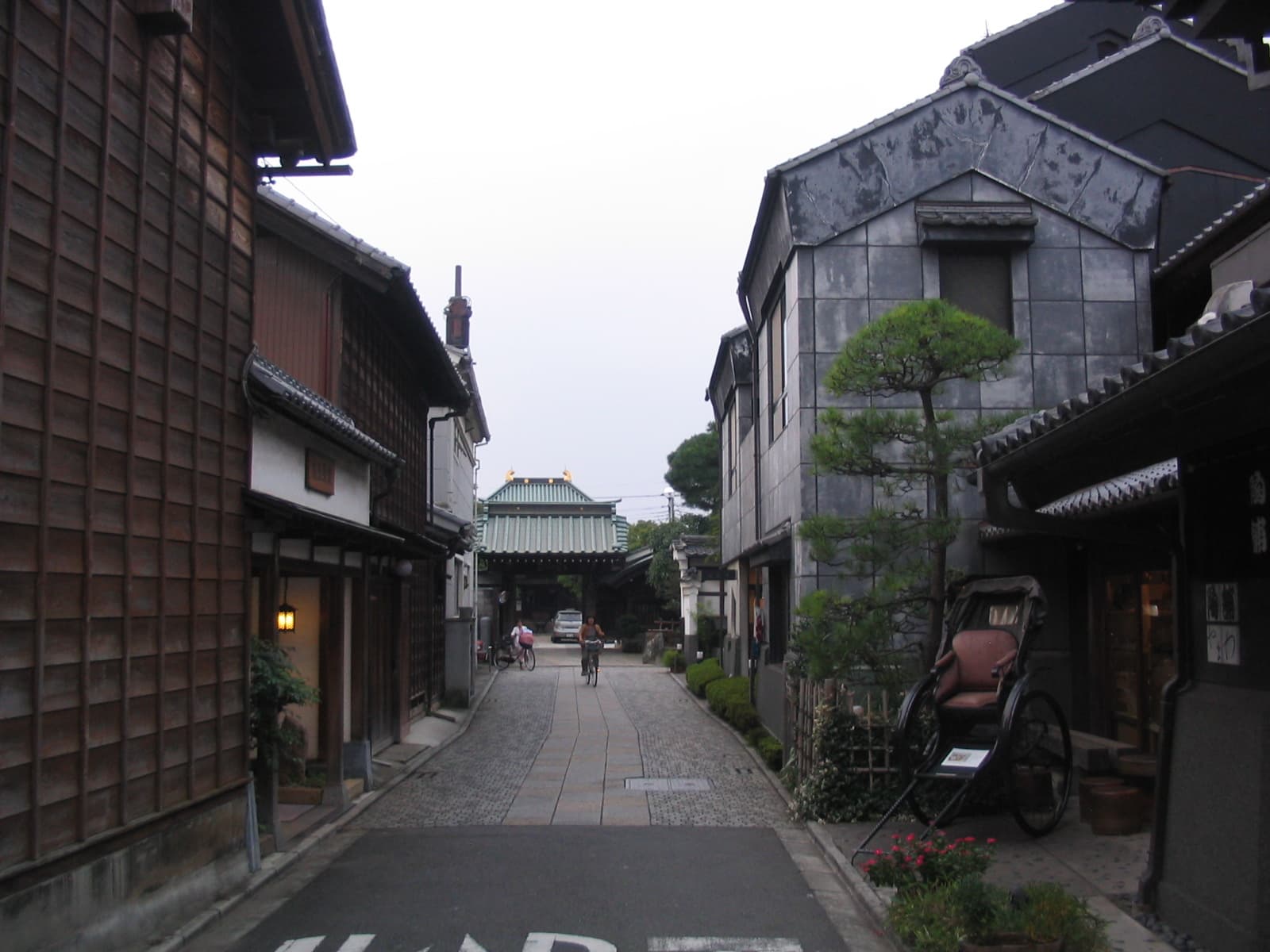 Collin Grady / CC BY-SA 2.0, via Wikimedia Commons
Zelfgeleide audiowandeling door Kawagoe — GPS-route, offline afspelen, meeslepende vertelling in 32 talen.
“Reis naar 'Klein Edo', waar historische pakhuizen en het geluid van een eeuwenoude klok het commerciële verleden van Japan oproepen.”
Niet de ansichtkaarten. De verhalen die zelfs locals niet kennen — gefluisterd in je oor, precies waar ze gebeurden.
De iconische klokkentoren van Kawagoe bevat een verrassend verhaal van veerkracht, dat onthult wat de stad het meest waardeerde, zelfs in zijn donkerste uur.
Voorbij de grote torii-poort kent deze oude schrijn een unieke dagelijkse praktijk voor degenen die op zoek zijn naar een specifieke vorm van geluk.
Deze sfeervolle steeg, nu een toevluchtsoord voor traditionele snoepjes, speelde ooit een cruciale rol in het bevoorraden van een grote Japanse stad tijdens een periode van schaarste.
Ontdek elk geheim van Kawagoe
Elk adres, elke onthulling volledig — in je oor, precies waar het gebeurde.
Jij kiest je stops. Jij wandelt. De stem onthult wat de anderen missen.


Je zelfgeleide audiotour van Kawagoe is klaar — kies je bezienswaardigheden, kies je taal en start zodra je aankomt.
KopenLume heeft een ingebouwde augmented-reality-gids. Houd je telefoon omhoog: de camera toont de straat voor je, met een oplichtende pijl over het echte beeld die altijd naar je volgende stop wijst — geen kaart om uit te puzzelen, geen verkeerde afslagen. Zoals alles in Lume werkt het volledig offline.
Een korte reis vanuit het levendige centrum van Tokio, Kawagoe, liefkozend bekend als 'Koedo' of 'Klein Edo', biedt een boeiende kijk op het feodale verleden van Japan. Deze aantrekkelijke stad in de prefectuur Saitama staat bekend om zijn zorgvuldig bewaarde straten, bekleed met kenmerkende kurazukuri (gebouwen in de stijl van kleimuurmagazijnen) die de sfeer van de Edo-periode (1603-1867) oproepen.
Naast zijn architectonische schoonheid nodigt Kawagoe bezoekers uit om een rustiger tempo van leven te omarmen. Dwaal door historische lanen, ontdek traditionele ambachten en proef lokale delicatessen, vooral die gemaakt van de beroemde zoete aardappelen. De combinatie van historische bezienswaardigheden, levendige festivals en unieke culinaire ervaringen maakt het een favoriete dagtocht voor zowel binnenlandse als internationale reizigers die op zoek zijn naar een voorproefje van het oude Japan.
## Van Kasteelstad tot 'Klein Edo' Het verhaal van Kawagoe strekt zich eeuwen terug uit, met zijn oorsprong als onderdeel van de oude provincie Musashi. In de 15e eeuw werd het kasteel Kawagoe gebouwd door de familie Ōta, wat het belang van de stad als een strategische militaire vesting verstevigde. Tijdens de Edo-periode bloeide Kawagoe op als een vitaal commercieel en transshipment knooppunt, waardoor het de bijnaam 'de keuken van Edo' verdiende vanwege zijn rol in het leveren van goederen aan de hoofdstad.
Het Tokugawa-shogunaat erkende het strategische belang van Kawagoe en plaatste het onder het bestuur van invloedrijke daimyo-families. Deze nauwe band met Edo leidde ertoe dat Kawagoe veel elementen van de cultuur en architectuur van Edo overnam, wat bijdroeg aan de benaming 'Klein Edo'.
Een belangrijk moment in de architectonische evolutie van Kawagoe vond plaats na de Grote Brand van 1893, die een aanzienlijk deel van de stad verwoestte. In de nasleep herbouwden handelaren hun winkels en magazijnen in de brandwerende kurazukuri-stijl, gekenmerkt door stevige, zwartgepleisterde muren en uitgebreide dakpannen. Deze veerkrachtige structuren, waarvan sommige dateren uit de 18e en 19e eeuw, werden het bepalende kenmerk van het straatbeeld van Kawagoe en getuigen van de blijvende geest van de stad.
Begin uw verkenning in de Kurazukuri Straat (Magazijnwijk), waar de kenmerkende met klei bepleisterde koopmanshuizen u meevoeren naar een vervlogen tijdperk. Zorg ervoor dat u de Toki no Kane (Tijdbel Toren) ervaart, een houten structuur van drie verdiepingen die al meer dan 400 jaar de tijd aangeeft en nog steeds vier keer per dag luidt. Vlakbij biedt Kashiya Yokocho (Snoepsteeg) een nostalgische reis met zijn vele winkels die traditionele Japanse snoepjes en snacks verkopen.
Voor een moment van rustige reflectie, bezoek de Kawagoe Hikawa Schrijn, een historische schrijn die 1500 jaar oud is, bekend om zijn zegeningen voor matchmaking en zijn indrukwekkende 15 meter hoge houten torii-poort. Kita-in Tempel, een belangrijke Tendai boeddhistische tempel opgericht in 830, is een ander hoogtepunt, met meer dan 500 unieke Gohyaku Rakan beelden, elk met een onderscheidende uitdrukking. De tempel bevat ook de enige overgebleven structuren van het voormalige Edo Kasteel. Voor een dieper begrip van de lokale geschiedenis biedt het Kawagoe Festival Museum inzichten in het levendige jaarlijkse festival van de stad.
Kawagoe verwelkomt bezoekers het hele jaar door, maar de lente (maart-mei) en de herfst (oktober-november) bieden het meest aangename weer voor wandeltochten. In de lente sieren kersenbloesems het historische landschap, vooral langs de Shingashi-rivier. De herfst brengt comfortabele temperaturen en heldere herfstkleuren, samenvallend met het veelgeprezen Kawagoe Festival half oktober, een UNESCO Immaterieel Cultureel Erfgoed evenement met uitgebreide praalwagens. Zomers zijn warm en vochtig, terwijl winters over het algemeen mild en helder zijn en een rustigere ervaring bieden.
Kawagoe is gemakkelijk bereikbaar vanuit Tokio, waardoor het een ideale dagtocht is. De reis duurt ongeveer 30-60 minuten met de trein, met opties zoals de Tobu Tojo Line, Seibu Shinjuku Line of JR Kawagoe Line. Station Hon-Kawagoe (Seibu Line) ligt over het algemeen dichter bij het oude stadsdeel. Eenmaal in Kawagoe zijn de belangrijkste toeristische gebieden grotendeels beloopbaar, hoewel er ook lokale bussen beschikbaar zijn. Overweeg de aanschaf van een Kawagoe kortingspas voor gecombineerd trein- en busvervoer. Hoewel grotere etablissementen IC-kaarten en creditcards accepteren, is het verstandig om wat contant geld mee te nemen voor kleinere winkels en eetkraampjes.
Kawagoe — Koreaans, Chinees, Hebreeuws en nog 29 talen, elke stop verteld door een moedertaalspreker. Het grootste taalaanbod van alle zelfgeleide audiotours.
Beschikbaar in: