Kerak Castle
Tijdens een hevige belegering toonde Saladin, de legendarische moslimleider, een onverwachte daad van ridderlijkheid te midden van de chaos van de oorlog.
Volledig verhaal ontgrendeld in de tour
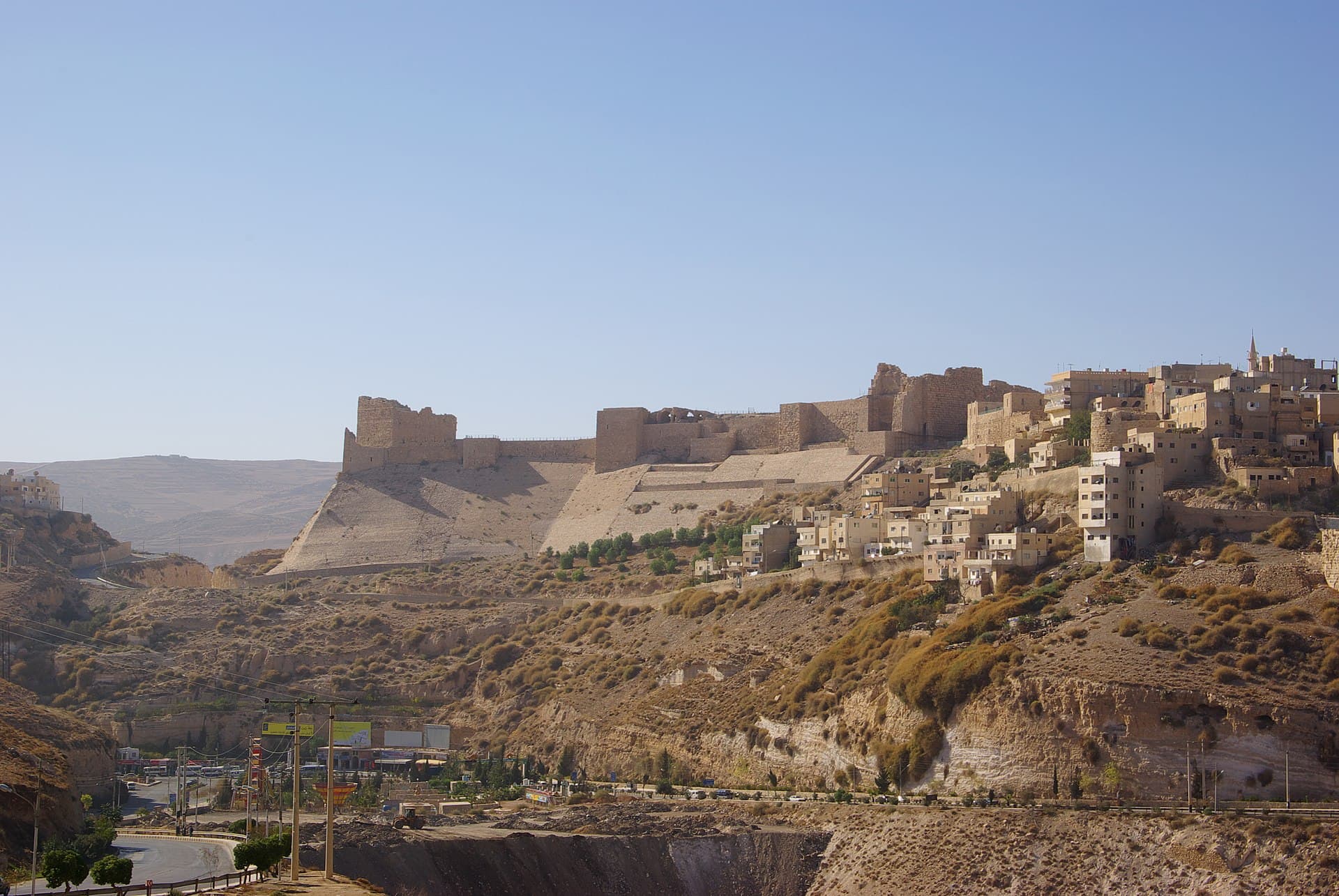 Berthold Werner / CC BY 3.0, via Wikimedia Commons
Zelfgeleide audiowandeling door Kerak — GPS-route, offline afspelen, meeslepende vertelling in 32 talen.
“Waar kruisvaarders echo's Jordaanse harten ontmoeten.”
Niet de ansichtkaarten. De verhalen die zelfs locals niet kennen — gefluisterd in je oor, precies waar ze gebeurden.
Tijdens een hevige belegering toonde Saladin, de legendarische moslimleider, een onverwachte daad van ridderlijkheid te midden van de chaos van de oorlog.
De beruchte kruisvaardersheer van het kasteel, Reynald van Châtillon, had een bijzonder gruwelijke methode voor het executeren van gevangenen.
Zelfs na eeuwen van islamitisch bewind heeft Kerak een verrassende religieuze demografie behouden.
Ontdek elk geheim van Kerak
Elk adres, elke onthulling volledig — in je oor, precies waar het gebeurde.
Jij kiest je stops. Jij wandelt. De stem onthult wat de anderen missen.


Je zelfgeleide audiotour van Kerak is klaar — kies je bezienswaardigheden, kies je taal en start zodra je aankomt.
KopenLume heeft een ingebouwde augmented-reality-gids. Houd je telefoon omhoog: de camera toont de straat voor je, met een oplichtende pijl over het echte beeld die altijd naar je volgende stop wijst — geen kaart om uit te puzzelen, geen verkeerde afslagen. Zoals alles in Lume werkt het volledig offline.
Kerak, lokaal bekend als Al-Karak, is een stad in zuidelijk Jordanië die dramatisch oprijst uit het omringende landschap. Het meest prominente kenmerk is het imposante Kerak-kasteel, een kruisvaardersfort dat al eeuwenlang de skyline van de stad domineert. De stad zelf is gebouwd op een driehoekig plateau, met het kasteel dat de smalle zuidpunt verankert. Deze strategische locatie, hoog boven de Jordaanvallei, controleerde ooit vitale handelsroutes tussen Damascus, Egypte en Mekka, waardoor het door de geschiedenis heen een cruciale plaats was.
Naast de formidabele muren van zijn kasteel biedt Kerak een glimp van de culturele diepte van Jordanië. De oude straten en lokale markten van de stad nodigen uit tot verkenning en bieden een authentieke ervaring, weg van drukkere toeristische centra. Kerak dient als een uitstekend tussenpunt langs de historische King's Highway, die reizigers verbindt tussen Amman en Petra.
De geschiedenis van Kerak strekt zich uit tot in de bijbelse tijden, waar het bekend stond als Kir Heres en wordt vermeld als belegerd door de Koning van Israël. De locatie had administratief belang tijdens de Romeinse, Byzantijnse en vroege islamitische periodes, lang voordat het huidige kasteel werd gebouwd.
Het kasteel dat bezoekers vandaag zien, dateert grotendeels uit de 12e eeuw, met de bouw die begon in 1142 onder Pagan de Butler en Fulk, Koning van Jeruzalem. De kruisvaarders noemden het Crac des Moabites of "Karak in Moab", en het werd al snel het machtscentrum van het Landom van Oultrejordain, ter vervanging van het zwakkere Montreal Castle in het zuiden. De strategische positie stelde het in staat om bedoeïenenherders en de lucratieve handelsroutes te controleren.
Een van de meest beruchte figuren die geassocieerd wordt met Kerak Castle was Reynald van Châtillon, die in de vroege jaren 1170 heer werd. Zijn heerschappij werd gekenmerkt door daden van barbarij, waaronder het verbreken van verdragen en het plunderen van pelgrimskaravanen op weg naar Mekka, wat de toorn opwekte van Saladin, de Sultan van Egypte en Syrië. Saladin belegerde Kerak meerdere keren. De eerste significante belegering vond plaats in 1183, beroemd tijdens een koninklijk huwelijk binnen de kasteelmuren. Ondanks intensief bombardement kon Saladin het fort tijdens deze belegering niet veroveren, die uiteindelijk werd opgeheven door een hulpmacht onder leiding van Koning Boudewijn IV van Jeruzalem. Echter, na de kruisvaardersnederlaag bij de Slag om Hattin in 1187, viel Kerak Castle, geïsoleerd en zonder hulp, uiteindelijk in 1189 aan Saladin na een langdurige blokkade.
Onder Ayubidische heerschappij bleef Kerak een belangrijk administratief centrum voor de regio. De Mamlukse Sultan Baibars vergrootte het kasteel verder in 1263, waarbij hij een toren aan de noordwestelijke hoek toevoegde. Tijdens het Ottomaanse Rijk behield Kerak zijn strategische belang en controleerde het kruispunten tussen het Arabische schiereiland, Egypte en Syrië. In 1834 werd het kasteel gedeeltelijk verwoest tijdens een belegering door Ibrahim Pasha van Egypte, die een boerenopstand wilde neerslaan. Ottomaanse autoriteiten herstelden de controle in 1893, gebruikten delen van het kasteel opnieuw en stationeerden er een garnizoen. Vandaag de dag staat het kasteel als een getuigenis van eeuwenlange oorlogsvoering en verschuivende macht, met zichtbare verschillen tussen de donkerdere, ruw gevormde kruisvaardersmetselwerk en de lichtere kalksteen toevoegingen uit latere Arabische periodes.
De belangrijkste attractie in Kerak is ongetwijfeld Kerak Castle, een uitgestrekt stenen fort dat een boeiende reis door de middeleeuwse geschiedenis biedt. Bezoekers kunnen de indrukwekkende architectuur verkennen, waaronder een donker doolhof van stenen gewelfde zalen, kerkers en eindeloze gangen. De hoogste punten van het kasteel bieden een weids uitzicht dat op heldere dagen reikt over de Dode Zee en zelfs tot de Olijfberg in Jeruzalem. Let op de onderscheidende kruisvaardersarchitectuur, vaak geïdentificeerd door donkerder steen, in contrast met de lichtere kalksteen die in latere islamitische uitbreidingen werd gebruikt.
Naast het kasteel nodigt de stad Kerak zelf uit tot verkenning. Wandel door de lokale markten en oude straten om het unieke culturele erfgoed van de stad te ervaren. Het Karak Archeologisch Museum, gelegen in het oude kasteel, herbergt artefacten uit verschillende historische periodes, waaronder de Moabieten, Nabateeërs, Romeinen, Byzantijnen, Islamitische en Kruisvaardersperiodes. Voor wie geïnteresseerd is in de lokale keuken, staat Kerak vooral bekend om zijn mansaf, het nationale gerecht van Jordanië, gemaakt met lamsvlees, rijst en jameed (gefermenteerde gedroogde yoghurt). Lokale restaurants bieden authentieke Jordaanse smaken, waarbij veel families in de dorpen nog steeds hun eigen jameed bereiden, wat het gerecht een rijkere smaak geeft.
De beste tijden om Kerak te bezoeken zijn tijdens de lente (maart tot mei) en de herfst (september tot november). Tijdens deze seizoenen is het weer mild en aangenaam, ideaal voor het verkennen van historische bezienswaardigheden en het ondernemen van buitenactiviteiten. De lente brengt bloeiende bloemen en weelderige landschappen, terwijl de herfst comfortabele temperaturen en minder drukte biedt. Zomers (juni tot augustus) kunnen extreem heet zijn, met temperaturen die vaak boven de 30°C uitkomen, waardoor buitenverkenning uitdagend is vanwege intense zon en gebrek aan schaduw. Winters (december tot februari) zijn koel en regenachtig, met temperaturen die 's nachts dalen tot ongeveer 10°C of lager.
Kerak ligt ongeveer 140 kilometer ten zuiden van Amman en is bereikbaar via de schilderachtige King's Highway. Het huren van een auto is een populaire manier om Jordanië te verkennen, en biedt flexibiliteit om bezienswaardigheden buiten de hoofdwegen te bezoeken. Als alternatief rijden er onregelmatige bussen van Amman naar Kerak, en begeleide tours nemen Kerak Castle vaak op als stop op routes naar Petra en Wadi Rum. De Jordan Pass dekt de toegangsprijs voor Kerak Castle. Reken op minimaal 1 tot 1,5 uur om het kasteel grondig te verkennen, inclusief de tunnels, zalen en uitzichtpunten. Het dragen van comfortabele wandelschoenen wordt aanbevolen voor de ongelijke stenen paden, en een lichte jas kan handig zijn voor koelere seizoenen of binnen de donkerdere gangen van het kasteel. Overweeg het inhuren van een lokale gids bij het kasteel voor diepere inzichten in de geschiedenis ervan. De lokale valuta is de Jordaanse Dinar (JD), hoewel Amerikaanse dollars breed worden geaccepteerd.
Kerak — Koreaans, Chinees, Hebreeuws en nog 29 talen, elke stop verteld door een moedertaalspreker. Het grootste taalaanbod van alle zelfgeleide audiotours.
Beschikbaar in: