Systrastapi (Sisters' Rock)
Two nuns, a burning pyre, and a posthumous pardon. What dark tale is etched into this rocky hill?
Full story unlocks in the tour
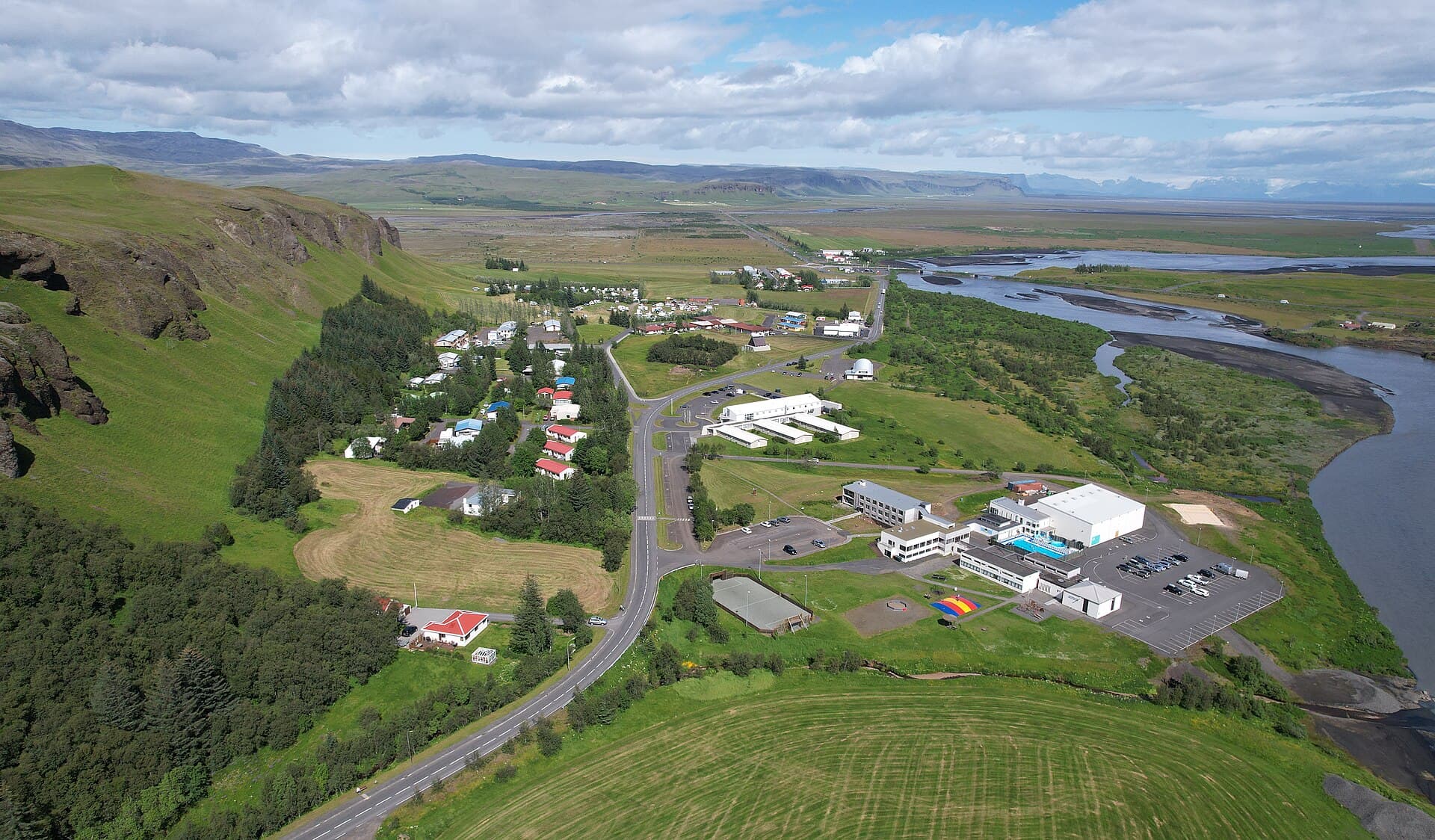 Eysteinn Guðni Guðnason / CC BY-SA 4.0, via Wikimedia Commons
Self-guided audio walking tour of Kirkjubæjarklaustur — GPS route, offline playback, story-driven narration in 32 languages.
“Where ancient sagas meet volcanic landscapes, and every stone tells a story.”
Not the postcards. The stories even locals don't know — whispered in your ear, right where they happened.
Two nuns, a burning pyre, and a posthumous pardon. What dark tale is etched into this rocky hill?
A perfectly paved church floor, yet no church ever stood here. What natural architect crafted this illusion?
A vast, moss-covered expanse, born from one of history's most devastating eruptions. What secrets does this verdant carpet conceal?
Discover every secret of Kirkjubæjarklaustur
Every address, every reveal in full — in your ear, right where it happened.
You pick your stops. You walk. The voice reveals what the others miss.


Your self-guided audio tour of Kirkjubæjarklaustur is ready — pick your landmarks, choose your language, and start the moment you arrive.
BuyKirkjubæjarklaustur, often affectionately shortened to 'Klaustur,' is a small village in South Iceland, a pivotal stop along the country's famous Ring Road. Its name, meaning 'church farm cloister,' hints at deep historical and spiritual roots, tracing back to Irish monks and a medieval Benedictine convent. Surrounded by a dramatic array of volcanic landscapes, cascading waterfalls, and unique geological formations, Klaustur serves as a tranquil base for exploring some of Iceland's most awe-inspiring natural wonders.
With a population of around 120-200 people, Kirkjubæjarklaustur may be small, but it offers essential services for travelers, including accommodation, restaurants, a supermarket, and a gas station—a welcome sight in the often-uninhabited stretches of the South Coast. The village itself rests beneath a cliff, with the picturesque Systrafoss waterfall flowing directly into town, creating a serene and captivating atmosphere.
Beyond its practical amenities, Klaustur is a place where history, folklore, and geology intertwine. Every rock formation, waterfall, and trail seems to recount tales of ancient nuns, fiery sermons, and the raw power of Iceland's volcanic past, inviting visitors to delve deeper into its enigmatic allure.
The history of Kirkjubæjarklaustur stretches back to the earliest days of settlement in Iceland. Long before the Norse arrived, Irish Christian monks, known as 'Papar,' are believed to have settled this area, establishing it as a sacred Christian site. Folklore from the Norse sagas even recounts how pagans attempting to settle at Kirkjubær would die upon crossing its threshold, reinforcing the area's ancient spiritual significance. One such tale speaks of Hildir Eysteinsson, a pagan who met an instant demise when he tried to move to Kirkjubær in the 10th century; his burial site is now known as Hildishaugur, or 'Hildir's Mound.'
In 1186 AD, a Benedictine convent was formally established at Kirkjubær, giving the village its distinctive name, which translates to 'church farm cloister.' This convent played a significant role in the region for 364 years until the Icelandic Reformation in 1550. The period of the convent is rich with vivid folklore, particularly surrounding the fates of some of its nuns. Two nuns are famously said to have been burned at the stake on Systrastapi (Sisters' Rock) for various transgressions, including heresy and fornication. These dramatic stories are deeply embedded in the local landscape, with landmarks like Systrastapi, Systrafoss (Sisters' Falls), and Systravatn (Sisters' Lake) all bearing names that harken back to the nuns' presence.
Kirkjubæjarklaustur's history is also profoundly marked by Iceland's powerful volcanic activity. The village lies amidst vast lava fields, remnants of colossal eruptions that have shaped the landscape over millennia. The most impactful of these was the Laki eruption, also known as the Skaftá Fires, which began in 1783 and lasted for eight months. This catastrophic event released an immense volume of lava and toxic gases, causing widespread devastation across Iceland and even impacting global climate patterns. The lava flows threatened to engulf Kirkjubæjarklaustur itself.
It was during this terrifying time, on July 20, 1783, that Pastor Jón Steingrímsson delivered his legendary 'Fire Sermon' in the local church. Many believed that his powerful sermon miraculously halted the advancing lava at the very edge of the village, preserving it from destruction. This event cemented Steingrímsson's place in Icelandic history as the 'Fire Priest,' and a chapel in Kirkjubæjarklaustur, built in 1974, commemorates his legacy. Today, the Eldhraun lava field, now covered in a fragile, velvety green moss, serves as a silent, sprawling reminder of this dramatic period.
In modern times, Kirkjubæjarklaustur has evolved into a vital service center and a popular stop for travelers exploring Iceland's South Coast. Its strategic location makes it an ideal base for accessing numerous natural attractions, including the Fjaðrárgljúfur canyon, the Dverghamrar basalt columns, and the vast Vatnajökull National Park. The village, though small, continues to offer a blend of historical intrigue, geological marvels, and a peaceful atmosphere that resonates with both residents and visitors.
Kirkjubæjarklaustur and its surroundings offer a wealth of natural and historical sights. Begin with a visit to Systrafoss Waterfall, which cascades gracefully down a cliff directly into the village. Above it lies Systravatn (Sisters' Lake), offering pleasant walks and views. Just west of the village, a short hike leads to Systrastapi (Sisters' Rock), a steep rocky hill imbued with the dramatic folklore of the convent nuns.
Do not miss Kirkjugólf (Church Floor), a fascinating natural pavement of hexagonal basalt columns that appears man-made, located a short walk from the Ring Road. A short drive east brings you to Dverghamrar (Dwarf Cliffs), another site of striking hexagonal basalt columns, linked to local legends of unseen people. The expansive Eldhraun Lava Field, formed by the monumental Laki eruption, is a compelling sight, with its unique moss-covered landscape. Remember to stay on marked paths to protect the fragile moss.
For canyon enthusiasts, Fjaðrárgljúfur Canyon is a striking 1.2-mile long gorge with moss-covered cliffs rising nearly 328 feet, just a 10-minute drive from the village. The village also features a church commemorating Pastor Jón Steingrímsson and his famous 'Fire Sermon'. The Skaftárstofa visitor center offers insights into the geology and ecology of the region, serving as an information point for the western section of Vatnajökull National Park.
The best time to visit Kirkjubæjarklaustur is during the late spring and summer months, from June to August. During this period, temperatures are mild, ranging from 8 to 15 degrees Celsius (46 to 59 degrees Fahrenheit), and daylight hours are long, offering the chance to experience the midnight sun. This is also when all hiking trails are accessible and the road to the Laki craters opens.
While summer is most popular, spring and autumn offer fewer crowds and potentially lower prices. Winter provides a quieter, tranquil atmosphere and excellent opportunities to witness the Northern Lights, though some highland routes will be closed, and temperatures are much colder, ranging from -2 to 2 degrees Celsius (28 to 36 degrees Fahrenheit).
Kirkjubæjarklaustur is conveniently located on Iceland's Ring Road (Route 1), approximately 250 kilometers (155 miles) east of Reykjavík, a drive that typically takes around 3 to 3.5 hours without stops. Most visitors choose to rent a car for the flexibility it offers in exploring the surrounding attractions. Public bus services are available, but schedules can be limited, especially in winter.
The village, though small, provides essential amenities including a supermarket, gas station, post office, and banking services. Accommodation options range from hotels and guesthouses to campsites. Dining choices are somewhat limited but include local restaurants and fast food at the gas station. The local swimming pool with hot tubs is a popular spot for relaxation after a day of sightseeing.
When exploring the natural sites, particularly the moss-covered lava fields, it's crucial to stay on marked paths, as the fragile moss takes centuries to recover if damaged. Always check road conditions, especially for highland F-roads which require a 4WD vehicle and are only accessible in summer.
Kirkjubæjarklaustur in Korean, in Chinese or in Hebrew — and 29 more languages, every stop narrated by a native voice. The widest language range of any self-guided audio tour.
Available in: