Viaduc de Knaresborough
Le viaduc de Knaresborough, un témoignage de l'ingénierie victorienne, dissimule un secret dramatique sous ses élégantes arches.
L'histoire complète se débloque dans le tour
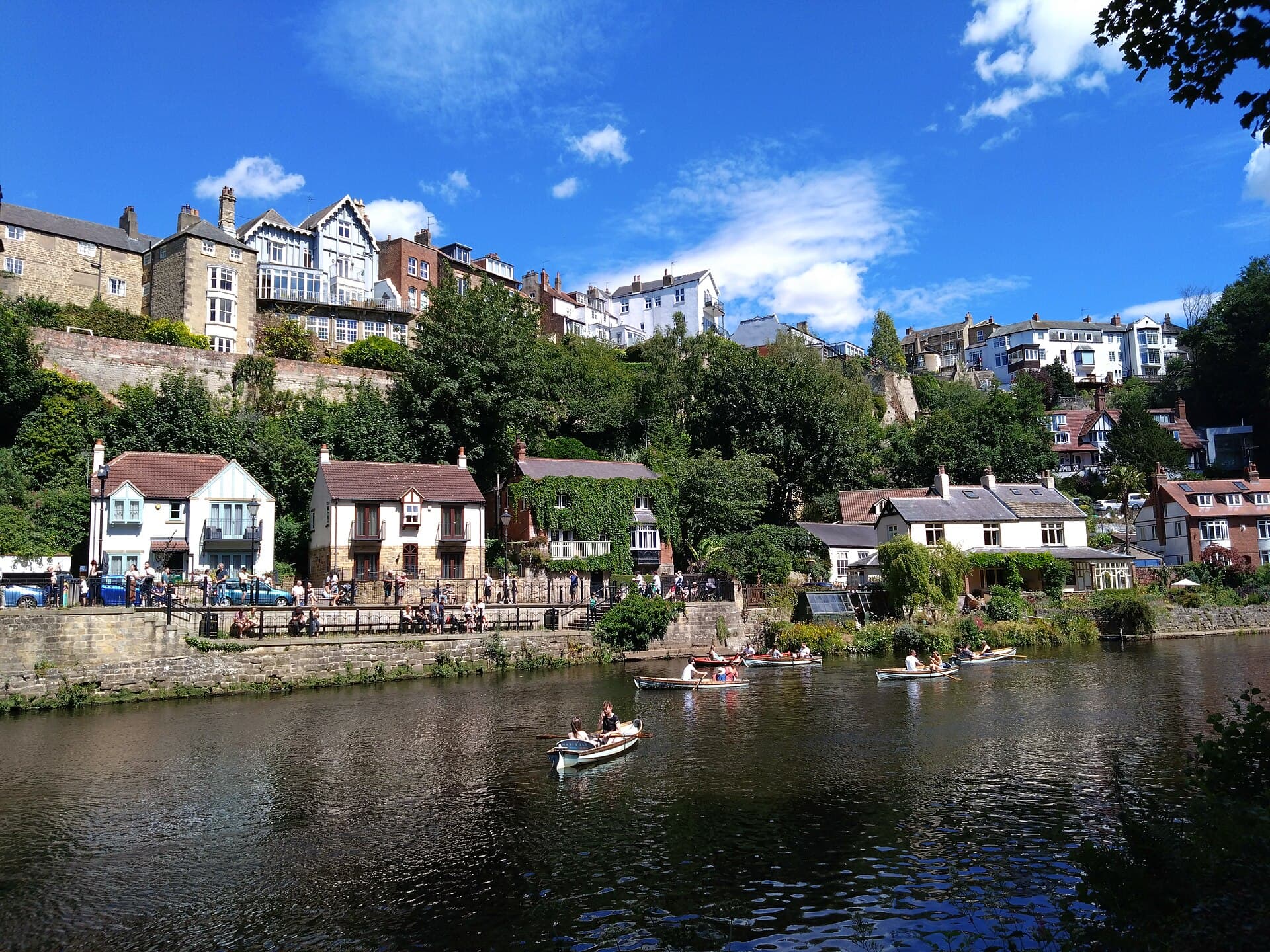 Luke McCarthy / CC BY-SA 2.0, via Wikimedia Commons
Visite audio autoguidée de Knaresborough — parcours GPS à pied, lecture hors ligne, narration en 32 langues.
“Là où les légendes ancestrales rencontrent des vues spectaculaires sur la rivière.”
Pas les cartes postales. Les histoires que même les habitants ignorent — soufflées à l'oreille, là où elles se sont passées.
Le viaduc de Knaresborough, un témoignage de l'ingénierie victorienne, dissimule un secret dramatique sous ses élégantes arches.
Cette forteresse royale, autrefois un rempart formidable, a connu un destin imprévu qui a façonné l'essence même de la ville.
Au-delà de ses liens avec un ermite du XIIIe siècle, cette modeste grotte recèle un récit plus sombre et plus récent de transgression.
Découvrez tous les secrets de Knaresborough
Chaque adresse, chaque révélation en entier — dans ton oreille, là où elle s'est passée.
Tu choisis tes lieux. Tu marches. La voix te révèle ce que les autres ignorent.


Votre visite audioguidée de Knaresborough vous attend — choisissez vos lieux, votre langue, et lancez-vous dès votre arrivée.
AcheterLume intègre un guide en réalité augmentée. Levez votre téléphone : sa caméra montre la rue devant vous, avec une flèche lumineuse posée sur l'image réelle qui pointe toujours vers votre prochain arrêt — aucune carte à déchiffrer, aucun mauvais virage. Comme tout dans Lume, ça fonctionne entièrement hors-ligne.
Knaresborough, une ville marchande du North Yorkshire, en Angleterre, offre un paysage distinctif où des rues escarpées et sinueuses descendent vers la gorge boisée de la rivière Nidd. Le cadre spectaculaire de la ville est défini par les ruines de son château médiéval, l'imposant viaduc ferroviaire victorien et une paisible zone fluviale. Ce mélange d'architecture historique et de beauté naturelle crée une scène pittoresque, souvent décrite comme parfaite pour une carte postale, surtout lorsque le viaduc se reflète dans la rivière au petit matin.
Avec une histoire remontant aux rois médiévaux et à la légendaire prophétesse Mère Shipton, Knaresborough conserve son héritage dans ses ruelles pavées et ses anciennes habitations troglodytes. La ville présente deux expériences distinctes : le centre-ville perché sur la falaise avec sa place du marché et les jardins du château, et la paisible rive de la rivière, idéale pour des promenades tranquilles et des excursions en bateau. Ce contraste confère à Knaresborough un charme unique, en faisant une destination enrichissante à explorer.
## Des trésors romains aux forteresses royales Les origines de Knaresborough remontent à l'époque romaine, avec une collection de pots en cuivre du IVe siècle, connue sous le nom de Trésor de Knaresborough, découverte dans la région, suggérant la présence de riches villas romaines à proximité. La ville est mentionnée dans le Domesday Book de 1086 sous le nom de 'Chenaresburg', signifiant 'forteresse de Cenheard'. L'influence normande a commencé vers 1100 lorsqu'un château a été construit sur un promontoire rocheux au-dessus de la rivière Nidd, entraînant la croissance de la ville à mesure que les commerçants arrivaient pour servir le château.
Le château de Knaresborough a joué un rôle important dans l'histoire anglaise. Dans les années 1170, Hugh de Morville et trois autres chevaliers s'y sont réfugiés après l'assassinat de l'archevêque Thomas Becket. Le roi Jean a ensuite pris possession du château en 1204, investissant massivement pour le transformer en forteresse militaire et en centre de munitions clé, produisant des carreaux d'arbalète. Il a également distribué le premier Maundy Money à Knaresborough en 1210. Le château a été reconstruit entre 1307 et 1312 par Édouard Ier et Édouard II, y compris la construction du Grand Donjon. La reine Philippa, épouse d'Édouard III, a reçu le château en 1331, en faisant une résidence royale où elle et sa famille passaient souvent les étés. Richard II y fut également brièvement emprisonné en 1399.
Pendant la guerre civile anglaise, le château de Knaresborough était une place forte royaliste et a subi un siège en 1644. Après sa reddition, le Parlement ordonna sa destruction en 1646, et de nombreux bâtiments de la ville furent ensuite construits avec ses pierres récupérées. Le chemin de fer est arrivé à Knaresborough en 1848, avec l'ouverture de la gare actuelle en 1851, la même année où l'emblématique viaduc fut achevé après un effondrement antérieur.
Knaresborough a également abrité des figures notables telles qu'Ursula Sontheil, mieux connue sous le nom de Mère Shipton, une prophétesse du XVIe siècle qui serait née dans une grotte au bord de la rivière. Une autre figure locale était John Metcalfe, ou 'Blind Jack of Knaresborough', un ingénieur civil qui, bien qu'aveugle depuis l'enfance, a construit 180 miles de routes à péage dans le nord de l'Angleterre.
Commencez votre exploration au château de Knaresborough, dont les ruines offrent des vues imprenables sur la rivière Nidd et le viaduc. Les jardins du château sont idéaux pour une promenade tranquille, et le musée du palais de justice donne un aperçu de son passé médiéval. Une courte marche depuis le château mène à la grotte de Mère Shipton et au puits pétrifiant, la plus ancienne attraction touristique d'Angleterre, où les objets sont lentement transformés en pierre par des eaux riches en minéraux.
Pour des vues classiques, dirigez-vous vers le point de vue du viaduc, particulièrement saisissant au lever du soleil ou en fin d'après-midi, pour admirer le viaduc ferroviaire victorien enjambant la gorge de la rivière. Descendez au bord de la rivière pour des sentiers, des bateaux à rames et de charmants cafés. Explorez la place du marché, où un marché a lieu chaque mercredi depuis plus de 700 ans, proposant des produits locaux, de l'artisanat et divers articles. Ne manquez pas la chapelle de Notre-Dame du Rocher, une petite chapelle du XVe siècle taillée dans la falaise, ou la grotte de St. Robert, un site historique lié à un ermite du XIIIe siècle. À proximité, les jardins de Bebra offrent une retraite paisible avec des vues sur le viaduc.
La meilleure période pour visiter Knaresborough pour les activités par temps chaud est de fin juin à fin août, lorsque les températures maximales moyennes quotidiennes sont supérieures à 17 °C (63 °F). Juillet est généralement le mois le plus chaud, avec une moyenne maximale de 20 °C (68 °F). Le printemps et l'été sont idéaux pour les activités au bord de la rivière comme le canotage et pour profiter des parcs en pleine floraison. La Knaresborough Bed Race, un événement annuel unique, a lieu le deuxième samedi de juin. L'automne apporte de riches couleurs boisées à la gorge de Nidd. Pour moins de foules et des prix d'hébergement potentiellement plus bas, envisagez de visiter pendant les saisons creuses, en dehors des principales vacances scolaires d'été et de Noël.
Knaresborough est une ville compacte, facilement explorable à pied, mais sachez que la ville est divisée en deux zones distinctes — le sommet de la falaise et le bord de la rivière — reliées par des escaliers ou des pentes raides. La ville possède sa propre gare ferroviaire avec des services réguliers depuis Leeds, York et Harrogate. Si vous conduisez, un parking de longue durée est disponible à York Place, offrant un accès pratique au centre-ville. D'autres parkings centraux, tels que Fisher Street et Chapel Street, offrent un stationnement de courte durée, mais peuvent être très fréquentés le mercredi en raison du jour de marché. Des bornes de recharge pour véhicules électriques sont disponibles au parking de Chapel Street. Le Centre d'information touristique de Knaresborough, situé près de la place du marché, fournit des cartes, des guides locaux et une assistance pour l'hébergement.
Knaresborough en coréen, en chinois ou en hébreu — et dans 29 autres langues, chaque étape narrée par une voix native. La plus large gamme de langues de tous les audioguides autoguidés.
Disponible en :