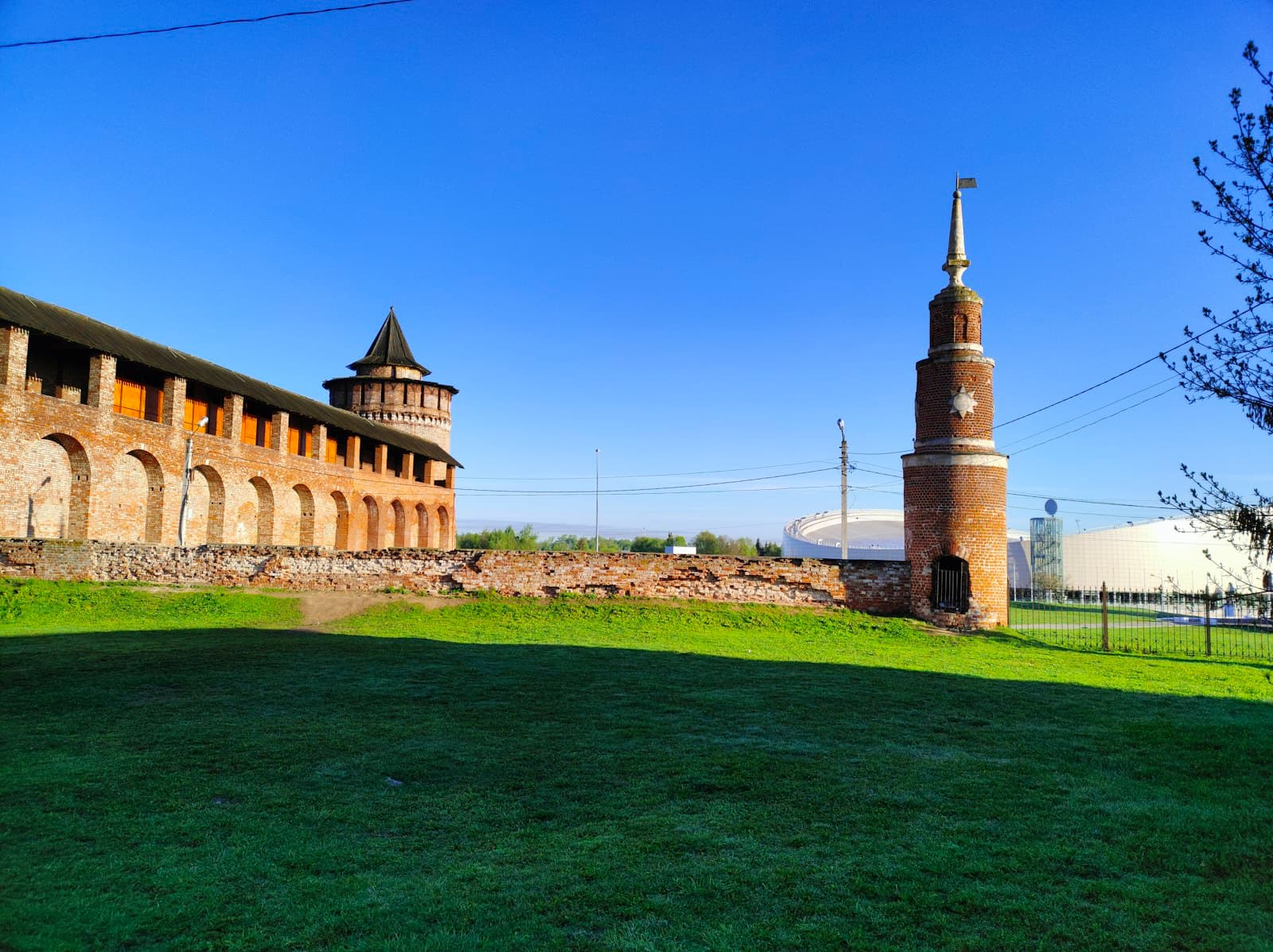
Tour de Marinka, Kremlin de Kolomna
L'une des tours du Kremlin de Kolomna porte le nom d'une noble polonaise, Marina Mniszech, et des récits contradictoires sur son destin entre ses murs.
L'histoire complète se débloque dans le tour
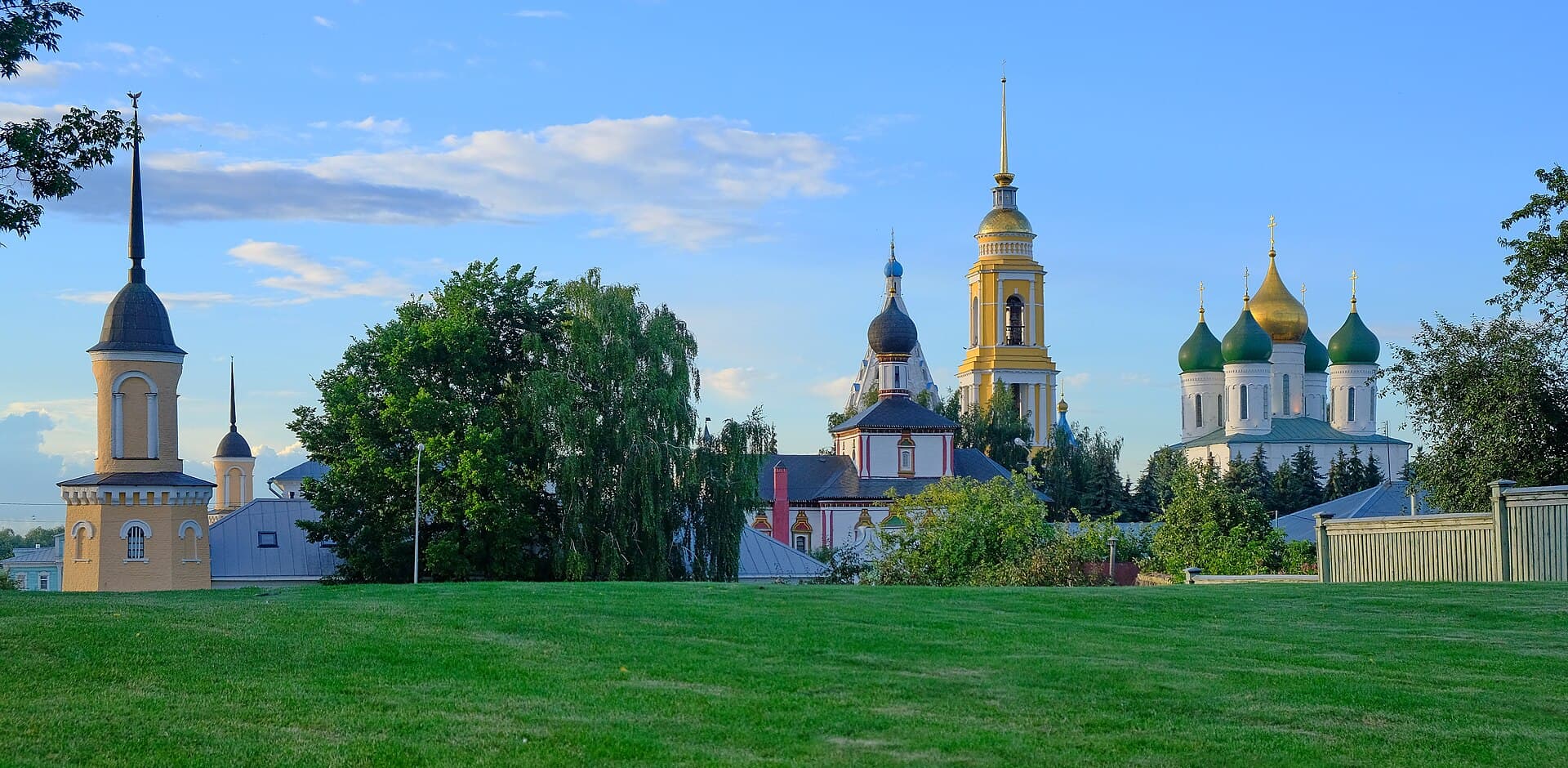 Ghirlandajo / CC BY-SA 4.0, via Wikimedia Commons
Visite audio autoguidée de Kolomna — parcours GPS à pied, lecture hors ligne, narration en 32 langues.
“Là où les murs ancestraux gardent de doux secrets et le temps ralentit au doux cliquetis d'un tramway.”
Pas les cartes postales. Les histoires que même les habitants ignorent — soufflées à l'oreille, là où elles se sont passées.
L'une des tours du Kremlin de Kolomna porte le nom d'une noble polonaise, Marina Mniszech, et des récits contradictoires sur son destin entre ses murs.
Le blason de la ville, orné d'une colonne, semble être un jeu de mots visuel évident sur son nom, mais ses origines sont moins liées à l'étymologie locale qu'aux caprices impériaux.
Cette confiserie traditionnelle à base de pommes, autrefois une délicatesse oubliée, a connu une renaissance spectaculaire, mais son retour a été marqué par une tournure surprenante digne d'un roman russe.
Découvrez tous les secrets de Kolomna
Chaque adresse, chaque révélation en entier — dans ton oreille, là où elle s'est passée.
Tu choisis tes lieux. Tu marches. La voix te révèle ce que les autres ignorent.


Votre visite audioguidée de Kolomna vous attend — choisissez vos lieux, votre langue, et lancez-vous dès votre arrivée.
AcheterLume intègre un guide en réalité augmentée. Levez votre téléphone : sa caméra montre la rue devant vous, avec une flèche lumineuse posée sur l'image réelle qui pointe toujours vers votre prochain arrêt — aucune carte à déchiffrer, aucun mauvais virage. Comme tout dans Lume, ça fonctionne entièrement hors-ligne.
Kolomna, une ville au sud-est de Moscou, au confluent de la Moskova et de l'Oka, offre un voyage tangible dans le passé de la Russie. Mentionnée pour la première fois en 1177, elle fut un bastion vital et un carrefour commercial pendant des siècles. Aujourd'hui, ses murs de Kremlin bien conservés, ses églises historiques et ses rues charmantes invitent les visiteurs à explorer un côté moins fréquenté de l'histoire russe.
Au-delà de ses merveilles architecturales, Kolomna est réputée pour ses traditions culinaires uniques, notamment sa fameuse pastila, une confiserie à base de pommes qui a connu une remarquable résurgence. Le rythme détendu et le caractère provincial de la ville offrent un contraste rafraîchissant avec la capitale, en faisant une destination idéale pour ceux qui recherchent une immersion culturelle et un aperçu du patrimoine russe.
L'histoire de Kolomna commence en 1177, lorsqu'elle apparaît pour la première fois dans le Codex de Laurentian, bien que des preuves archéologiques suggèrent que des colonies existaient encore plus tôt, entre 1140 et 1160. Sa position stratégique au confluent des rivières Moskova et Oka en fit un centre commercial et de défense crucial, initialement partie de la Principauté de Riazan.
L'importance de la ville grandit lorsqu'elle devint le premier territoire incorporé à la Principauté de Moscou en 1301. Kolomna servit de bouclier principal au sud de Moscou, subissant de multiples attaques de tribus nomades, y compris quatre sacs par les Tatars. Le Grand Prince Dmitri Donskoï, figure vénérée de l'histoire russe, rassembla ses troupes à Kolomna en 1380 avant la bataille décisive de Koulikovo contre le Khan mongol Mamaï.
Le monument historique le plus important, le Kremlin de pierre de Kolomna, fut construit entre 1525 et 1531 sous le règne du tsar russe Vassili III. Cette formidable forteresse, conçue pour protéger des ennemis, comptait initialement 17 tours et des murs atteignant jusqu'à 21 mètres de hauteur et 4,5 mètres de largeur. Bien qu'il ne reste aujourd'hui que sept tours et deux sections du mur, le Kremlin de Kolomna n'est que quatre hectares plus petit que son homologue plus célèbre de Moscou. Pendant le Temps des Troubles, Kolomna fut confrontée à d'autres défis, notamment l'occupation par les forces polono-lituaniennes au début du XVIIe siècle.
Au XVIIe siècle, l'importance militaire de Kolomna diminua, et elle se transforma en une ville commerçante prospère. En 1781, elle reçut ses armoiries de l'impératrice Catherine II. Le XIXe siècle vit Kolomna devenir un centre précoce de construction de locomotives, et en 1862, le chemin de fer la relia à Moscou, stimulant davantage le développement industriel. Malgré sa croissance industrielle, Kolomna a conservé son cœur historique, offrant un mélange unique d'architecture médiévale et de maisons de marchands du XIXe siècle.
La pièce maîtresse incontestée de Kolomna est son Kremlin, une forteresse de briques rouges datant du début du XVIe siècle. Explorez ses sept tours restantes, y compris la légendaire Tour de Marinka, et marchez le long de ses épais remparts pour admirer la ville et la rivière Oka. À l'intérieur des murs du Kremlin, vous trouverez la Place de la Cathédrale, abritant la Cathédrale de l'Assomption, le Monastère Novo-Golutvin et l'Église de Tikhvin. La Cathédrale de l'Assomption, reconstruite au XVIIe siècle, se dresse sur le site d'une église antérieure de l'époque de Dmitri Donskoï.
Au-delà du Kremlin, flânez dans le Kolomna Posad, le quartier historique des marchands avec ses maisons traditionnelles en bois et ses rues charmantes. Visitez l'Église de Nikola-na-Posade, datant de l'ère de la Horde d'Or. Pour un avant-goût de la culture locale, plongez dans le monde de la pastila au Musée de la Pastila de Kolomna ou à la Fabrique-Musée de la Pastila, où vous pourrez découvrir les méthodes de production traditionnelles et déguster différentes variétés. Ne manquez pas la Kalachnaya (Musée de la Boulangerie Kalach) pour un spectacle théâtral et une dégustation du pain kalach traditionnel russe. Parmi les autres sites notables, citons le Monument de Dmitri Donskoï près des murs du Kremlin et l'Église de l'Archange Michel.
La meilleure période pour visiter Kolomna pour les activités par temps chaud s'étend de fin juin à mi-août, lorsque les températures diurnes moyennes se situent entre 20°C et 26°C. Juillet est généralement le mois le plus chaud, avec un ciel dégagé. Le printemps (avril-mai) et l'automne (septembre-octobre) offrent un temps plus doux, bien que plus variable, avec des jardins en fleurs ou des feuilles changeantes, ce qui les rend propices aux longues promenades. Les hivers (décembre-février) sont froids avec un manteau neigeux, créant une atmosphère distincte pour ceux qui apprécient les paysages gelés.
Kolomna est facilement accessible depuis Moscou, située à environ 114 kilomètres au sud-est de la capitale. Le moyen le plus simple de s'y rendre est en train de banlieue (une "elektrichka") depuis la gare de Kazan à Moscou. Les trains partent toutes les demi-heures environ, avec un temps de trajet d'environ 2 heures 20 minutes à 2 heures 30 minutes, coûtant entre 410 et 800 RUB. Les bus sont également une option, prenant environ 3 heures 14 minutes et coûtant 440-470 RUB. En voiture, le trajet dure environ 1 heure 50 minutes.
Une fois à Kolomna, le centre historique est facilement explorable à pied. Des tramways sont également disponibles et offrent un mode de transport charmant, bien qu'ancien. Les taxis et les bus locaux peuvent également vous aider à naviguer dans la ville. Les options d'hébergement comprennent de petites maisons d'hôtes et des hôtels, avec des appartements également disponibles pour des séjours plus longs. Il est recommandé de réserver à l'avance, surtout pendant la haute saison ou les festivals. Les souvenirs abondent, la pastila étant le plus célèbre, aux côtés de l'artisanat traditionnel comme la céramique, les objets en bois et les poupées matriochka.
Kolomna en coréen, en chinois ou en hébreu — et dans 29 autres langues, chaque étape narrée par une voix native. La plus large gamme de langues de tous les audioguides autoguidés.
Disponible en :