Elisabeth Bridge
This enduring bridge, linking Komárno to its Hungarian twin, harbors a secret about national identity, literally underfoot.
Full story unlocks in the tour
 Andrzej Otrębski / CC BY-SA 4.0, via Wikimedia Commons
Self-guided audio walking tour of Komárno — GPS route, offline playback, story-driven narration in 32 languages.
“Where two rivers converge, and cultures interweave.”
Not the postcards. The stories even locals don't know — whispered in your ear, right where they happened.
This enduring bridge, linking Komárno to its Hungarian twin, harbors a secret about national identity, literally underfoot.
This formidable fortress, once a bulwark against empires, later assumed a surprising, less-discussed role, reflecting a more contemporary, yet equally strategic, period.
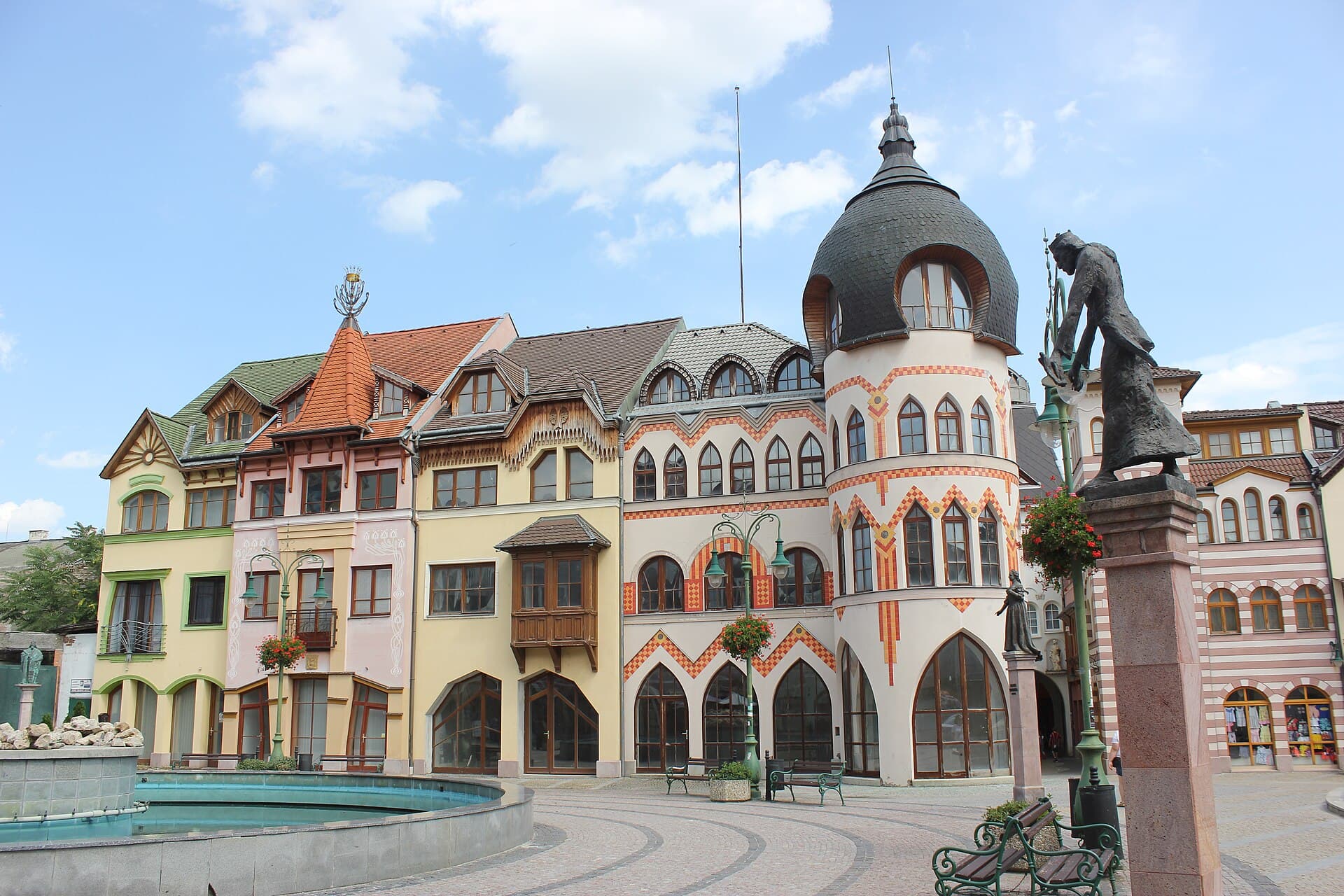
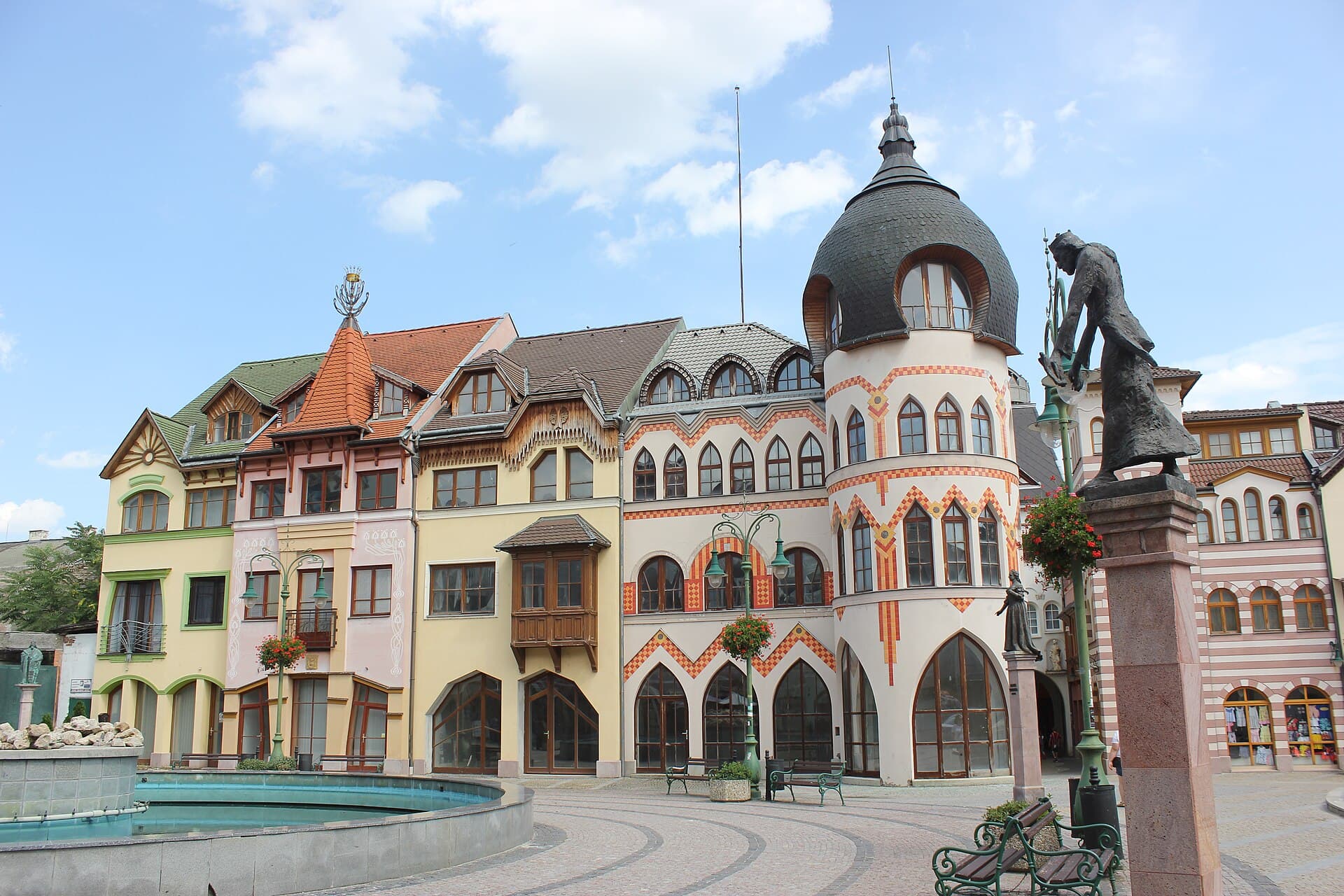
A lively square in Komárno displays architecture from across the continent, yet its very presence articulates more than mere aesthetics.
Discover every secret of Komárno
Every address, every reveal in full — in your ear, right where it happened.
You pick your stops. You walk. The voice reveals what the others miss.
Your self-guided audio tour of Komárno is ready — pick your landmarks, choose your language, and start the moment you arrive.
BuyLume has a built-in augmented-reality guide. Hold your phone up and its camera shows the street ahead of you, with a glowing arrow laid over the real view that always points to your next stop — no map to puzzle over, no wrong turns. Like everything in Lume, it works fully offline.
Komárno, a town in southwestern Slovakia, rests at the strategic convergence of the Danube and Váh rivers, directly on the border with Hungary. This singular geographical placement has deeply shaped its identity, forging a cultural crossroads where Slovak and Hungarian traditions gracefully intermingle. Once a unified city known as Komárom, the Treaty of Trianon in 1920 divided it, with the northern bank becoming Komárno in Czechoslovakia (now Slovakia) and the southern part remaining Komárom in Hungary. Despite the political separation, the two towns maintain close ties, notably through the enduring Elisabeth Bridge.
Komárno is more than a border town; it stands as a testament to resilience and adaptation. Its narrative stretches from Roman fortifications to a pivotal role in the Austro-Hungarian Empire, weathering numerous sieges, natural calamities, and political upheavals. Today, it functions as Slovakia's principal port on the Danube and a significant cultural center for the Hungarian community in Slovakia, with a majority of its population identifying as Hungarian. Visitors will uncover a town rich in architectural legacy, from its expansive fortress system to the distinctive Courtyard of Europe, offering a tangible journey through centuries of Central European history.
## From Roman Outpost to Royal Town Komárno's story begins long before modern borders, with evidence of continuous habitation since the Early Bronze Age. The strategic significance of its location at the confluence of the Danube and Váh rivers was recognized early on by the Romans, who established a military camp and the town of Brigetio on the right bank of the Danube, with a fortified bridgehead called Celemantia on the northern bank in present-day Iža. After the Roman Empire, the region was settled by Avars in the 7th and 8th centuries, followed by Magyar tribes in the early 10th century, who constructed the first castle here.
Komárno received significant privileges as a town in 1265 from King Béla IV, fostering its expansion in trade and crafts. The town prospered under King Matthias Corvinus in the 15th century, who built a Renaissance palace within the castle and utilized Komárno as a base for his royal Danube flotilla. Its strategic location rendered it a crucial defense point against the Ottoman Empire, leading to the construction of the formidable Komárno Fortress, one of the largest bastion fortifications in Central Europe, between the 16th and 19th centuries. Empress Maria Theresa further elevated Komárno's status in 1745, granting it the rights of a "free royal town," which spurred the construction of palaces, monasteries, and churches.
## Earthquakes, Revolutions, and Division The 18th century presented severe challenges to Komárno, including devastating earthquakes in 1763 and 1783 that destroyed many buildings and claimed lives. Despite these setbacks and other natural calamities like floods and fires, Komárno remained an important center for trade and crafts. The town also played a significant role in the Hungarian Revolution of 1848–49, serving as the final stronghold for Hungarian forces against the Austrian army. General György Klapka, a celebrated figure, commanded the defense of the fortress during this period.
The 20th century brought the most profound transformation. With the collapse of the Austro-Hungarian Empire after World War I, the Treaty of Trianon in 1920 divided the historic city of Komárom. The northern part became Komárno in Czechoslovakia, while the southern part remained Komárom in Hungary. This division transformed Komárno into a frontier town and a vital center for Hungarian culture in Czechoslovakia. After World War II, Komárno once again became part of Czechoslovakia, undergoing significant reconstruction and industrial development, particularly with the rebuilding of the Slovak Shipyard. Today, Komárno continues to navigate its dual heritage, a bustling port city with a deep historical narrative.
Komárno offers a compelling fusion of historical monuments and distinctive cultural attractions. Begin your exploration at Klapka György Square, the lively core of the old town, where you will encounter the Neo-Renaissance Town Hall and the enduring Zichy Palace, which now houses a portion of the Danube Museum. The square also features a statue of General György Klapka, a hero of the 1848 Hungarian Revolution. Nearby, the enigmatic Trinity Statue stands as the oldest monument in the area.
A short stroll will lead you to the monumental Komárno Fortress, a sprawling system of bastion fortifications that ranks among Central Europe's most significant historical monuments. You can traverse its extensive grounds, including the Old and New Fortresses. Do not overlook the Courtyard of Europe, a distinctive contemporary architectural project showcasing buildings representing various European styles.
For a deeper immersion into local history and culture, visit the Danube Region Museum, which presents exhibitions on the historical development of Komárno and the ethnography of the region. The Roman Lapidarium displays ancient carved stone monuments from Roman forts along the Limes Romanus. The impressive St. Andrew's Basilica is another significant landmark, possessing a rich artistic and religious heritage. For a unique perspective on the town's more recent past, explore the Cold War Museum, situated in an underground civil defense shelter beneath the Matica slovenská building. Finally, cross the Elisabeth Bridge to literally step into Hungary and experience the connection between the twin cities.
The ideal time to visit Komárno for warm-weather pursuits is from early June to mid-September. During these months, temperatures remain pleasantly mild, averaging between 23°C and 29°C (73°F to 84°F) in July and August, making it perfect for exploring the town's outdoor attractions and enjoying the Danube. The skies are clearest in July, and while June can be the wettest month, precipitation levels are generally moderate. The shoulder seasons of spring (April-May) and autumn (September-October) also offer agreeable weather with fewer crowds, with temperatures ranging from 10°C to 20°C (50°F to 68°F). September is particularly appealing for comfortable weather and fewer tourists.
Komárno is readily accessible, serving as a notable transportation hub. It maintains good connections via public transport, including buses and trains, to nearby cities like Bratislava, the capital of Slovakia. If traveling from Budapest, you can take a train directly to Komárno, or for a more economical option, consider taking a train to Hungarian Komárom and walking across the Elisabeth Bridge. The town is part of the Schengen Area, meaning border inspections between Komárno and Hungarian Komárom have been lifted, allowing for effortless travel between the two.
Within Komárno, walking and biking offer excellent ways to explore, with numerous bike paths along the rivers. The local currency is the Euro (EUR). While Slovak is the official language, Hungarian is widely spoken due to the town's significant Hungarian minority, and signs are often bilingual. You will discover a range of accommodations, including hotels, guesthouses, and even car camping facilities. Do not miss the opportunity to sample local cuisine, which frequently features savory Hungarian dishes.
Komárno in Korean, in Chinese or in Hebrew — and 29 more languages, every stop narrated by a native voice. The widest language range of any self-guided audio tour.
Available in: