Susaninskaya Ploshchad (Plaza Susanin)
Los lugareños tienen un apodo bastante 'caliente' para la plaza central de Kostroma.
La historia completa se desbloquea en el tour
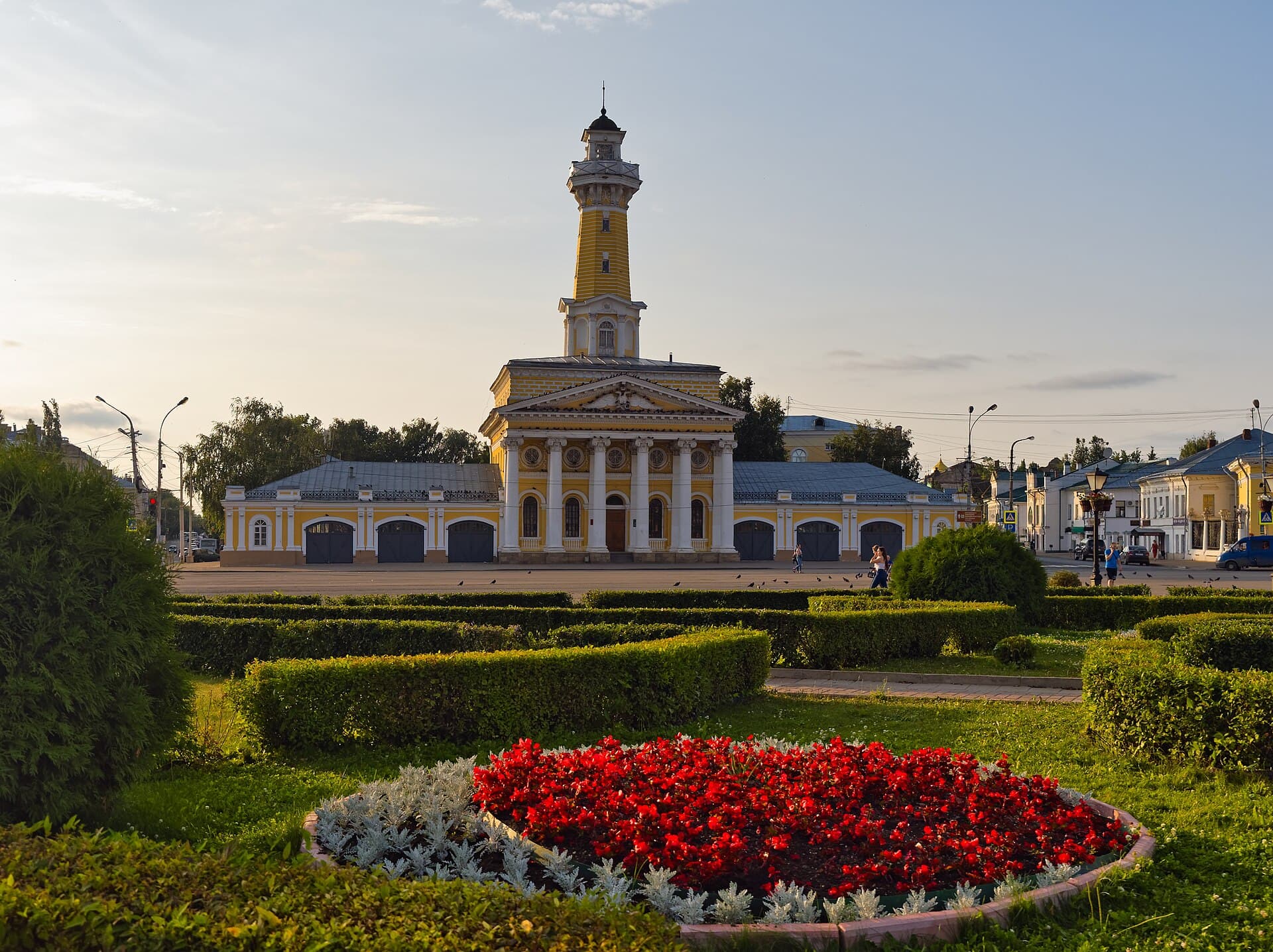 Alexxx1979 / CC BY-SA 4.0, via Wikimedia Commons
Tour de audio autoguiado de Kostroma — ruta GPS a pie, reproducción offline, narración en 32 idiomas.
“Donde la historia imperial y los cuentos de hadas se entrelazan en la curva del Volga.”
No las postales. Las historias que ni los locales conocen — al oído, justo donde ocurrieron.
Los lugareños tienen un apodo bastante 'caliente' para la plaza central de Kostroma.
Antes de la Revolución de 1917, un icono significativo dentro del monasterio sufrió una transformación sorprendente.
Se dice que el singular plano radial de las calles de Kostroma fue inspirado por un gesto casual de una poderosa emperatriz.
Descubre todos los secretos de Kostroma
Cada dirección, cada revelación al completo — a tu oído, justo donde ocurrió.
Eliges tus paradas. Caminas. La voz te revela lo que los demás ignoran.


Tu tour de audioguía por Kostroma te espera — elige tus lugares, tu idioma y empieza al llegar.
ComprarLume incluye una guía de realidad aumentada. Levanta el móvil y su cámara muestra la calle que tienes delante, con una flecha luminosa sobre la imagen real que siempre apunta a tu próxima parada — sin mapas que descifrar, sin giros equivocados. Como todo en Lume, funciona completamente sin conexión.
Kostroma, una ciudad en el Anillo de Oro de Rusia, ofrece un viaje a través de siglos de historia y folclore ruso. Situada en la confluencia de los ríos Volga y Kostroma, aproximadamente a 300-370 kilómetros al noreste de Moscú, ocupa un lugar significativo como la 'cuna de la dinastía Romanov'. Fundada en 1152 por el Príncipe Yury Dolgoruky, Kostroma ha soportado numerosos desafíos, desde invasiones mongolas hasta incendios devastadores, pero ha conservado su distintivo patrimonio arquitectónico y carácter provincial.
La ciudad es una cautivadora mezcla de iglesias antiguas, calles de madera bien conservadas y hileras de comerciantes neoclásicas. Más allá de su importancia histórica, Kostroma también es conocida como la ciudad natal de Snegurochka, la Doncella de Nieve, un personaje querido en los cuentos de hadas rusos y nieta de Ded Moroz (Papá Noel). Los visitantes pueden explorar su profundo pasado, sumergirse en las leyendas locales y descubrir por qué es considerada la 'capital del queso' de Rusia y un importante centro de producción de joyería.
Los orígenes de Kostroma se remontan a 1152, cuando fue fundada por el Príncipe Yury Dolgoruky, también acreditado con la fundación de Moscú. Inicialmente, sirvió como una fortaleza estratégica en la orilla izquierda del río Volga, enfrentando numerosos ataques de enemigos, incluidos los mongoles que saquearon la ciudad en 1238. Después de estas primeras luchas, Kostroma se convirtió en un pequeño principado, en un momento liderado por el Príncipe Vasily de Kostroma, el hermano menor de Alexander Nevsky.
La importancia de la ciudad aumentó a principios del siglo XVII, un período tumultuoso conocido como el Tiempo de los Disturbios. Fue dentro de los muros del Monasterio de Ipatiev en 1613 donde a Mikhail Romanov, entonces un joven boyardo, se le ofreció el trono ruso, marcando el comienzo de la dinastía Romanov de tres siglos de duración. Este evento consolidó el lugar de Kostroma en la historia rusa como la 'cuna de los Romanov'. La familia Romanov mantuvo una conexión especial con la ciudad, visitándola con frecuencia y desempeñando un papel crucial en su desarrollo, incluida la reconstrucción de la Catedral de la Trinidad en 1652.
En el siglo XVII, Kostroma creció hasta convertirse en la cuarta ciudad más grande de Rusia, después de Moscú, Yaroslavl y Kazán, en gran parte debido a su papel como un importante centro comercial y puerto en el Volga. Las conexiones comerciales con mercaderes ingleses y holandeses a través de la Compañía de Moscovia impulsaron aún más su prosperidad. Un gran incendio en 1773 devastó gran parte de la ciudad, pero también allanó el camino para un gran proyecto de reconstrucción. La emperatriz Catalina la Grande encargó la reconstrucción de la ciudad con un plano de calles radial, un diseño urbano del siglo XVIII que aún es evidente hoy, presentando una elegante arquitectura neoclásica provincial. Durante la era soviética, muchas iglesias fueron destruidas, pero Kostroma ha logrado preservar una parte significativa de sus edificios históricos, particularmente en los bloques centrales.
Comience su exploración en Susaninskaya Ploshchad, la plaza central, a menudo llamada 'La Sartén' por los lugareños. Aquí, encontrará la icónica Torre de Bomberos, una obra maestra neoclásica de principios del siglo XIX y un símbolo de la ciudad. Cerca, el Gostiny Dvor de Kostroma ofrece monumentales hileras comerciales de finales del siglo XVIII y principios del XIX, que aún funcionan como un bullicioso centro comercial donde puede encontrar recuerdos locales como lino y sal negra.
Cruce el puente sobre el río Kostroma para llegar al Monasterio de Ipatiev, una extensa fortaleza de piedra blanca considerada la 'cuna de la dinastía Romanov'. Dentro de sus muros, explore la Catedral de la Trinidad de cinco cúpulas con sus intrincados frescos del siglo XVII y su iconostasio dorado, y visite la Casa Boyarda Romanov. Adyacente al monasterio se encuentra Kostromskaya Sloboda, un Museo al aire libre de Arquitectura de Madera. Este atmosférico parque presenta iglesias de madera históricas, cabañas de campesinos y graneros traídos de toda la región, ofreciendo una vívida visión de la vida rural rusa.
Un paseo por el pintoresco Malecón del Río Volga ofrece vistas del majestuoso río y los cruceros, llevando al romántico Mirador de Ostrovsky. Para un toque de folclore, visite la Torre de Snegurochka, la residencia oficial de la Doncella de Nieve. Finalmente, adéntrese en el orgullo culinario de la ciudad en el Museo del Queso, donde podrá aprender sobre las tradiciones locales de elaboración de queso y probar el famoso queso 'Kostromskoy'.
Kostroma experimenta un clima continental templado con cuatro estaciones distintas. La mejor época para visitar para actividades de clima cálido es desde finales de junio hasta mediados de agosto, cuando las temperaturas diurnas promedio oscilan entre unos cómodos 25°C (77°F) en julio y 16-18°C (61-64°F) en junio y agosto. Los veranos son generalmente cálidos y agradables, ideales para paseos a pie y cruceros fluviales, aunque es posible que llueva ocasionalmente. Los inviernos son fríos y nevados, siendo enero el mes más frío, con un promedio de -5°C (23°F) durante el día y bajando a -12°C (10°F) por la noche. Si aprecia los paisajes nevados y la arquitectura cubierta de escarcha, el invierno puede ser una época mágica, pero empaque ropa de invierno abrigada. La primavera y el otoño ofrecen un clima cambiante, con temperaturas suaves en mayo y septiembre, pero rápidamente pasando a condiciones más frías.
La moneda en Rusia es el Rublo Ruso (RR). Los ciudadanos de muchos países, incluidos Estados Unidos y Canadá, requieren una visa de turista para ingresar a Rusia, y es aconsejable verificar los requisitos de visa con mucha antelación. Los viajeros deben llevar sus pasaportes en todo momento. Aunque algunas personas en Rusia hablan inglés, no está tan extendido como en otros países europeos, por lo que conocer algunas frases básicas en ruso puede ser útil.
Kostroma es fácilmente accesible desde Moscú. Puede tomar un tren nocturno o un cómodo viaje en tren que dura aproximadamente 4 horas. Para aquellos que llegan en crucero fluvial, los barcos suelen atracar a lo largo del Volga, cerca del centro histórico de la ciudad. El centro de la ciudad se explora mejor a pie, lo que permite descubrimientos inesperados. La delincuencia en Kostroma generalmente se limita a pequeños robos como carteristas en zonas concurridas, así que tenga precaución como lo haría en cualquier ciudad desconocida. El alojamiento en Kostroma es generalmente más asequible que en ciudades más grandes como Moscú o San Petersburgo, con opciones que van desde hostales hasta hoteles de gama media.
Kostroma en coreano, en chino o en hebreo — y 29 idiomas más, cada parada narrada por una voz nativa. La mayor variedad de idiomas de cualquier audioguía autoguiada.
Disponible en: