Jagmandir Paleis
Dit eilandpaleis in Kishore Sagar Lake herbergt een geheim van koninklijke toevlucht.
Volledig verhaal ontgrendeld in de tour
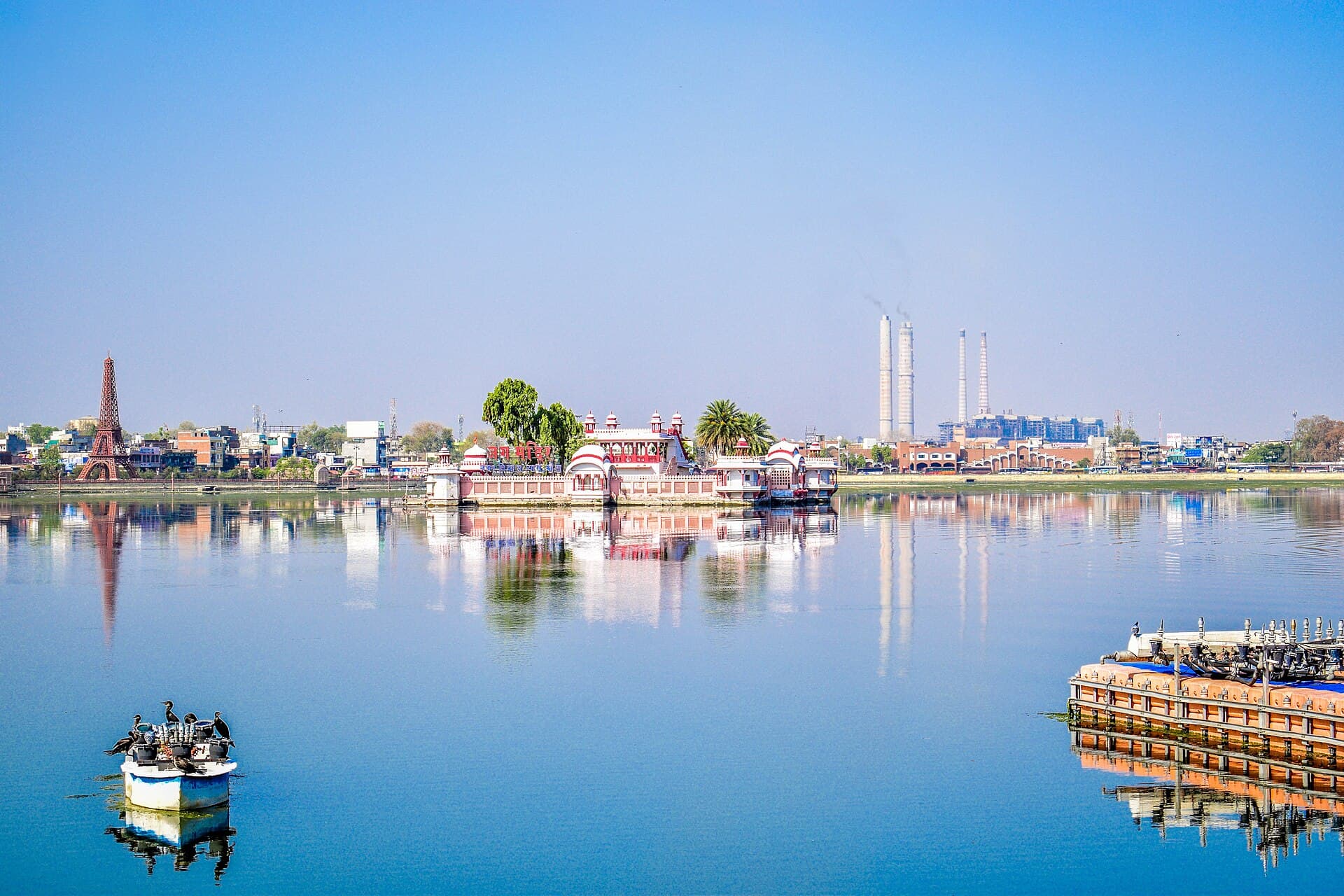 Ipawanc / CC BY-SA 4.0, via Wikimedia Commons
Zelfgeleide audiowandeling door Kota — GPS-route, offline afspelen, meeslepende vertelling in 32 talen.
“Waar geschiedenis stroomt met de Chambal, en elke draad een verhaal vertelt.”
Niet de ansichtkaarten. De verhalen die zelfs locals niet kennen — gefluisterd in je oor, precies waar ze gebeurden.
Dit eilandpaleis in Kishore Sagar Lake herbergt een geheim van koninklijke toevlucht.
Het delicate 'Khat'-patroon van Kota Doria stof draagt een fluistering van zijn oorsprong met zich mee.
Dit serene Shiva-heiligdom biedt een uitzicht dat zo dramatisch is dat het vaak wordt vergeleken met een wereldberoemd natuurwonder.
Ontdek elk geheim van Kota
Elk adres, elke onthulling volledig — in je oor, precies waar het gebeurde.
Jij kiest je stops. Jij wandelt. De stem onthult wat de anderen missen.


Je zelfgeleide audiotour van Kota is klaar — kies je bezienswaardigheden, kies je taal en start zodra je aankomt.
KopenLume heeft een ingebouwde augmented-reality-gids. Houd je telefoon omhoog: de camera toont de straat voor je, met een oplichtende pijl over het echte beeld die altijd naar je volgende stop wijst — geen kaart om uit te puzzelen, geen verkeerde afslagen. Zoals alles in Lume werkt het volledig offline.
Kota, de op twee na grootste stad van Rajasthan, ontvouwt een mix van historische grandeur en natuurlijke pracht langs de Chambal-rivier. Hoewel soms overschaduwd door zijn bekendere Rajasthani tegenhangers, biedt Kota een rustigere, maar even boeiende ervaring voor diegenen die zich willen verdiepen in het diepe erfgoed en de levendige cultuur van de regio. De stad is een belangrijk educatief centrum en trekt studenten uit heel India voor de voorbereiding op competitieve examens.
Naast zijn academische bekendheid, is Kota een stad van versterkte paleizen, ingewikkelde tempels en rustige waterwegen. Het dient als toegangspoort tot de Hadoti-regio, een gebied vol eeuwenoude verhalen. Van zijn kenmerkende architecturale stijl tot zijn traditionele ambachten, Kota nodigt uit tot verkenning en belooft een reis door een minder bekende, maar diep authentieke, uithoek van Rajasthan.
## Van Bundi Buitenpost tot Onafhankelijke Staat De oorsprong van Kota gaat terug tot de 12e eeuw, toen Rao Deva, een Hada Chauhan Rajput-clanleider, het gebied veroverde en Bundi en Hadoti stichtte. Aanvankelijk was Kota een kleiner vorstendom, een landgift (jaghir) van Bundi. Zijn lot veranderde echter dramatisch aan het begin van de 17e eeuw. Tijdens het bewind van de Mughal-keizer Jahangir schonk Rao Ratan Singh van Bundi Kota aan zijn zoon, Madho Singh. Deze daad markeerde een cruciaal moment, aangezien Kota al snel zijn moederstaat overtrof in zowel oppervlakte als inkomsten, en zichzelf in 1631 n.Chr. onder keizer Shah Jahan vestigde als een onafhankelijke politieke entiteit.
Door de eeuwen heen evolueerde Kota van een militaire buitenpost tot een verfijnd cultureel centrum. Het werd bekend om zijn aparte miniatuurschilderschool en zijn formidabele fortificaties. Maharao Bhim Singh speelde een cruciale rol in de geschiedenis van Kota, als de eerste in zijn dynastie die de titel Maharao droeg. Later, in de 18e eeuw, kwam Zalim Singh naar voren als een vooraanstaand diplomaat en staatsman. Tijdens de Britse Raj was Kota een staat met een 17-saluut. Opmerkelijk genoeg, tijdens de Indiase Opstand van 1857, was Kota een van de weinige Rajputana-staten waar Indiase troepen in opstand kwamen, naar verluidt met discrete hulp van de heerser. Na de onafhankelijkheid van India in 1947 tekende de laatste regerende Maharao, Bhim Singh II, het Instrument of Accession, wat leidde tot de integratie van Kota in de moderne staat Rajasthan.
Begin uw verkenning bij het Garh Paleis, ook bekend als het Stadspaleis, een uitgestrekt complex gebouwd in Rajput-architectuurstijl. Dit versterkte paleis, gelegen in het hart van de stad, herbergt het Maharao Madho Singh Museum, dat inzicht biedt in het koninklijke verleden van Kota.
Aangrenzend aan het paleis ligt het Kishore Sagar-meer, een kunstmatig reservoir gebouwd in de 14e eeuw. In het midden ligt het prachtige Jagmandir Paleis, gebouwd tussen 1740 en 1745. Dit paleis van rode zandsteen is per boot bereikbaar en biedt een schilderachtig uitzicht, vooral bij zonsondergang. In de buurt biedt het Seven Wonders Park miniatuurreplica's van wereldwijde bezienswaardigheden zoals de Taj Mahal, de Eiffeltoren en de Grote Piramide, wat zorgt voor een unieke fotomoment.
Voor een ontsnapping in de natuur, bezoek Chambal Garden, een rustige picknickplek aan de oevers van de Chambal-rivier, waar u boottochten kunt maken en mogelijk gharials kunt observeren. Een korte rit van de stad, de Garadia Mahadev Tempel biedt een weids panoramisch uitzicht op de kloof van de Chambal-rivier, een werkelijk ontzagwekkend gezicht.
Vergeet de Kota Barrage niet, een belangrijke dam aan de Chambal-rivier, bekend om zijn krachtige waterstroom en schilderachtige omgeving. Het is een favoriete plek voor avondwandelingen en zonsondergangen.
De ideale tijd om Kota te bezoeken is tijdens de wintermaanden, van oktober tot februari. Gedurende deze periode is het weer koel en aangenaam, met gemiddelde temperaturen tussen 12-30 graden Celsius, wat perfect is voor sightseeing en buitenactiviteiten. Zomers, van maart tot juni, worden gekenmerkt door intense hitte, met temperaturen die vaak boven de 40 graden Celsius uitkomen, wat het minder comfortabel maakt om te reizen. Het moessonseizoen, van juli tot september, brengt matige tot zware regenval, wat soms reisplannen kan verstoren, hoewel de landschappen weelderig en groen zijn.
Kota is goed verbonden over de weg en het spoor. Hoewel Kota een luchthaven heeft, zijn er sinds 1999 geen vluchten meer geweest, dus de dichtstbijzijnde functionerende luchthaven is in Jaipur. Vanaf Jaipur kunt u Kota bereiken per trein, bus of taxi. Binnen de stad zijn auto-riksja's, privé-bussen en fietsriksja's veelvoorkomende vervoersmiddelen. Het is raadzaam om de tarieven te onderhandelen voordat u aan uw reis begint. Voor langere afstanden of een comfortabelere ervaring wordt het huren van een auto of jeep aanbevolen.
Kleed u bescheiden bij het bezoeken van religieuze plaatsen. Neem voldoende water mee, vooral tijdens de warmere maanden, en wees bedacht op apen in bepaalde gebieden, met name bij de Garadia Mahadev Tempel. Voor sommige attracties gelden toegangsprijzen en het is altijd goed om de openingstijden van tevoren te controleren.
Kota — Koreaans, Chinees, Hebreeuws en nog 29 talen, elke stop verteld door een moedertaalspreker. Het grootste taalaanbod van alle zelfgeleide audiotours.
Beschikbaar in: