Salle d'Assemblée du Palais de l'Archevêque
La grandiose Salle d'Assemblée rococo du Palais de l'Archevêque a été le théâtre de moments charnières de l'histoire et de drames cinématographiques.
L'histoire complète se débloque dans le tour
 Herbert Frank from Wien (Vienna), AT / CC BY 2.0, via Wikimedia Commons
Visite audio autoguidée de Kroměříž — parcours GPS à pied, lecture hors ligne, narration en 32 langues.
“Là où l'opulence baroque rencontre la sérénité des jardins, un chef-d'œuvre morave se révèle.”
Pas les cartes postales. Les histoires que même les habitants ignorent — soufflées à l'oreille, là où elles se sont passées.
La grandiose Salle d'Assemblée rococo du Palais de l'Archevêque a été le théâtre de moments charnières de l'histoire et de drames cinématographiques.
Dans les grottes artificielles du château se cache un secret étincelant, un hommage au nom de famille de l'évêque.
Une colonnade apparemment décorative dans le Jardin des Fleurs recèle un but pratique surprenant pour apprécier son design complexe.
Découvrez tous les secrets de Kroměříž
Chaque adresse, chaque révélation en entier — dans ton oreille, là où elle s'est passée.
Tu choisis tes lieux. Tu marches. La voix te révèle ce que les autres ignorent.
Votre visite audioguidée de Kroměříž vous attend — choisissez vos lieux, votre langue, et lancez-vous dès votre arrivée.
AcheterLume intègre un guide en réalité augmentée. Levez votre téléphone : sa caméra montre la rue devant vous, avec une flèche lumineuse posée sur l'image réelle qui pointe toujours vers votre prochain arrêt — aucune carte à déchiffrer, aucun mauvais virage. Comme tout dans Lume, ça fonctionne entièrement hors-ligne.
Kroměříž, souvent surnommée l'« Athènes de la Moravie », est une ville de la région de Zlín en République tchèque, célébrée pour son architecture baroque exceptionnelle et ses vastes jardins. Située sur la rivière Morava, ce site classé au patrimoine mondial de l'UNESCO offre un mélange rare de grand art, de signification historique et d'espaces verts tranquilles. Son centre-ville historique méticuleusement préservé, avec ses maisons à arcades et ses rues pavées, invite à une exploration tranquille, loin de l'agitation des grandes villes européennes.
Pendant des siècles, Kroměříž a servi de résidence d'été aux puissants évêques et archevêques d'Olomouc qui, grâce à leur richesse et leur influence considérables, ont transformé une modeste colonie en un monument de l'ère baroque. Cet héritage est le plus évident dans le Palais de l'Archevêque et ses deux jardins distincts : le Jardin des Fleurs formel et le vaste Jardin du Château de style anglais. Ces sites représentent collectivement un exemple remarquablement intact d'une résidence princière européenne et de son aménagement paysager des XVIIe et XVIIIe siècles.
## D'un village de marché à une puissance ecclésiastique Kroměříž apparaît pour la première fois dans les registres historiques vers 1110, lorsqu'elle fut vendue à l'évêque Jan II d'Olomouc, devenant rapidement un centre névralgique de l'évêché en raison de son emplacement stratégique à un gué de la rivière Morava et au carrefour d'importantes routes commerciales. Au début du XIIIe siècle, elle fut déclarée petite ville, et sous l'évêque Bruno de Schauenburk, elle acquit son tracé actuel, avec des remparts et la construction de l'église gothique Saint-Maurice.
## Les cicatrices de la guerre et la renaissance baroque La prospérité de la ville fut gravement interrompue par la guerre de Trente Ans. En 1643, les armées suédoises pillèrent Kroměříž, ne laissant qu'une fraction de ses maisons intactes, suivie d'une peste dévastatrice et d'un incendie majeur en 1656. Cependant, une nouvelle ère de reconstruction et d'épanouissement artistique commença sous l'évêque Karel II de Liechtenstein-Castelcorn, qui prit les rênes en 1664. Il fut à l'origine de la reconstruction du château, posa les fondations du Jardin des Fleurs élaboré, et agrandit considérablement la galerie d'art et la bibliothèque du château, transformant Kroměříž en une résidence baroque de premier plan.
## Un centre des Lumières et un refuge politique Kroměříž continua de prospérer, devenant la résidence officielle des archevêques d'Olomouc en 1777. Sa prééminence intellectuelle et culturelle lui valut le surnom d'« Athènes de la Moravie ». Un événement historique important se produisit en 1848, lorsque l'assemblée constituante autrichienne, cherchant refuge contre la révolte de Vienne, se réunit au Palais de l'Archevêque. Cette assemblée rédigea la constitution éphémère de Kremsier, visant à l'autonomie culturelle nationale au sein d'une monarchie autrichienne libérale. Aujourd'hui, la ville reste un centre culturel animé, accueillant divers festivals et expositions, tandis que son patrimoine bien préservé continue d'attirer les visiteurs.
Le Palais de l'Archevêque est le point central de Kroměříž, une résidence baroque monumentale qui fut autrefois le cœur politique et culturel des évêques d'Olomouc. À l'intérieur, vous pouvez explorer les somptueuses Salles Représentatives, y compris la Salle d'Assemblée rococo, célèbre pour ses apparitions cinématographiques, et la Salle du Trône. Le palais abrite également l'une des collections d'art les plus importantes d'Europe, présentant des chefs-d'œuvre d'artistes tels que Titien, Van Dyck et Cranach l'Ancien. Montez les 206 marches de la tour du palais pour des vues panoramiques sur la ville et les paysages environnants.
Adjacent au palais se trouve le Jardin du Château (Podzámecká zahrada), un vaste parc de style anglais de 64 hectares avec des arbres exotiques, des plans d'eau et des paons en liberté, offrant un contraste serein avec les aménagements baroques formels. À quelques pas, le Jardin des Fleurs (Květná zahrada) est un triomphe de la géométrie baroque précoce, caractérisé par sa colonnade de 244 mètres, ses labyrinthes taillés avec précision et une rotonde octogonale ornée de fresques et de stucs. Ce jardin est considéré comme un excellent exemple d'architecture de jardin en Europe.
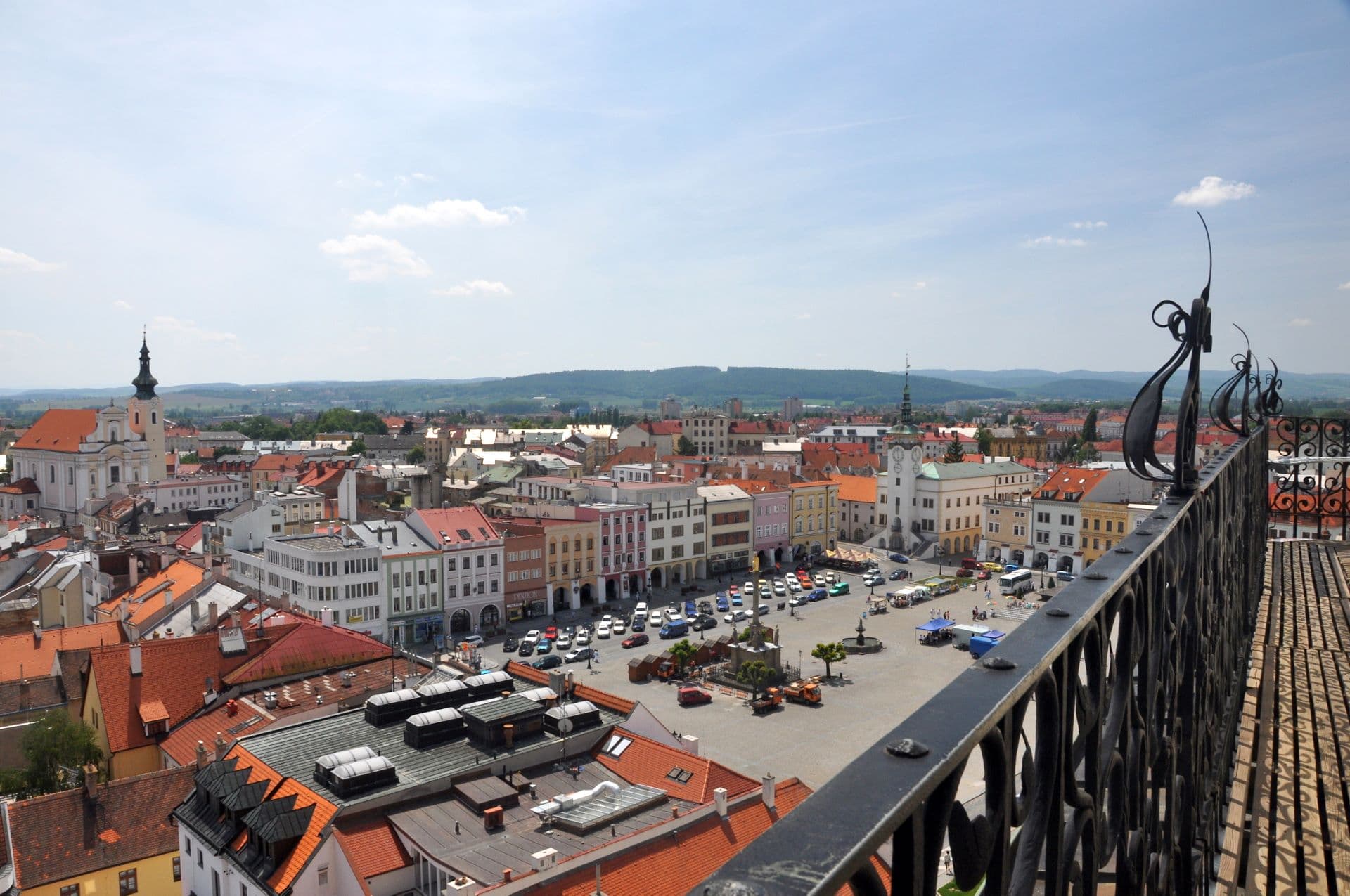
Au-delà des sites classés à l'UNESCO, explorez la Velké Náměstí (Grande Place), l'espace urbain central de la ville, bordée de maisons à arcades et dotée d'une colonne mariale du XVIIe siècle. Parmi les autres sites remarquables, citons la Monnaie de l'Évêque, la dernière monnaie préservée de ce type en Moravie, et la formidable Église gothique Saint-Maurice.
Kroměříž est particulièrement enchanteuse du printemps à l'automne, lorsque ses célèbres jardins sont en pleine floraison. Les mois les plus chauds offrent les meilleures conditions pour explorer les vastes espaces extérieurs du Jardin du Château et du Jardin des Fleurs. L'été apporte également divers événements culturels et festivals sur la place de la ville. Bien que les jardins soient beaux toute l'année, une visite pendant la saison des fleurs maximise l'expérience visuelle.
Kroměříž est facilement accessible à pied, avec un centre historique compact et un terrain plat. La ville est accessible en train et en bus, avec des liaisons directes en bus vers Brno et des correspondances indirectes en train vers Olomouc et Brno. Pour ceux qui conduisent, un parking payant est disponible, y compris un parking souterrain, bien que les places directement devant le Palais de l'Archevêque soient réservées.
La plupart des visites du Palais de l'Archevêque sont en tchèque, mais d'autres langues peuvent souvent être organisées, et des descriptions détaillées sont fournies pour les non-tchécophones. Les billets pour les différents parcours du palais (Salles Représentatives, Sala Terrena, Galerie du Château, Tour) peuvent être achetés en ligne ou à la billetterie. L'entrée au Jardin du Château est généralement gratuite, tandis que le Jardin des Fleurs nécessite un billet. Notez que les vélos, trottinettes et animaux de compagnie ne sont pas autorisés à l'intérieur du château ou de ses jardins. La ville offre un éventail d'options de restauration et d'hébergement, y compris des hôtels sur la place principale.
Kroměříž en coréen, en chinois ou en hébreu — et dans 29 autres langues, chaque étape narrée par une voix native. La plus large gamme de langues de tous les audioguides autoguidés.
Disponible en :