At their peak, the town's waterwheels numbered more than 60 — but the industry they powered vanished almost overnight because of a single invisible enemy in 1884.
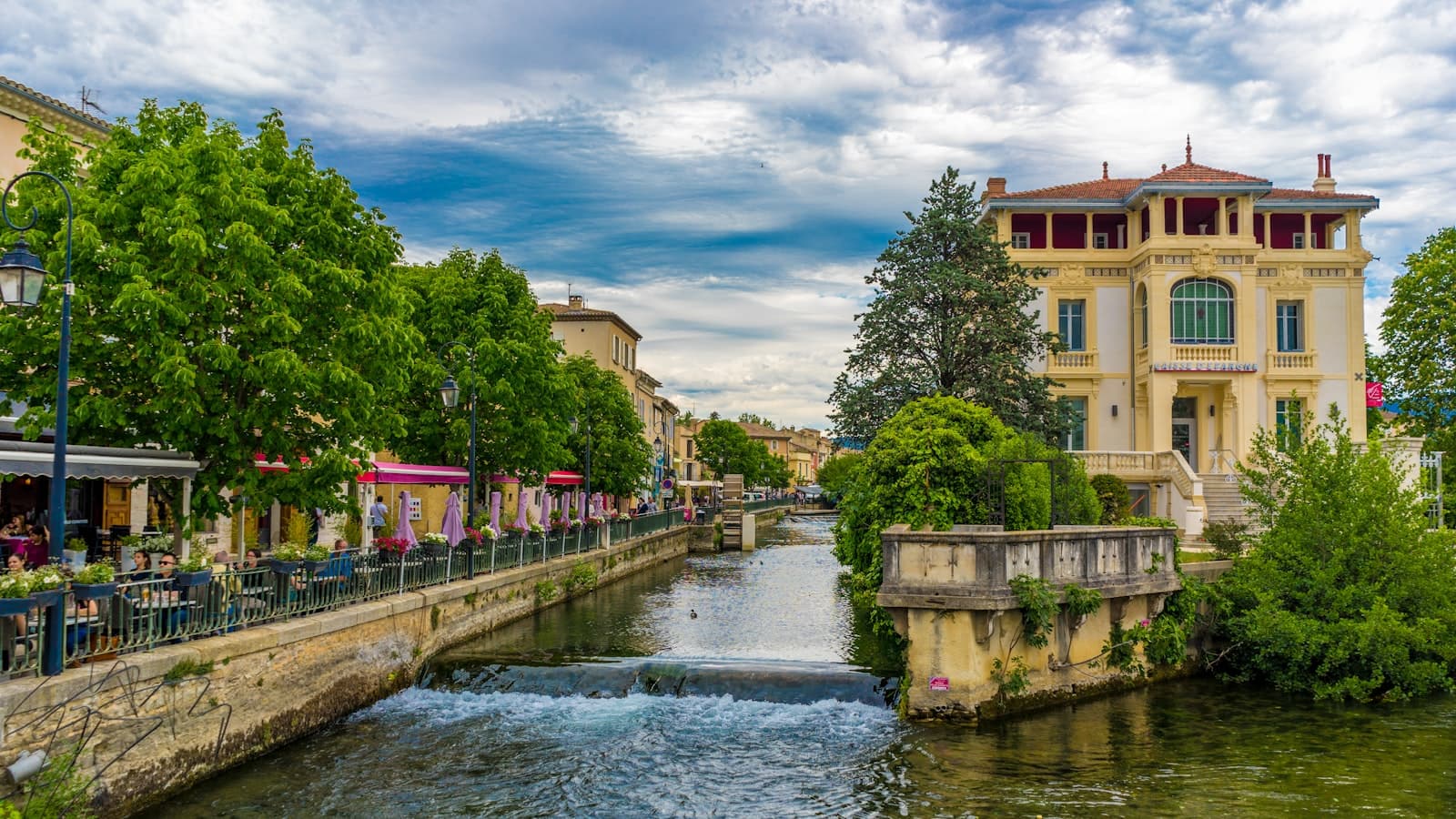
M.Minderhoud / CC BY-SA 3.0, via Wikimedia CommonsL'Isle-sur-la-Sorgue
“Fifteen moss-covered wheels, 300 antique dealers, one river at 13°C all year long.”
L'Isle-sur-la-Sorgue, as no one tells it.
Not the postcards. The stories even locals don't know — whispered in your ear, right where they happened.
Europe's third-largest antiques trade was born on a single August afternoon in 1966 — and the man behind it wasn't an antique dealer at all.
The church's façade looks modest enough. Inside, 222 angels are doing something that has nothing to do with prayer.
Discover every secret of L'Isle-sur-la-Sorgue
Every address, every reveal in full — in your ear, right where it happened.
You pick your stops. You walk. The voice reveals what the others miss.


How long do you have in L'Isle-sur-la-Sorgue?
No tours available yet. Check back soon — we're preparing them.
The story of L'Isle-sur-la-Sorgue
L'Isle-sur-la-Sorgue sits on a cluster of islands formed where the Sorgue river splits into branches just east of Avignon. The name says it plainly: an island on the Sorgue. What it doesn't say is that the water circling the old town runs at a constant 13°C year-round, emerges from one of Europe's most powerful underground springs, and once drove more than 60 moss-draped waterwheels powering silk mills, paper factories, and wool works. Today those wheels still turn — silently, for nobody in particular — while the streets and warehouses around them have filled up with around 300 permanent antique dealers, making this one of the most concentrated markets for antiques and decorative arts in Europe. The Sunday market, stretching through the whole town centre, draws collectors, browsers, and cooks with equal impartiality.
History
The name 'Insula' appears in written records from the 11th century, though excavations in the Bagnoles district between 2012 and 2015 uncovered a Neolithic settlement dating to around 4000 BC. By the mid-13th century, L'Isle was the second-largest town in the Marquisate of Provence after Avignon. The Sorgue served simultaneously as food source and power supply: fishing rights over the entire river from its source to the Rhône were granted by royal privilege in 1237, and up to 100 families still made a living from the river in the 19th century, hauling as many as 15,000 crayfish a day.
From the 13th century onward, wool and then silk mills multiplied along the Sorgue's branches, powered by waterwheels. By the 1840s, a local factory had invented the 'Tapis de l'Isle' — carpets that became so famous they were renamed 'Tapis d'Avignon' after a factory merger in 1927. At peak industrial capacity in the 19th century, 62 wheels operated in the town.
For three centuries, from the mid-15th century to the Revolution, L'Isle was one of only four towns in the Comtat Venaissin where Jews were permitted to live — a papal enclave surrounded by France. Their locked ghetto, or carrière, covered roughly 6,000 m² around what is now the Place de la Juiverie. After the Revolution brought emancipation in 1791, the community dispersed, and the synagogue was demolished in 1856.
On July 23, 1793, during the federalist revolt against the Convention, Republican troops under General Doppet stormed and sacked the town, burning much of it and damaging the synagogue. Eleven residents were subsequently guillotined.
The transformation into an antiques centre began on August 15, 1966, when two local residents, Albert Gassier and René Légier, organised a one-afternoon fair with 14 exhibitors. A radio broadcast the night before drew an unexpectedly large crowd. The rest happened steadily over decades: today L'Isle ranks third in Europe for the antiques trade, behind only the Paris flea markets at Saint-Ouen and London's Portobello Road.
What to See and Do
The waterwheels — Fifteen remain in the canal network, most visible from the ring road around the old town. The largest cluster runs along the Arquet canal. A 90-minute walking tour maps them all; the tourist office provides a free plan.
Collégiale Notre-Dame-des-Anges — The exterior is plain. Inside: gilded altarpieces, canvases by Parrocel and Mignard, and a 15-metre-high main altarpiece populated by 222 sculpted angels escorting the Virgin. The 1648 organ by Charles Royer occupies one chapel. Consecrated in 1672 and classified as a historic monument.
Maison René Char (Hôtel de Campredon) — An 18th-century mansion turned cultural centre and permanent museum dedicated to the poet born here in 1907. Eight halls across 400 m² contain manuscripts, first editions, his library, and works from his personal collection including pieces by Picasso, Braque, and Giacometti.
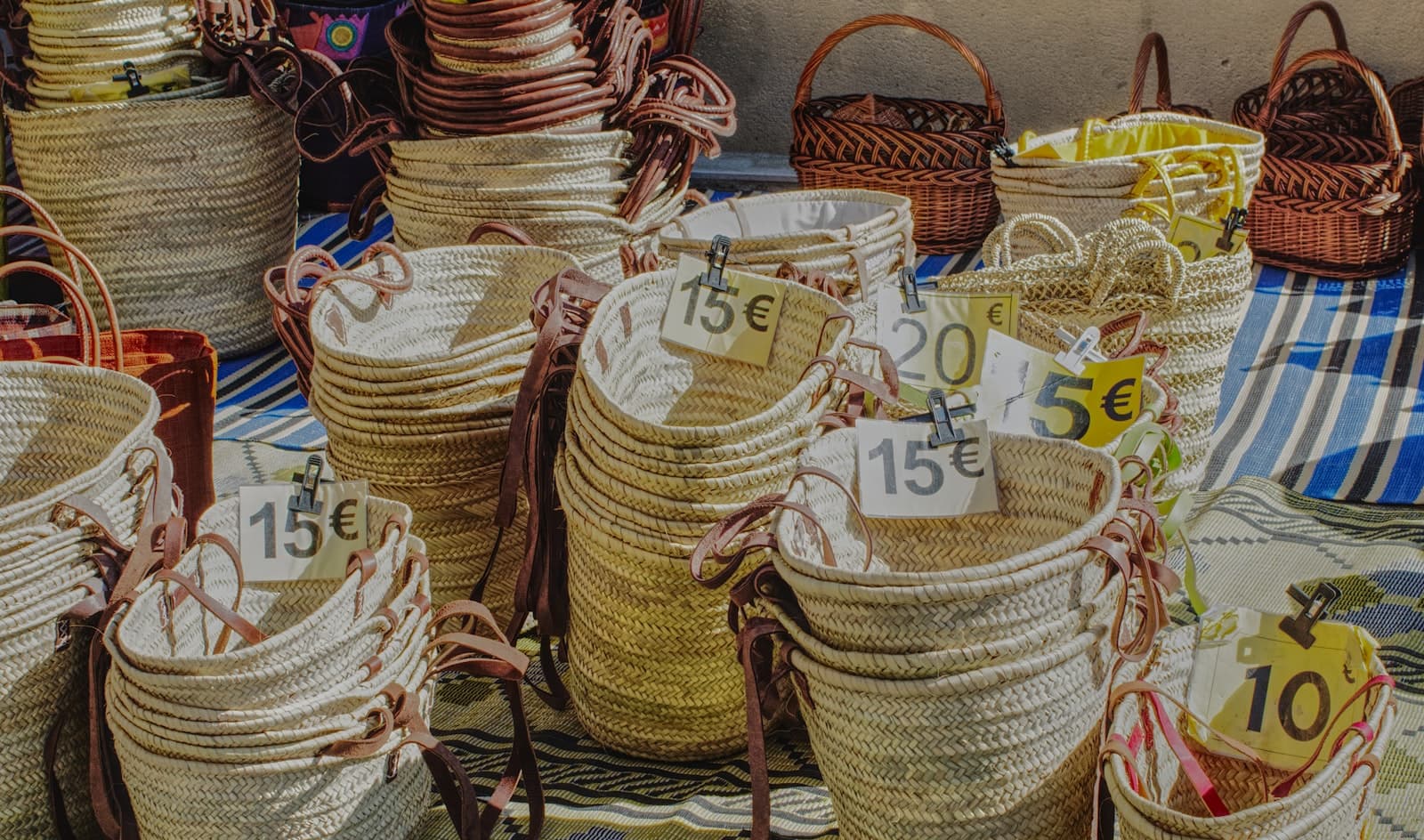
The Sunday market — Runs across the whole town centre every Sunday from early morning to around 1 pm. Two markets in one: the weekly Provençal food-and-produce market (vegetables, olives, lavender products, Moustiers faience) and the permanent brocante/antique stalls open year-round. Thursday also has a smaller morning market.
The Partage des Eaux — A 1.5 km walk upstream from the centre, where the Sorgue divides into its main branches. Picnic ground beside unusually clear, cold water. Worth combining with the watermill walk.
The hospital pharmacy (Hôtel-Dieu) — The 18th-century hospital, designed by architect Jean-Baptiste Franque and opened in 1755, preserves an intact pharmacy with its original fittings and a collection of blue Moustiers faience drug jars. Listed as a historic monument since 1969.
The Chapelle des Pénitents Bleus — Built 1766–1769, currently awaiting restoration. Its polychrome plaster ceilings and high-relief cherub decoration are visible from the street and during occasional cultural openings.
The International Antiques and Brocante Fair — Two major editions yearly: Easter weekend and August 15. More than 450 exhibitors, four themed zones (antiques, brocante, books, 1970s–80s design), over 100,000 visitors.
The Floating Market (Marché Flottant) — First Sunday of August only, 9 am–12:30 pm. Vendors on nego-chin flat-bottom boats sell produce from the river. Ends with the collective singing of the Coupo Santo.
When to Visit
Spring (April–June): The Easter weekend hosts the International Antiques Fair — the largest gathering of the year, with 450+ exhibitors. Temperatures are mild (15–22°C), the market crowds are serious but manageable, and the waterwheels run at full power after winter rains. Easter Sunday is extremely busy; the Thursday and Friday before are quieter for antique browsing.
Summer (July–August): Peak season. The first Sunday of August has the Floating Market; August 15 has the second major antiques fair. July brings the traditional fishing festival (third Sunday). Temperatures can exceed 35°C; the constant 13°C water of the Sorgue provides relief along the canal edges. Arrive before 8 am on Sunday market days — parking fills quickly.
Autumn (September–October): Crowds thin significantly after mid-August. The Sunday market continues, antique dealers remain open, and the light over the Sorgue at this time is exceptional. Best season for unhurried visits.
Winter (November–March): Quieter but not closed. Permanent antique galleries operate Thursday and Sunday. The waterwheels run well, and the town's canal character is easier to appreciate without crowds. The Collégiale and Maison René Char are open through winter.
Practical Information
Getting there: Direct train from Avignon-Centre (TER, SNCF) — approximately 25–36 minutes, trains run roughly 12 times a day. The station is a 10-minute walk from the town centre. By car: 23 km east of Avignon on the D900; take the ring road to find parking on the outskirts.
Parking: Paid and free spaces exist around the ring road circling the old town. On Sunday market days and during the two major fairs, arrive before 8 am or use the train. The town centre itself is largely pedestrianised.
Market days: Sunday (main market, 6 am–2 pm; antique galleries open all day) and Thursday (smaller market, 8 am–noon).
Antique galleries: Most open Thursday–Sunday, some daily. Over 300 dealers are permanently established; independent galleries also operate in former warehouses (called 'villages d'antiquaires') on the main avenues.
Maison René Char: Open year-round, check current hours at the tourist office or official municipal website.
Hospital pharmacy (Hôtel-Dieu): Visits by appointment or guided tour; contact the tourist office.
Language: French-speaking town with some English spoken in antique galleries catering to international buyers. Provençal place names and festival terminology are still widely used locally.
Budget: No entry fee to walk the town, see the waterwheels, or visit the Collégiale. The Maison René Char and Hôtel-Dieu have modest admission fees. The antiques market is free to browse.
- How do I get from Avignon to L'Isle-sur-la-Sorgue?
- The TER regional train from Avignon-Centre station takes 25 to 36 minutes and costs from around €7–10. There are roughly 12 services per day. The station in L'Isle is about a 10-minute walk from the old town centre. On Sunday market days, the train is strongly recommended — parking in town fills before 8 am.
- Is the Sunday market only antiques, or is there also food?
- Both run simultaneously. The Sunday market has two components: a Provençal food-and-produce market (vegetables, fruit, bread, cheese, flowers, local crafts, Moustiers faience pottery) and the permanent antique and brocante stalls operated by the 300+ dealers who have shops open year-round. The food vendors typically pack up after 1 pm; antique galleries stay open longer.
- When is the best time to visit to avoid the biggest crowds?
- Autumn (September and October) offers the fullest experience with the fewest visitors. All antique galleries remain open, the Sunday market runs as normal, and the Sorgue's canal light in autumn is particularly good. If you want to see the International Antiques Fair, Easter weekend and August 15 are the two dates — expect 100,000+ visitors over each event, arrive very early or by train.
- Can I visit the Maison René Char even if I don't know his poetry?
- Yes. The eight exhibition halls cover his biography (born here in 1907, Surrealist poet turned Resistance commander), his friendships with Picasso, Braque, Giacometti, Camus, and Heidegger, and display his manuscripts and personal library. The building itself — the 1746 Hôtel de Campredon — is one of the most elegant interiors in town. No prior knowledge needed.
- What is the Floating Market, and do I need to book in advance?
- The Marché Flottant takes place once a year on the first Sunday of August, from 9 am to 12:30 pm. Vendors sell fresh produce from traditional flat-bottomed nego-chin boats on a branch of the Sorgue facing the public garden. No booking is required — it is free to watch and buy from the banks. Arrive before 9 am for the best position along the riverbank; the crowd grows quickly.
- Are the waterwheels still working, and where can I see the most of them?
- Fifteen of the original 62 wheels remain and continue to turn with the flow of the Sorgue, though they no longer power anything. The largest visible cluster runs along the Arquet canal, easily reached on foot from the town centre. The tourist office provides a free walking-tour map identifying 15 wheels in the town centre; the full loop takes about 90 minutes.