El Museo Internacional de Relojería (MIH)
El museo alberga una colección extraordinaria, pero su fundación misma fue un regalo de una familia cuyo nombre es sinónimo de tiempo.
La historia completa se desbloquea en el tour
 MadGeographer / Public domain, via Wikimedia Commons
Tour de audio autoguiado de La Chaux-de-Fonds — ruta GPS a pie, reproducción offline, narración en 32 idiomas.
“Donde el tiempo se mide en movimientos, y los movimientos dan forma a una ciudad.”
No las postales. Las historias que ni los locales conocen — al oído, justo donde ocurrieron.
El museo alberga una colección extraordinaria, pero su fundación misma fue un regalo de una familia cuyo nombre es sinónimo de tiempo.
Esta ciudad suiza, en lo alto de las montañas del Jura, fue reconstruida con una visión radical después de un evento devastador, creando un plan urbano como ningún otro en Suiza.
En una histórica casa de campo que ahora sirve cocina local, podrías encontrar un artefacto sorprendente del pasado de la región.
Descubre todos los secretos de La Chaux-de-Fonds
Cada dirección, cada revelación al completo — a tu oído, justo donde ocurrió.
Eliges tus paradas. Caminas. La voz te revela lo que los demás ignoran.


Tu tour de audioguía por La Chaux-de-Fonds te espera — elige tus lugares, tu idioma y empieza al llegar.
ComprarLume incluye una guía de realidad aumentada. Levanta el móvil y su cámara muestra la calle que tienes delante, con una flecha luminosa sobre la imagen real que siempre apunta a tu próxima parada — sin mapas que descifrar, sin giros equivocados. Como todo en Lume, funciona completamente sin conexión.
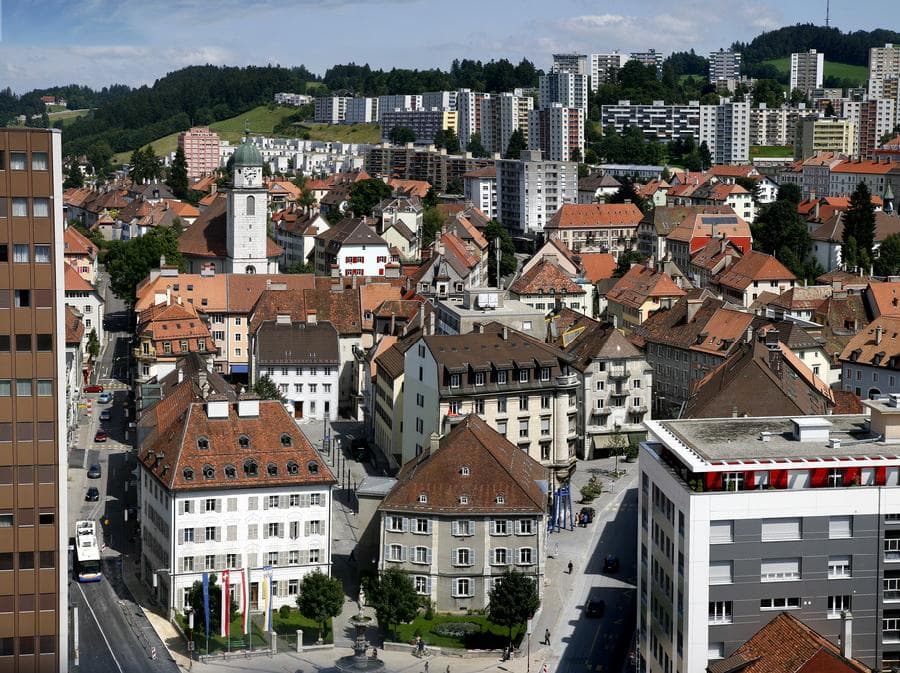
La Chaux-de-Fonds, una ciudad en el cantón suizo de Neuchâtel, se encuentra a una altitud de 992 metros en las montañas del Jura, a pocos kilómetros al sur de la frontera francesa. Es la quinta ciudad más grande de la parte francófona de Suiza. La identidad de la ciudad está inextricablemente ligada a la relojería, una industria que ha dado forma a su tejido urbano y le ha valido reconocimiento internacional.
En 2009, La Chaux-de-Fonds, junto con su ciudad vecina Le Locle, fue galardonada conjuntamente con el estatus de Patrimonio Mundial de la UNESCO. Esta designación reconoce su valor universal excepcional como ciudades manufactureras monoindustriales, donde la planificación y los edificios reflejan la organización racional necesaria para los artesanos relojeros. El diseño único de la ciudad, una respuesta directa a su herencia industrial, la convierte en un destino fascinante para aquellos interesados en la planificación urbana, la arquitectura y el intrincado mundo de la horología.
El área alrededor de La Chaux-de-Fonds fue habitada por primera vez hace aproximadamente 10,000 años durante el período Mesolítico, con rastros encontrados en cuevas cercanas. La región fue colonizada desde Val-de-Ruz a mediados del siglo XIV, y La Chaux-de-Fonds se menciona por primera vez en 1350 como "la Chaz de Fonz", probablemente refiriéndose a una meseta árida y conectándola con Fontaines en Val-de-Ruz. Inicialmente, sirvió como pastos de verano para el ganado de los valles vecinos, con chozas temporales que gradualmente dieron paso a viviendas permanentes. A principios del siglo XVI, se había formado una comunidad, convirtiéndose en una parroquia independiente en 1656.
La verdadera transformación de La Chaux-de-Fonds comenzó con la llegada de la relojería en el siglo XVII. Este oficio se adaptaba perfectamente a las condiciones locales, requiriendo persistencia y siendo independiente del clima. El crecimiento y la prosperidad de la ciudad quedaron principalmente ligados a esta industria. Sin embargo, un devastador incendio en 1794 destruyó tres cuartas partes del pueblo. Esta tragedia condujo a un rediseño urbano único, con la ciudad reconstruida según un plan de calles en cuadrícula, un concepto que fue innovador y sigue siendo distintivo entre las ciudades suizas. Este plan presentaba calles anchas y rectas orientadas para proporcionar a los talleres de los relojeros la máxima luz natural, con talleres a menudo ubicados en los pisos superiores con grandes ventanas orientadas al sur.
A principios del siglo XX, La Chaux-de-Fonds, junto con Le Locle, producía aproximadamente la mitad de los relojes del mundo. La ciudad se convirtió en un centro para renombradas empresas relojeras, incluyendo Breitling, Ebel, Corum, Girard-Perregaux, Omega y Tissot. También es el lugar de nacimiento de varias figuras notables, como el arquitecto Le Corbusier (Charles-Édouard Jeanneret), el pionero del automóvil Louis Chevrolet y el escritor Blaise Cendrars. La ciudad también es reconocida como un centro de arquitectura Art Nouveau, con su forma local conocida como "Style Sapin".
La herencia relojera de la ciudad se explora mejor en el Musée International d'Horlogerie (MIH), el Museo Internacional de Relojería. Este museo exhibe más de 4,000 artículos, desde relojes de sol hasta relojes atómicos, ilustrando la historia completa de la medición del tiempo. Más allá de las exposiciones, el museo también restaura y conserva magistralmente relojes. Para una comprensión más profunda de la planificación urbana única de la ciudad, visite el Espace de l'Urbanisme horloger, que explica cómo la ciudad fue construida por y para la relojería.
La Chaux-de-Fonds es también un sitio significativo para los entusiastas de la arquitectura, particularmente por las obras de su famoso nativo, Le Corbusier. Puede visitar sus primeras creaciones, como la Maison Blanche, construida para sus padres en 1912, y la Villa Turque (1916/17). La ciudad misma es un museo al aire libre de Art Nouveau, con numerosos edificios que muestran este estilo distintivo, conocido localmente como "Style Sapin".
Para un cambio de ritmo, el MUZOO – El Zoo Bois du Petit-Château combina un museo de historia natural con un zoológico, ofreciendo exhibiciones de animales y colecciones de mamíferos. Las montañas del Jura circundantes también ofrecen oportunidades para practicar senderismo y ciclismo.
La mejor época para visitar La Chaux-de-Fonds para actividades de clima cálido es desde principios de julio hasta finales de agosto. Durante estos meses, las temperaturas diurnas promedio alcanzan unos cómodos 24°C (75°F) en julio, con noches alrededor de 13°C (55°F). Si bien los veranos son suaves y agradables, las precipitaciones ocurren regularmente durante todo el año, por lo que es aconsejable llevar un paraguas o ropa impermeable. Los inviernos son frescos, siendo enero el mes más frío, con un promedio de alrededor de 1.3°C (34°F) durante el día y bajando por debajo de cero por la noche.
La Chaux-de-Fonds es fácilmente accesible en transporte público, vehículo privado u opciones de movilidad suave. La ciudad está conectada a la red ferroviaria suiza (CFF, BLS, CJ) y tiene varias estaciones de tren, con la estación central ubicada en el centro de la ciudad. Ciudades vecinas como Neuchâtel y Biel/Bienne son fácilmente accesibles en tren. La red de autobuses urbanos, operada por transN, ofrece un servicio frecuente en toda la ciudad, con autobuses que pasan cada 10 minutos, e incluso cada 5 minutos entre la estación de tren y la Tour Espacité. La organización compacta de la ciudad y la infraestructura de transporte público significan que la mayoría de las áreas clave, incluidos sitios culturales, tiendas y parques, se pueden alcanzar en 15 minutos a pie, en bicicleta o en transporte público. Para aquellos que llegan en coche, hay grandes aparcamientos disponibles en el centro de la ciudad.
La Chaux-de-Fonds en coreano, en chino o en hebreo — y 29 idiomas más, cada parada narrada por una voz nativa. La mayor variedad de idiomas de cualquier audioguía autoguiada.
Disponible en: