De Heksenmarkt (Mercado de las Brujas)
Tussen de kraampjes die kruiden en amuletten verkopen, zie je een bijzonder item dat essentieel wordt geacht voor nieuwe constructies.
Volledig verhaal ontgrendeld in de tour
 Parallelepiped09 / CC BY-SA 4.0, via Wikimedia Commons
Zelfgeleide audiowandeling door La Paz — GPS-route, offline afspelen, meeslepende vertelling in 32 talen.
“Waar Andespieken stedelijke energie ontmoeten, tart La Paz de zwaartekracht en verwachtingen.”
Niet de ansichtkaarten. De verhalen die zelfs locals niet kennen — gefluisterd in je oor, precies waar ze gebeurden.
Tussen de kraampjes die kruiden en amuletten verkopen, zie je een bijzonder item dat essentieel wordt geacht voor nieuwe constructies.
Dit is niet zomaar een toeristische attractie; het is een essentieel onderdeel van het dagelijks leven, en het is verrassend betaalbaar.
U kunt verklede personages tegenkomen die het verkeer regelen, en ze zijn er niet alleen voor de show.
Ontdek elk geheim van La Paz
Elk adres, elke onthulling volledig — in je oor, precies waar het gebeurde.
Jij kiest je stops. Jij wandelt. De stem onthult wat de anderen missen.


Je zelfgeleide audiotour van La Paz is klaar — kies je bezienswaardigheden, kies je taal en start zodra je aankomt.
KopenLume heeft een ingebouwde augmented-reality-gids. Houd je telefoon omhoog: de camera toont de straat voor je, met een oplichtende pijl over het echte beeld die altijd naar je volgende stop wijst — geen kaart om uit te puzzelen, geen verkeerde afslagen. Zoals alles in Lume werkt het volledig offline.
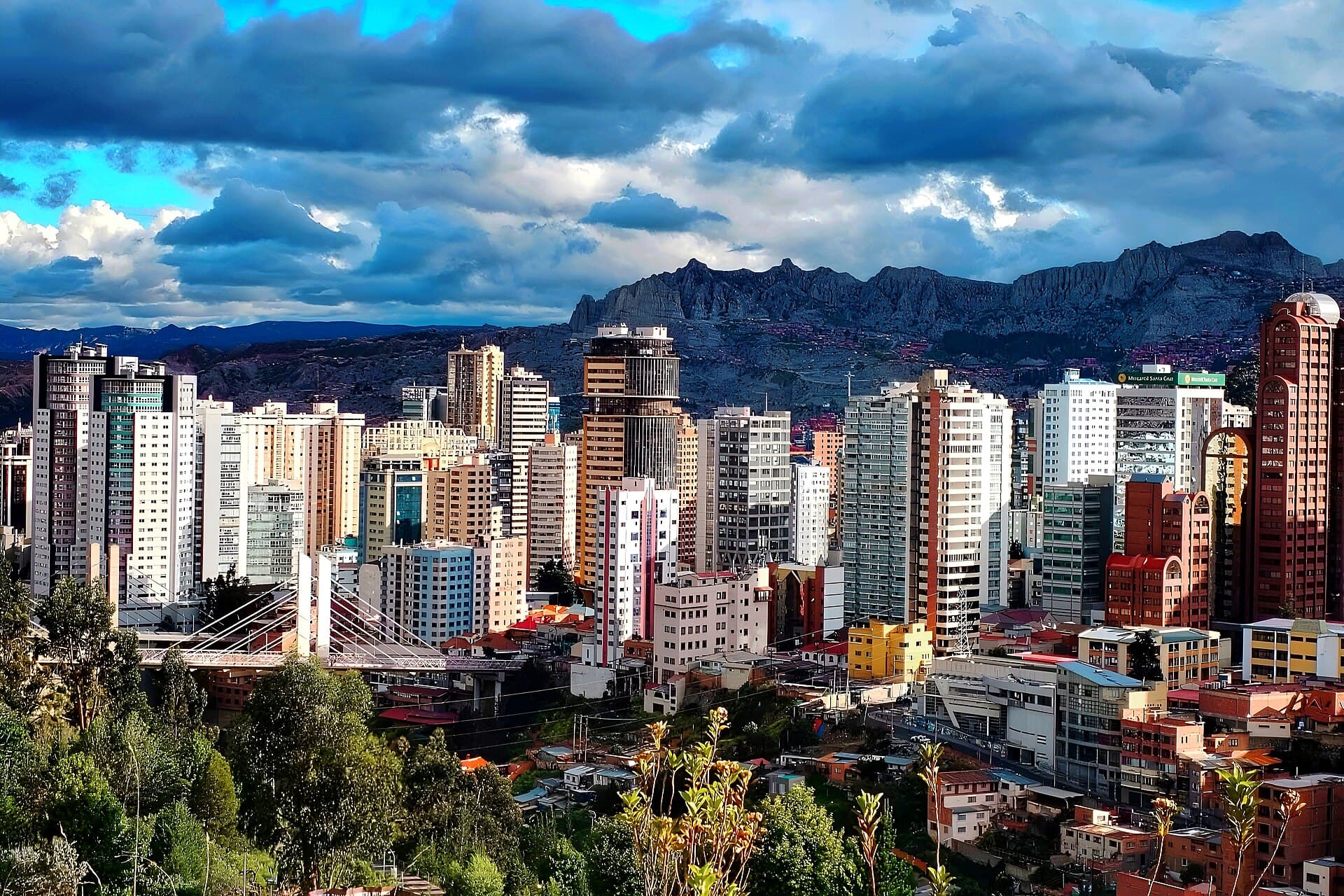
La Paz, officieel Nuestra Señora de La Paz, is de administratieve hoofdstad van Bolivia, een stad die werkelijk de wolken raakt. Het beslaat een kloof uitgesleten door de Choqueyapu-rivier, verspreid over hoogtes van ongeveer 3.250 tot 4.100 meter boven zeeniveau. Dit maakt het de hoogste administratieve hoofdstad ter wereld. De dramatische topografie biedt grandioze uitzichten op de unieke indeling van de stad, met de drievoudige, met sneeuw bedekte Illimani-berg vaak zichtbaar op de achtergrond.
Deze stad is een boeiende mix van de inheemse Aymara-cultuur en Spaans koloniaal erfgoed, zichtbaar in de actieve markten, historische pleinen en diverse architectuur. Van moderne wolkenkrabbers tot de geïmproviseerde bakstenen huizen die zich aan de heuvels vastklampen, La Paz presenteert een opvallend visueel verhaal. De energieke sfeer en het onderscheidende karakter maken het een essentiële stop voor reizigers die op zoek zijn naar een meeslepende Zuid-Amerikaanse ervaring.
Het gebied dat nu bekend staat als La Paz heeft een geschiedenis die teruggaat tot de pre-Spaanse periode, met bewijs dat suggereert dat de Tiwanacota's (of Tiahuanacota's) cultuur, mogelijk van Aymara-etniciteit, de regio al in 1500 voor Christus bewoonde. Deze geavanceerde beschaving, bekend om zijn landbouw-, navigatie- en bouwtechnieken, breidde zijn invloed uit over de regio rond het Titicacameer en in de vallei van de Choqueyapu-rivier.
La Paz werd op 20 oktober 1548 gesticht door de Spaanse conquistador kapitein Alonso de Mendoza. Oorspronkelijk gevestigd in de Inca-nederzetting Laja, werd het al snel verplaatst naar de huidige locatie in de Chuquiago Marka-vallei, wat betere bescherming en toegang tot goud in de rivier bood. De stad kreeg oorspronkelijk de naam Nuestra Señora de La Paz (Onze Lieve Vrouw van Vrede) ter herdenking van het herstel van de vrede na een opstand onder Spaanse conquistadores. Juan Gutierrez Paniagua kreeg in 1549 de taak om het stadsplan te ontwerpen, waarbij Plaza Murillo werd gekozen als locatie voor overheidsgebouwen en de Metropolitaanse Kathedraal.
Onder Spaans koloniaal bewind werd La Paz een belangrijk commercieel centrum, strategisch gelegen aan de handelsroute die de zilverproducerende mijnen van Potosí en Oruro verbond met Lima. De stad kende talloze opstanden gedurende zijn koloniale geschiedenis, waaronder een beleg van zes maanden door de inheemse leider Túpac Katari in 1781. De strijd voor onafhankelijkheid van Spaans bewind intensiveerde, waarbij Pedro Domingo Murillo op 16 juli 1809 een revolutie ontketende in La Paz, een cruciaal moment in de Zuid-Amerikaanse Onafhankelijkheidsoorlogen.
Nadat Bolivia in 1825 onafhankelijk werd, werd La Paz kortstondig hernoemd tot La Paz de Ayacucho ter herdenking van een beslissende slag. Hoewel Sucre de constitutionele hoofdstad blijft en de zetel van het Hooggerechtshof huisvest, werd La Paz in 1898 de de facto administratieve hoofdstad en de zetel van de uitvoerende en wetgevende takken van de regering. De 20e eeuw zag La Paz uitgroeien tot het belangrijkste stedelijke centrum van Bolivia, met aanzienlijke infrastructuurontwikkeling en een groeiende bevolking. Vandaag de dag is het een belangrijk politiek, administratief, economisch en cultureel centrum van Bolivia.
De meest iconische manier om La Paz te ervaren is door Mi Teleférico te nemen, het langste en hoogste stedelijke kabelbaannetwerk ter wereld. Met meerdere kleurgecodeerde lijnen biedt het ongeëvenaarde panoramische uitzichten op het dramatische landschap van de stad en de omliggende Andespieken.
Daal af naar het hart van La Paz om de Mercado de las Brujas, of Heksenmarkt, te verkennen, waar Aymara-verkopers traditionele remedies, amuletten en offers voor Pachamama verkopen. Verken in de buurt de levendige Rodriguez Straatmarkt voor een voorproefje van het lokale leven.
Voor een glimp van het koloniale verleden van de stad, bezoek Plaza Murillo, de thuisbasis van de Metropolitaanse Kathedraal, het Regeringspaleis en de Wetgevende Vergadering. Verken Calle Jaén, een smalle, pittoreske straat met goed bewaarde koloniale gebouwen en verschillende kleine musea.
Op korte afstand van de stad biedt het Valle de la Luna (Maanvallei) een buitenaards landschap van geërodeerde kleispirits en formaties, perfect voor een unieke wandeling. Overweeg als alternatief een dagtocht naar de oude archeologische site van Tiwanaku, een belangrijke pre-Inca beschaving.
Het droge seizoen, van mei tot oktober, wordt over het algemeen beschouwd als de beste tijd om La Paz te bezoeken. Gedurende deze maanden is het weer koeler en droger met heldere luchten, ideaal om de stad en de omliggende hooggelegen gebieden te verkennen. Hoewel de nachten koud kunnen zijn, zijn de dagtemperaturen mild. De overgangsmaanden april en november bieden ook mild weer en minder drukte. Het regenseizoen, van december tot februari, brengt een grotere kans op middagbuien, maar ook levendige festivals.
La Paz ligt op extreem grote hoogte (ongeveer 3.650 meter of 11.975 voet), dus acclimatiseren is cruciaal. Doe het rustig aan, drink veel water en cocathee, en vermijd zware maaltijden en alcohol tijdens uw eerste paar dagen. El Alto International Airport ligt nog hoger, op meer dan 4.000 meter, dus wees voorbereid op onmiddellijke effecten bij aankomst.
Reizen door La Paz is efficiënt met het Mi Teleférico kabelbaannetwerk, dat betaalbaar is en uitstekende uitzichten biedt. Gebruik voor kortere afstanden geregistreerde radiotaxi's of ritdeel-apps, en spreek altijd vooraf een tarief af, aangezien meters niet gebruikelijk zijn. De veiligheid is over het algemeen goed in de belangrijkste toeristische gebieden gedurende de dag, maar het is raadzaam om na donker betrouwbaar vervoer te gebruiken en op uw bezittingen te letten in drukke markten en kabelbanen.
Contant geld (Boliviano) heeft de voorkeur, en het is handig om kleinere coupures te hebben. Geldautomaten zijn beschikbaar, maar het is het veiligst om die in banken te gebruiken.
La Paz — Koreaans, Chinees, Hebreeuws en nog 29 talen, elke stop verteld door een moedertaalspreker. Het grootste taalaanbod van alle zelfgeleide audiotours.
Beschikbaar in: