Komodo International Airport (LBJ)
Het ontwerp van de luchthaven integreert subtiel lokale cultuur, meer dan alleen de naamgever.
Volledig verhaal ontgrendeld in de tour
 Tiket2 / CC BY 2.0, via Wikimedia Commons
Zelfgeleide audiowandeling door Labuan Bajo — GPS-route, offline afspelen, meeslepende vertelling in 32 talen.
“Waar oude draken rondzwerven en turquoise wateren roepen.”
Niet de ansichtkaarten. De verhalen die zelfs locals niet kennen — gefluisterd in je oor, precies waar ze gebeurden.
Het ontwerp van de luchthaven integreert subtiel lokale cultuur, meer dan alleen de naamgever.
Een van de meest iconische eilanden van Komodo Nationaal Park, Padar, heeft een verrassende afwezigheid gezien de nabijheid.
U kunt verrassend hands-on aan de slag met een van de traditionele industrieën van Labuan Bajo.
Ontdek elk geheim van Labuan Bajo
Elk adres, elke onthulling volledig — in je oor, precies waar het gebeurde.
Jij kiest je stops. Jij wandelt. De stem onthult wat de anderen missen.


Je zelfgeleide audiotour van Labuan Bajo is klaar — kies je bezienswaardigheden, kies je taal en start zodra je aankomt.
KopenLume heeft een ingebouwde augmented-reality-gids. Houd je telefoon omhoog: de camera toont de straat voor je, met een oplichtende pijl over het echte beeld die altijd naar je volgende stop wijst — geen kaart om uit te puzzelen, geen verkeerde afslagen. Zoals alles in Lume werkt het volledig offline.
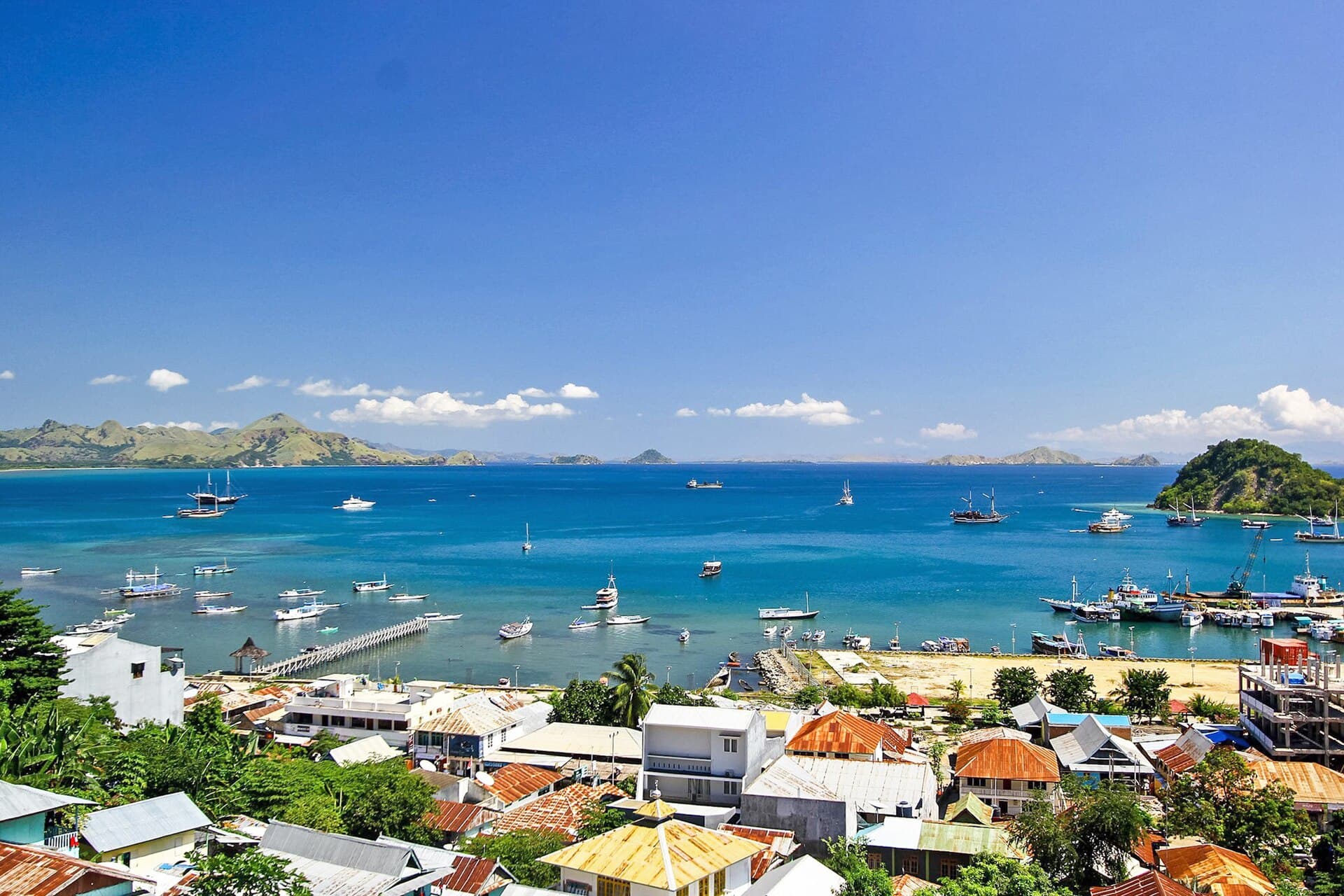
Labuan Bajo, een levendige havenstad aan de westelijke rand van het eiland Flores in Oost-Nusa Tenggara, Indonesië, dient als de primaire toegangspoort tot het gevierde Komodo Nationaal Park. Ooit een rustig vissersdorp, is het snel getransformeerd tot een dynamische reisbestemming, die elk jaar honderdduizenden bezoekers trekt met zijn dramatische terrein, helderblauwe wateren en zeldzame wilde dieren. De stad zelf, hoewel compact en gemakkelijk te voet te doorkruisen, fungeert als een lanceerplatform voor excursies naar de omliggende eilanden, waar prehistorische Komodo-varanen zwerven en uitzonderlijke duikmogelijkheden wachten.
Naast zijn functie als doorvoerhaven, biedt Labuan Bajo een boeiende mix van natuurlijke pracht en cultureel inzicht. De strategische ligging van de stad, versterkt door een verspreiding van kleine, onbewoonde eilanden, creëert een schilderachtige haven en een veilige omgeving voor bezoekers. De Indonesische regering heeft Labuan Bajo erkend als een van zijn "10 Nieuwe Bali's" en "vijf toeristische bestemmingen met superprioriteit", wat aanzienlijke infrastructuurontwikkelingen stimuleert, waaronder nieuwe accommodaties, eetgelegenheden en verbeterde luchthavenfaciliteiten. Deze uitbreiding beoogt moderne gemakken in evenwicht te brengen met het behoud van lokale gebruiken en de opvallende natuurlijke omgeving die Labuan Bajo tot een unieke bestemming maken.
De oorsprong van Labuan Bajo is diep geworteld in zijn maritieme erfgoed. De naam van de stad zelf, wat "Haven van het Bajo Volk" betekent, verwijst naar de vroegste bewoners: de Bajo-etnische groep, ook bekend als "Zeenomaden". Deze bekwame zeevaarders, die tussen de 15e en 19e eeuw vanuit Sulawesi migreerden, vestigden kustnederzettingen, aanvankelijk wonend op boten of in paalwoningen boven ondiepe riffen en baaien. Hun economie draaide om de zee, met visserij, parelduiken en het verzamelen van zeekomkommers (trepang) als belangrijkste beroepen, die zeer gewaardeerd werden in de regionale handel.
Geografisch gezien bood de natuurlijke haven van Labuan Bajo, beschut door talrijke kleine eilanden, een ideaal toevluchtsoord voor schepen tegen stormen en sterke stromingen, waardoor het een cruciaal handelspunt werd tussen maritieme handelaren, met name de Bugis uit Sulawesi, en de inheemse Manggarai-bevolking van het binnenland van Flores. Deze interactie bevorderde een "smeltkroes"-cultuur, waarbij de tradities van moslimzeenomaden werden vermengd met de gebruiken van de lokale Manggarai.
Hoewel Labuan Bajo vanaf de 17e eeuw functioneerde als een kleine haven onder invloed van het Sultanaat Bima, bleef het tot het einde van de 20e eeuw relatief onbekend voor de buitenwereld. Een cruciaal moment kwam in 1910 toen een Nederlandse koloniale luitenant, na lokale verhalen over "landkrokodillen" te hebben gehoord, de eerste foto en huid van de gigantische hagedis naar een zoölogisch museum op Java stuurde, wat wetenschappelijke interesse in de regio wekte. Deze ontdekking, en het daaropvolgende onderzoek door wetenschappers als W. Douglas Burden in de jaren 1920 en de Amerikaanse wetenschapper Walter Auffenberg eind jaren 1960, legde de basis voor de oprichting van het Komodo Nationaal Park in 1980.
De aanwijzing van het park als UNESCO Werelderfgoed in 1991 markeerde een keerpunt, waarbij de economie van Labuan Bajo van traditionele visserij werd geheroriënteerd naar de horeca- en duiktoerisme-industrie. In 2003 werd Labuan Bajo officieel het administratieve centrum van het nieuw gevormde West-Manggarai Regentschap, wat het belang ervan verder verstevigde en de ontwikkeling van stedelijke infrastructuur inluidde. Vandaag de dag zet Labuan Bajo zijn snelle expansie voort, gedreven door zijn status als toegangspoort tot het Komodo Nationaal Park en een belangrijke bestemming in de toerismestrategie van Indonesië.
Labuan Bajo dient als startpunt voor avonturen in het Komodo Nationaal Park. Essentiële ervaringen zijn een zonsopgang trektocht op Padar Island voor een weids uitzicht op de kenmerkende driekleurige baaien – met wit, zwart en roze zand. Een bezoek aan Pink Beach biedt unieke snorkelmogelijkheden, waarbij het zand zijn roze tint krijgt van microscopische rode koraalfragmenten. Natuurlijk is geen enkele reis compleet zonder de Komodo-varanen tegen te komen op Komodo Island of Rinca Island, onder begeleiding van parkwachters.
Naast het nationale park, verken de Batu Cermin Cave, ook bekend als Mirror Stone Cave, op slechts enkele kilometers van de stad. Zonlicht dringt door een opening in de rots, verlicht kristallen van binnen en creëert een spiegelachtig effect, het best te observeren tussen 9-10 uur 's ochtends. Voor een verfrissende duik, overweeg een uitstapje naar Rangko Cave, een afgelegen grot aan zee met een natuurlijk zoutwaterzwembad dat per boot bereikbaar is. Ervaar de lokale cultuur met een halve dagtour naar Melo Village, ongeveer 40 minuten van Labuan Bajo, waar u traditionele ceremonies kunt bijwonen en kunt genieten van Flores-koffie. Mis de levendige Labuan Bajo Vis Markt 's ochtends vroeg niet voor een glimp van het lokale leven en de meest verse vis. Voor een bijzonder zonsondergangspektakel, bezoek Kalong Island om duizenden vliegende honden te zien die uit hun grotten tevoorschijn komen en over de lucht zweven.
Het droge seizoen, van april tot oktober, wordt over het algemeen beschouwd als de meest gunstige tijd om Labuan Bajo te bezoeken. Gedurende deze maanden kunt u kalme zeeën, heldere luchten en uitstekend zicht verwachten voor duiken en snorkelen. Deze periode is ideaal voor eilandexcursies, trektochten en het genieten van iconische uitzichtpunten zoals Padar Island. Het hoogseizoen vindt plaats tussen juni en augustus, met perfect weer maar ook grotere drukte en hogere prijzen. Voor een balans van goed weer, gematigde drukte en redelijke prijzen, kunt u de schouderseizoenen van april-mei en september-oktober overwegen. Het natte seizoen, van november tot maart, brengt meer regen en ruigere zeeën, maar ook minder toeristen en weelderige groene landschappen.
Labuan Bajo bereiken is het gemakkelijkst per vliegtuig, met Komodo International Airport (LBJ) dat directe vluchten aanbiedt vanuit grote Indonesische steden zoals Bali, Jakarta en Surabaya. De luchthaven ligt gunstig op korte rijafstand van het stadscentrum. Hoewel Labuan Bajo compact en grotendeels beloopbaar is, zijn motorfietstaxi's (ojeks) en lokale taxi's beschikbaar voor langere afstanden. Voor het verkennen van het Komodo Nationaal Park zijn bootcharters essentieel, variërend van gedeelde houten boten tot privé speedboten en meerdaagse liveaboard cruises.
Indonesische Rupiah (IDR) is de lokale valuta, en het is raadzaam om wat contant geld bij u te hebben, hoewel er geldautomaten in de stad beschikbaar zijn. Wi-Fi kan inconsistent zijn, waarbij Telkomsel over het algemeen het beste mobiele netwerk biedt. Bij het inpakken, onthoud rif-veilige zonnebrandcrème om het zeeleven te beschermen, comfortabele wandelschoenen voor trektochten en sneldrogende kleding. Gebruik altijd gerenommeerde touroperators, volg de instructies van parkwachters en beoefen verantwoord toerisme door het zeeleven niet aan te raken of iets uit de natuurlijke omgeving mee te nemen.
Labuan Bajo — Koreaans, Chinees, Hebreeuws en nog 29 talen, elke stop verteld door een moedertaalspreker. Het grootste taalaanbod van alle zelfgeleide audiotours.
Beschikbaar in: