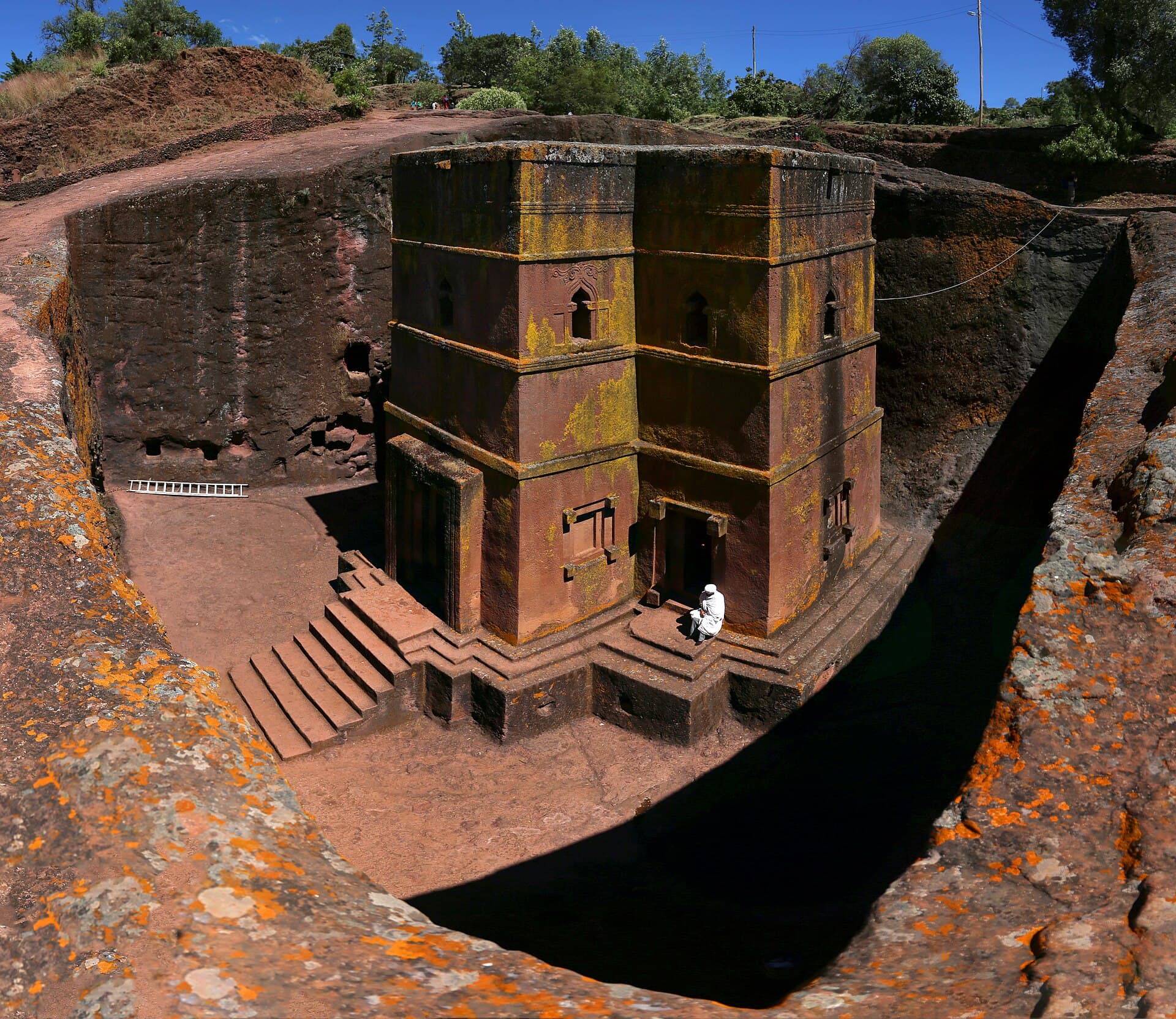
Lalibela, EthiopiaSailko / CC BY 3.0, via Wikimedia Commons
ET

Lalibela

Where ancient faith is carved from living rock.

The secrets of Lalibela

Lalibela, as no one tells it.

Not the postcards. The stories even locals don't know — whispered in your ear, right where they happened.

3 secrets below. Many more wait inside the tour.
Biete Maryam

Among the intricate carvings and frescoes of Biete Maryam, one pillar holds a secret so profound, only a select few are permitted to read it.

Full story unlocks in the tour
Mount Ashetan

The name of a mountain overlooking Lalibela, 'Ashetan,' translates to 'smell' in Amharic, a curious name for such a prominent landmark.

Full story unlocks in the tour
King Lalibela's Birth

The king who commissioned these extraordinary churches received his name, Lalibela, due to an unusual event at his birth.

Full story unlocks in the tour
The full tour

Discover every secret of Lalibela

Every address, every reveal in full — in your ear, right where it happened.

Get the key to Lalibela

You pick your stops. You walk. The voice reveals what the others miss.

Choose your time

How long do you have in Lalibela?

No tours available yet. Check back soon — we're preparing them.

About Lalibela

The story of Lalibela

Lalibela, a high-altitude town in Ethiopia's Amhara region, stands as a profound testament to faith and architectural ingenuity. At roughly 2,500 meters (8,200 feet) above sea level, this rural settlement is globally recognized for its eleven monolithic rock-hewn churches, a UNESCO World Heritage site since 1978. These structures are not built in the traditional sense, but rather meticulously carved out of the earth from solid volcanic rock, creating an otherworldly complex of worship.

Often called the 'New Jerusalem,' Lalibela holds immense religious significance for Ethiopian Orthodox Christians, serving as a major pilgrimage site. The town's population is almost entirely Ethiopian Orthodox Christian, and pilgrims often travel great distances, sometimes on foot, to visit these sacred sites. The experience of Lalibela is one of stepping back in time, where ancient traditions are vibrantly alive amidst a landscape of dramatic highlands and a deeply spiritual atmosphere.

History

The Vision of a New Jerusalem

Lalibela, originally known as Roha, gained its current name from its most distinguished monarch, King Gebre Meskel Lalibela, who reigned during the late 12th and early 13th centuries as part of the Zagwe dynasty. Tradition holds that King Lalibela commissioned the construction of the rock-hewn churches with the aim of creating a 'New Jerusalem' in Ethiopia. This ambitious project was conceived after Muslim conquests made Christian pilgrimages to the original Jerusalem hazardous.

While the precise dating of the churches remains a subject of some debate, most are believed to have been carved during King Lalibela's reign, primarily in the 12th and 13th centuries. The construction process was unique: rather than building upwards, the churches were excavated and carved downwards from solid rock. This involved carving trenches to isolate a large block of stone, which was then meticulously chiseled internally and externally to form doors, windows, columns, and vaulted ceilings. The entire undertaking is believed to have taken 24 years to complete.

The eleven churches are divided into two main groups, connected by a network of carved passageways and natural wadis. The northern group includes Biete Medhane Alem (House of the Saviour of the World), Biete Maryam (House of Mary), Biete Maskal (House of the Cross), Biete Denagel (House of Virgins), and Biete Golgotha Mikael (House of Golgotha Mikael). To the south are Biete Amanuel (House of Emmanuel), Biete Qeddus Mercoreus (House of St. Mercoreos), Biete Abba Libanos (House of Abbot Libanos), Biete Gabriel Raphael (House of Gabriel Raphael), and Biete Lehem (House of Holy Bread). The eleventh church, Biete Giyorgis (House of St. George), stands in isolation but is also connected by trenches. Some of these structures, like Biete Medhane Alem, are fully monolithic, carved entirely from a single block of stone, while others are semi-monolithic, sharing a wall with the surrounding rock. The interiors are sometimes adorned with frescoes and bas-reliefs, showcasing the artistic skill of the era.

What to see

Lalibela's primary draw is its extraordinary cluster of eleven rock-hewn churches, a UNESCO World Heritage site. These churches are typically divided into two main groups, plus the isolated Biete Giyorgis. Plan for at least one full day, or ideally two, to explore them thoroughly.

Begin with the Northwestern cluster, which includes the impressive Biete Medhane Alem, believed to be the largest monolithic church in the world. Also in this group are Biete Maryam, Biete Maskal, Biete Denagel, and Biete Golgotha Mikael. The Southeastern cluster features Biete Amanuel, Biete Qeddus Mercoreus, Biete Abba Libanos, Biete Lehem, and Biete Gabriel-Rufael. The most iconic church, Biete Giyorgis (Church of St. George), is a striking cruciform structure carved 40 meters into the red volcanic rock and is best visited early in the morning for photography and a more peaceful experience.

Beyond the main churches, consider excursions to nearby sites like Na'akuto La'ab, a semi-cave church located about 7 km from town, or Yemrehanna Kristos, a cave church 42 km away. For expansive views of the highlands, a hike or mule ride to Ashetan Maryam monastery is rewarding. Saturday is market day in Lalibela, offering a bustling glimpse into local life.

When to visit

The best time to visit Lalibela is during the dry season, which runs from October to March. During these months, you can expect clear blue skies and warm daytime temperatures, typically around 20-27°C. Evenings can be cool due to the town's altitude of approximately 2,500 meters, so bring layers. Major religious festivals, such as Ethiopian Christmas (Gena) on January 7th and Timket (Epiphany) on January 19th, are particularly active times to visit, though the town will be much busier and prices for accommodation may increase.

Practical

Lalibela Airport (LLI) is located 23-25 km (14-15 miles) southwest of the town. Minibuses are available for transport from the airport to town, typically costing around 100 Birr. Flights from Addis Ababa are the most sensible way to reach Lalibela, with Ethiopian Airlines offering daily services. Domestic flight discounts are often available for international passengers who flew into Ethiopia with Ethiopian Airlines.

Once in Lalibela, the town is compact and walkable, with donkeys often outnumbering cars. A 5-day entrance pass to the churches costs approximately $50 USD. It is advisable to dress modestly, covering shoulders and knees, especially when visiting churches. Women should carry a headscarf. Shoes must be removed before entering each church. Accommodation options range from lodges like Mezena Lodge and Tukul Village to more budget-friendly guesthouses.

Good to know
What is the primary attraction in Lalibela?
The primary attraction in Lalibela is its eleven medieval monolithic rock-hewn churches, carved directly from the earth, which are a UNESCO World Heritage site.
How many days are recommended to visit Lalibela?
Most visitors spend one or two nights in Lalibela, allowing for one full day to explore the churches. If you wish to visit highland monasteries or experience festivals, three nights are recommended.
What is the best way to get to Lalibela?
The fastest and most practical way to reach Lalibela is by flying from Addis Ababa to Lalibela Airport (LLI) with Ethiopian Airlines.
What kind of food can I expect in Lalibela?
Ethiopian cuisine in Lalibela centers around injera, a spongy flatbread, served with various stews (wot) like doro wot (spicy chicken stew), misir wot (lentil stew), and shiro (chickpea stew). Kitfo (minced beef) and tibs (fried meat) are also popular.
Is Lalibela safe for tourists?
Lalibela is generally considered safe for tourists, particularly for fly-in/fly-out visits to the main sites. However, it is advisable to monitor current travel advisories for the wider Amhara region.
What should I wear when visiting the churches?
When visiting the churches, it is important to dress modestly, covering your shoulders and knees. Women should bring a headscarf, and all visitors must remove their shoes before entering the churches.
Lalibela
From€9.00
No booking · activate anytime · 12h to walk it
Get the key to Lalibela