Parque Nacional White Sands
Las deslumbrantes dunas blancas de yeso son una vista impactante, pero lo que yace debajo de ellas cuenta una historia aún más antigua.
La historia completa se desbloquea en el tour
 Terry Umbenhaur / CC BY-SA 3.0, via Wikimedia Commons
Tour de audio autoguiado de Las Cruces — ruta GPS a pie, reproducción offline, narración en 32 idiomas.
“Donde el sol del desierto de Chihuahua se encuentra con la ambición cósmica.”
No las postales. Las historias que ni los locales conocen — al oído, justo donde ocurrieron.
Las deslumbrantes dunas blancas de yeso son una vista impactante, pero lo que yace debajo de ellas cuenta una historia aún más antigua.
Este extenso paisaje desértico guarda secretos más allá de su belleza agreste, conectándolo tanto con forajidos notorios como con la exploración espacial.
La institución pública de educación superior más antigua del estado tiene una sorprendente conexión con un descubrimiento celestial.
Descubre todos los secretos de Las Cruces
Cada dirección, cada revelación al completo — a tu oído, justo donde ocurrió.
Eliges tus paradas. Caminas. La voz te revela lo que los demás ignoran.
Tu tour de audioguía por Las Cruces te espera — elige tus lugares, tu idioma y empieza al llegar.
ComprarLume incluye una guía de realidad aumentada. Levanta el móvil y su cámara muestra la calle que tienes delante, con una flecha luminosa sobre la imagen real que siempre apunta a tu próxima parada — sin mapas que descifrar, sin giros equivocados. Como todo en Lume, funciona completamente sin conexión.
Las Cruces, que significa "las cruces" en español, es la segunda ciudad más grande de Nuevo México, situada en el Valle de Mesilla. Su nombre se relaciona comúnmente con una historia local que involucra tres cruces de madera erigidas para marcar el lugar de un mortal ataque apache. Establecida en 1849, la ciudad surgió un año después de que Estados Unidos adquiriera la región a través del Tratado de Guadalupe Hidalgo. Hoy en día, sirve como un centro regional para la agricultura, la cultura y la investigación, con una población de aproximadamente 114,000 residentes.
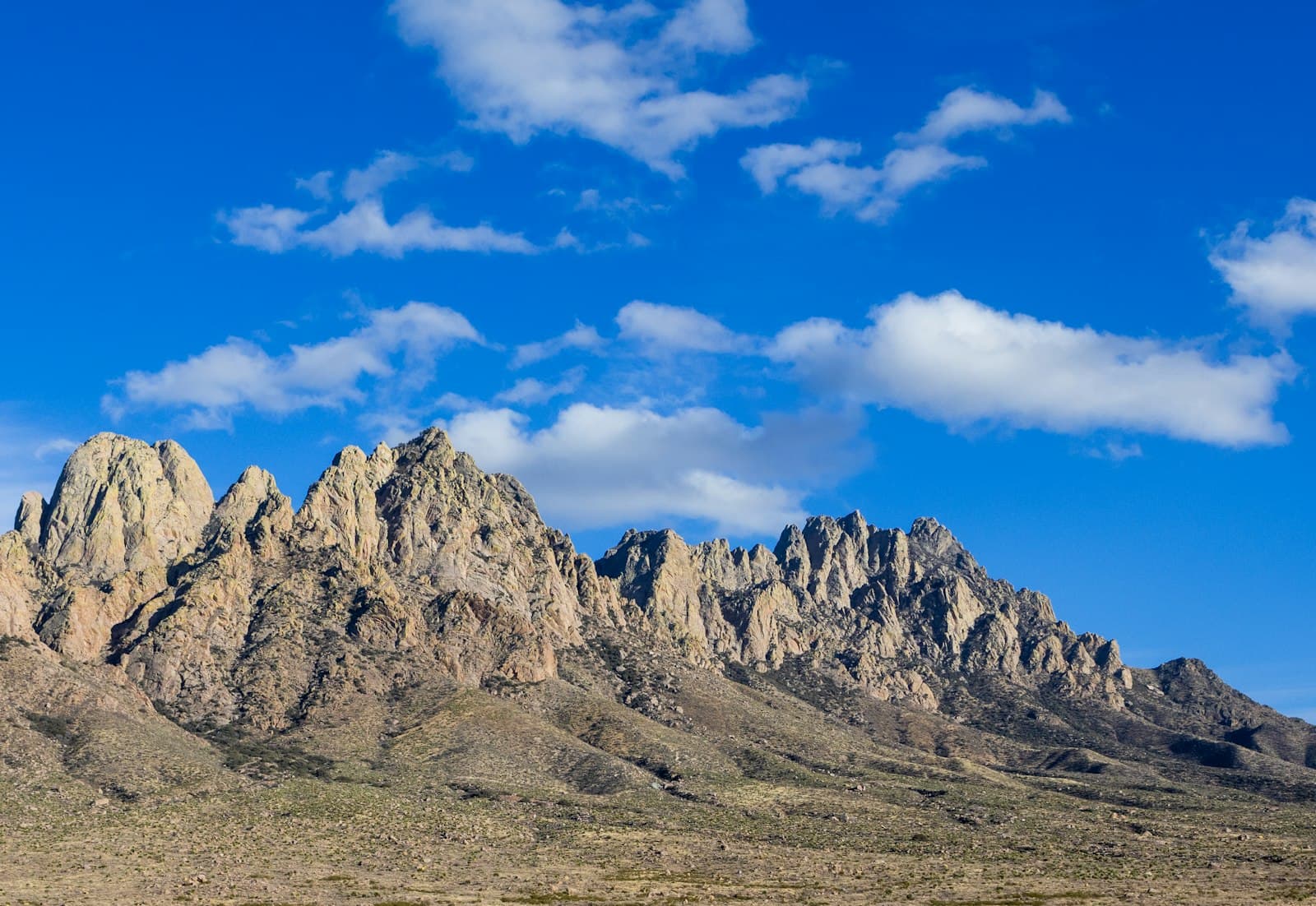
El paisaje de la ciudad está definido por las dramáticas Montañas Organ al este, cuyas agujas rocosas se elevan abruptamente desde el suelo del desierto de Chihuahua. Las Cruces también es una puerta de entrada a maravillas naturales extraordinarias como el Parque Nacional White Sands, una vasta extensión de dunas de yeso relucientes. Más allá de su atractivo natural, la ciudad ofrece una mezcla de profundidad histórica y aspiraciones modernas, incluyendo su proximidad a Spaceport America, el primer puerto espacial comercial construido específicamente para este fin en el mundo.
La historia del área de Las Cruces se remonta a milenios, con grupos nativos americanos, exploradores españoles y colonos mexicanos habitando el Valle de Mesilla mucho antes de su establecimiento formal. El control de la región cambió varias veces a través de guerras y tratados internacionales, incluyendo períodos bajo dominio español, mexicano, estadounidense e incluso confederado.
El asentamiento de Las Cruces fue oficialmente topografiado y establecido en 1849, como resultado directo de la cesión de tierras a los Estados Unidos después de la Guerra México-Americana y el Tratado de Guadalupe Hidalgo en 1848. Se cree que el nombre "Las Cruces" se origina en una leyenda donde se colocaron tres cruces para conmemorar a quienes murieron en un ataque apache.
En 1852, Las Cruces se convirtió en la sede del condado de Doña Ana. Para 1907, fue oficialmente incorporada como pueblo, y solo cinco años después, en 1912, Nuevo México logró la estadidad, convirtiéndose en el estado número 47. Durante este período, Las Cruces estaba desarrollando su infraestructura, adquiriendo su primer sistema de agua, energía eléctrica y una fábrica de hielo.
Una institución significativa en la historia de Las Cruces es la Universidad Estatal de Nuevo México (NMSU). Establecida en 1888 por el educador Hiram Hadley como Las Cruces College, se convirtió en el New Mexico College of Agriculture and Mechanic Arts en 1889, designada como la universidad de concesión de tierras del estado. La universidad se fusionó con el New Mexico College of Agriculture and Mechanic Arts, abriendo sus puertas en 1890 con 35 estudiantes y seis miembros del profesorado. En 1960, la institución fue formalmente reconocida como New Mexico State University.
Más recientemente, la región ha abrazado una nueva frontera con Spaceport America, ubicado aproximadamente a 45 millas al norte de Las Cruces. La idea de un puerto espacial comercial en Nuevo México surgió a principios de la década de 1990, y el primer lanzamiento de cohetes desde el sitio ocurrió en 2006. Spaceport America abrió oficialmente en 2011, convirtiéndose en la primera instalación de lanzamiento y aterrizaje espacial comercial construida específicamente para este fin en el mundo, no dedicada a vuelos espaciales gubernamentales o militares.
Comience su exploración en el Monumento Nacional Organ Mountains-Desert Peaks, inmediatamente al este de la ciudad. Este monumento cubre casi 500,000 acres en cuatro áreas distintas: las Montañas Organ, Desert Peaks, Potrillo Mountains y Doña Ana Mountains. Las Montañas Organ se caracterizan por picos escarpados y angulares que alcanzan los 9,000 pies, ofreciendo oportunidades para practicar senderismo, fotografía y observación de vida silvestre. El Área Natural Dripping Springs, en el borde occidental de las Montañas Organ, cuenta con exhibiciones interpretativas y edificios históricos.
Un corto viaje en coche al oeste de Las Cruces lleva a Picacho Peak, que ofrece senderos para practicar senderismo, ciclismo de montaña y equitación con vistas al desierto circundante. Al norte, el Chihuahuan Desert Nature Park ofrece tres millas de senderos fáciles, incluyendo un mini-sendero pavimentado, señales interpretativas y refugios para pícnic, todo dentro de 900 acres de desierto virgen.
Para una experiencia verdaderamente única, visite el Parque Nacional White Sands, el campo de dunas de yeso más grande de la Tierra, ubicado a aproximadamente una hora en coche al noreste. Aquí, puede deslizarse por las relucientes dunas blancas, recorrer senderos marcados o simplemente admirar el paisaje de otro mundo. La arena permanece fresca incluso en días calurosos.
En la ciudad, explore el centro de Las Cruces, conocido por su revitalizada Main Street, galerías locales y atractivos murales. El Mercado de Agricultores y Artesanías de Las Cruces, un mercado reconocido a nivel nacional, abarca siete cuadras de la ciudad y cuenta con docenas de vendedores de arte, joyas, artesanías, productos agrícolas y alimentos. La ciudad también tiene varios museos, incluyendo el Museo de Arte de Las Cruces, el Museo de la Naturaleza y la Ciencia, y el Centro Cultural Branigan.
Las Cruces experimenta un clima desértico cálido con inviernos suaves y veranos calurosos. Las épocas más agradables para visitar y realizar actividades de clima cálido son desde principios de mayo hasta finales de junio y desde finales de agosto hasta mediados de octubre. Alternativamente, de marzo a mayo y de octubre a mediados de noviembre ofrecen un clima confortable con temperaturas suaves y baja humedad, ideal para actividades al aire libre y turismo. Aunque los veranos pueden ser cálidos, con un promedio de alrededor de 36°C (96°F) en junio y julio, la ciudad generalmente recibe abundante sol durante todo el año. Agosto suele ser el mes más lluvioso, mientras que abril es generalmente el mes más seco.
Las Cruces es atendida por el Aeropuerto Internacional de Las Cruces (LRU), aunque muchos visitantes también vuelan al Aeropuerto Internacional de El Paso (ELP) en Texas, que está a aproximadamente una hora en coche al sur. Se recomienda encarecidamente alquilar un coche para explorar Las Cruces y sus atracciones naturales circundantes, ya que las opciones de transporte público son limitadas para llegar a sitios como el Parque Nacional White Sands o las Montañas Organ. Al aventurarse al aire libre, especialmente durante los meses más cálidos, lleve mucha agua, use ropa protectora y protector solar debido al ambiente desértico y la abundante luz solar. El alojamiento varía desde cadenas hoteleras nacionales hasta posadas locales. El centro de la ciudad ofrece una variedad de opciones gastronómicas, con un enfoque en la cocina neomexicana, particularmente los platos con chile verde. Para aquellos interesados en productos y artesanías locales, el Mercado de Agricultores y Artesanías funciona semanalmente los sábados durante todo el año, con un mercado más pequeño los miércoles.
Las Cruces en coreano, en chino o en hebreo — y 29 idiomas más, cada parada narrada por una voz nativa. La mayor variedad de idiomas de cualquier audioguía autoguiada.
Disponible en: