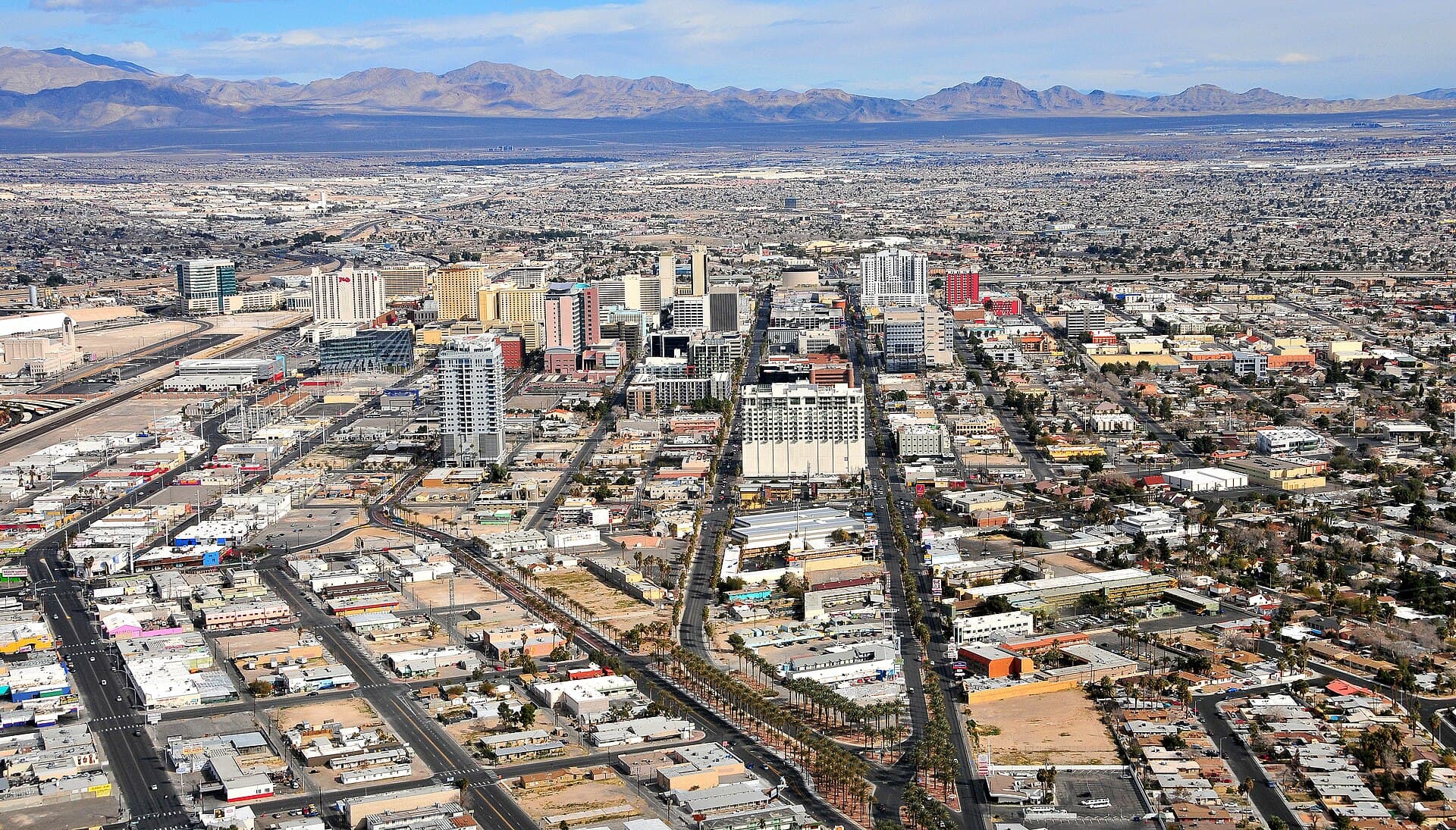
Las Vegas, United StatesMike McBey / CC BY 2.0, via Wikimedia Commons
US

Las Vegas

Beyond the neon glow, a desert oasis whispers its dazzling, improbable tales.

The secrets of Las Vegas

Las Vegas, as no one tells it.

Not the postcards. The stories even locals don't know — whispered in your ear, right where they happened.

3 secrets below. Many more wait inside the tour.
The Nevada Test Site

Just an hour's drive from the Strip, a peculiar form of tourism once thrived.

Full story unlocks in the tour
The Golden Gate Hotel & Casino

The city's oldest hotel holds a surprising connection to early communication.

Full story unlocks in the tour
Lake Mead

Beneath the waters of Lake Mead lies an unexpected relic of the past.

Full story unlocks in the tour
The full tour

Discover every secret of Las Vegas

Every address, every reveal in full — in your ear, right where it happened.

Get the key to Las Vegas

You pick your stops. You walk. The voice reveals what the others miss.

Choose your time

How long do you have in Las Vegas?

No tours available yet. Check back soon — we're preparing them.

About Las Vegas

The story of Las Vegas

Las Vegas, often called the "Entertainment Capital of the World," is a city that defies its desert surroundings. What began as a modest railroad stop in 1905 has blossomed into a global icon, known for its opulent casino-hotels, dazzling shows, and a nightlife that promises endless excitement. With over 40 million visitors annually, it consistently ranks among the world's top tourist destinations.

Beyond the famous Las Vegas Strip, which technically lies outside the city limits in unincorporated Clark County, a lively local culture thrives. From the burgeoning Arts District to a surprising array of outdoor adventures just a short drive away, Las Vegas offers more than just bright lights and slot machines. It's a place of constant reinvention, where history and spectacle intertwine to create a truly unique experience.

History

From Meadows to Metropolis

The name "Las Vegas," Spanish for "the meadows," was bestowed upon the area in 1829 by Rafael Rivera, a member of a Spanish trading party. He discovered artesian wells and extensive green areas, a true oasis in the desert. Nomadic Paleo-Indians first traveled to the Las Vegas area approximately 10,000 years ago, followed by Ancient Puebloan and Paiute tribes. The first non-native settlement was established in 1855 by Mormon missionaries who built an adobe fort. However, this mission was abandoned in 1858.

The foundation for modern Las Vegas was laid in 1902 when U.S. Senator William Clark purchased 2,000 acres of land and water rights, envisioning a town along his San Pedro, Los Angeles & Salt Lake Railroad. On May 15, 1905, Las Vegas was officially founded when 110 acres of land were auctioned off, establishing it as a railroad town and a vital refueling and rest stop. The city was incorporated in 1911.

The Rise of "Sin City"

A pivotal year for Las Vegas was 1931, when Nevada legalized gambling. The first gambling license was issued to the Northern Club on Fremont Street, which soon became known as "Glitter Gulch" due to its many bright lights. This era also saw the start of the Boulder Dam (later renamed Hoover Dam) construction, bringing a massive influx of workers and creating a demand for entertainment. Electricity from the dam further fueled the city's growth and the development of hotels along the Strip. The western-style El Rancho Vegas hotel-casino, the first themed resort on what would become the Strip, opened in 1941. The arrival of figures like Howard Hughes in 1966 helped to transform Las Vegas into a more diverse tourist destination, moving away from its earlier mob influence.

A City of Constant Evolution

Throughout the latter half of the 20th century and into the 21st, Las Vegas experienced unprecedented growth. Between 1990 and 2000, the population increased by 85.2%. The city continued to expand its offerings beyond gambling, with resorts becoming "brighter" and "bigger" to attract tourists. The Fremont Street Experience, a spectacular light and sound show, opened in the mid-1990s, revitalizing downtown. Today, Las Vegas continues to evolve, embracing art, culture, and diverse entertainment options while maintaining its iconic status as a global entertainment hub.

What to see

While the Las Vegas Strip is an undeniable draw, with its iconic resorts, world-class entertainment, and elaborate attractions, the city offers much more to explore. For a different side of Las Vegas, venture downtown to the Arts District, also known as "18b." This 18-block cultural neighborhood is a hub of independent galleries, artist studios, craft breweries, and vintage shops. On the first Friday of each month, the district comes alive with an art walk featuring local artists and musicians.

Beyond the galleries, the Arts District is an open-air museum with colorful street murals, sculptures, and unexpected art installations transforming building facades and public spaces. Explore the Neon Museum's Neon Boneyard, where vintage neon signs from Las Vegas's past are preserved and displayed, offering a nostalgic journey through the city's illuminated history. For a truly unique art experience, visit AREA15, an immersive entertainment complex featuring psychedelic visuals and interactive exhibits, including Meow Wolf's Omega Mart, a surreal supermarket adventure.

Even on the Strip, art can be found beyond the casino floors. The Bellagio Conservatory and Botanical Gardens transforms seasonally with elaborate floral displays, while the Cosmopolitan showcases contemporary art installations, digital pieces, and murals throughout its resort. For a break from the urban landscape, consider a day trip to Red Rock Canyon National Conservation Area, offering desert scenery and opportunities for hiking and rock climbing.

When to visit

The most comfortable times to visit Las Vegas are during the spring (March to May) and fall (September to November). During these seasons, daytime temperatures are pleasant, ranging from the 60s to 80s Fahrenheit (16-31°C), with minimal rainfall, making it ideal for exploring both the Strip and outdoor attractions like Red Rock Canyon. The shoulder seasons also offer fewer crowds compared to the peak summer months.

Summer (June to August) brings intense heat, with average daily highs often exceeding 100°F (38°C). While hot, this can be a good time for budget travelers as hotel rates tend to be lower, and pool activities are a popular way to stay cool. Winter (December to February) offers milder temperatures, typically in the 40s to 60s Fahrenheit (4-17°C), making it suitable for sightseeing and enjoying holiday festivities.

Practical

Harry Reid International Airport (LAS) is the main gateway to Las Vegas, located approximately five miles south of downtown. The airport has two main terminals (Terminal 1 and Terminal 3), with Allegiant operating out of Terminal 1 and international flights primarily using Terminal 3. The terminals are not physically connected, so it's important to know your departure terminal in advance.

Getting around Las Vegas is convenient with several transportation options. The Las Vegas Monorail offers a quick way to navigate the Strip, with trains arriving every four to eight minutes at seven stations. For travel along the Strip and downtown, the RTC Transit bus service provides routes like "The Deuce" and "SDX" (Strip & Downtown Express). The Downtown Loop is a free shuttle connecting visitors to downtown attractions, including the Arts District and Fremont Street Experience. Ride-sharing services like Uber and Lyft are also readily available. If you plan to explore beyond the city, rental cars are a good option, with an offsite car rental facility accessible by shuttle from the airport.

Good to know
Is the Las Vegas Strip actually in Las Vegas?
No, the famous Las Vegas Strip is not located within the city limits of Las Vegas. It falls under the jurisdiction of Clark County.
How many hotel rooms are there in Las Vegas?
As of 2022, Las Vegas has over 150,000 hotel rooms. It would take approximately 288 to 340 years for one person to spend a night in every hotel room.
Is gambling legal everywhere in Las Vegas?
While gambling is synonymous with Las Vegas, it was legalized at the state level in Nevada in 1931. However, prostitution is not legal in Las Vegas.
What is the Las Vegas Arts District?
The Las Vegas Arts District, also known as "18b," is an 18-block cultural neighborhood in downtown Las Vegas featuring art galleries, studios, craft breweries, vintage shops, and street art.
What is the main airport in Las Vegas?
The main airport serving the Las Vegas area is Harry Reid International Airport (LAS), formerly known as McCarran International Airport. It is located about five miles south of downtown Las Vegas.
What is the weather like in Las Vegas?
Las Vegas has a desert climate, with hot, dry summers and mild winters. July is typically the hottest month, with average highs around 104°F (40°C), while January is the coldest, with average lows around 37°F (3°C).
Las Vegas
From€9.00
No booking · activate anytime · 12h to walk it
Get the key to Las Vegas