The world's longest single-span chairlift glides over a dramatic river gorge, mere minutes from the city center.
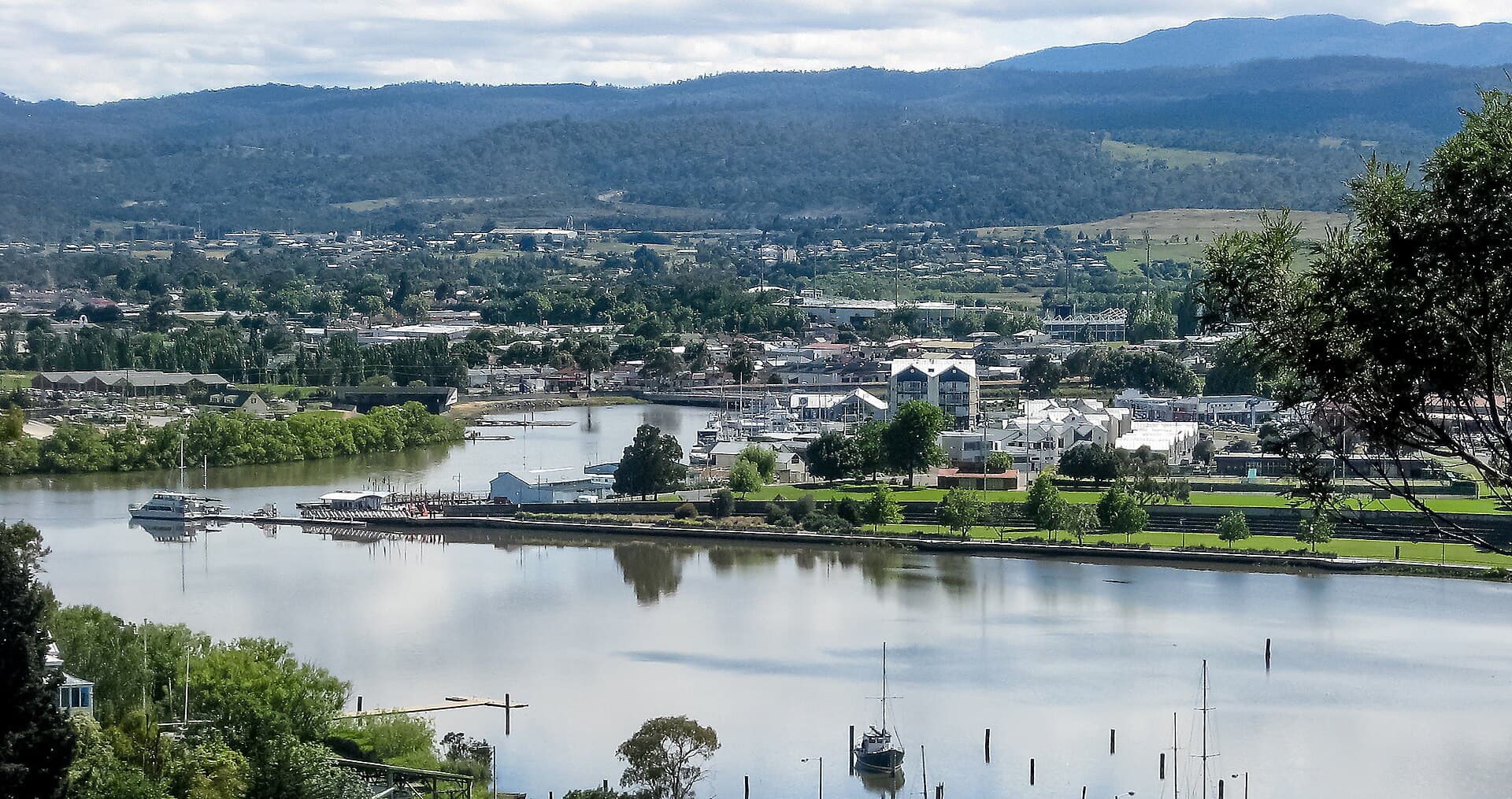
File:Launie (cropped).JPG: User: (WT-shared) Plug at wts wikivoyage derivative work: Georgfotoart / Public domain, via Wikimedia CommonsLaunceston
“Where colonial elegance meets wild beauty at the river's edge.”
Launceston, as no one tells it.
Not the postcards. The stories even locals don't know — whispered in your ear, right where they happened.
Beyond its carefully tended gardens, a troop of Japanese macaques have made this historic park their dwelling.
This Australian city pioneered a crucial urban infrastructure development.
Discover every secret of Launceston
Every address, every reveal in full — in your ear, right where it happened.
You pick your stops. You walk. The voice reveals what the others miss.
How long do you have in Launceston?
No tours available yet. Check back soon — we're preparing them.
The story of Launceston
Launceston, Tasmania's second-largest city, presents a captivating fusion of historic elegance and striking natural landscapes. Positioned at the convergence of the North Esk and South Esk rivers, where they flow together to form the Tamar River, Launceston is a city shaped by its waterways and embracing hills. Recognized as a UNESCO City of Gastronomy in 2021, it cultivates a thriving food scene that celebrates the region's fertile farmlands and cool-climate wines. With a gentle pace and a welcoming community, Launceston offers a distinct entry point to northern Tasmania's wild expanses and a rich array of cultural experiences.
A short stroll from the city center reveals Cataract Gorge, a remarkable natural wonder that feels like another world. This dramatic river gorge features walking paths, a swimming area, and the world's longest single-span chairlift, providing expansive views of the South Esk River. Beyond its natural allure, Launceston's avenues are graced with beautifully preserved Georgian and Victorian architecture, reflecting its standing as one of Australia's oldest cities.
From Patersonia to a City of Firsts
The territory now known as Launceston was originally home to nomadic Aboriginal Tasmanians, specifically the Stoney Creek, Tyerenotepanner, Panninher, and Lettermairrener Nations. European settlement commenced in March 1806 when Lieutenant Colonel William Paterson relocated a British garrison from York Town to a more advantageous site at the confluence of the North Esk and South Esk rivers. Initially named Patersonia, the settlement was soon renamed Launceston, after a town in Cornwall, United Kingdom.
By 1827, Launceston's population reached 2,000, and it became an export center, primarily for the colony's northern pastoral industry, trading in wool and wheat. The city's growing prosperity was evident in the construction of substantial Georgian and Victorian buildings, many of which remain preserved today. Launceston was proclaimed a municipality on October 30, 1852, and its first local government elections took place in January 1853. In 1851, Tasmania competed against Victoria in Australia's inaugural first-class cricket match at the NTCA Ground in Launceston.
The discovery of tin at Mount Bischoff in 1871 and gold mining in Beaconsfield in 1877 stimulated considerable growth, transforming Launceston from a small town into an urban center over the subsequent two decades. Launceston was officially declared a city on January 1, 1889, becoming the second city in Tasmania after Hobart. The late 19th century also witnessed the grand opening of the first railway line connecting Launceston with Deloraine in 1871 and the Tasmanian International Exhibition in 1891, housed in the specially constructed Albert Hall. Launceston holds several Australian firsts: it was the first Australian city to implement underground sewers and the first to be lit by hydroelectricity, with the Duck Reach Power Station commencing operations in 1895 as the Southern Hemisphere's first municipal hydroelectric power station. It also saw the initial application of anesthetic in the Southern Hemisphere.
A visit to Launceston offers a wide array of experiences, from natural wonders to cultural institutions. The city's most prominent natural attraction is Cataract Gorge Reserve, a distinctive river gorge just a 15-minute walk from the city center. Here, you can ride the world's longest single-span chairlift, explore walking paths, relax by the swimming pool, or wander through the Victorian-era Cliff Grounds garden.
For a measure of culture and history, the Queen Victoria Museum and Art Gallery (QVMAG) stands as Australia's largest regional museum, presenting diverse exhibits across two locations. Another green expanse to explore is City Park, one of Australia's oldest public gardens, established in 1820. It features an unexpected enclosure of Japanese macaques, an 1875 cast-iron bandstand, and the John Hart Conservatory. The Launceston Seaport provides a lively hub with cafes and restaurants along a boardwalk, linking to Royal Park and Cataract Gorge. Beyond the city, the Tamar Valley Wine Trail offers scenic drives and opportunities to sample cool-climate wines from numerous vineyards.
Launceston experiences a cool, temperate climate with four distinct seasons. The warmest months are typically January and February, with average temperatures ranging from 12.2°C to 24.4°C (54°F to 76°F), making it ideal for warm-weather activities. This period, extending to early March, is considered peak travel season and coincides with festivals like Festivale and Mona Foma. Autumn (March, April, May) also offers pleasant weather with clear days and crisp evenings, and the landscape transforms with vivid fall foliage. Winters (June-August) are cooler, with average temperatures from 2.2°C to 12.5°C (36°F to 55°F), and while chilly, provide a cozy atmosphere for indoor activities and exploring nearby snowy landscapes like Cradle Mountain.
Launceston Airport (LST) is approximately a 15-minute drive from the city center. Public transport within Launceston and its suburbs is primarily served by an extensive bus service operated by Metro Tasmania. All Metro services in Launceston operate with low-floor accessible buses. Travel on Metro buses is currently free across Tasmania until June 2027. For longer trips throughout the state, Tassielink Regional Coaches and Redline Coaches provide services to most major Tasmanian towns.
The local currency is the Australian Dollar (AUD). Currency exchange services are available, with Travelex being a prominent option in the city. It is generally advisable to be familiar with current exchange rates and avoid exchanging currency at airports or hotels due to potentially unfavorable rates and fees. Launceston is generally considered a safe destination, with a low crime rate. However, like any city, it's recommended to be mindful of your surroundings, especially in deserted areas late at night.
- What is the main natural attraction in Launceston?
- The primary natural attraction in Launceston is Cataract Gorge Reserve, a distinctive river gorge just a short walk from the city center, featuring walking paths, a swimming area, and a scenic chairlift.
- Is Launceston a good base for exploring other parts of Tasmania?
- Yes, Launceston's central location makes it an excellent base for exploring Northern Tasmania, including the Tamar Valley Wine Trail, historic towns like Evandale and Longford, and natural areas such as Cradle Mountain.
- What is Launceston known for culturally?
- Launceston is known for its well-preserved colonial and Victorian architecture, its lively arts scene including the Queen Victoria Museum and Art Gallery (QVMAG), and its designation as a UNESCO City of Gastronomy.
- Are there any unique animal attractions in Launceston?
- Yes, City Park in Launceston is home to an enclosure of Japanese macaques, a popular and enduring attraction within the historic gardens.
- What is the best way to get around Launceston?
- Launceston has an extensive public bus service operated by Metro Tasmania, providing transport within the city and its suburbs. Walking is also a fine option for many central attractions like Cataract Gorge and City Park.
- Is Launceston safe for tourists?
- Launceston is generally considered a safe city with a low crime rate. Visitors are advised to take common-sense precautions, such as being aware of their surroundings, particularly in less populated areas after dark.