The solitary bell tower of Cagsawa stands as a stark reminder of nature's formidable power. Yet, a local legend about its survival during the 1814 eruption speaks of more than mere architectural endurance.
Dexbaldon / CC BY 4.0, via Wikimedia CommonsLegazpi
“Where the perfect cone meets the spirited Bicolano heart.”
Legazpi, as no one tells it.
Not the postcards. The stories even locals don't know — whispered in your ear, right where they happened.
A walk along Legazpi Boulevard offers expansive views of Mayon Volcano and the Albay Gulf. Few, however, recognize that the boulevard itself is a testament to the city's continuous engagement with a powerful natural force.
The fiery Bicol Express, a culinary emblem of the region, is known for its intense spice and creamy coconut milk. However, the dish's origin story speaks less of a chef's creation and more of a resourceful home cook.
Discover every secret of Legazpi
Every address, every reveal in full — in your ear, right where it happened.
You pick your stops. You walk. The voice reveals what the others miss.
How long do you have in Legazpi?
No tours available yet. Check back soon — we're preparing them.
The story of Legazpi
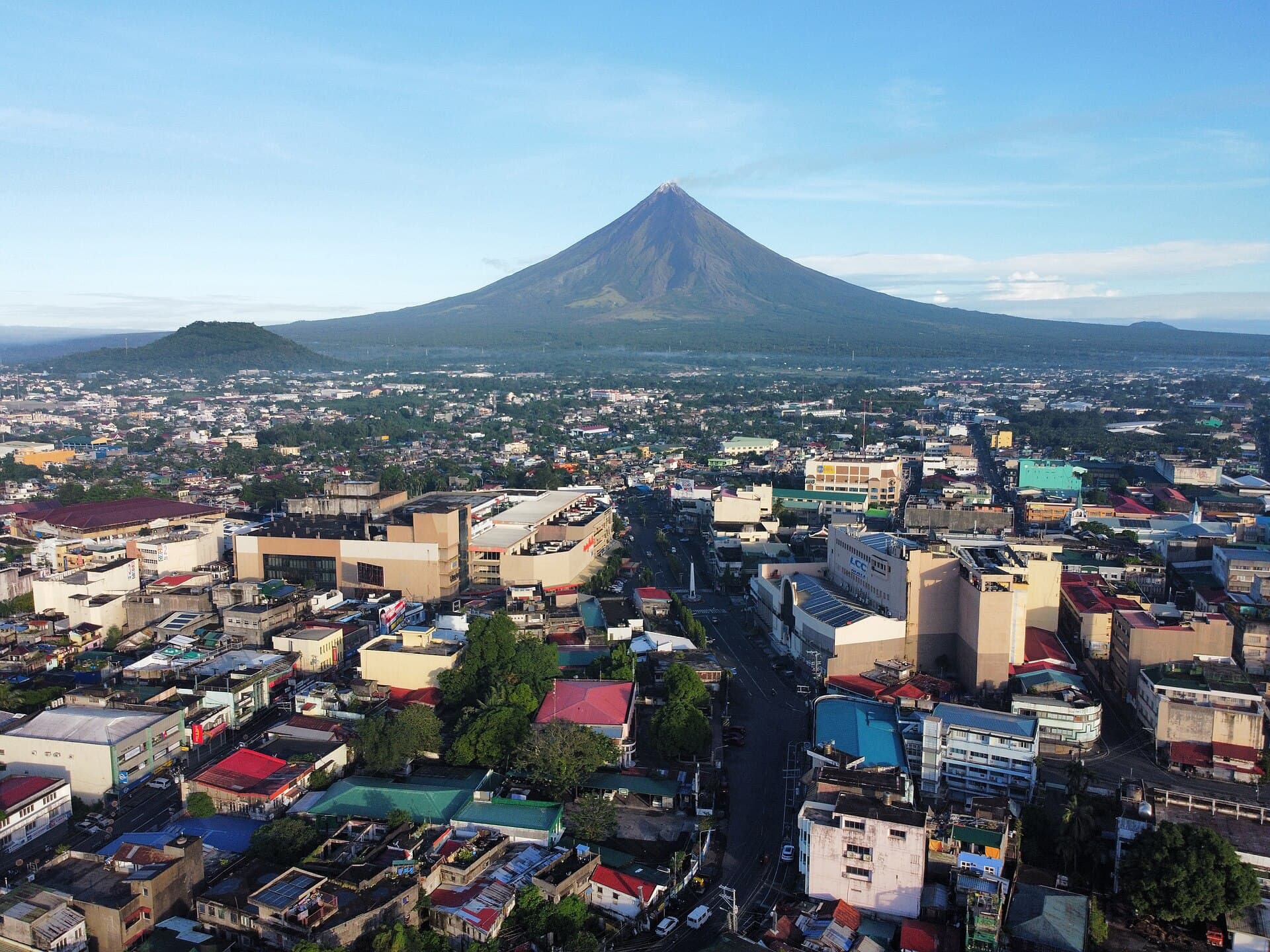
Legazpi City, the capital of Albay province in the Philippines, is a place where natural grandeur and spirited culture intertwine. Dominated by the magnificent Mayon Volcano, celebrated for its almost perfectly conical form, the city offers an engaging blend of adventure and visual splendor. Often referred to as the 'City of Fun and Adventure' and the 'Gateway of Southern Luzon', Legazpi functions as a central hub for tourism, education, healthcare, and commerce within the Bicol Region.
Beyond its volcanic centerpiece, Legazpi sustains a diverse service-based economy focused on trade, agro-processing, and adventure tourism. Its strategic position on the western shore of Albay Gulf provides access to both land and sea, with Bicol International Airport in nearby Daraga facilitating air travel. The city's warm and welcoming residents, coupled with its distinctive Bicolano cuisine, contribute to an authentic Filipino experience for all who visit.
## From Sawangan to Legazpi Legazpi's beginnings trace back to Sawangan, a pre-Hispanic coastal settlement. This was a collection of fishing and farming communities along the mangrove flats of Albay Gulf. In 1587, the area transformed into a Spanish mission town, with Franciscan friars establishing the Misión San Gregorio Magno de Sawangan. Despite frequent pirate raids, the Spanish consistently rebuilt the mission, and it officially became a town in 1616.
## Naming and Early Colonial Period The city received its official name, Legazpi, on September 22, 1856, through a Royal Decree. This honored Miguel López de Legazpi, the Basque Spanish conquistador who led the first Spanish colonial expedition to the Philippine Islands in 1565. The name was chosen to preserve his memory, a decision reached through agreement between the original inhabitants and the Spaniards who supported their pursuit of autonomy. The town was formally inaugurated on October 23, 1856.
## Resilience Amidst Calamities Legazpi's progress has been punctuated by recurring natural calamities. The most significant was the 1814 eruption of Mayon Volcano, which devastated the nearby town of Cagsawa, claiming over 1,000 lives. The Cagsawa church was buried, leaving only its bell tower visible. The city has also endured other adversities, including Super Typhoon Sening in 1970. Despite these challenges, Legazpi has shown remarkable endurance, consistently rebuilding and evolving.
## Modern Development Legazpi was first declared a city under the Becerra Law of 1892, encompassing the municipalities of Legazpi, Albay Nuevo, and Daraga. It reverted to a municipality during the American occupation but regained city status twice more, in 1948 and finally in 1959. Today, Legazpi is recognized as a regional center for higher education and a highly competitive city, earning accolades as a 'most business-friendly' Philippine component city.
Legazpi's landscape is shaped by the compelling presence of Mayon Volcano, an active stratovolcano revered for its nearly symmetrical conical form. Glimpses of Mayon are available across the city, providing a dramatic backdrop to many points of interest.
A visit to the Cagsawa Ruins Park is essential, offering the iconic view of the 18th-century Cagsawa church bell tower, partially submerged by volcanic debris from the 1814 eruption, with Mayon Volcano in the distance. For an adventurous interaction with the volcano, ATV tours across the black lava trails are a popular pursuit.
Sumlang Lake provides a tranquil setting for photography and bamboo raft excursions, offering reflections of Mayon on its calm surface. Ligñon Hill Nature Park presents expansive views of Legazpi City, Albay Gulf, and Mayon Volcano, particularly striking as the sun descends. The Daraga Church, also known as Nuestra Señora de la Portería Parish Church, is another historical landmark recognized for its Baroque architecture and its commanding perspective of Mayon.
Legazpi Boulevard, the second-longest boulevard in the Philippines, invites a leisurely walk, offering views of the sea and an animated atmosphere, especially at dusk. The Legazpi City Museum and Library, situated within the City Hall, offers insights into the city's story through sculptures, paintings, and historical photographs. For a taste of local culture, the Ibalong Festival, held annually in August, celebrates Bicol's foundational mythology with street parades and cultural performances.
Legazpi experiences a tropical climate, marked by consistent warmth and elevated humidity throughout the year. Temperatures typically range from 25.5°C in January to 28.4°C in May, with daily highs frequently reaching 29–32°C. The most favorable time to visit for clear skies and outdoor pursuits is during the drier period from February to May. This window offers comfortable temperatures and fewer rainy days, ideal for volcano treks and sightseeing. While rain occurs year-round, the months from late October to January tend to be the wettest.
The local currency in Legazpi is the Philippine Peso (PHP). Major hotels, eateries, and shops generally accept international credit and debit cards (Visa, Mastercard), but carrying cash is advisable for smaller establishments, markets, and tricycle fares. ATMs are widely available in commercial districts, and currency exchange services can be found in banks and shopping centers.
Legazpi is generally considered safe for visitors, with welcoming residents and comparatively low violent crime rates. However, standard precautions are always recommended, such as avoiding isolated areas after dark and safeguarding personal belongings. When exploring Mayon Volcano, always engage licensed guides. The primary languages spoken are Filipino (Tagalog) and Bikol. Most nationalities can enter the Philippines visa-free for stays up to 30 days, but it is essential to verify current visa requirements before traveling.
Transportation within Legazpi is readily available, including tricycles, jeepneys, UV Express vans, and taxis. Ride-hailing services like Grab are also operational. Bicol International Airport (DRP) serves as the main air entry point, located in nearby Daraga.
- What is the local currency in Legazpi?
- The local currency in Legazpi is the Philippine Peso (PHP).
- Is Legazpi safe for tourists?
- Legazpi is generally considered safe for visitors, with welcoming residents and low violent crime rates. However, it's always wise to take standard precautions like avoiding isolated areas after dark.
- What languages are spoken in Legazpi?
- The primary languages spoken in Legazpi are Filipino (Tagalog) and Bikol.
- What is the best way to get around Legazpi?
- Public transportation options include tricycles, jeepneys, UV Express vans, and taxis. Ride-hailing services like Grab are also available.
- Do I need a visa to visit Legazpi?
- Most nationalities can enter the Philippines visa-free for stays up to 30 days, but it's crucial to check current visa requirements before your trip.
- Can I drink tap water in Legazpi?
- While the Local Water Utilities Administration has made claims about tap water safety, city officials have previously advised against drinking tap water due to concerns about impurities. It's best to err on the side of caution and opt for bottled water.