Kathedraal van Leiria
De Kathedraal van Leiria heeft een ongebruikelijk architectonisch geheim, dat haar onderscheidt van bijna elke andere kathedraal in Portugal.
Volledig verhaal ontgrendeld in de tour
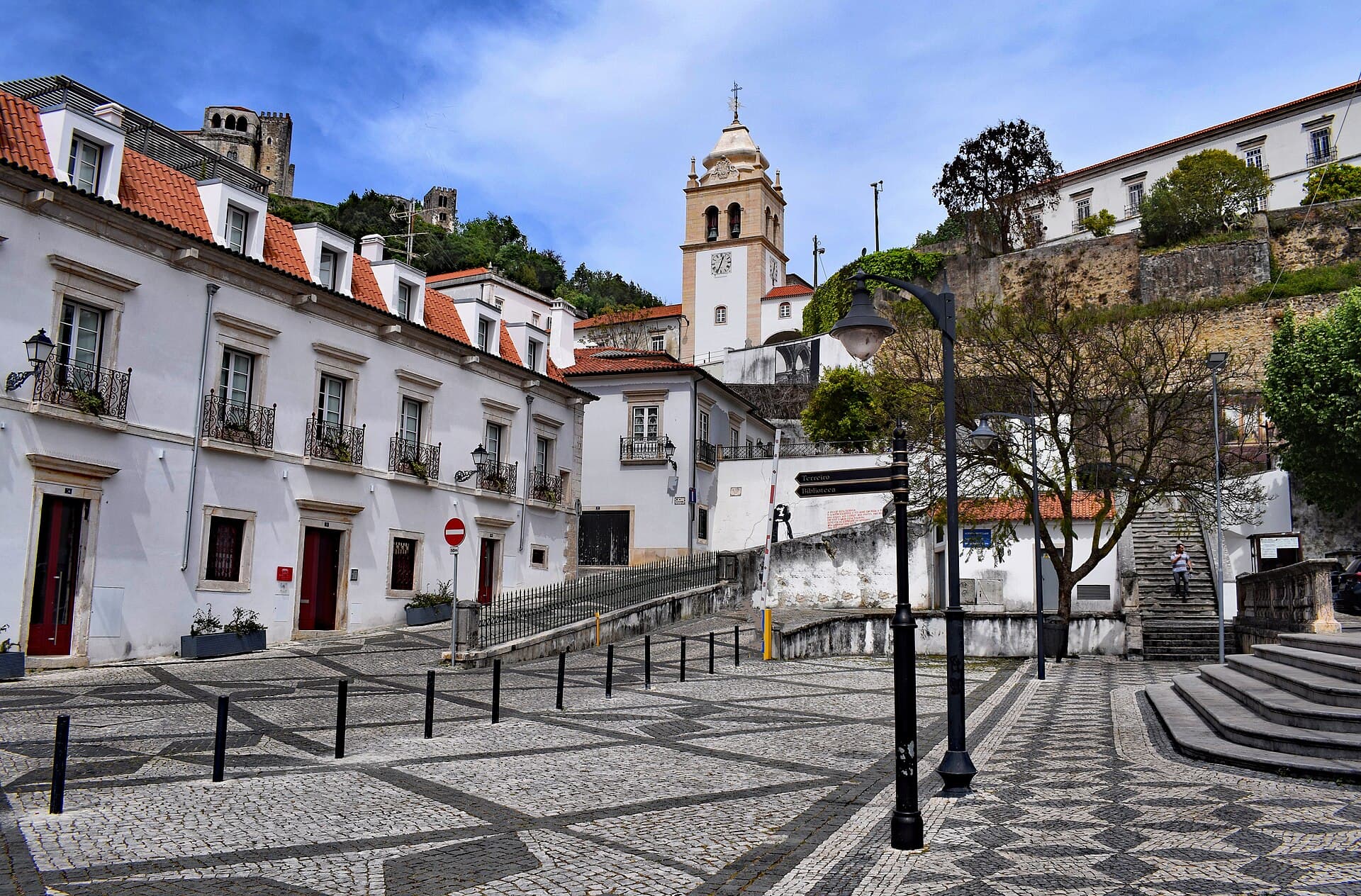 Jocelyn Erskine-Kellie from London, UK / CC BY-SA 2.0, via Wikimedia Commons
Zelfgeleide audiowandeling door Leiria — GPS-route, offline afspelen, meeslepende vertelling in 32 talen.
“Waar oude stenen spreken en een rivier zijn eigen koers vaart.”
Niet de ansichtkaarten. De verhalen die zelfs locals niet kennen — gefluisterd in je oor, precies waar ze gebeurden.
De Kathedraal van Leiria heeft een ongebruikelijk architectonisch geheim, dat haar onderscheidt van bijna elke andere kathedraal in Portugal.
De Lis-rivier, een bepalend kenmerk van Leiria, bezit een geografische eigenaardigheid die hem tamelijk ongebruikelijk maakt.
Observeer het wapen van Leiria, en u zult twee kraaien ontwaren. Hun aanwezigheid is meer dan louter decoratief; het is een knipoog naar een cruciaal moment in het verhaal van de stad.
Ontdek elk geheim van Leiria
Elk adres, elke onthulling volledig — in je oor, precies waar het gebeurde.
Jij kiest je stops. Jij wandelt. De stem onthult wat de anderen missen.


Je zelfgeleide audiotour van Leiria is klaar — kies je bezienswaardigheden, kies je taal en start zodra je aankomt.
KopenLume heeft een ingebouwde augmented-reality-gids. Houd je telefoon omhoog: de camera toont de straat voor je, met een oplichtende pijl over het echte beeld die altijd naar je volgende stop wijst — geen kaart om uit te puzzelen, geen verkeerde afslagen. Zoals alles in Lume werkt het volledig offline.
Leiria, een stad in centraal Portugal, biedt een boeiende mix van historische diepgang en hedendaagse energie. Gelegen aan de oevers van de Lis-rivier, is het de hoofdstad van zijn district en een handige tussenstop tussen Lissabon en Porto. Het stadslandschap wordt bepaald door zijn middeleeuwse kasteel, dat vanaf een heuveltop over de stad uitkijkt, en een historisch centrum vol smalle, kronkelende straatjes.
Leiria is een stad van intrigerende contrasten, waar oude Romeinse fundamenten een levendige universitaire sfeer ontmoeten. Het is een plek waar je door eeuwen van menselijke inspanningen kunt dwalen, van Keltisch-Iberische nederzettingen tot Moorse invloeden en de aanvang van de Portugese democratie. Naast de historische kern biedt Leiria gemakkelijke toegang tot de stranden van de Zilverkust van Portugal en het weelderige dennenbos Pinhal de Leiria, wat een diversiteit aan ervaringen voor bezoekers biedt.
De regio rond Leiria is sinds prehistorische tijden bewoond, met vroege nederzettingen door de Keltisch-Iberische stam van de Turduli Oppidani, gevolgd door de Romeinen, die een nederzetting genaamd Collippo uitbreidden. De stenen van deze oude Romeinse stad werden later hergebruikt om een groot deel van het middeleeuwse Leiria te bouwen. In de 8e eeuw bezetten de Moren het gebied.
Het moderne verhaal van Leiria begon echt in 1135, toen Afonso I, de eerste koning van Portugal, het gebied heroverde en opdracht gaf tot de bouw van een kasteel op een strategische heuveltop. Dit fort was cruciaal voor de verdediging tijdens de Reconquista, een periode waarin het grondgebied regelmatig van handen wisselde tussen christelijke en Moorse troepen. Het belang van Leiria groeide, en in 1254 was het de locatie van de eerste Cortes (parlement) waar vertegenwoordigers van het gewone volk officieel aanwezig waren, wat een belangrijke stap betekende richting parlementaire monarchie in Portugal.
Koning Dinis I, vaak de 'Dichterkoning' genoemd, speelde begin 14e eeuw een cruciale rol in de ontwikkeling van Leiria. Hij transformeerde het kasteel van een militair bastion tot een koninklijk paleis, waar hij vaak verbleef met zijn vrouw, koningin Isabel. Koning Dinis initieerde ook de grootschalige aanplant van het Pinhal de Leiria, een uitgestrekt dennenbos langs de kust, om zandverstuiving tegen te gaan en hout te leveren voor de schepen van het Tijdperk van de Ontdekkingen. Leiria kreeg stadsrechten en werd in 1545 de zetel van een bisdom, met de bouw van zijn kathedraal die begon in 1559. De stad kende uitdagingen, waaronder de verwoestende aardbeving van 1755 en schade tijdens de Napoleontische invasies in 1808. Ondanks deze tegenslagen heeft Leiria zijn historische aantrekkingskracht behouden, duidelijk zichtbaar in zijn middeleeuwse architectuur en cultureel erfgoed.
Begin uw verkenning bij het Kasteel van Leiria, een middeleeuws fort dat een weids uitzicht over de stad biedt. Het kasteel, oorspronkelijk een militair bolwerk, werd omgebouwd tot een koninklijk paleis en beschikt over een opmerkelijke loggia uit de 15e eeuw. Binnen kunt u de muren, torens en koninklijke appartementen verkennen.
Daal af naar het historische centrum en bezoek het Praça Rodrigues Lobo, het belangrijkste plein van de stad, een levendige hub met cafés en winkels. In de buurt staat de Kathedraal van Leiria, een maniëristisch gebouw uit de 16e eeuw, dat getuigt van de veerkracht van de stad, aangezien het werd herbouwd na de aardbeving van 1755 en een brand in 1810.
Wandel langs de Jardim Luís de Camões, een groen gebied naast de Lis-rivier, ideaal voor een ontspannen wandeling. Ontdek de Moinho do Papel (Papermolen Museum), een gerestaureerde watermolen uit de 15e eeuw die de eerste papierfabriek van Portugal was. Voor een diepere duik in de lokale geschiedenis toont het Museu de Leiria, gehuisvest in het voormalige klooster van Santo Agostinho, artefacten van prehistorische tijden tot religieuze kunst. De stad biedt ook het Museu da Imagem em Movimento (M|I|MO), een museum gewijd aan de geschiedenis van de bewegende beelden.
Leiria heeft een mediterraan klimaat met warme, droge zomers en milde, natte winters. De meest geschikte tijd om te bezoeken voor activiteiten in warm weer is van half juni tot half september, wanneer de temperaturen gemiddeld tussen 24°C en 27°C liggen, en de luchten het helderst zijn met minimale regenval. Lente (maart-mei) en herfst (september-november) bieden aangename temperaturen, zachte briesjes en af en toe regenbuien, waardoor ze geschikt zijn voor het verkennen van de stad en het bloeiende platteland.
Leiria is gemakkelijk bereikbaar, gelegen ongeveer halverwege tussen Lissabon en Porto. U kunt de stad met de auto, trein of bus vanuit beide grote steden bereiken, met een reistijd van ongeveer 90 minuten vanuit Lissabon. Binnen Leiria is het stadscentrum compact en grotendeels beloopbaar, hoewel sommige gebieden rond het kasteel heuvelachtig zijn. Een lokaal busnetwerk biedt betaalbaar vervoer binnen de stadsgrenzen. Voor het verkennen van het bredere district Leiria, inclusief de stranden en natuurparken, wordt het huren van een auto aanbevolen. Hoewel veel mensen in toeristische gebieden Engels spreken, is het altijd nuttig om een paar Portugese zinnen te kennen. Dineren begint meestal later in Portugal, dus verwacht geen diner voor 19:30 uur.
Leiria — Koreaans, Chinees, Hebreeuws en nog 29 talen, elke stop verteld door een moedertaalspreker. Het grootste taalaanbod van alle zelfgeleide audiotours.
Beschikbaar in: