Floresta Petrificada de Lesbos
Imagine um bosque onde as árvores se erguem como pedra, as suas formas antigas perfeitamente preservadas.
História completa desbloqueada no tour
 Koutrolm / Public domain, via Wikimedia Commons
Tour de áudio autoguiado por Lesbos — rota GPS a pé, reprodução offline, narração envolvente em 32 idiomas.
“Onde ecos antigos encontram encostas férteis e um mar azul-celeste.”
Não os postais. As histórias que nem os locais conhecem — sussurradas ao seu ouvido, exatamente onde aconteceram.
Imagine um bosque onde as árvores se erguem como pedra, as suas formas antigas perfeitamente preservadas.
O ar desta aldeia carrega uma fragrância distinta e aromática.
A ilha é coberta por um número surpreendente de oliveiras.
Descubra cada segredo de Lesbos
Cada endereço, cada revelação na íntegra — no seu ouvido, exatamente onde aconteceu.
Você escolhe as suas paragens. Você caminha. A voz revela o que os outros perdem.


O seu tour áudio autoguiado de Lesbos está pronto — escolha os seus pontos de interesse, selecione o seu idioma e comece no momento em que chegar.
ComprarA Lume inclui um guia de realidade aumentada. Levante o telemóvel: a câmara mostra a rua à sua frente, com uma seta luminosa sobreposta à imagem real que aponta sempre para a sua próxima paragem — sem mapa para decifrar, sem voltas erradas. Como tudo na Lume, funciona totalmente offline.
Lesbos, também conhecida como Lesvos, é a terceira maior ilha da Grécia, situada no nordeste do Mar Egeu, a meros 10 quilômetros da costa turca. A ilha desdobra uma cativante mistura de paisagens verdejantes e verdes no seu lado leste, caracterizadas por olivais ondulantes e vales arborizados, e um terreno mais dramático e vulcânico a oeste, perto de Sigri. Esta topografia variada, juntamente com o seu passado profundo e caráter autêntico, apresenta uma experiência singular de ilha grega que muitas vezes parece menos comercializada do que as suas contrapartes menores.
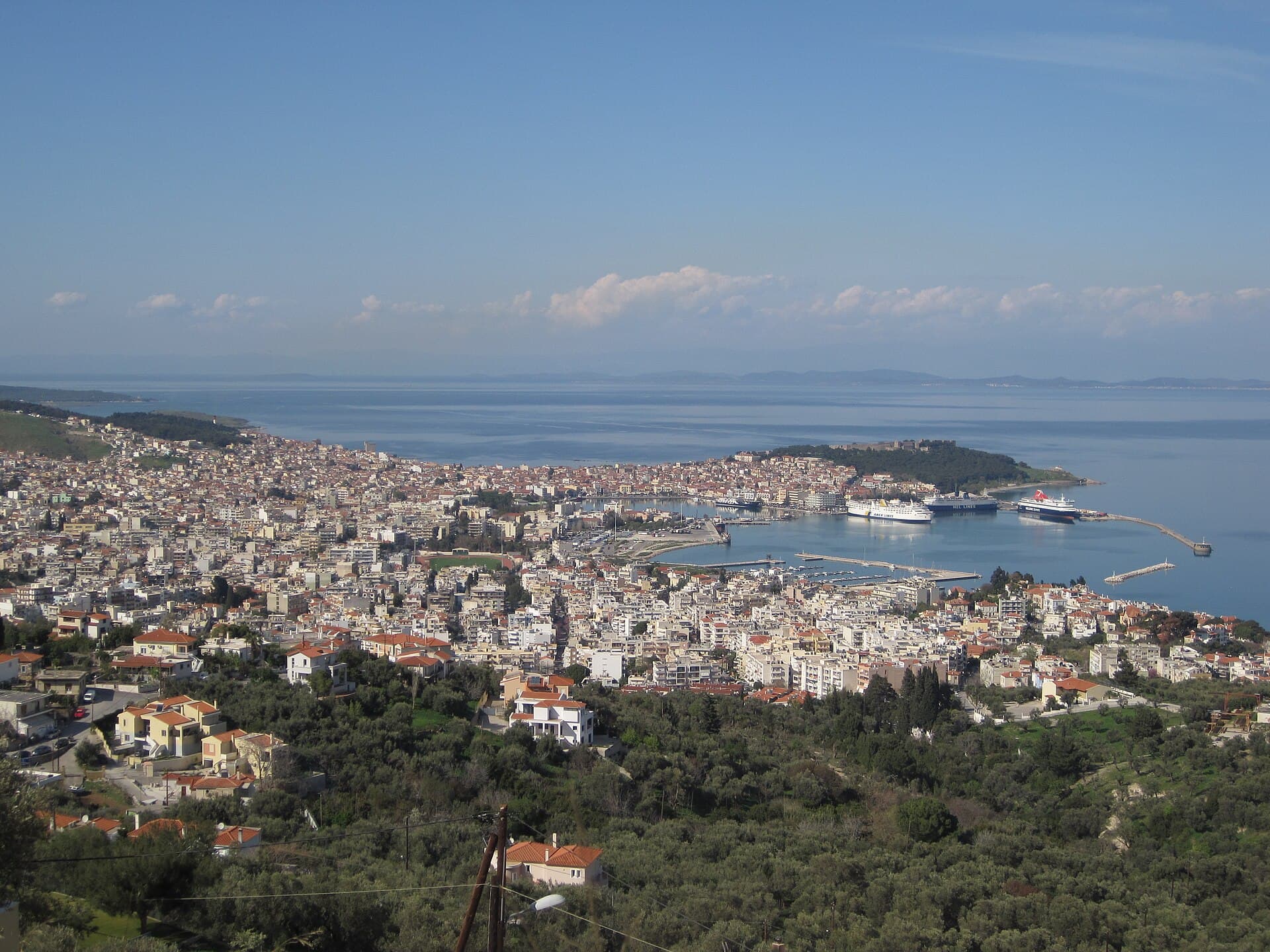
Mytilene, a capital, serve como o coração movimentado da ilha, com o seu porto e aeroporto a marcá-la como um ponto de chegada principal. A cidade entrelaça perfeitamente ruínas antigas com a vida contemporânea, exibindo mansões neoclássicas, igrejas bizantinas e um proeminente castelo medieval. Para além da capital, Lesbos revela pitorescas aldeias de pescadores, praias tranquilas e povoados montanhosos, cada um oferecendo um vislumbre das tradições duradouras e dos ritmos locais da ilha.
A história de Lesbos remonta a milénios, com os artefactos mais antigos datando do final do período Paleolítico. A ilha tem sido continuamente habitada desde pelo menos 3000 a.C., com notáveis assentamentos da Idade do Bronze como Thermi. De acordo com a mitologia grega clássica, a ilha recebeu o seu nome do herói Lesbos, e o seu primeiro rei, Macareus de Rodes, supostamente teve muitas filhas que emprestaram os seus nomes a algumas das maiores cidades da ilha, incluindo Mytilene.
Na antiguidade, Lesbos foi um proeminente nexo cultural e artístico, particularmente celebrado pelo seu vinho. O século VII a.C. viu a ilha florescer como um centro de realizações artísticas e filosóficas, produzindo figuras como a poetisa Safo, o estadista Pittacus e o filósofo Teofrasto. Safo, nascida em Eressos no final do século VII a.C., é reverenciada pela sua poesia lírica apaixonada, parte da qual expressava profundos desejos por mulheres, levando aos termos "amor sáfico" e "lesbianismo" serem derivados do nome da ilha.
Ao longo da sua existência, a posição estratégica de Lesbos no nordeste do Egeu tornou-a um território cobiçado. Experimentou períodos de independência, controlo persa no século VI a.C., e mais tarde tornou-se membro da Liga de Delos liderada por Atenas em 479 a.C. A ilha passou então para o domínio macedónio, ptolemaico e romano. Durante a Idade Média, Lesbos pertenceu ao Império Bizantino, e mais tarde, a família genovesa Gattilusio governou-a a partir de 1354. Os genoveses foram responsáveis pela construção de castelos formidáveis, incluindo os de Mytilene e Molyvos.
Em 1462, Lesbos foi conquistada pelo Império Otomano, que governou a ilha por mais de 450 anos até à Primeira Guerra Balcânica em 1912. Vestígios do domínio otomano ainda são evidentes hoje na arquitetura da ilha, incluindo mesquitas e banhos turcos. Lesbos finalmente tornou-se parte do Reino da Grécia em 1912, uma união solidificada pelo Tratado de Lausanne em 1923. A chegada de refugiados da Ásia Menor em 1922 contribuiu ainda mais para o desenvolvimento económico e cultural da ilha.
Comece a sua exploração em Mytilene, a capital da ilha, onde o imponente Castelo de Mytilene, um dos maiores da Grécia, oferece vistas amplas e um vislumbre das eras bizantina e otomana. Passeie pelo bairro aristocrático de Kioski com as suas mansões neoclássicas e explore o Museu Arqueológico para ver artefactos de Thermi e templos antigos de Eólia. Não deixe de visitar a Igreja de Agios Therapon com a sua cúpula distinta e de percorrer os mercados tradicionais ao longo da Rua Ermou.
Viaje para oeste até à Floresta Petrificada de Lesbos, um Geoparque Global da UNESCO. Este monumento natural singular, formado por erupções vulcânicas há 17 a 20 milhões de anos, apresenta troncos de árvores fossilizados, alguns atingindo 19,5 metros de comprimento. O Museu de História Natural da Floresta Petrificada de Lesbos em Sigri fornece mais informações sobre o passado geológico da ilha. Enquanto estiver em Sigri, visite o Castelo de Sigri, da era otomana.
Dirija-se para norte até Molyvos (também conhecida como Mithymna), uma aldeia encantadora coroada por um castelo bizantino, oferecendo vistas deslumbrantes sobre o Mar Egeu. Explore as suas vielas sinuosas e descubra os Banhos Otomanos. Perto dali, a aldeia de Petra é conhecida pelo Templo Sagrado de Panagia, acessível por 114 degraus esculpidos numa rocha de 40 metros de altura, proporcionando vistas panorâmicas.
Para um toque de cultura local, visite Plomari, famosa pelas suas destilarias de ouzo. Visite um museu como o Barbayanni Ouzo ou o Ouzo Plomari para aprender sobre o processo de destilação e provar a bebida. Lesbos também oferece numerosas fontes termais, como as de Thermi e Gera, conhecidas pelas suas propriedades terapêuticas.
A época ideal para visitar Lesbos para férias de praia estende-se de junho a meados de setembro, quando o tempo está quente e ensolarado, e a temperatura do mar atinge o pico em torno de 23-25°C. Para aqueles interessados em sítios históricos, caminhadas ou observação de aves, a primavera (abril e maio) e o outono (até outubro) são excelentes escolhas. Durante a primavera, a ilha está viva com flores silvestres e a migração de aves está no seu auge. O outono oferece temperaturas amenas, menos multidões e o início da colheita da azeitona. Lesbos permanece uma ilha ativa com negócios durante todo o ano, então mesmo nos meses mais frios, você encontrará a vida local florescendo.
Lesbos é facilmente acessível por via aérea, com voos a chegar ao Aeroporto Internacional de Mytilene (MJT), ou por ferry a partir da Grécia continental (Piraeus/Atenas, Tessalónica, Kavala) e outras ilhas gregas. Alugar um carro é altamente recomendado para explorar totalmente as diversas paisagens e numerosas aldeias da ilha, pois o transporte público pode ser limitado. O aluguer de carros pode variar entre 40-50€ por dia durante a época alta. As opções de alojamento são tipicamente estabelecimentos menores, geridos por famílias, em vez de grandes resorts, oferecendo uma experiência mais autêntica. Embora o inglês seja falado nas áreas turísticas, aprender algumas frases básicas em grego é sempre apreciado. A moeda local é o Euro. Lesbos é geralmente considerada uma ilha grega mais económica, especialmente fora da época alta.
Lesbos — coreano, chinês, hebraico e mais 29 idiomas, cada parada narrada por uma voz nativa. A maior variedade de idiomas entre os passeios de áudio autoguiados.
Disponível em: