Market Square
Avant l'emploi moderne, la Market Square de Letterkenny était le théâtre d'une tradition annuelle poignante.
L'histoire complète se débloque dans le tour
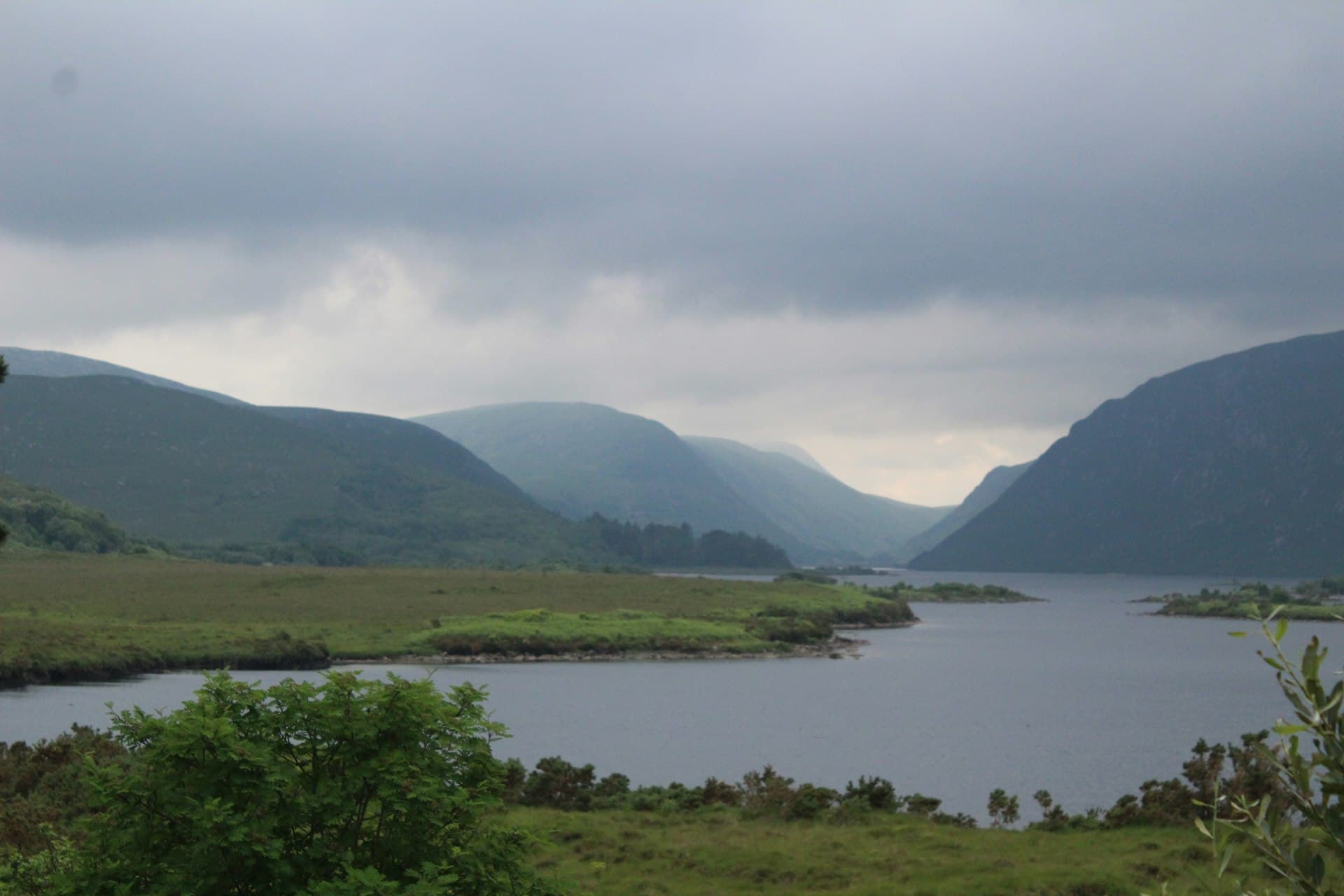 Photo: Rebecca Williams / Unsplash
Visite audio autoguidée de Letterkenny — parcours GPS à pied, lecture hors ligne, narration en 32 langues.
“Là où les paysages sauvages rencontrent un dynamisme urbain effervescent.”
Pas les cartes postales. Les histoires que même les habitants ignorent — soufflées à l'oreille, là où elles se sont passées.
Avant l'emploi moderne, la Market Square de Letterkenny était le théâtre d'une tradition annuelle poignante.
Entrez dans le plus ancien pub de Letterkenny, et vous ne buvez pas seulement une pinte ; vous faites un voyage dans le temps jusqu'à une année très précise.
Le nom même de 'Letterkenny' pourrait suggérer son ancienneté, mais la véritable genèse de la région réside dans un lieu encore plus ancien.
Découvrez tous les secrets de Letterkenny
Chaque adresse, chaque révélation en entier — dans ton oreille, là où elle s'est passée.
Tu choisis tes lieux. Tu marches. La voix te révèle ce que les autres ignorent.


Votre visite audioguidée de Letterkenny vous attend — choisissez vos lieux, votre langue, et lancez-vous dès votre arrivée.
AcheterLume intègre un guide en réalité augmentée. Levez votre téléphone : sa caméra montre la rue devant vous, avec une flèche lumineuse posée sur l'image réelle qui pointe toujours vers votre prochain arrêt — aucune carte à déchiffrer, aucun mauvais virage. Comme tout dans Lume, ça fonctionne entièrement hors-ligne.
Letterkenny, la plus grande ville du comté de Donegal, fonctionne comme un centre dynamique, mêlant profondeur historique et énergie contemporaine. Positionnée le long de la rivière Swilly et à quelques kilomètres de la côte atlantique, elle sert de porte d'entrée aux paysages spectaculaires du nord-ouest de l'Irlande. Connue sous le nom de 'ville cathédrale', la silhouette de Letterkenny est définie par la flèche imposante de la cathédrale St. Eunan, témoignant de son héritage durable. La scène artistique et culturelle active de la ville, ainsi que ses pubs traditionnels et ses restaurants variés, offrent une atmosphère accueillante aux visiteurs en quête d'une expérience irlandaise authentique sans l'agitation des grandes villes.
L'emplacement stratégique de Letterkenny en fait un point de départ idéal pour explorer la région plus vaste du Donegal, fréquemment louée pour sa splendeur naturelle. De là, les voyageurs peuvent facilement s'aventurer vers les promontoires saisissants d'Inishowen, Fanad, Rosguill et Horn Head, ou explorer les étendues immaculées du parc national de Glenveagh. La ville elle-même, avec une population de plus de 19 000 habitants, offre un mélange d'architecture historique et d'équipements contemporains, reflétant son évolution d'un petit village de marché à un important centre commercial et culturel.
## Du territoire d'O'Cannon à la ville de la Plantation Les origines de Letterkenny sont ancrées dans l'ancien territoire de Tír Conaill, l'actuel Donegal, autrefois sous la domination du clan O'Cannon, dont le nom se retrouve dans la désignation irlandaise de la ville, Leitir Ceanainn, signifiant 'la colline aux cheveux clairs' ou 'le territoire de la colline des O'Cannons'. Bien qu'aucun bastion O'Cannon ne se trouve directement à Letterkenny, leur influence médiévale s'étendait jusqu'à Conwal, à proximité.
La ville moderne a commencé à prendre forme lors de la Plantation d'Ulster au début du XVIIe siècle. En 1611, le capitaine écossais Patrick Crawford se voit attribuer 1 000 acres, et après sa mort, le mariage de sa veuve avec Sir George Maybury conduit à l'établissement d'une ville de marché avec cinquante maisons au toit de chaume près de Lough Swilly. En 1657, Letterkenny est un centre florissant, accueillant un marché hebdomadaire et deux foires annuelles, favorisant la prospérité tout au long des XVIIe et XVIIIe siècles avec des maisons de plantation, des moulins et un port en pleine croissance.
## Croissance et Transformation La position stratégique de Letterkenny en tant que premier point de traversée de la rivière Swilly a été cruciale pour son développement, devenant le principal centre commercial et industriel du Donegal. La Main Street de la ville, exceptionnellement longue, a été conçue pour faciliter le commerce et reste l'une des plus longues d'Irlande. Le transport ferroviaire a encore stimulé sa croissance, avec l'ouverture du chemin de fer de Letterkenny en 1883, puis sa connexion à Burtonport, et l'introduction de rames diesel par le County Donegal Railway en 1903.
Des monuments architecturaux importants ont émergé durant cette période. La cathédrale St. Eunan, une structure gothique néo-gothique proéminente, a été construite entre 1890 et 1900 et consacrée en 1901, sa flèche de 64 mètres dominant la ligne d'horizon. Le Donegal County Museum, à l'origine un hospice construit en 1845, a ensuite servi diverses fonctions communautaires avant de devenir un musée en 1987. La ville a également vu l'établissement d'institutions comme le St. Eunan's College (1904-1906) et le couvent de Loreto (1854), contribuant à son tissu éducatif et social.
Tout au long de son histoire, Letterkenny s'est adaptée et a évolué. Le conseil municipal, créé en 1899, a supervisé des améliorations comme l'éclairage au gaz en 1856. Autrefois une ville principalement agricole, elle s'est transformée en un centre administratif et culturel moderne. En 2015, Letterkenny a même été reconnue comme la ville la plus propre d'Irlande.
Commencez votre exploration sur Main Street à Letterkenny, une artère animée bordée de boutiques, de pubs et de cafés, remarquable pour être l'une des plus longues d'Irlande. Un élément central est la Cathédrale de St. Eunan et St. Columba, un édifice néo-gothique frappant achevé en 1901, avec une flèche s'élevant à 64 mètres. À l'intérieur, admirez les vitraux complexes, dont certains de l'artiste irlandais Michael Healey, et les sculptures détaillées. À proximité, le Donegal County Museum, logé dans un ancien hospice du XIXe siècle, offre un aperçu complet du patrimoine de la région, des clans médiévaux à la famine irlandaise.
Pour un aperçu de la culture locale, assistez à une représentation au An Grianán Theatre ou explorez les expositions et événements musicaux au Regional Cultural Centre. Si vous êtes intéressé par les pubs irlandais traditionnels, le Central Bar, établi en 1808, offre une atmosphère accueillante avec de la musique live. Pour les amateurs de plein air, le Letterkenny Town Park offre des espaces verts pour la détente. Au-delà de la ville, envisagez un court trajet en voiture jusqu'aux Newmills Corn and Flax Mills, un complexe historique avec l'une des plus grandes roues hydrauliques en fonctionnement d'Irlande. Letterkenny sert également d'excellente base pour des excursions d'une journée au Parc National de Glenveagh, abritant un château du XIXe siècle, et les paysages côtiers spectaculaires du Wild Atlantic Way.
La période la plus favorable pour visiter Letterkenny s'étend de la fin du printemps au début de l'automne, de mai à septembre. Cette période offre des températures plus douces et des heures d'ensoleillement prolongées, idéales pour explorer la ville et ses attractions naturelles environnantes. Juin, juillet et août offrent généralement le temps le plus chaud, avec des maximales quotidiennes moyennes d'environ 17°C (63°F), ce qui est confortable pour les activités de plein air. Bien que le temps irlandais puisse être imprévisible, ces mois connaissent généralement moins de pluie par rapport aux périodes plus humides de l'automne et de l'hiver. Pour un équilibre entre beau temps et moins de foule, envisagez de visiter en mai, juin ou septembre.
Letterkenny est facilement accessible, bien qu'elle n'ait pas son propre aéroport. L'option la plus proche est l'aéroport de Donegal (CFN), à environ 40 km. Alternativement, vous pouvez atterrir à Dublin et louer une voiture pour le trajet d'environ 203 km. La ville est un centre pour les services de bus locaux, bien que ceux-ci puissent être peu fréquents pour des visites touristiques approfondies.
Les options d'hébergement à Letterkenny vont des hôtels classiques 3-4 étoiles aux Bed & Breakfasts familiaux confortables et aux auberges de jeunesse abordables. Des locations de vacances sont également disponibles, le centre-ville offrant une forte concentration de choix. Le centre-ville propose un large éventail de services, y compris des banques, des magasins et diverses options de restauration, de la cuisine irlandaise traditionnelle à la cuisine internationale. Les habitants sont réputés pour leur hospitalité, et les rues sont souvent animées par de la musique live et l'arôme de pâtisseries fraîches.
Letterkenny en coréen, en chinois ou en hébreu — et dans 29 autres langues, chaque étape narrée par une voix native. La plus large gamme de langues de tous les audioguides autoguidés.
Disponible en :