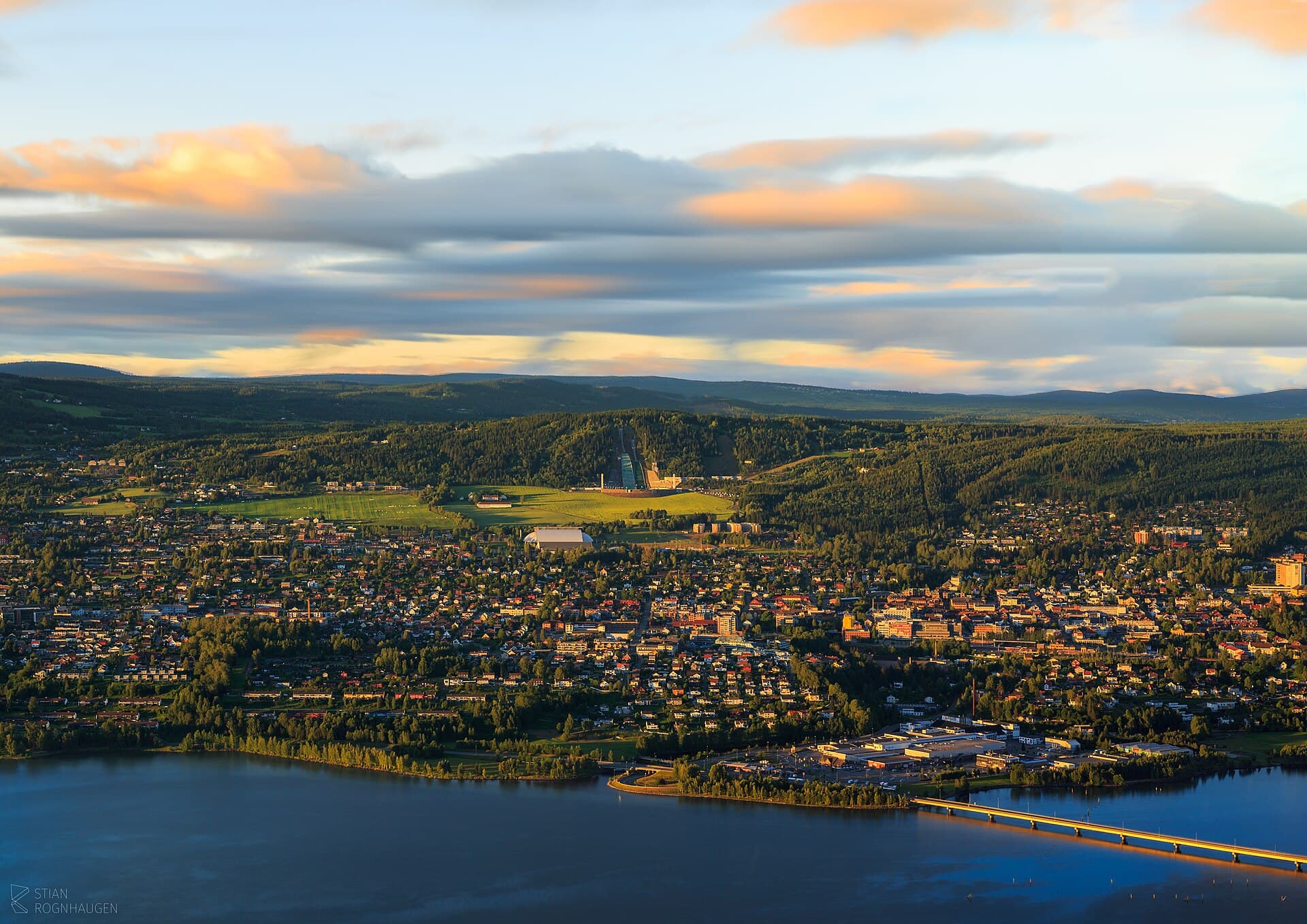
Lillehammer, NorwayStian Rognhaugen / CC BY-SA 4.0, via Wikimedia Commons
NO

Lillehammer

Where Olympic legacy meets literary whispers and the wild Nordic heart.

The secrets of Lillehammer

Lillehammer, as no one tells it.

Not the postcards. The stories even locals don't know — whispered in your ear, right where they happened.

3 secrets below. Many more wait inside the tour.
Lysgårdsbakkene Ski Jump

This iconic Olympic venue holds a secret about its construction that goes beyond engineering marvel.

Full story unlocks in the tour
Maihaugen Open-Air Museum

Among its historic buildings, one particular structure has a connection to a Nobel laureate.

Full story unlocks in the tour
Lillehammer's Coat of Arms

The town's official emblem tells a dramatic tale of survival from the 13th century.

Full story unlocks in the tour
The full tour

Discover every secret of Lillehammer

Every address, every reveal in full — in your ear, right where it happened.

Get the key to Lillehammer

You pick your stops. You walk. The voice reveals what the others miss.

Choose your time

How long do you have in Lillehammer?

No tours available yet. Check back soon — we're preparing them.

About Lillehammer

The story of Lillehammer

Lillehammer, a town in southeastern Norway, rests at the northern end of Lake Mjøsa, where the Lågen River flows into the country's largest lake. This striking location, within the Gudbrandsdalen valley, has shaped its identity as both a trading and farming settlement and a cultural center. While internationally recognized for hosting the 1994 Winter Olympics, Lillehammer offers a blend of outdoor adventure, enduring history, and a spirited arts scene.

The town's compact core features well-preserved 19th-century wooden houses, many constructed in the "Swiss style" with low heights, gabled roofs, and carved decor, creating a distinctive and inviting atmosphere. Beyond its evocative streets, Lillehammer serves as a gateway to national parks like Rondane, Jotunheimen, and Langsua, providing ample opportunities for hiking, cycling, and skiing. In 2017, Lillehammer was designated a UNESCO City of Literature, underscoring its literary heritage and lively cultural scene.

From exploring Olympic venues to immersing oneself in open-air museums and art galleries, Lillehammer presents a multifaceted experience. It's a place where the echoes of ancient sagas meet modern sporting achievements, and where nature's grandeur is always within reach.

History

From Ancient Settlements to Market Town

The history of settlement in the Lillehammer area dates back to ancient times, with evidence suggesting habitation since the Iron Age. The market here was first mentioned in Håkon Håkonson's saga in 1390, and the area was also a site for Thing assembly in the same year. The name Lillehammer itself derives from the Old Norse word Litlikhamarr, meaning "little rocky hill," to distinguish it from the nearby town of Hamar.

Lillehammer officially received its market town status on August 7, 1827, which spurred its economic and commercial development. Its strategic location at the northern end of Lake Mjøsa and at the entrance to the Gudbrandsdalen valley made it a natural gateway for trade between southern and central Norway. The Mesna River, flowing through the town, provided power for early mills and sawmills, contributing to its industrial growth.

A Hub for Arts and Culture

By the end of the 19th century, Lillehammer had begun to attract artists and writers, fostering a creative community known as the "Lillehammer School." This artistic flourishing laid the groundwork for the town's reputation as an important cultural center. Notable literary figures, including Nobel laureates Bjørnstjerne Bjørnson and Sigrid Undset, lived and worked in the Lillehammer region, and their homes are now open as museums.

The Olympic Legacy

Lillehammer gained international prominence when it hosted the XVII Winter Olympic Games in 1994. This event was particularly noteworthy for its strong environmental focus and compact design, earning it the moniker "White Green Games." Measures such as fining contractors for excessive tree cutting and constructing the ice hockey rink inside a mountain cave to conserve energy set new standards for sustainability in major sporting events. The success of the 1994 Games led Lillehammer to also host the Winter Youth Olympic Games in 2016, further solidifying its status as a winter sports destination.

Modern Lillehammer

Today, Lillehammer continues to embrace its cultural and sporting heritage. It is home to the largest literature festival in the Nordic countries and was designated a UNESCO City of Literature in 2017. The town's infrastructure, reshaped by the Olympics, continues to support a lively community focused on sport, culture, and outdoor life.

What to see

Begin your exploration at Maihaugen Open-Air Museum, one of Northern Europe's largest, showcasing over 200 historical buildings from the 12th century to the present day. Wander through rural farmsteads, a stave church, and a residential area to experience Norwegian life through the centuries. Adjacent to Maihaugen is the Norwegian Olympic Museum, where you can delve into the history of the Olympic Games, with a special focus on the 1994 Lillehammer Winter Olympics and Norway's sporting achievements.

For expansive views of Lillehammer and Lake Mjøsa, take the chairlift or walk the 936 steps to the top of the Lysgårdsbakkene Ski Jump, an iconic venue from the 1994 Olympics. If you're an adrenaline enthusiast, consider trying the bobsled or bobraft experience at the Lillehammer Olympic Bob- and Luge Track at Hunderfossen, Scandinavia's only artificially refrigerated track.

Stroll along the charming pedestrian street in Lillehammer's town center, admiring the colorful 19th-century wooden houses. Visit the Lillehammer Art Museum, housed in a distinctive building designed by Snøhetta, which features Norwegian art from the 1830s to the present. For a quieter natural escape, explore the Mesna River Walks, following trails past waterfalls and old industrial sites close to the town center.

When to visit

The ideal time to visit Lillehammer depends on your interests. For warm-weather activities and outdoor recreation, the summer months from early July to mid-August offer mild temperatures, with average highs around 18°C (64°F). July is generally the warmest month, though nights can still be cool, with temperatures dropping to around 8-9°C (46-48°F). Precipitation is also highest in July, with an average of 3.8 inches.

For winter sports enthusiasts, a long and snowy winter typically spans from November to March, providing ideal conditions for skiing and other activities. February offers similar cold temperatures to January but with longer daylight hours, while March sees even longer days as spring approaches. Spring, particularly March and April, is considered the least rainy period, making it suitable for those who prefer to avoid frequent precipitation.

Practical

Lillehammer is easily accessible by train from Oslo, with the journey taking approximately 1 hour and 40 minutes. Trains also connect Lillehammer to Trondheim (around 4.5 hours) and Åndalsnes (around 3.5 hours, with a change at Dombås). Oslo Airport Gardermoen (OSL) is the main international air gateway, located about 108 km from Lillehammer.

Once in Lillehammer, the town center is compact and walkable. For exploring further afield, local bus services are frequent and connect to nearby attractions and ski resorts. You can purchase bus tickets using the EnTur app or directly from the driver. Taxis are also available from Lillehammer Skysstasjon, the main terminal for buses, trains, and taxis. For getting around town, electric scooters and e-bikes can be rented via apps like Bolt or ShareBike.

Good to know
What is Lillehammer most famous for?
Lillehammer is most famous globally for hosting the 1994 Winter Olympics, an event remembered for its strong environmental focus. It also hosted the 2016 Winter Youth Olympics.
Is Lillehammer a UNESCO City of Literature?
Yes, Lillehammer was designated a UNESCO City of Literature in 2017, recognizing its enduring literary traditions and lively cultural scene.
What is Maihaugen?
Maihaugen is one of Northern Europe's largest open-air museums, featuring around 200 historical buildings that showcase Norwegian life from the 12th century to the present day.
Can you still experience the Olympic venues?
Yes, many of the venues from the 1994 Winter Olympics, such as the Lysgårdsbakkene Ski Jump and the Olympic Bob- and Luge Track, are still active and open to visitors.
What is the Birkebeiner race?
The Birkebeinerrennet is a famous cross-country ski marathon that commemorates the legendary 1206 journey of Birkebeiner skiers who saved the two-year-old Prince Haakon Haakonsson. Participants in the race carry a 7.7 lb backpack to simulate the weight of the prince.
Are there art museums in Lillehammer?
Yes, the Lillehammer Art Museum features an impressive collection of Norwegian visual art from the 1830s to the present day, housed in a distinctive building designed by Snøhetta.
Lillehammer
From€9.00
No booking · activate anytime · 12h to walk it
Get the key to Lillehammer