Cathédrale de Lincoln
Pendant plus de deux siècles, la cathédrale de Lincoln a détenu un record mondial surprenant.
L'histoire complète se débloque dans le tour
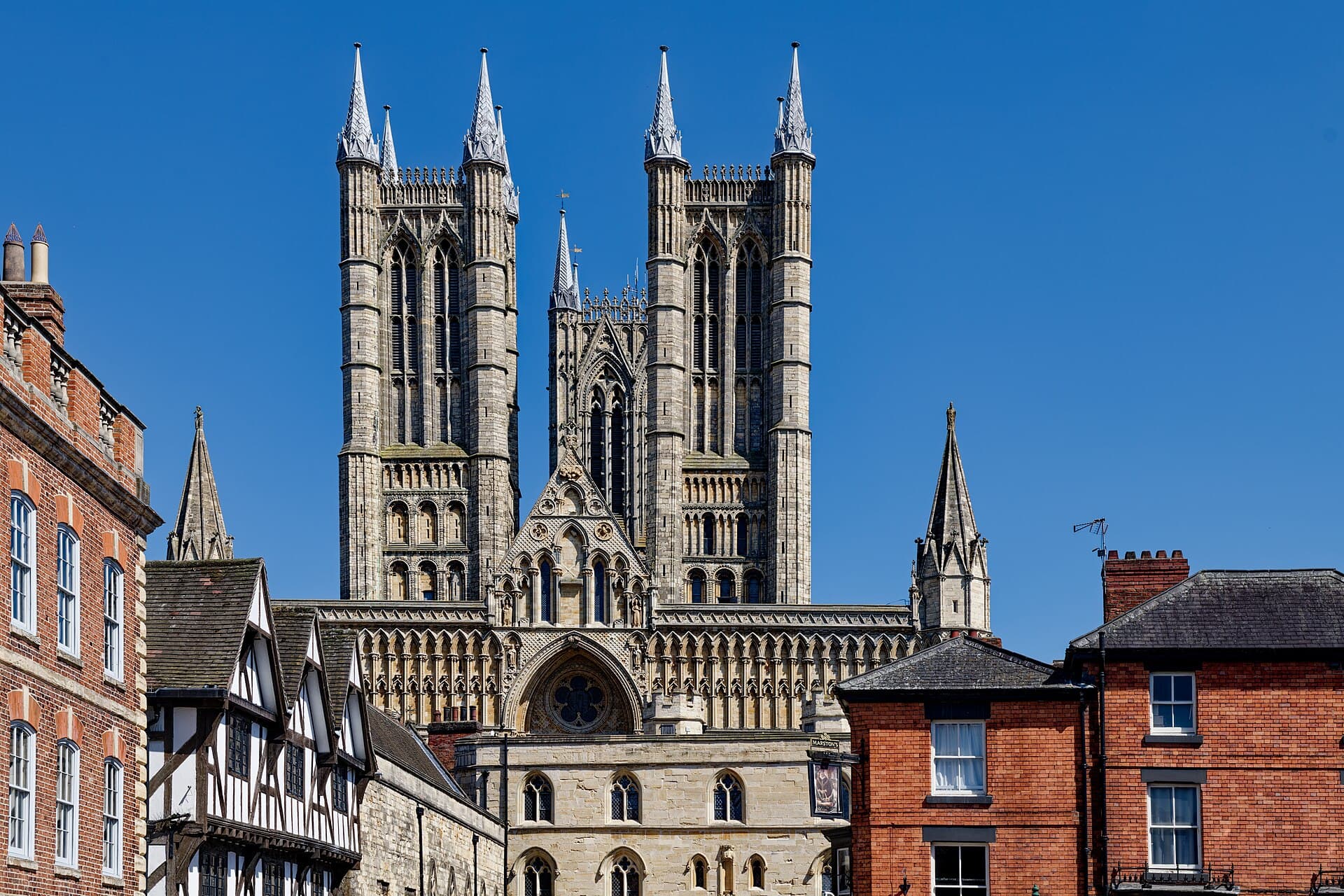 Tilman2007 / CC BY-SA 4.0, via Wikimedia Commons
Visite audio autoguidée de Lincoln — parcours GPS à pied, lecture hors ligne, narration en 32 langues.
“Là où les voies romaines rencontrent les flèches gothiques, et l'histoire parle de chaque pierre.”
Pas les cartes postales. Les histoires que même les habitants ignorent — soufflées à l'oreille, là où elles se sont passées.
Pendant plus de deux siècles, la cathédrale de Lincoln a détenu un record mondial surprenant.
Entrez dans une chapelle où les fidèles pouvaient s'entendre, mais ne pas se voir.
Cherchez attentivement dans le Chœur des Anges de la cathédrale de Lincoln une figurine de pierre malicieuse avec une légende.
Découvrez tous les secrets de Lincoln
Chaque adresse, chaque révélation en entier — dans ton oreille, là où elle s'est passée.
Tu choisis tes lieux. Tu marches. La voix te révèle ce que les autres ignorent.


Votre visite audioguidée de Lincoln vous attend — choisissez vos lieux, votre langue, et lancez-vous dès votre arrivée.
AcheterLume intègre un guide en réalité augmentée. Levez votre téléphone : sa caméra montre la rue devant vous, avec une flèche lumineuse posée sur l'image réelle qui pointe toujours vers votre prochain arrêt — aucune carte à déchiffrer, aucun mauvais virage. Comme tout dans Lume, ça fonctionne entièrement hors-ligne.
Située au sommet d'une colline, Lincoln est une ville où les couches d'histoire sont visiblement gravées dans son paysage, offrant une connexion palpable à son passé romain, normand et médiéval. La silhouette de la ville est définie par sa majestueuse Cathédrale et son Château, qui témoignent de siècles d'importance architecturale et historique. Au-delà de ces structures emblématiques, Lincoln se déploie avec des artères anciennes, des bâtiments historiques et une atmosphère qui mêle l'attrait antique à la vie moderne.
L'emplacement stratégique de Lincoln, reliant le nord et le sud de l'Angleterre, en a fait une colonie importante à travers le temps. De ses origines en tant que communauté de l'âge du fer à sa transformation en colonia romaine, puis en un puissant centre commercial de laine médiéval, la ville s'est continuellement réinventée tout en préservant son patrimoine. Les visiteurs peuvent explorer une ville où chaque tournant révèle une histoire, des arches romaines toujours utilisées aux ponts médiévaux avec des boutiques construites dessus.
La ville offre un mélange unique de monuments culturels, de commerces indépendants et d'espaces verts, ce qui en fait une destination attrayante pour ceux qui cherchent à s'immerger dans le passé durable de l'Angleterre. Que vous soyez attiré par la grande architecture, les légendes intrigantes ou simplement le caractère d'une ville anglaise historique, Lincoln offre un voyage évocateur à travers le temps.
Les origines de Lincoln remontent à un établissement de l'âge du fer, stratégiquement positionné près du Brayford Pool sur la rivière Witham, au pied d'une colline proéminente. Les Romains ont reconnu cet emplacement avantageux, établissant une forteresse légionnaire vers 50-60 après J.-C. Cette forteresse a finalement évolué en Lindum Colonia vers 86 après J.-C., une ville autonome pour les légionnaires à la retraite, reflétant son statut de modèle d'urbanisme romain. Pendant cette période, Lincoln rivalisait avec Londres en importance, présentant une ville élaborée avec un forum, une basilique, des thermes et un aqueduc. Des vestiges de cette époque, tels que la Newport Arch – la seule arche romaine du Royaume-Uni encore utilisée par la circulation – et des sections des murs de la ville, restent visibles aujourd'hui.
Après le départ des Romains, Lincoln a connu une période de déclin avant de devenir l'un des cinq bourgs sous la domination danoise dans l'est de l'Angleterre à l'époque viking, s'établissant comme un important centre commercial avec sa propre monnaie. La conquête normande à la fin du XIe siècle a marqué un autre moment pivot. Guillaume le Conquérant a ordonné la construction du château de Lincoln en 1068 sur le site de la forteresse romaine, et de la cathédrale de Lincoln en 1072, toutes deux stratégiquement positionnées au sommet de la colline. La cathédrale, un chef-d'œuvre de l'architecture gothique, fut consacrée en 1092 et, après une reconstruction suite à un tremblement de terre en 1185, devint célèbre pour être le plus haut bâtiment du monde pendant plus de deux siècles.
Au XIIe siècle, Lincoln prospéra comme l'une des villes les plus riches d'Angleterre, en grande partie grâce à son rôle significatif dans le commerce de la laine, réputée pour ses beaux tissus teints en « écarlate » et « vert ». Henri II accorda à la ville sa première charte en 1154, conférant des privilèges similaires à ceux de la Cité de Londres. La prospérité médiévale de la ville est toujours évidente dans des structures comme le High Bridge, construit vers 1160, qui est le plus ancien pont du Royaume-Uni avec des bâtiments occupés dessus. Le château de Lincoln a continué à servir de prison et de tribunal jusqu'à l'époque moderne, abritant l'une des quatre seules copies originales subsistantes de la Magna Carta de 1215. Ce témoignage durable de l'histoire, de l'établissement romain à la proéminence médiévale, continue de définir le caractère de Lincoln.
Commencez votre exploration au sommet de la colline avec la cathédrale de Lincoln, un exemple imposant d'architecture gothique qui fut autrefois le plus haut bâtiment du monde. À l'intérieur, cherchez les sculptures complexes, y compris le célèbre Diablotin de Lincoln. Adjacent à la cathédrale se trouve le château de Lincoln, une forteresse normande construite par Guillaume le Conquérant. Explorez ses murs pour des vues imprenables, visitez la prison victorienne avec sa chapelle unique à 'système séparé', et découvrez l'une des quatre copies originales subsistantes de la Magna Carta de 1215, exposée aux côtés de la Charte de la Forêt de 1217 dans un caveau dédié.
Descendez Steep Hill, une artère historique bordée de boutiques indépendantes, pour découvrir davantage le passé de Lincoln. À sa base, vous trouverez le High Bridge, le plus ancien pont du Royaume-Uni avec des bâtiments encore dessus. Dans toute la ville, en particulier dans le quartier de Bailgate, des vestiges romains sont visibles, y compris la Newport Arch, la seule arche romaine de Grande-Bretagne encore utilisée par la circulation. Ne manquez pas le Brayford Pool, le plus ancien port intérieur du Royaume-Uni, développé par les Romains pour le commerce.
Lincoln offre des expériences distinctes tout au long de l'année. Pour les activités par temps chaud, de fin juin à fin août est idéal, avec des températures maximales moyennes quotidiennes supérieures à 18 °C (65 °F) et les ciels les plus clairs en juillet. Le printemps (mars à mai) et l'automne (septembre à novembre) offrent des températures agréables et moins de foule, avec des jardins en fleurs au printemps et des couleurs riches en automne. Bien que les hivers (décembre à février) puissent être frais et humides, la ville se transforme en une destination festive, avec une gamme d'événements de Noël remplaçant l'ancien grand marché de Noël.
Lincoln est une ville où l'on peut se promener, en particulier la zone historique en hauteur autour de la Cathédrale et du Château, bien que Steep Hill porte bien son nom. Des options de transport public sont disponibles pour se déplacer plus loin. La ville est généralement considérée comme sûre, surtout comparée aux grandes zones urbaines du Royaume-Uni, avec un fort sentiment de communauté dans de nombreux quartiers. Cependant, comme toute ville, il est judicieux d'être conscient de votre environnement, en particulier dans les lieux plus fréquentés du centre-ville où des petits délits comme le vol peuvent se produire. Certaines zones comme Ermine et Monks Road ont été notées comme ayant des taux de criminalité plus élevés. La monnaie utilisée est la Livre Sterling (GBP). L'anglais est la langue parlée. Le Wi-Fi est généralement disponible dans les hébergements, les cafés et les espaces publics. Le pourboire est d'usage pour un bon service dans les restaurants (10-15%) et pour d'autres services comme les taxis. Les exigences de visa dépendent de votre nationalité, il est donc conseillé de vérifier les directives actuelles du gouvernement britannique avant votre voyage.
Lincoln en coréen, en chinois ou en hébreu — et dans 29 autres langues, chaque étape narrée par une voix native. La plus large gamme de langues de tous les audioguides autoguidés.
Disponible en :