The Mangturm, a medieval tower guarding Lindau's harbor, holds a secret about its original purpose, which was not defense.
Edda Praefcke / CC BY 2.5, via Wikimedia CommonsLindau
“Where Bavarian grace meets the Bodensee's calm waters.”
Lindau, as no one tells it.
Not the postcards. The stories even locals don't know — whispered in your ear, right where they happened.
The elaborate frescoes on Lindau's Old Town Hall narrate stories, but one detail within them suggests a struggle for power that shaped the city.
Lindau's iconic new lighthouse, a symbol of the city, has a surprising connection to a very different kind of structure from its past.
Discover every secret of Lindau
Every address, every reveal in full — in your ear, right where it happened.
You pick your stops. You walk. The voice reveals what the others miss.
How long do you have in Lindau?
No tours available yet. Check back soon — we're preparing them.
The story of Lindau
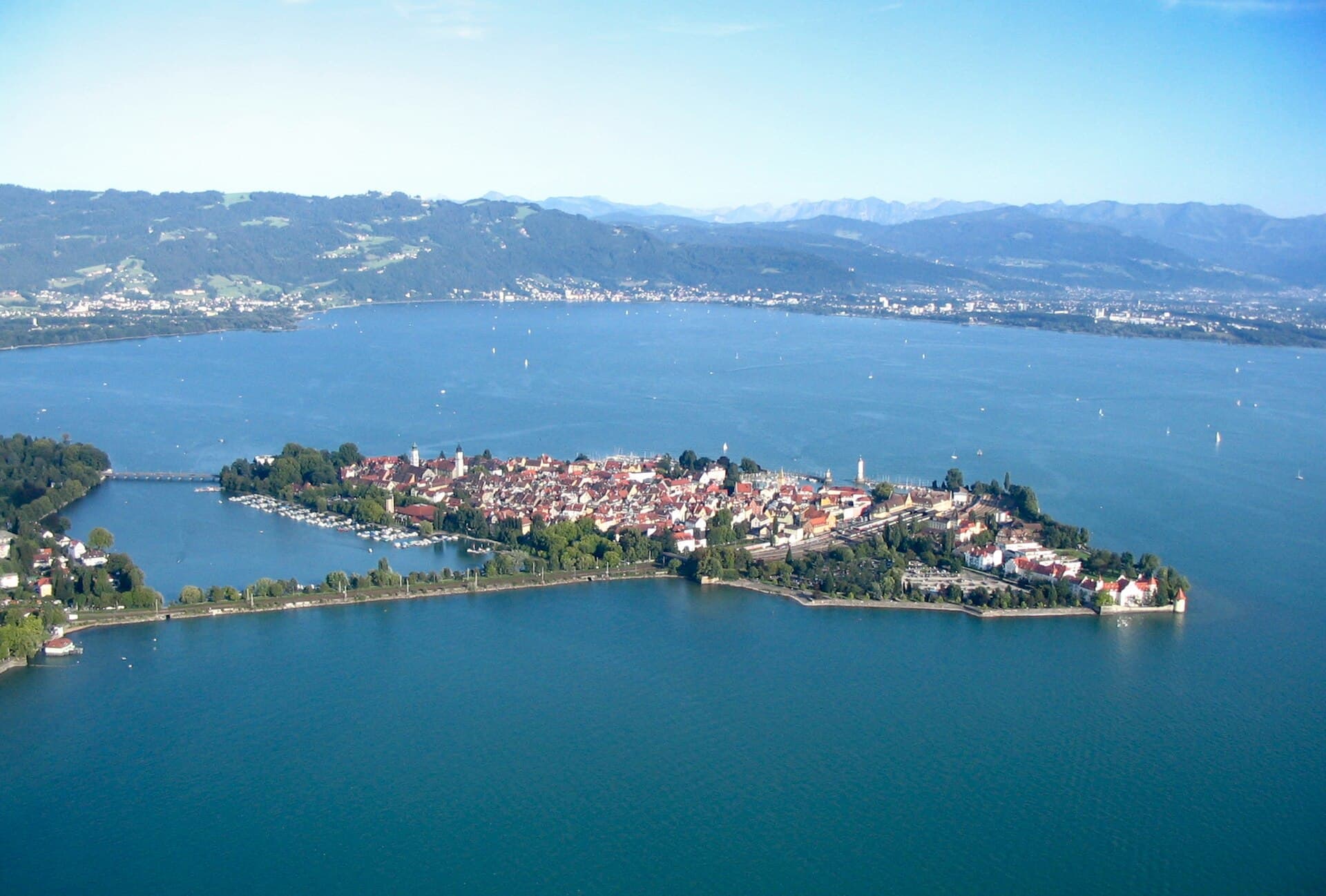
Lindau, an enchanting island town on Lake Constance (Bodensee) in Bavaria, Germany, offers a distinctive blend of medieval allure and natural splendor. Connected to the mainland by a bridge and a railway dam, the island's harbor entrance is famously marked by a grand Bavarian lion sculpture and a venerable lighthouse. Wander through narrow lanes, admire colorful frescoes adorning venerable buildings, and absorb the tranquil atmosphere of the lake.
This scenic setting has drawn visitors for centuries, providing a serene escape with broad views of the distant Alps. Lindau's compact size makes it ideal for exploration on foot, inviting you to uncover its quiet courtyards and lively squares at a relaxed pace. The island's singular position, almost entirely encircled by the shimmering waters of Lake Constance, creates an idyllic backdrop for both relaxation and discovery.
From Roman Outpost to Free Imperial City
Lindau's beginnings trace back to Roman times, with evidence of a Roman settlement on the island. The name 'Lindau' itself is thought to come from 'Linden Au,' meaning 'linden tree meadow,' suggesting the island was once covered in these trees. The first documented mention of Lindau dates to 882 AD, when a monastery was established on the island by a count named Adalbert. This Benedictine convent for noblewomen played a significant role in the early development of the settlement.
During the Middle Ages, Lindau grew in importance as a trading center due to its strategic location on Lake Constance. In 1275, it was granted the status of a Free Imperial City by King Rudolf I, a designation that gave it considerable autonomy and independence directly under the Holy Roman Emperor. This status allowed Lindau to flourish economically and politically, developing its own laws, coinage, and defenses.
Reformation and the Thirty Years' War
The Reformation brought significant changes to Lindau in the 16th century. The city council adopted Protestantism, leading to tensions with the Catholic surrounding territories and the monastery on the island. Despite these religious shifts, Lindau continued to thrive as a center for trade and craftsmanship.
The Thirty Years' War (1618-1648) had a devastating impact on many parts of Germany, and Lindau experienced its effects. The city endured sieges and blockades, particularly in 1646, which severely affected its population and economy. However, Lindau managed to maintain its independence throughout the conflict.
From Imperial City to Bavarian Allure
The end of the Holy Roman Empire in 1806 marked a significant turning point for Lindau. It lost its status as a Free Imperial City and was annexed by the Kingdom of Bavaria. Despite this loss of independence, Lindau continued to prosper, particularly with the advent of steamship travel on Lake Constance and the construction of the railway in the mid-19th century. These developments further cemented its position as a key transportation hub and a favored destination for travelers.
Today, Lindau carefully preserves its enduring past, with its well-maintained medieval old town and notable harbor serving as a testament to its lasting legacy. The blend of its imperial past, its strategic location, and its natural beauty continues to draw visitors from around the world.
Begin your exploration at Lindau Harbor, a picture-perfect scene featuring the Old Lighthouse (Mangturm), the New Lighthouse (Neuer Leuchtturm), and the Bavarian Lion sculpture. Ascend the New Lighthouse for broad views of the lake and Alps.
Walk along the Seepromenade, a lively waterfront path lined with cafes and offering expansive vistas. Journey into the Altstadt (Old Town) and discover Maximilianstrasse, the main street, adorned with historic buildings and appealing shops.
Do not overlook the Old Town Hall (Altes Rathaus), an impressive example of Renaissance architecture with lively frescoes depicting scenes from Lindau's past. Explore the Diebsturm (Thieves' Tower), another medieval tower with a distinctive pointed roof.
For a moment of quiet, visit the Stadtgarten (City Garden), a peaceful park offering lovely views of the lake. Consider a boat trip on Lake Constance to truly appreciate the island's unique perspective and the surrounding landscape.
The best time to visit Lindau is during the warmer months, from May to September. The weather is pleasant for exploring the island and enjoying boat trips on Lake Constance. July and August offer the warmest temperatures and a lively atmosphere, though they are also the busiest. The spring and autumn shoulder seasons provide a quieter experience with comfortable temperatures and appealing scenery, especially during the fall foliage.
Lindau is easily accessible by train, with the Lindau-Insel station located directly on the island. If arriving by car, parking is available on the mainland, with shuttle buses or a short walk connecting to the island. The Old Town is largely pedestrianized, making walking the ideal way to get around. Consider purchasing a Bodensee Card, which offers discounts on attractions and public transport in the wider Lake Constance region. The official currency is the Euro, and German is the spoken language, though English is widely understood in tourist areas.
- Is Lindau an actual island?
- Yes, Lindau's historic Old Town is situated on an island in Lake Constance, connected to the mainland by a bridge and a railway dam.
- What is the main attraction in Lindau?
- The main attraction in Lindau is its picturesque harbor entrance, featuring the Bavarian Lion sculpture, the New Lighthouse, and the Old Lighthouse (Mangturm).
- Can you swim in Lake Constance near Lindau?
- Yes, swimming is generally possible in designated areas of Lake Constance around Lindau, particularly during the summer months when the water is warmer.
- How long does it take to explore Lindau Island?
- You can comfortably explore the main sights of Lindau Island in a half to a full day, depending on your pace and how many attractions you wish to enter.
- Are there good restaurants in Lindau?
- Yes, Lindau offers a variety of restaurants, from traditional Bavarian eateries to those serving international cuisine, many with scenic views of the lake.
- Is Lindau suitable for families with children?
- Lindau is very suitable for families, offering boat trips, parks, and a safe, pedestrian-friendly environment for exploration.