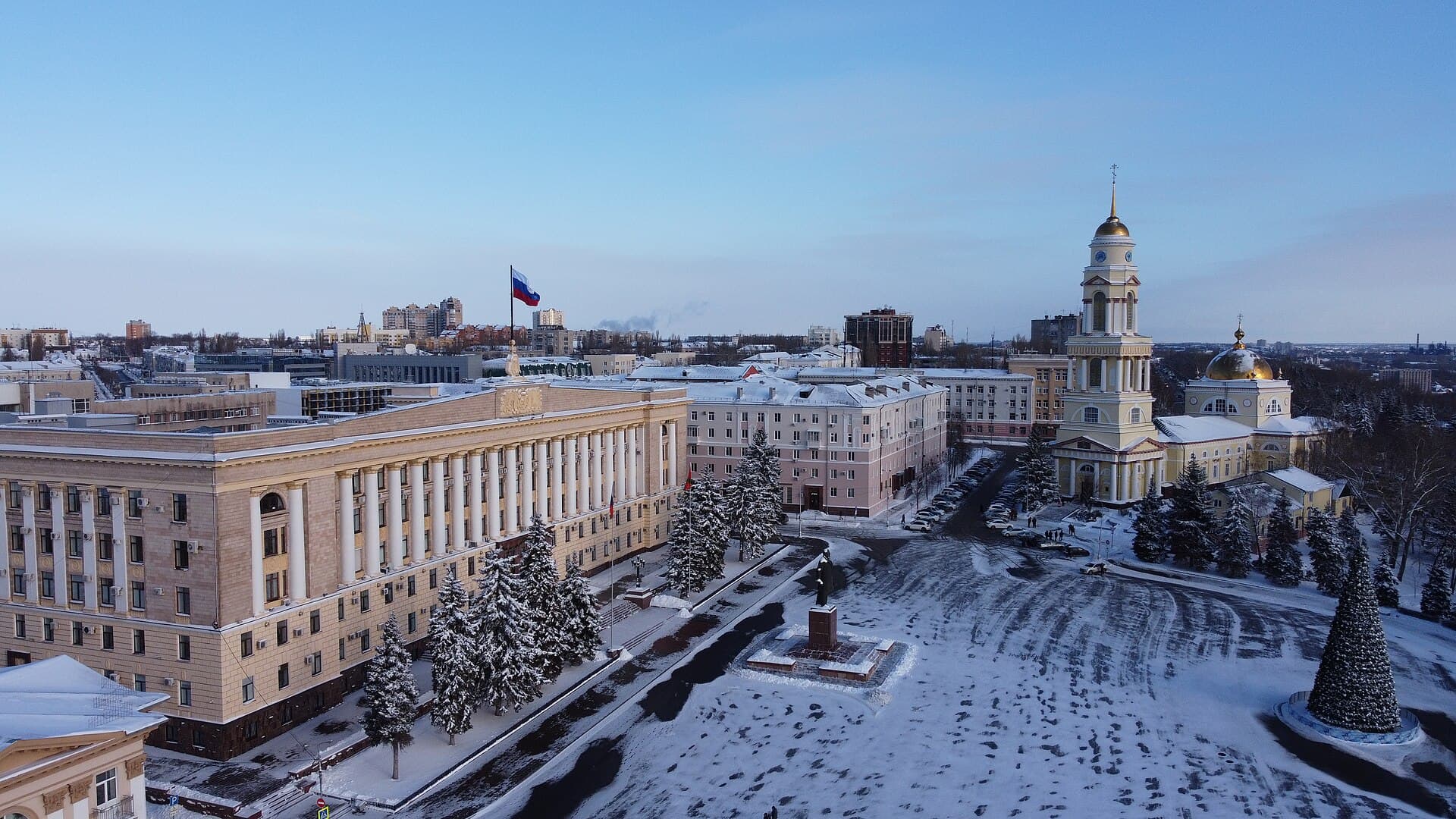
Lipetsk, RussiaAndre Percon / CC BY-SA 4.0, via Wikimedia Commons
RU

Lipetsk

Where the forge's fire meets the spring's embrace.

The secrets of Lipetsk

Lipetsk, as no one tells it.

Not the postcards. The stories even locals don't know — whispered in your ear, right where they happened.

3 secrets below. Many more wait inside the tour.
Nizhny Park

Most visitors wander through Nizhny Park for a leisurely walk or to see its zoo, yet few grasp the park's profound historical resonance beyond simple recreation.

Full story unlocks in the tour
Novolipetsk Metallurgical Plant (NLMK)

The Novolipetsk Metallurgical Plant dominates the city's industrial horizon, an expansive complex that pulses with contemporary production, yet its beginnings are far more ancient than its Soviet-era establishment suggests.

Full story unlocks in the tour
Lipetsk Regional Art Museum (Gubin House)

The graceful Gubin House, now an art museum, stands as a fine example of 19th-century Classicist architecture, yet it holds a private connection to a future emperor.

Full story unlocks in the tour
The full tour

Discover every secret of Lipetsk

Every address, every reveal in full — in your ear, right where it happened.

Get the key to Lipetsk

You pick your stops. You walk. The voice reveals what the others miss.

Choose your time

How long do you have in Lipetsk?

No tours available yet. Check back soon — we're preparing them.

About Lipetsk

The story of Lipetsk

Lipetsk, the administrative heart of the Lipetsk Oblast, is a city where the enduring legacy of industry and the gentle flow of natural springs converge. Resting on the banks of the Voronezh River, approximately 438 kilometers southeast of Moscow, it presents a distinctive fusion of historical depth and contemporary activity. The city's identity is deeply etched by its metallurgical industry, a heritage initiated by Peter the Great, alongside its unexpected past as a celebrated spa resort.

Beyond its industrial prowess, Lipetsk offers a tranquil atmosphere with verdant parks and architectural monuments. The city's contours, shaped by the river and undulating hills, provide picturesque settings for exploration, inviting travelers to uncover its singular character. With a population exceeding 500,000, Lipetsk is a lively urban center that maintains a temperate continental climate, characterized by warm summers and cold winters.

History

From Ironworks to Imperial Resort

The narrative of Lipetsk officially commences in 1703, when Peter the Great decreed the establishment of ironworks on the Voronezh River to provision the Russian army and navy. This initial industrial undertaking swiftly transformed the settlement, then identified as Lipskiye Zavody, into a crucial metallurgical center in Petrine Russia. However, the area's narrative extends further back, with mentions of a fortified settlement in the 13th century that was subsequently razed by Mongol-Tatar raiders in 1284.

A surprising chapter in Lipetsk's evolution unfolded in the early 19th century. Local lore attributes the discovery of healing mineral springs in the area to Peter I himself. This discovery led to Emperor Alexander I's decree in 1805 to inaugurate the "Lipetsk Mineral Waters" resort, swiftly establishing the city as a favored destination for the aristocracy seeking therapeutic advantages. This dual identity as an industrial core and a spa town persisted throughout the 19th century, with notable architectural developments like the Christ's Nativity Cathedral and the Resort Baths Building in Lower Park reflecting the Classicist aesthetics of the period.

Industrial Expansion and Soviet Era

The construction of the Oryol-Tsaritsyn railway near Lipetsk in 1868 significantly propelled the city's economic expansion. The 20th century brought further industrial growth, most notably with the decision in 1931 to construct the Novolipetsk Metallurgical Plant (NLMK). This colossal enterprise, which commenced production in 1934, solidified Lipetsk's standing as a pivotal center for ferrous metallurgy in the USSR and modern Russia. During World War II, the city's industrial capacity was further utilized, with a tractor factory erected to satisfy wartime demands. In 1944, Lipetsk became the administrative seat of the newly formed Lipetsk Region, a testament to its expanding significance.

Modern Lipetsk

Today, Lipetsk continues its legacy as an industrial powerhouse, with NLMK remaining among Russia's largest steel plants. The city also maintains its role in aviation, with the Lipetsk Aviation Centre serving as a substantial training ground for military pilots. While its industrial output is considerable, Lipetsk has also prioritized urban development, with parks and cultural institutions providing a counterpoint to its heavy industry. The city's story, from its Petrine origins to its Soviet-era expansion and present-day status, is visibly etched into its landscape, offering a singular narrative for visitors to uncover.

What to see

Begin your journey in Nizhny Park, the historical heart of Lipetsk, where you can still taste the renowned local mineral water from the pump room. This expansive green space also features monuments and a modest amusement park, suitable for unhurried walks and family excursions. Within Nizhny Park, you will find the Monument to Peter the Great, commemorating his pivotal role in the city's inception.

For a deeper immersion into the city's spiritual and architectural heritage, visit the Christ's Nativity Cathedral. Completed in the 1840s, this principal temple of the city displays a monumental Classicist style with a grand colonnade and dome. Nearby, the Lipetsk Regional Art Museum, housed in the elegant Gubin House, offers a window into the region's artistic expressions. Do not overlook the Holy Dormition Monastery, another significant architectural site providing a serene sanctuary.

While the Novolipetsk Metallurgical Plant (NLMK) operates as an active industrial site, its sheer scale is impressive and can be observed from the Upper Park, offering a distinct vantage point on Lipetsk's industrial strength. Other notable green spaces include Verkhny Park, connected to Nizhny Park by a pathway, which also features fountains and areas for repose.

For those interested in local culture, the Lipetsk Museum of Folk and Decorative and Applied Arts presents an extensive array of traditional and contemporary pieces, including workshops on ancient crafts. The city also showcases various modern sculptures and fountains in places like Go Square Garden, contributing to its contemporary allure.

When to visit

Lipetsk experiences a temperate continental climate with distinct seasons. The most agreeable time to visit for warm-weather pursuits is from mid-June to late August, when average daily high temperatures exceed 19°C (67°F) and can reach 27°C (81°F) in July. Summers are pleasant and partly cloudy, with occasional rain and thunderstorms. For those who do not mind colder conditions, winters are frigid, snowy, overcast, and windy, with January being the coldest month, averaging around -6°C (21°F).

Practical

The official currency in Lipetsk, and throughout Russia, is the Russian Ruble (RUB). While major credit cards are widely accepted in urban areas, it is prudent to carry some cash for smaller establishments or local markets. The official language is Russian. While English might be understood in areas catering to visitors, learning a few fundamental Russian phrases will enrich your experience.

Lipetsk is reasonably safe for solo female travelers, though general precautions such as avoiding walking alone at night in unfamiliar districts and maintaining awareness of your surroundings are advised. Comprehensive travel insurance is essential for any international journey.

Public transportation in Lipetsk includes buses, trolleybuses, and marshrutkas (minibuses), offering a standard Russian system for navigating the city. Taxis are also readily available and affordable, though drivers may not speak English. For intercity travel, trains are considered the most dependable option, with overnight services connecting Lipetsk to Moscow and other major cities. Lipetsk Airport (LPK) provides flights to Moscow and Saint Petersburg.

Good to know
What is the primary industry in Lipetsk?
Lipetsk is a significant industrial center, primarily recognized for its ferrous metallurgy, with the Novolipetsk Metallurgical Plant (NLMK) standing as one of Russia's largest steel producers.
Are there any natural attractions in Lipetsk?
Yes, Lipetsk is known for its natural mineral springs, which historically led to its development as a spa resort. These springs can be found in locations like Nizhny Park.
What is the best way to get to Lipetsk?
Lipetsk can be reached by air via Lipetsk Airport (LPK) with flights from Moscow and Saint Petersburg. Train services also offer a dependable option, with connections from Moscow and other major cities.
What kind of climate does Lipetsk have?
Lipetsk experiences a temperate continental climate, characterized by cold, snowy winters and warm, at times hot, summers.
Is Lipetsk a good destination for families?
Yes, Lipetsk offers several family-friendly attractions, including Nizhny Park with its amusement park and the Lipetsk Zoo.
What currency is used in Lipetsk?
The official currency used in Lipetsk, as throughout Russia, is the Russian Ruble (RUB).
Lipetsk
From€9.00
No booking · activate anytime · 12h to walk it
Get the key to Lipetsk