Castell d'en Plaja
The castle that defines Lloret's skyline isn't quite as ancient as it appears.
Full story unlocks in the tour
 Victor Gleim / CC BY-SA 4.0, via Wikimedia Commons
Self-guided audio walking tour of Lloret de Mar — GPS route, offline playback, story-driven narration in 32 languages.
“Where the wild coast meets a surprising past.”
Not the postcards. The stories even locals don't know — whispered in your ear, right where they happened.
The castle that defines Lloret's skyline isn't quite as ancient as it appears.
Among the elaborate tombs, you'll find a silent testament to Lloret's global reach.
This central church holds a secret behind its colorful domes.
Discover every secret of Lloret de Mar
Every address, every reveal in full — in your ear, right where it happened.
You pick your stops. You walk. The voice reveals what the others miss.
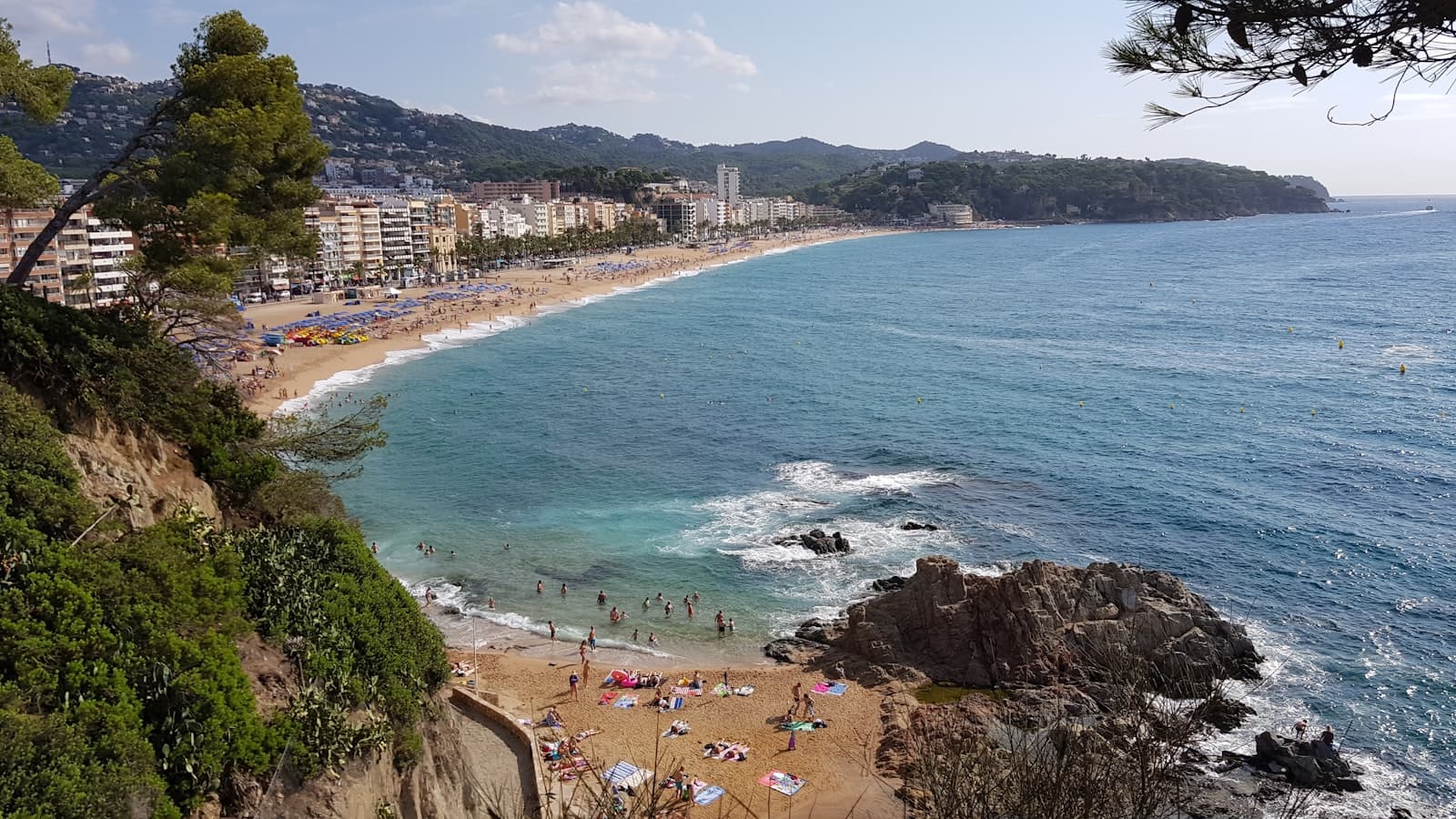
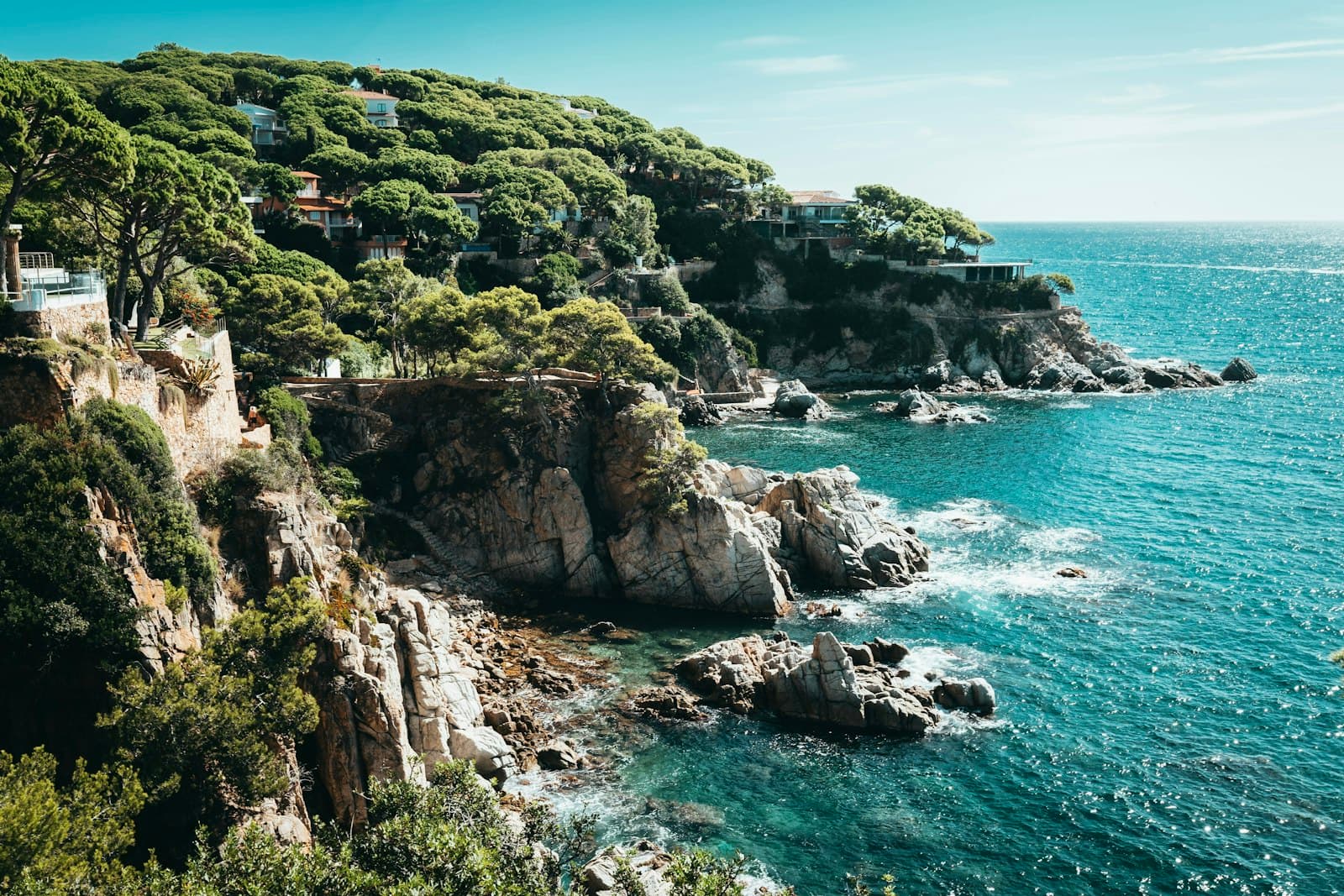
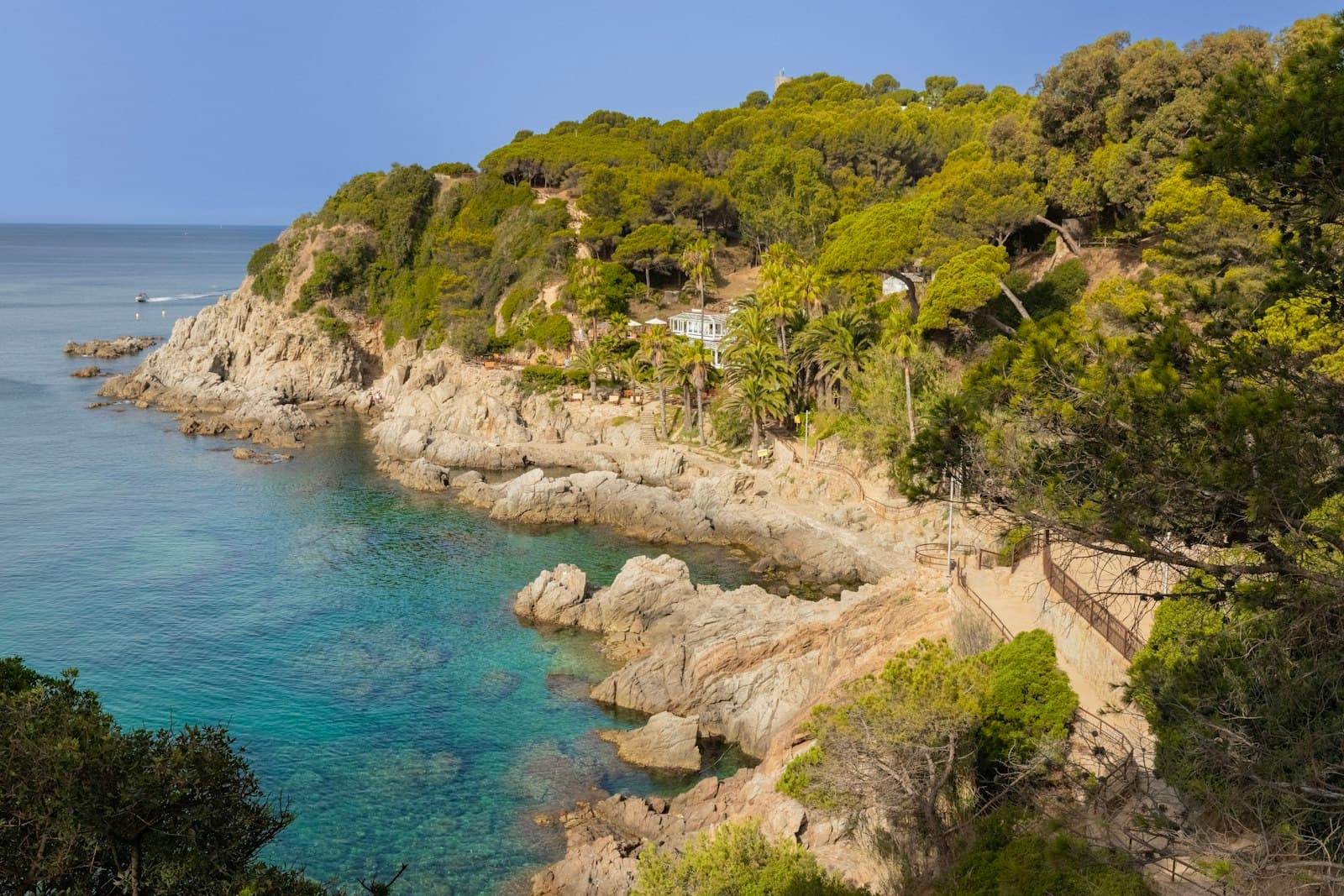
Your self-guided audio tour of Lloret de Mar is ready — pick your landmarks, choose your language, and start the moment you arrive.
BuyLume has a built-in augmented-reality guide. Hold your phone up and its camera shows the street ahead of you, with a glowing arrow laid over the real view that always points to your next stop — no map to puzzle over, no wrong turns. Like everything in Lume, it works fully offline.
Lloret de Mar, a coastal town along Spain's Costa Brava, is recognized for its beaches and lively atmosphere, yet it also holds a history stretching back over a thousand years. Situated approximately 40 kilometers south of Girona and 75 kilometers northeast of Barcelona, it draws many summer visitors. The town's coastline extends for 9 kilometers, offering both expansive sandy beaches and smaller, more secluded coves.
While frequently associated with its energetic nightlife and resort amenities, Lloret de Mar provides a diverse experience. Beyond the active main beach, there are tranquil gardens, ancient ruins, and architectural marvels that speak to its past as a fishing village and a center for maritime trade. The town's evolution into an international tourist destination began in the 1950s, though it attracted elite families from Barcelona even earlier, in the 1920s.
The name Lloret de Mar itself has ancient roots, deriving from the Latin word Lauretum, meaning 'place where laurels grow,' first appearing in documents as 'Loredo' in 966. Today, with a population of around 38,402, it remains a significant town in the Selva area of Catalonia, offering a blend of natural beauty, historical intrigue, and modern leisure.
The history of Lloret de Mar traces back to antiquity, with evidence of human presence from the Iberian era, specifically the 4th–3rd centuries BC. Archaeological sites like Montbarbat, Puig de Castellet, and Turó Rodó reveal fortified Iberian settlements. These early inhabitants, the Indigetes, organized into territorial tribes, utilizing the highlands for control and trade with other Mediterranean peoples. The Romans later colonized Catalonia in the 3rd century BCE, influencing the region.
The town's name, Loredo, first appeared in documents in 966, derived from the Latin Lauretum, meaning 'place where laurels grow.' During the Middle Ages, Lloret de Mar faced vulnerability to Saracen pirate attacks, leading to the town's center being constructed inland until the 15th century, near the Chapel of Les Alegries. The 11th century saw the construction of Sant Joan Castle, a crucial defensive outpost against sea invasions, which was repeatedly damaged and rebuilt over centuries.
A significant economic and cultural shift occurred in the 18th century when King Charles III permitted free trade between Catalan ports and the Americas. This era spurred a boom in shipbuilding and maritime trade, enriching many local residents who ventured to the New World. These individuals, known as 'Indianos' in Catalonia or 'Americanos' in Lloret, returned with their fortunes, funding the construction of grand mansions, schools, and hospitals. Many of Lloret de Mar's distinctive Modernist and Neoclassical buildings, including the Museu del Mar (Maritime Museum) housed in Can Garriga, are a legacy of this period.
By the early 19th century, Sant Joan Castle lay in ruins, later undergoing extensive reconstruction in the late 20th century. The Parish Church of Sant Romà, completed in 1522 in Catalan Gothic style, was also remodeled in the early 20th century by Modernist architect Bonaventura Conill i Montobbio, a student of Gaudí. This blend of historical styles is also evident in the Modernist Cemetery, designed for the affluent Indianos, featuring elaborate tombs by architects like Conill i Montobbio and Puig i Cadafalch.
Lloret de Mar transitioned from a fishing village to a tourist destination in the mid-20th century. By the 1950s, it began drawing international visitors, leading to significant urban development and the construction of numerous hotels. While much of the old town was transformed, the town retains its historical sites, offering a glimpse into its layered past.
Begin your exploration at the Parish Church of Sant Romà, a unique blend of Gothic and Modernist architecture with its colorful domes and fortified elements. Walk along the Lloret de Mar Beach, the town's main stretch of coarse, white sand, where you can find water sports and the bronze Monument to the Fisherman's Wife. Legend says touching her foot and looking at the horizon will make your wishes come true.
For a quieter beach experience, head to Fenals Beach, a slightly smaller expanse of coarse sand separated from the main beach by a pine-covered headland. Overlooking the coast between Lloret and Fenals beaches is the restored tower of Sant Joan Castle, offering expansive views and insights into the town's medieval defenses. Just above Cala Boadella, the Santa Clotilde Gardens present a serene Italian Renaissance-style landscape with terraces, statues, and fountains, providing beautiful sea views.
Delve into Lloret's maritime past at the Museu del Mar (Maritime Museum), housed in an old Indiano house, which traces the town's seafaring history. For a glimpse into the lives of the wealthy 'Indianos,' visit the Modernist Cemetery, an open-air museum of funerary art with impressive tombs designed by notable architects. You can also explore ancient history at the Puig de Castellet Iberian Settlement, ruins of a fortified village dating back to the 3rd century BC.
Lloret de Mar enjoys a Mediterranean climate with long, warm summers and mild winters. The best time for a beach-focused holiday is between June and September, when the weather is warm and sunny, with average temperatures ranging from 23°C to 28°C, and sea temperatures are ideal for swimming (20°C to 26°C). This period is also when the town's tourist season is in full swing, with many activities.
For those who prefer milder weather and fewer crowds, May and October offer pleasant temperatures (20°C to 25°C) and are ideal for exploring the town, hiking, and enjoying local gastronomy. Autumn, particularly October, is the wettest month, but also a good time for food festivals and visiting nearby medieval villages.
Lloret de Mar is located in Catalonia, Spain, where both Spanish (Castilian) and Catalan are official languages. English, French, and German are also commonly understood in the tourism sector. The official currency is the Euro (€), and currency exchange is available at banks, ATMs, and exchange offices.
Getting to Lloret de Mar is convenient, with Barcelona Airport approximately 80 km away and Girona Airport just 30 km away. You can reach the town by direct bus from these airports or by a combination of train and bus. Once in Lloret de Mar, the town center is walkable, and urban bus lines connect various districts. Taxis are also readily available 24 hours a day.
Business hours typically run from 9:00/10:00 to 13:00/13:30, reopening in the afternoon from around 16:00 until 20:00/20:30. During summer, many shops extend their hours until 23:00. Meal times are generally later than in other European countries, with lunch between 13:30 and 15:30, and dinner from 20:30 to 22:30. Parking can be challenging and expensive in the urban center, though some hotels offer paid parking, and limited free street parking might be found further out.
Lloret de Mar in Korean, in Chinese or in Hebrew — and 29 more languages, every stop narrated by a native voice. The widest language range of any self-guided audio tour.
Available in: