De Derry Walls
Deze formidabele 17e-eeuwse muren dragen een bijnaam die boekdelen spreekt over hun blijvende kracht.
Volledig verhaal ontgrendeld in de tour
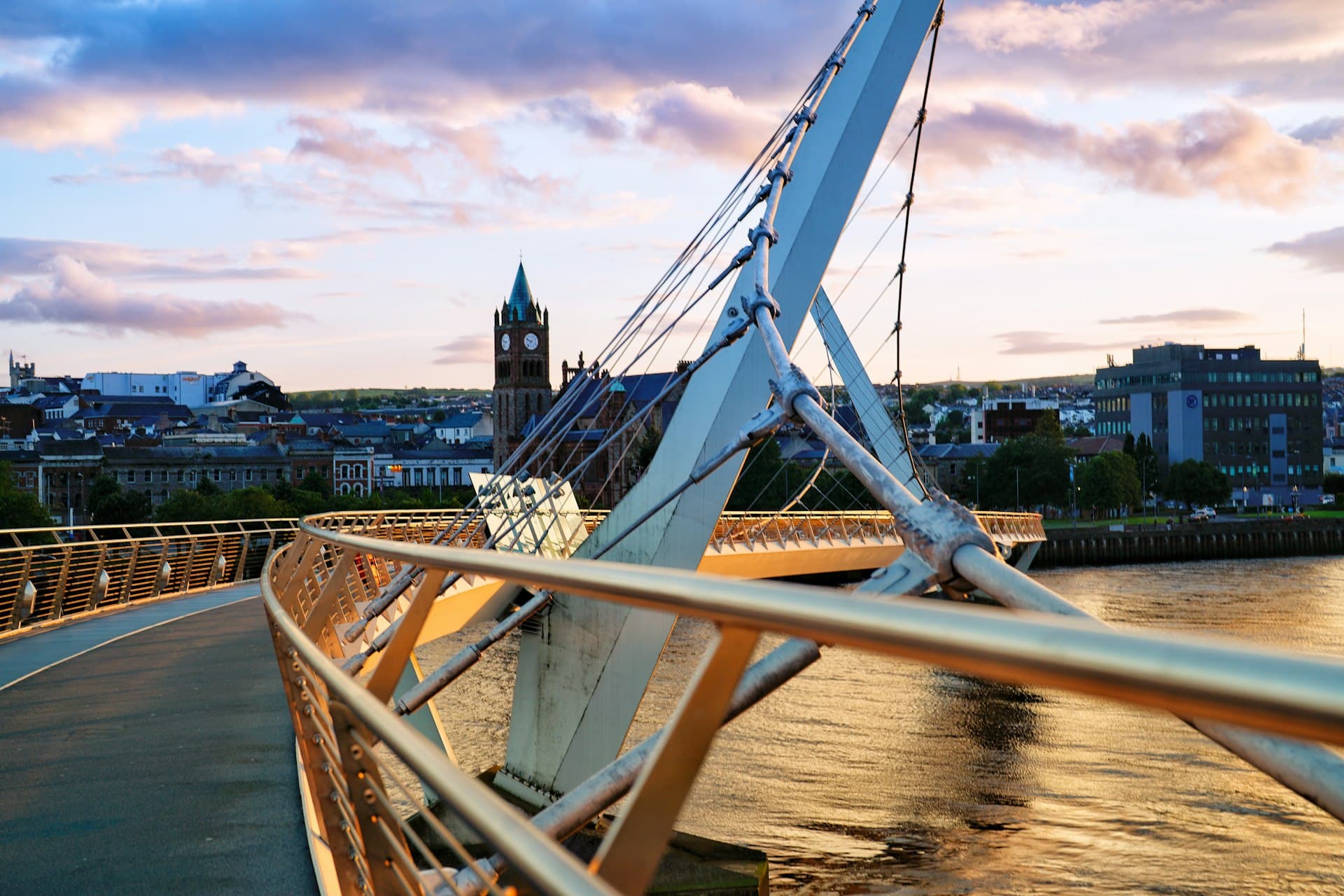 Photo: Jocelyn Allen / Unsplash
Zelfgeleide audiowandeling door Londonderry — GPS-route, offline afspelen, meeslepende vertelling in 32 talen.
“Voorbij oude bolwerken, een stad van blijvende geest en zich ontvouwende verhalen.”
Niet de ansichtkaarten. De verhalen die zelfs locals niet kennen — gefluisterd in je oor, precies waar ze gebeurden.
Deze formidabele 17e-eeuwse muren dragen een bijnaam die boekdelen spreekt over hun blijvende kracht.
Bekijk de funderingssteen van deze historische kathedraal en u zult een verrassende inscriptie ontdekken.
De iconische klokkentoren van de Guildhall vertoont een opvallende gelijkenis met een veel beroemder Londens herkenningspunt.
Ontdek elk geheim van Londonderry
Elk adres, elke onthulling volledig — in je oor, precies waar het gebeurde.
Jij kiest je stops. Jij wandelt. De stem onthult wat de anderen missen.

Je zelfgeleide audiotour van Londonderry is klaar — kies je bezienswaardigheden, kies je taal en start zodra je aankomt.
KopenLume heeft een ingebouwde augmented-reality-gids. Houd je telefoon omhoog: de camera toont de straat voor je, met een oplichtende pijl over het echte beeld die altijd naar je volgende stop wijst — geen kaart om uit te puzzelen, geen verkeerde afslagen. Zoals alles in Lume werkt het volledig offline.
Londonderry, vaak Derry genoemd, is de op één na grootste stad van Noord-Ierland en ligt aan de oevers van de rivier de Foyle. Deze historische bestemming staat bekend om zijn intacte 17e-eeuwse stadsmuren, een uniek kenmerk dat het de enige volledig ommuurde stad van Ierland en een van Europa's best bewaarde voorbeelden maakt. De dubbele naam van de stad weerspiegelt een complex verleden en een evoluerende culturele identiteit, waarbij "Derry" de voorkeur heeft van nationalisten en "Londonderry" van unionisten, hoewel "Derry" in het dagelijks gesprek door de meeste inwoners wordt gebruikt.
Naast zijn formidabele verdedigingswerken, presenteert Londonderry een boeiend verhaal van veerkracht, conflict en verzoening. Van de sobere gedenktekens van de Bogside tot de symbolische Peace Bridge, de stad deelt openlijk zijn verleden terwijl het uitkijkt naar een verenigde toekomst. De levendige kunstscene, historische architectuur en gastvrije sfeer nodigen bezoekers uit om zich te verdiepen in een verhaal dat zowel diep lokaal als universeel resoneert.
## Van Monastieke Nederzetting tot Ommuurde Stad De oorsprong van Londonderry gaat terug tot de 6e eeuw met de oprichting van een monastieke nederzetting door Sint Columba, een Ierse monnik. Eeuwenlang stond het bekend als Doire of Doire Cholmcille, wat 'eikenbos van Colmcille' betekent. Het strategische belang van de stad groeide tijdens de Tudor-verovering van Ierland, wat leidde tot frequente aanvallen.
In 1613 verleende koning Jacobus I de stad een Koninklijk Handvest, en het voorvoegsel "London" werd toegevoegd, waardoor het Londonderry werd hernoemd. Deze verandering erkende de financiële bijdragen van de Londense livery companies bij de wederopbouw en ontwikkeling van de stad tijdens de Plantation of Ulster. De iconische stadsmuren, een bepalend kenmerk van Londonderry vandaag de dag, werden gebouwd tussen 1613 en 1618 door The Honourable The Irish Society ter verdediging van de nieuwe Schotse en Engelse kolonisten. Deze muren doorstonden beroemd verschillende belegeringen, wat de stad zijn bijnaam 'The Maiden City' opleverde.
## The Troubles en het Pad naar Vrede De 20e eeuw bracht een periode van intense burgerlijke onrust, bekend als The Troubles. Londonderry werd een brandpunt, met name de wijk Bogside. De 'Free Derry Corner', een gevelmuur met het opschrift 'You are now entering Free Derry', kwam naar voren als een symbool van een zelfverklaard autonoom nationalistisch gebied tussen 1969 en 1972. Dit gebied was getuige van belangrijke gebeurtenissen zoals de Slag om de Bogside in 1969 en Bloody Sunday in 1972. Het Guildhall, een prominent civiel gebouw, werd ook beschadigd door bomaanslagen in 1972, maar werd vervolgens gerestaureerd.
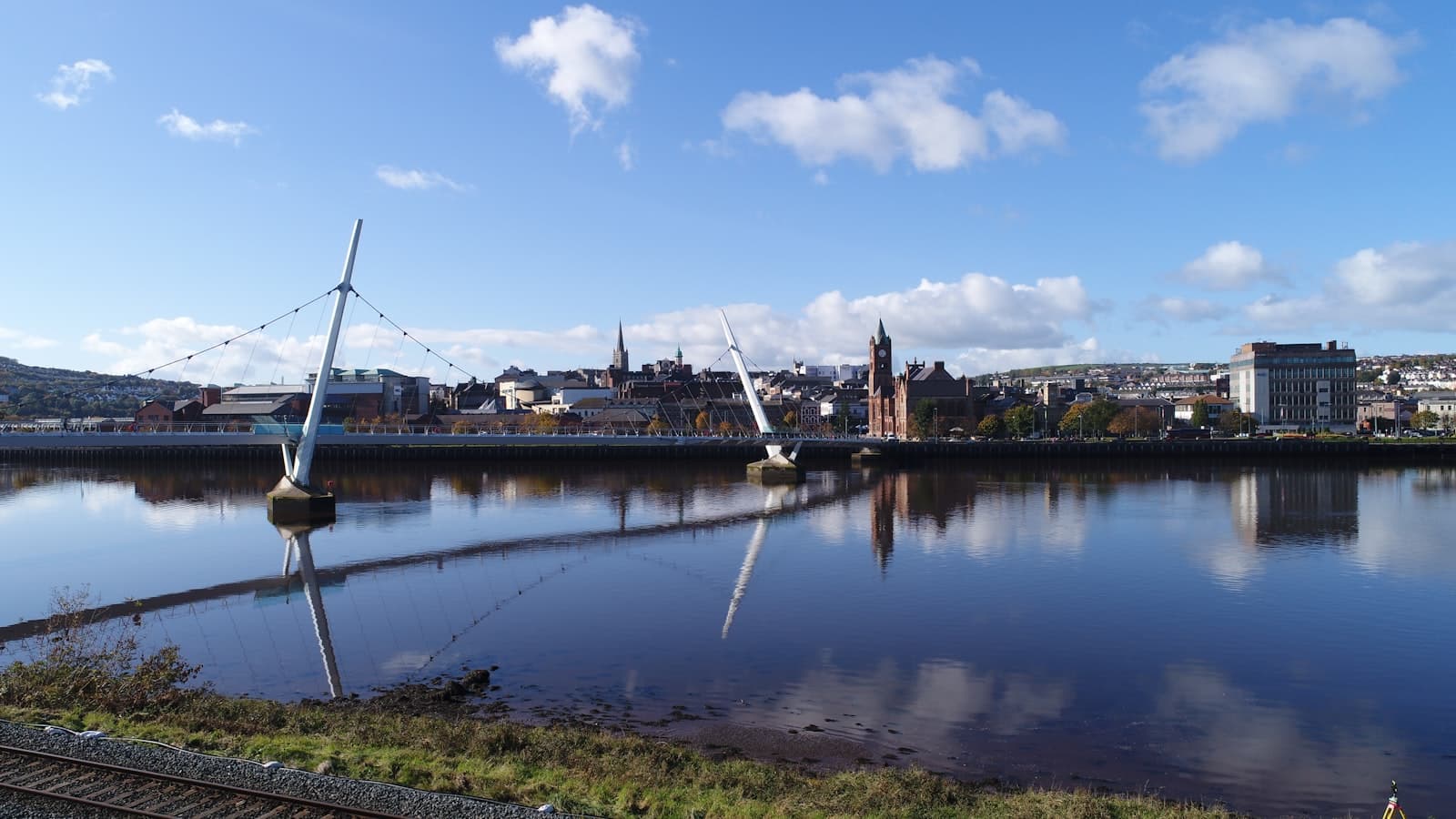
In de decennia daarna heeft Londonderry actief een pad van vrede en verzoening bewandeld. De Peace Bridge, geopend in 2011, verbindt fysiek de historisch verdeelde gemeenschappen over de rivier de Foyle en dient als een krachtig symbool van eenheid. De musea, muurschilderingen en monumenten van de stad behandelen openlijk hun complexe verleden, wat begrip en dialoog bevordert.
Begin uw verkenning met een wandeling over de Derry Walls, een circuit van 1,5 kilometer dat een weids uitzicht biedt over de stad en zijn stadsplan uit de Renaissance. Deze goed bewaarde 17e-eeuwse vestingwerken hebben zeven poorten en talrijke kanonnen, waarvan sommige dateren uit de jaren 1600.
Bezoek binnen de muren de St. Columb's Cathedral, de eerste protestantse kathedraal die na de Reformatie in de Britse Eilanden werd gebouwd. Dit gotische bouwwerk uit 1633 herbergt een verzameling artefacten, waaronder voorwerpen uit de belegering van Derry en historisch zilver.
Net buiten de muren, verken de Bogside-muurschilderingen en Free Derry Corner, krachtige visuele herinneringen aan The Troubles. Het Museum of Free Derry biedt een gedetailleerd verslag van deze periode. Steek de Peace Bridge over, een moderne voetgangersbrug over de rivier de Foyle, die een symbool is van eenheid tussen de gemeenschappen van de stad.
Vergeet niet het Guildhall te bezoeken, een opvallend neogotisch gebouw met ingewikkelde glas-in-loodramen die de geschiedenis van de stad uitbeelden. De klokkentoren is gemodelleerd naar de Big Ben van Londen. Dwaal voor een heerlijke afleiding door het Craft Village, een nagebouwde 18e-eeuwse straat en 19e-eeuws plein met lokale ambachtswinkels.
De ideale tijd om Londonderry te bezoeken voor aangenaam weer en buitenactiviteiten is tijdens de zomermaanden, van juni tot augustus, wanneer de temperaturen het mildst zijn en de dagen het langst. Dit is ook het hoogseizoen voor toerisme, met veel festivals en evenementen. Voor minder drukte en een intiemere ervaring, overweeg een bezoek tijdens het laagseizoen van november tot maart. Hoewel de winters koud zijn met af en toe regen en sneeuw, biedt de stad rond Kerstmis een feestelijke sfeer. De lente (maart-mei) brengt milder weer en bloeiende bloemen, geschikt om te wandelen en te verkennen voor de zomerse drukte. De herfst (september-november) staat bekend om zijn veranderende herfstkleuren en het gerenommeerde Halloweenfestival van de stad.
De lokale valuta is de Britse Pond (GBP). Veel bezienswaardigheden liggen op loopafstand, vooral binnen de ommuurde stad, waardoor lopen de beste manier is om te verkennen. Openbare bussen zijn beschikbaar vanaf het Foyle Street Bus Station, met een enkeltje van ongeveer £1,55 en een maandabonnement van £34. Taxi's zijn ook een optie, met een vast tarief van £1,24 en een kilometerprijs van £8,18, hoewel gemiddelde ritten meestal rond de £3 liggen.
Londonderry is bereikbaar per vliegtuig via City of Derry Airport (LDY) voor binnenlandse vluchten, of Belfast International (BFS) of Dublin (DUB) voor internationale aankomsten, met busverbindingen naar de stad. Treindiensten verbinden vanuit Belfast, en expresbussen rijden vanuit steden als Dublin en Belfast. Als u met de auto reist, houd er rekening mee dat er geen directe snelwegverbinding is met Dublin of Belfast, maar de hoofdwegen zijn over het algemeen goed. Parkeren kan krap zijn rond de stadsmuren, dus het gebruik van grotere parkeerplaatsen zoals Foyleside wordt aanbevolen.
Londonderry — Koreaans, Chinees, Hebreeuws en nog 29 talen, elke stop verteld door een moedertaalspreker. Het grootste taalaanbod van alle zelfgeleide audiotours.
Beschikbaar in: