Lac de Lugano
La partie la plus profonde du lac de Lugano recèle un secret surprenant, bien en dessous de sa surface émeraude.
L'histoire complète se débloque dans le tour
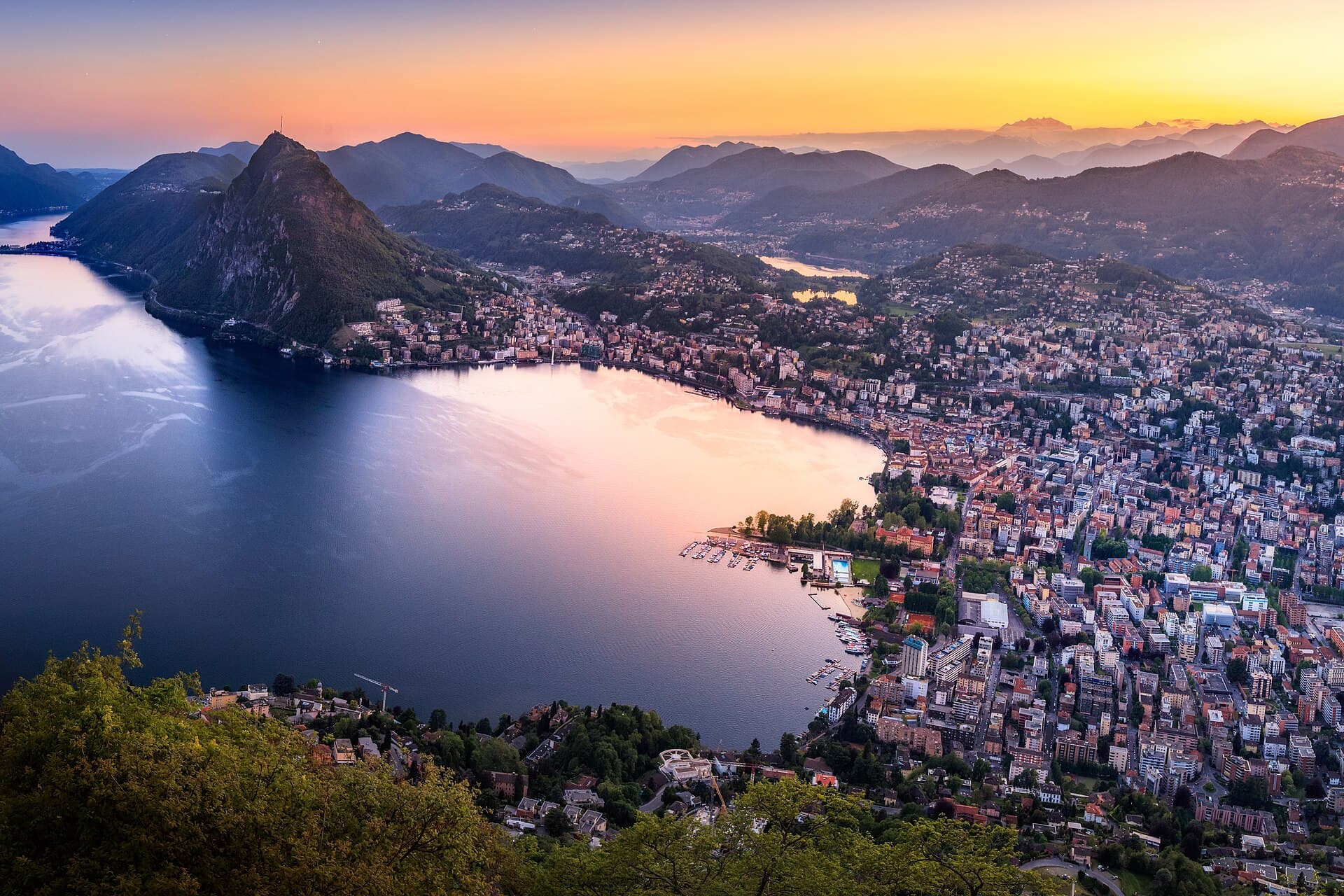 SamuelFerrara / CC BY-SA 4.0, via Wikimedia Commons
Visite audio autoguidée de Lugano — parcours GPS à pied, lecture hors ligne, narration en 32 langues.
“Là où la précision suisse et la chaleur italienne convergent sur un lac ensoleillé.”
Pas les cartes postales. Les histoires que même les habitants ignorent — soufflées à l'oreille, là où elles se sont passées.
La partie la plus profonde du lac de Lugano recèle un secret surprenant, bien en dessous de sa surface émeraude.
Cette place centrale, aujourd'hui un lieu de rassemblement animé, a jadis servi un autre but, plus solennel.
Conduire à Lugano à travers les tunnels du Gothard peut donner l'impression d'entrer dans un autre royaume.
Découvrez tous les secrets de Lugano
Chaque adresse, chaque révélation en entier — dans ton oreille, là où elle s'est passée.
Tu choisis tes lieux. Tu marches. La voix te révèle ce que les autres ignorent.
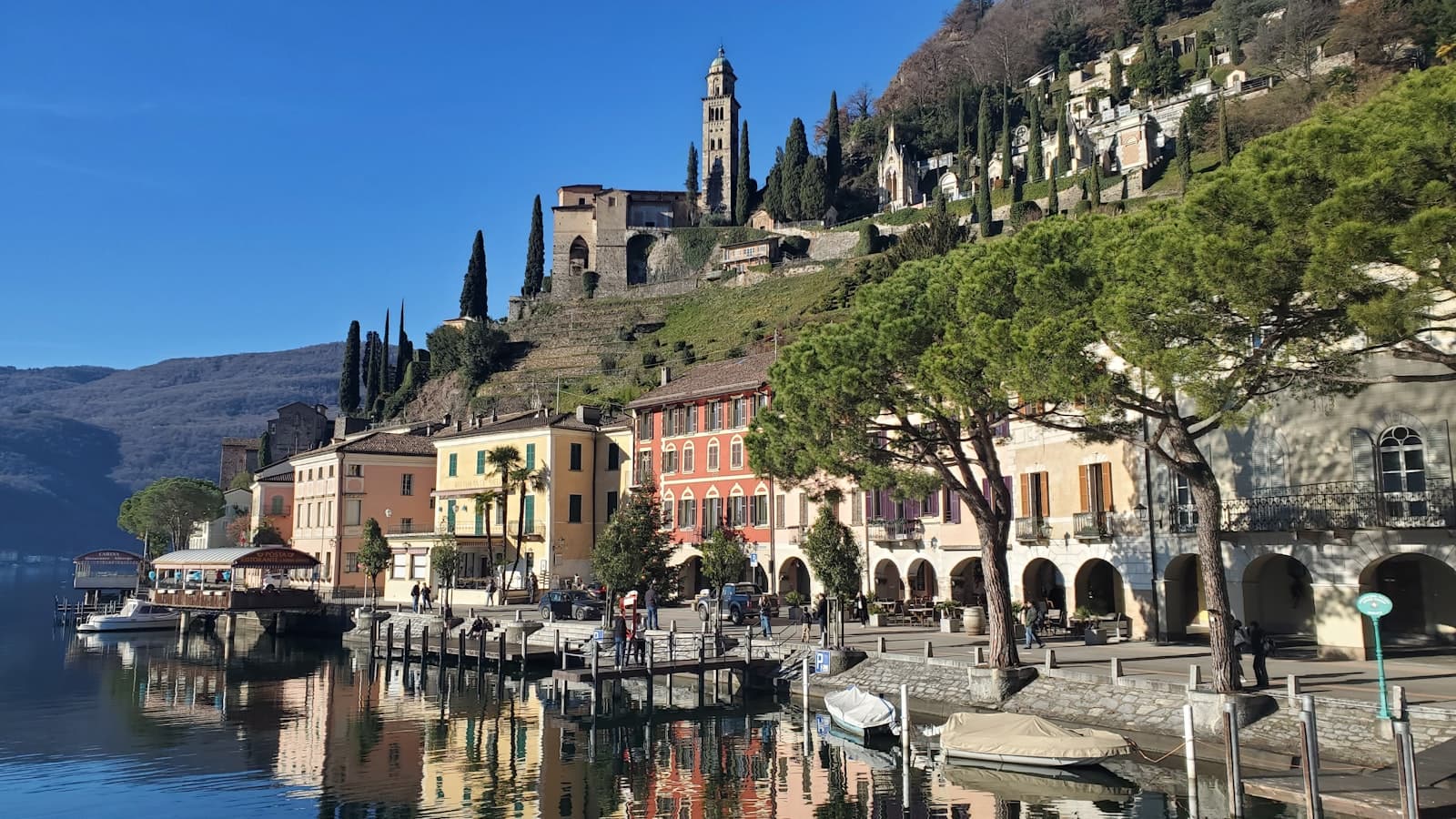
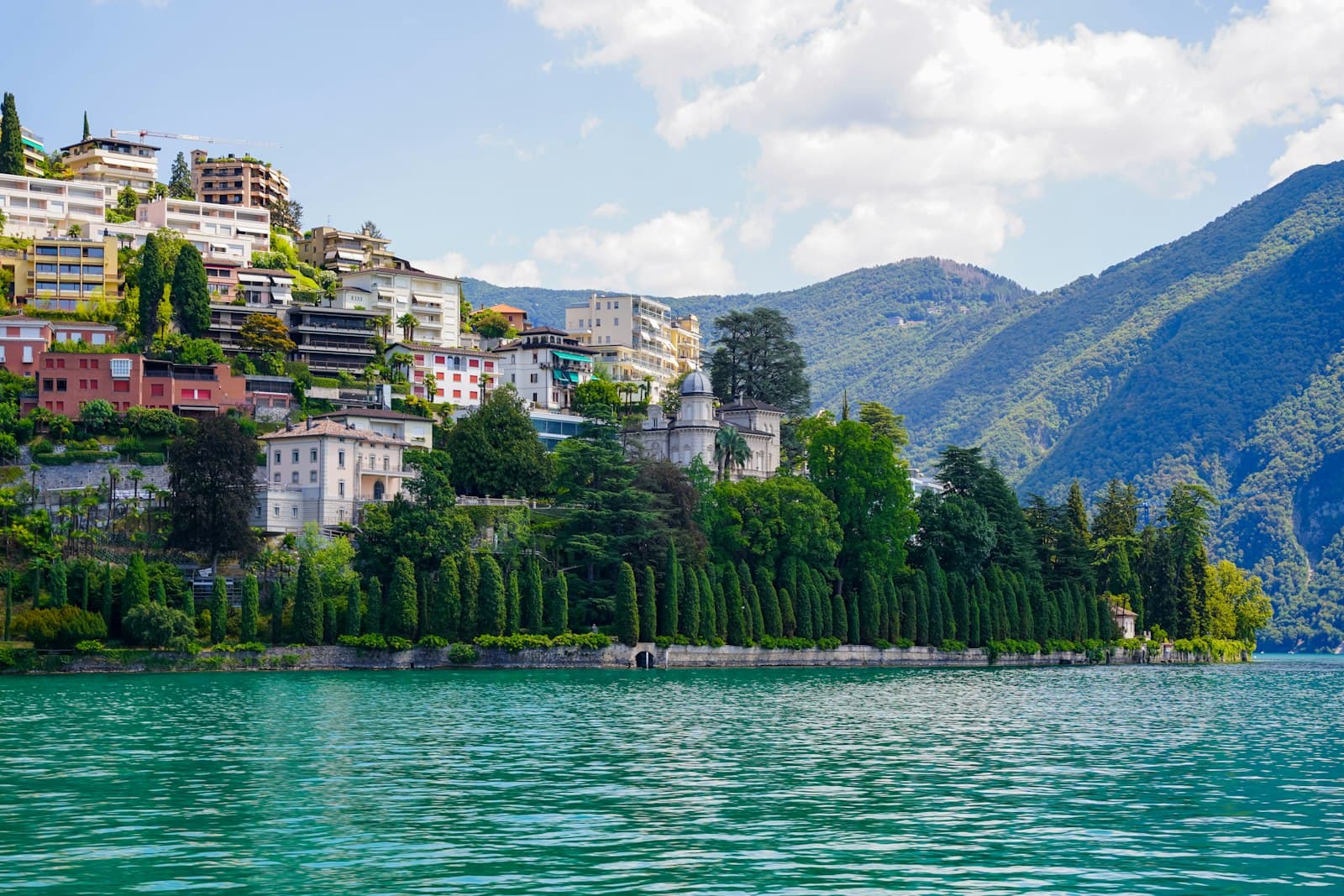
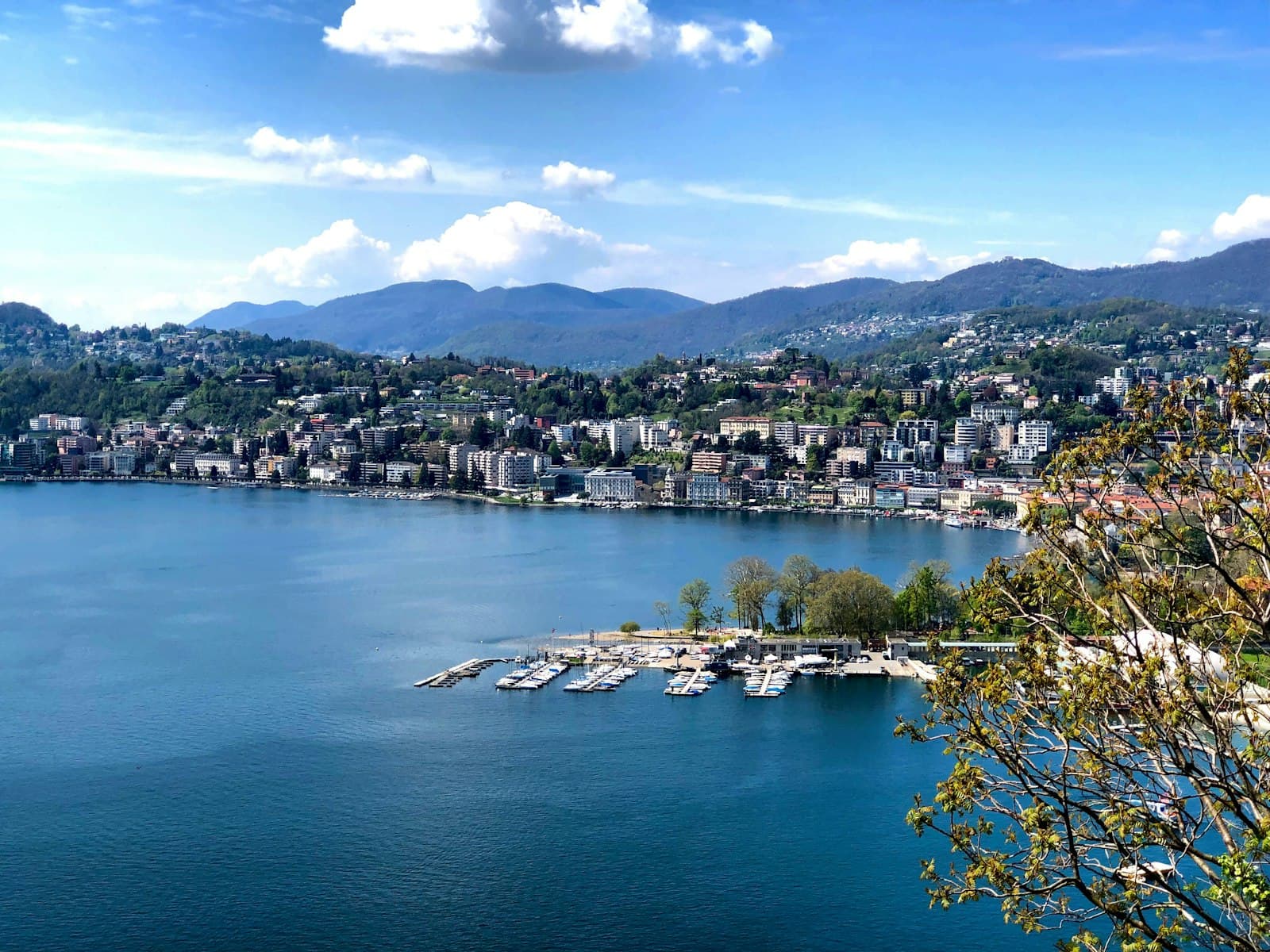
Votre visite audioguidée de Lugano vous attend — choisissez vos lieux, votre langue, et lancez-vous dès votre arrivée.
AcheterLume intègre un guide en réalité augmentée. Levez votre téléphone : sa caméra montre la rue devant vous, avec une flèche lumineuse posée sur l'image réelle qui pointe toujours vers votre prochain arrêt — aucune carte à déchiffrer, aucun mauvais virage. Comme tout dans Lume, ça fonctionne entièrement hors-ligne.
Lugano, la plus grande ville du canton du Tessin, en Suisse, de langue italienne, offre un mélange captivant d'efficacité suisse et de charme méditerranéen. Située sur la rive nord du lac de Lugano et encadrée par le Monte San Salvatore et le Monte Brè, la ville bénéficie de l'un des climats les plus doux de Suisse, souvent appelée le 'porche ensoleillé' du pays. Les promenades bordées de palmiers, l'architecture expressive et un rythme de vie détendu contribuent à son caractère distinctement italien, en faisant une destination populaire pour les visiteurs internationaux et les résidents suisses à la recherche d'une expérience plus chaude et plus tranquille.
Au-delà de sa beauté naturelle, Lugano est un important centre financier, bancaire et commercial, le troisième plus important de Suisse après Zurich et Genève. Pourtant, elle maintient une scène culturelle animée avec des musées, des galeries d'art et un centre culturel moderne, le LAC Lugano Arte e Cultura, qui accueille divers événements. La position unique de la ville, où l'italien est la langue principale et où la vie quotidienne reflète la chaleur méditerranéenne, crée une atmosphère accueillante qui la distingue des autres villes suisses.
Le territoire de la Lugano moderne est habité depuis les périodes étrusque et celtique, avec des preuves d'un centre commercial existant au nord du lac de Lugano dès le 1er siècle av. J.-C. La première mention écrite d'une implantation à l'emplacement actuel remonte à 875, où elle était désignée sous le nom de Sancti Laurentii in Luano. Lugano fut décrite comme une ville marchande en 984. Pendant des siècles, Lugano fut l'objet de disputes continues entre les puissantes dynasties de Côme et de Milan, en particulier les familles Visconti et Rusca.
En 1512, Lugano fut revendiquée par les Suisses, mettant fin à la période de domination milanaise, et devint un dominion suisse en 1513. Cela marqua le début d'une période de paix et de prospérité relative. En 1798, les habitants proclamèrent leur indépendance sous le slogan "Libre et Suisse", résistant à l'inclusion dans la République Cisalpine. Suite à la création du canton en 1803, la municipalité politique de Lugano fut créée. La constitution cantonale de 1814 désigna Lugano, Bellinzone et Locarno comme capitales tournantes du canton du Tessin, Lugano servant de capitale en 1827–33, 1845–51 et 1863–69.
Le XIXe siècle fut marqué par un important développement des infrastructures, notamment la construction de routes reliant Lugano à Bellinzone (1808–12), Ponte Tresa (1808–20) et Chiasso (1810–16). Le premier bateau à vapeur sur le lac de Lugano commença à fonctionner en 1848, avec un service régulier dès 1856. Un moment charnière dans l'histoire de Lugano fut l'ouverture du chemin de fer international du Gothard en 1882. Cette liaison ferroviaire sortit Lugano de son isolement géographique, la connectant directement à l'Europe du Nord et contribuant de manière significative au développement du tourisme et du secteur tertiaire, qui restent prédominants dans l'économie de la ville aujourd'hui. La fin du XIXe siècle vit également l'essor de Lugano en tant que station balnéaire européenne à la mode, avec de grands bâtiments le long du lac combinant les styles néoclassique et Liberty. Depuis 1890, le Palazzo Civico abrite le gouvernement de la ville.
Commencez votre exploration dans le centre historique, où la Piazza della Riforma néoclassique sert de place principale de Lugano et de lieu de rassemblement animé. À proximité, la Cathédrale de San Lorenzo du XIIIe siècle, reconstruite au XVe siècle, offre une architecture impressionnante et une terrasse avec vue sur la vieille ville et le lac. Un autre site religieux important est l'ancienne église franciscaine de Santa Maria degli Angioli, datant d'environ 1499, qui abrite des fresques de Bernardino Luini, dont 'La Passion et la Crucifixion'.
Pour une évasion tranquille, promenez-vous dans le Parco Ciani, un parc au bord du lac avec des arbres centenaires, des parterres de fleurs bien entretenus et des sentiers le long du rivage. Le parc présente l'emblématique 'Porte sur le Lac', encadrant une vue sur l'eau et les montagnes. Pour avoir une perspective plus large, prenez un funiculaire jusqu'au Monte San Salvatore ou au Monte Brè. Le Monte San Salvatore, au sud de la ville, offre une vue à 360 degrés sur le lac de Lugano et les environs, s'étendant jusqu'en Italie. Le Monte Brè, à l'est, offre également des vues panoramiques sur le lac de Lugano. Pour les amateurs d'art et de culture, le LAC Lugano Arte e Cultura est un centre moderne dédié aux arts visuels et du spectacle, accueillant des concerts, du théâtre et des expositions.
Lugano bénéficie d'un climat subtropical doux et humide avec des étés chauds et humides et des hivers relativement doux. La ville est l'une des plus ensoleillées de Suisse, avec des précipitations abondantes tout au long de l'année.
La période optimale pour visiter Lugano se situe généralement de la fin du printemps (mai-juin) au début de l'automne (septembre-octobre). Pendant ces mois, les températures sont agréables, allant de 15 à 22°C en mai à 18 à 25°C en septembre, idéales pour les activités de plein air et les visites touristiques. L'été (juin-août) est la haute saison, offrant un temps chaud parfait pour la baignade et les activités lacustres, bien que des orages occasionnels puissent survenir. Pour éviter les foules et potentiellement trouver de meilleures offres, envisagez les saisons intermédiaires d'avril, mai, fin septembre et octobre.
Lugano est une ville compacte, et son centre est facilement explorable à pied. Cependant, en raison de son terrain vallonné, des funiculaires et des ascenseurs sont disponibles pour faciliter les montées et offrir des trajets panoramiques. Le funiculaire Lugano Città–Stazione relie le centre-ville à la gare, fonctionnant tous les jours de 5h à minuit.
Les transports en commun à Lugano sont efficaces et fiables. Trasporti Pubblici Luganesi SA (TPL) exploite le réseau de bus urbains de la ville, reliant le centre aux zones résidentielles, aux hôtels et aux villages voisins. Les bus circulent fréquemment et les horaires peuvent être téléchargés sur le site web de TPL. Pour les déplacements régionaux, ARL et AutoPostale assurent des liaisons vers des zones plus larges. De nombreux hôtels proposent un Ticino Ticket, offrant la gratuité des transports en commun dans le canton. Bien que les taxis soient disponibles, ils peuvent être coûteux.
L'italien est la langue officielle principale à Lugano et dans le canton du Tessin, bien que l'allemand et l'anglais soient largement parlés dans les commerces touristiques. La monnaie locale est le franc suisse (CHF).
Lugano en coréen, en chinois ou en hébreu — et dans 29 autres langues, chaque étape narrée par une voix native. La plus large gamme de langues de tous les audioguides autoguidés.
Disponible en :