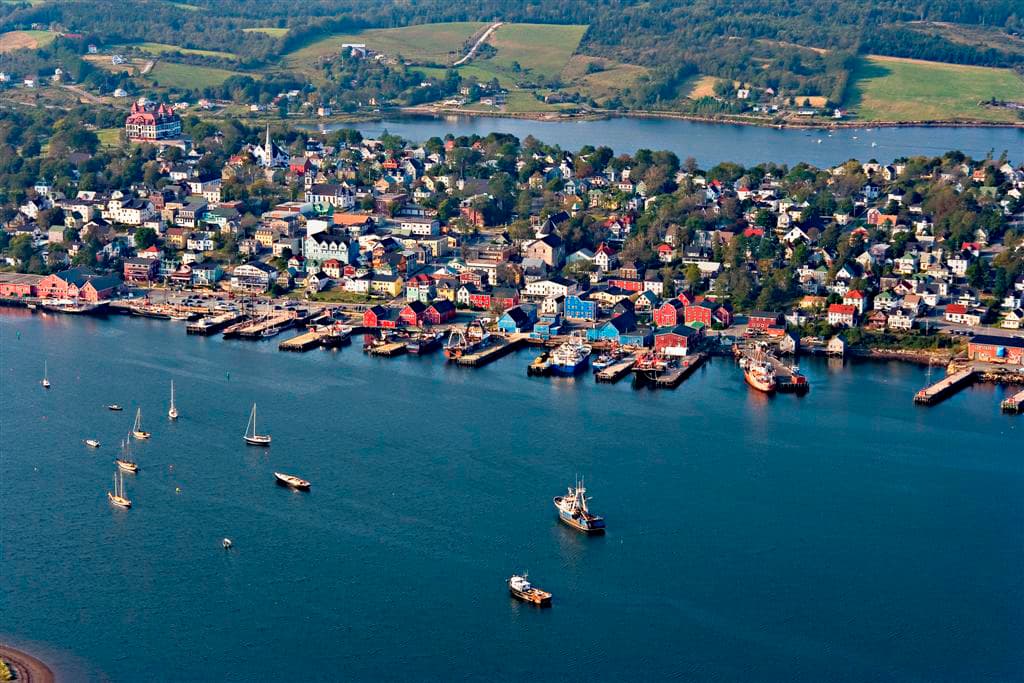
De geschilderde huizen van Lunenburg
De felle gevels van de gebouwen van Lunenburg zijn meer dan alleen een lust voor het oog.
Volledig verhaal ontgrendeld in de tour
 Jvienneau / CC BY-SA 3.0, via Wikimedia Commons
Zelfgeleide audiowandeling door Lunenburg — GPS-route, offline afspelen, meeslepende vertelling in 32 talen.
“Waar de blijvende geest van de zee een kleurrijke stad vormt.”
Niet de ansichtkaarten. De verhalen die zelfs locals niet kennen — gefluisterd in je oor, precies waar ze gebeurden.
De felle gevels van de gebouwen van Lunenburg zijn meer dan alleen een lust voor het oog.
Let op enkele van de oudere huizen in Lunenburg en u zult een ongebruikelijk architectonisch detail opmerken.
Deze prominente kerk, de op een na oudste Anglicaanse kerk in Canada, verbergt een geheim onder zijn gerestaureerde structuur.
Ontdek elk geheim van Lunenburg
Elk adres, elke onthulling volledig — in je oor, precies waar het gebeurde.
Jij kiest je stops. Jij wandelt. De stem onthult wat de anderen missen.


Lume heeft een ingebouwde augmented-reality-gids. Houd je telefoon omhoog: de camera toont de straat voor je, met een oplichtende pijl over het echte beeld die altijd naar je volgende stop wijst — geen kaart om uit te puzzelen, geen verkeerde afslagen. Zoals alles in Lume werkt het volledig offline.
Lunenburg, Nova Scotia, is een havenstad aan de South Shore van Canada, erkend als UNESCO Werelderfgoed. Opgericht in 1753, wordt het gevierd als het best bewaarde voorbeeld van een geplande Britse koloniale nederzetting in Noord-Amerika, met behoud van de oorspronkelijke 18e-eeuwse rasterindeling en uitstraling. De levendige waterkant van de stad, omzoomd met felgekleurde historische gebouwen, weerspiegelt de diepe verbinding met de zee en de blijvende maritieme nalatenschap.
Naast de architectonische aantrekkingskracht blijft Lunenburg een actieve vissershaven, met de grootste secundaire visverwerkingsfabriek van Canada. Reizigers kunnen zich verdiepen in het verleden, traditionele botenbouw observeren en zelfs aan boord gaan van de iconische Bluenose II, een replica van de gevierde raceschoener die op de Canadese dubbeltje prijkt. De unieke mix van historische betekenis, werkende waterkant en kleurrijke straatbeelden maakt Lunenburg tot een boeiende bestemming.
Voor de Europese vestiging werd het gebied dat nu bekend staat als Lunenburg bewoond door het Mi'kmaq-volk, dat het 'āseedĭk' noemde, wat schelpdierland betekent, of 'Mirliguèche'. Franse Acadiërs vestigden zich hier later tussen 1630 en 1680 en noemden hun stad Merliguesche.
In 1753 stichtten de Britten Lunenburg als een van hun eerste pogingen om protestanten in Nova Scotia te vestigen. De stad werd vernoemd naar de Hertog van Braunschweig-Lüneburg, die koning George II van Groot-Brittannië werd. De Britten streefden ernaar hun aanwezigheid in de regio te vergroten en rekruteerden meer dan 1.400 'Buitenlandse Protestanten' – voornamelijk ambachtslieden en boeren uit Duitsland, Zwitserland en Frankrijk – om de locatie te bevolken. De stad werd doelbewust gekozen vanwege haar verdedigbare schiereiland, beschutte haven en matig bewerkbare grond.
Lunenburg werd aangelegd in een rigide, rechthoekig rasterpatroon door Charles Morris, de hoofdtaxateur van de kolonie, die zijn eerdere plan voor Halifax weerspiegelde. Dit ontwerp, met zijn precieze straten, bouwkavels, tuinpercelen en boerderijkavels, wordt beschouwd als een van de vroegste en meest intacte Britse modelplannen in Canada. Vroege gebouwen waren vaak een verdieping hoge huizen in Kaap Cod-stijl. De economie van de stad was aanvankelijk afhankelijk van landbouw, maar de kolonisten keerden zich al snel tot de zee en ontwikkelden een bloeiende vis- en scheepsbouwsector. Tegen het einde van de 19e eeuw floreerde Lunenburg door scheepvaart, handel, visserij, landbouw en scheepsbouw, wat leidde tot de uitbreiding van de stad buiten de oorspronkelijke grenzen tot wat nu bekend staat als de Nieuwe Stad.
In 1995 werd de Oude Stad Lunenburg door UNESCO aangewezen als Werelderfgoed, ter erkenning van de uitzonderlijke universele waarde als het best bewaarde voorbeeld van een geplande Britse koloniale nederzetting in Noord-Amerika. De toewijding van de stad aan het behoud van de oorspronkelijke indeling en houten architectuur, met sommige structuren die dateren uit de 18e eeuw, heeft haar koloniale identiteit eeuwenlang behouden.
Begin uw verkenning met een wandeling langs de waterkant van Lunenburg, een levendig gebied met een houten promenade, kleurrijke oude scheepsbouwmagazijnen en dokken. Hier kunt u het Fisheries Museum of the Atlantic bezoeken, gehuisvest in een voormalige visverwerkingsfabriek. Het museum biedt tentoonstellingen over de visgeschiedenis van Nova Scotia, interactieve displays en toegang tot historische vaartuigen zoals de Theresa E. Connor, het oudste zoutbank-schoonervliegtuig van Canada.
Zoek naar de Bluenose II, een replica van de legendarische schoener die op de Canadese dubbeltje staat. Wanneer het in de haven ligt, kunt u de dekken bezoeken, met de bemanning praten of zelfs deelnemen aan een twee uur durende havenrondvaart of een 'Deckhand for a Day'-ervaring. Naast de waterkant, dwaal door de heuvelachtige, smalle straten van de Oude Stad en bewonder de kenmerkende 'Lunenburg Bump'-dakkapellen en de gevarieerde architectonische stijlen, waaronder invloeden uit Kaap Cod, Victoriaans en Gotisch. Zorg ervoor dat u de Lunenburg Academy ziet, een opvallend 19e-eeuws gebouw in Neo-Gotische stijl dat uitkijkt over de stad. St. John's Anglican Church, een kerk in Carpenter Gothic-stijl uit 1763, is ook een opmerkelijk herkenningspunt.
Overweeg voor een ander perspectief een walvisexcursie of een schilderachtige zeiltocht. U kunt ook de ambachtelijke sterke dranken scene van de stad verkennen bij Ironworks Distillery, gevestigd in een historisch maritiem smidsgebouw.
De meest aangename tijd om Lunenburg te bezoeken is tijdens de mildere weersomstandigheden, van mei tot oktober. Voor de warmste temperaturen en de meeste buitenactiviteiten zijn juni tot en met augustus ideaal, met dagtemperaturen die doorgaans variëren van 15°C tot 25°C (59°F tot 77°F). De schouderseizoenen van mei, september en oktober bieden aangenaam weer en minder drukte. Veel tours, attracties en restaurants zijn seizoensgebonden geopend en sluiten vaak van november tot april. Hoewel de winters koud en vaak nat zijn, met temperaturen van -5°C tot 5°C (23°F tot 41°F), biedt de stad nog steeds een pittoreske aantrekkingskracht.
Lunenburg ligt ongeveer 90 kilometer (55 mijl) ten zuidwesten van Halifax, een rit die doorgaans ongeveer 1,5 uur duurt. Hoewel er beperkte busdienst is en geen treindienst, wordt een huurauto aanbevolen voor het verkennen van de omliggende gebieden zoals Blue Rocks of Mahone Bay. Parkeren in de stad is gratis, maar kan beperkt zijn in juli en augustus; het Visitor Information Centre aan Blockhouse Hill Road biedt een betrouwbare parkeerplaats. De stad is compact en beloopbaar, maar sommige straten zijn oneffen, dus comfortabele schoenen zijn aan te raden.
Voor dineren biedt Lunenburg een verscheidenheid aan restaurants met visgerechten. Lokale klinieken en apotheken zijn beschikbaar, maar serieuze medische zorg kan reizen naar een groter centrum vereisen. Hoewel over het algemeen veilig, moeten soloreizigers zich bewust zijn van rustige straten na donker en overwegen om taxi's vooraf te boeken voor late terugkomsten. Veel lokale ambachtslieden en winkels bieden unieke souvenirs aan.
Lunenburg — Koreaans, Chinees, Hebreeuws en nog 29 talen, elke stop verteld door een moedertaalspreker. Het grootste taalaanbod van alle zelfgeleide audiotours.
Beschikbaar in: