For centuries, these colossal statues were rumored to sing at dawn.
Roland Unger / CC BY-SA 3.0, via Wikimedia CommonsLuxor
Self-guided audio walking tour of Luxor — GPS route, offline playback, story-driven narration in 32 languages.
“Where the echoes of pharaohs meet the rhythm of the Nile.”
Luxor, as no one tells it.
Not the postcards. The stories even locals don't know — whispered in your ear, right where they happened.
This grand temple, dedicated to the rejuvenation of kingship, once hosted a month-long celebration of rebirth and fertility.
Beyond the famous tombs, this necropolis holds a village that offers a rare glimpse into the daily lives of the artisans who built these royal resting places.
Discover every secret of Luxor
Every address, every reveal in full — in your ear, right where it happened.
You pick your stops. You walk. The voice reveals what the others miss.


How long do you have in Luxor?
No tours available yet. Check back soon — we're preparing them.
The story of Luxor
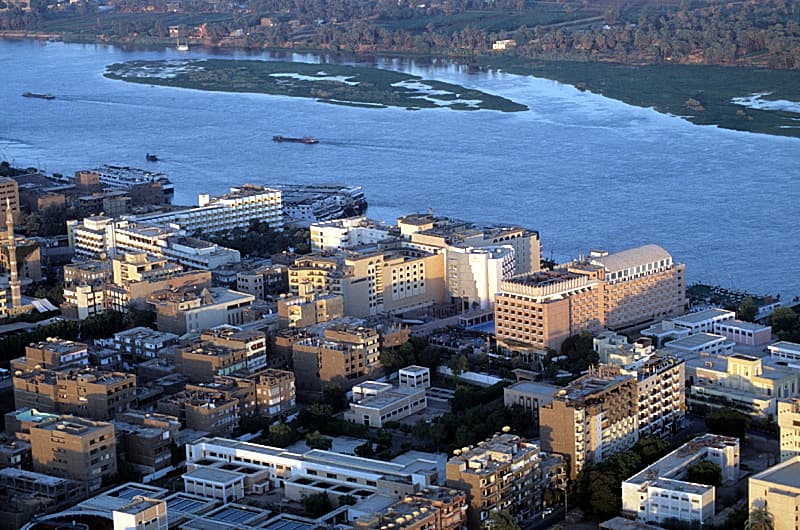
Luxor, often called the 'world's greatest open-air museum,' stands as a testament to the grandeur of ancient Egypt. The modern city, situated on the banks of the Nile River in Upper Egypt, is built upon the ruins of ancient Thebes, once the powerful capital of the New Kingdom. The city is divided by the Nile into two distinct areas: the East Bank, historically associated with the living, featuring bustling markets and magnificent temples like Luxor and Karnak, and the West Bank, the realm of the dead, home to vast necropolises including the Valley of the Kings and the Valley of the Queens.
Luxor's historical significance is profound, having served as the political, religious, and military heart of ancient Egypt for over 1500 years. Its landscape is dotted with an unparalleled concentration of ancient monuments, offering a direct connection to a civilization that flourished millennia ago. From the towering columns of Karnak to the intricate hieroglyphs within royal tombs, Luxor provides an immersive journey into a bygone era, where every stone seems to hold stories of pharaohs, gods, and daily life along the fertile Nile.
From Waset to Thebes: A Capital's Rise and Fall
The city now known as Luxor was originally called Waset, meaning 'city of the sceptre,' by the ancient Egyptians. Later, it became known as Thebai to the Greeks and Thebae to the Romans, a name that evolved from the Demotic Egyptian 'ta jpt,' referring to the Karnak Temple. Its current name, Luxor, is derived from the Arabic word 'El-Qusur,' meaning 'palaces' or 'forts,' a nod to the ancient structures that define its landscape.
Luxor's prominence began around 3000 BCE, but it truly rose to its zenith during the New Kingdom (circa 1550–1070 BCE), serving as the capital of Upper Egypt and a vital hub for political, religious, and military affairs. During this period, pharaohs like Amenhotep III and Ramesses II commissioned immense building projects, leaving an enduring legacy of temples and monuments. The city was a center of worship for the god Amun, who later became Amun-Ra, the national god. The grand temples of Karnak and Luxor were not only places of worship but also symbols of the pharaohs' power and devotion.
Despite its immense importance, Thebes' political influence waned after the 19th Dynasty, with the capital shifting north. However, its religious and cultural significance endured. Even under Persian, Greek, and Roman rule, Luxor continued to be a site of spiritual reflection. The city's ancient treasures were eventually buried beneath expanding settlements, only to be rediscovered and excavated in recent centuries, sparking renewed global interest in ancient Egypt. Today, Luxor remains a lively city, where the layers of its past are continuously unearthed, revealing more about one of the world's greatest civilizations.
Luxor's archaeological wonders are primarily divided between the East and West Banks of the Nile. On the East Bank, the Karnak Temple Complex is an expansive site, considered one of the largest religious complexes in the world. Its Hypostyle Hall, with its 134 towering columns, is particularly impressive. A restored Avenue of Sphinxes connects Karnak to Luxor Temple, which is particularly captivating when lit at night. The Luxor Museum offers a curated collection of artifacts, including statues from the New Kingdom.
Crossing to the West Bank, the Valley of the Kings is the burial ground for New Kingdom pharaohs, featuring intricately decorated rock-cut tombs. Nearby, the Mortuary Temple of Hatshepsut stands as a striking example of ancient Egyptian architecture. The Colossi of Memnon, two massive stone statues, are the first sights to greet visitors to the West Bank. Other significant sites include the Valley of the Queens, the Ramesseum (mortuary temple of Ramesses II), and Medinet Habu, the mortuary temple of Ramesses III, known for its well-preserved reliefs and original painting. For a different perspective, a hot air balloon ride over the West Bank at sunrise offers panoramic views of the ancient sites and the Nile.
The optimal time to visit Luxor is during the cooler months, from October to April. Temperatures during this period are comfortable, ranging from approximately 16-28°C (61-82°F), making it ideal for exploring the extensive outdoor archaeological sites. The peak season falls between December and February, offering the coolest weather but also attracting the largest crowds and higher prices. Shoulder seasons, March to April and October to November, provide a good balance of pleasant weather and fewer crowds, often with better accommodation rates. Summers, from May to September, are intensely hot, with temperatures frequently exceeding 40°C (104°F), making daytime sightseeing challenging and potentially risky.
Getting around Luxor is relatively easy, with options including taxis, horse-drawn carriages (calèches), and local ferries to cross the Nile. Agree on a price before starting any journey with a taxi or carriage. For exploring the West Bank, hiring a taxi for a half-day or full-day is a common and efficient option, especially when splitting costs with other travelers. Felucca rides on the Nile, traditional sailboats, offer a serene way to experience the river, particularly at sunset.
Luxor is not a day trip from Cairo; it requires at least one overnight stay to properly experience its many sites. Many visitors choose to fly into Luxor or take a Nile cruise from Aswan. While exploring, carry plenty of water, especially given the intense sun and heat, even in cooler months. Most major attractions have cafes on-site for refreshments. Accommodations are available on both the East and West Banks, with the West Bank generally offering a quieter atmosphere and often more budget-friendly options.
- What is Luxor known for?
- Luxor is renowned as the 'world's greatest open-air museum' due to its exceptional concentration of ancient Egyptian temples, tombs, and monuments, including the Karnak Temple Complex, Luxor Temple, and the Valley of the Kings.
- How many days do you need in Luxor?
- To adequately explore the highlights of Luxor, a minimum of three days is recommended. This allows sufficient time to visit the major sites on both the East and West Banks without feeling rushed.
- Is Luxor safe for tourists?
- While the provided search results do not directly address safety, general travel advice for Egypt often recommends staying informed about local conditions and exercising caution, as with any travel destination. It's always advisable to check current government travel advisories before your trip.
- Can you visit Luxor Temple at night?
- Yes, Luxor Temple is often open until late in the evening and is particularly atmospheric when illuminated after sunset. Some sources mention a sound and light show.
- What is the best way to get around Luxor?
- For getting around Luxor, taxis and horse-drawn carriages (calèches) are common. To cross the Nile between the East and West Banks, local ferries are available. For touring the West Bank's scattered sites, hiring a private taxi for a half or full day is efficient.
- Is a hot air balloon ride worth it in Luxor?
- Many travelers consider a hot air balloon ride over Luxor, especially at sunrise, to be a highlight of their trip, offering unparalleled aerial views of the ancient monuments and the Nile River.