The Hacienda (site)
Before it became luxury flats, this legendary venue hosted Madonna's first UK performance.
Full story unlocks in the tour
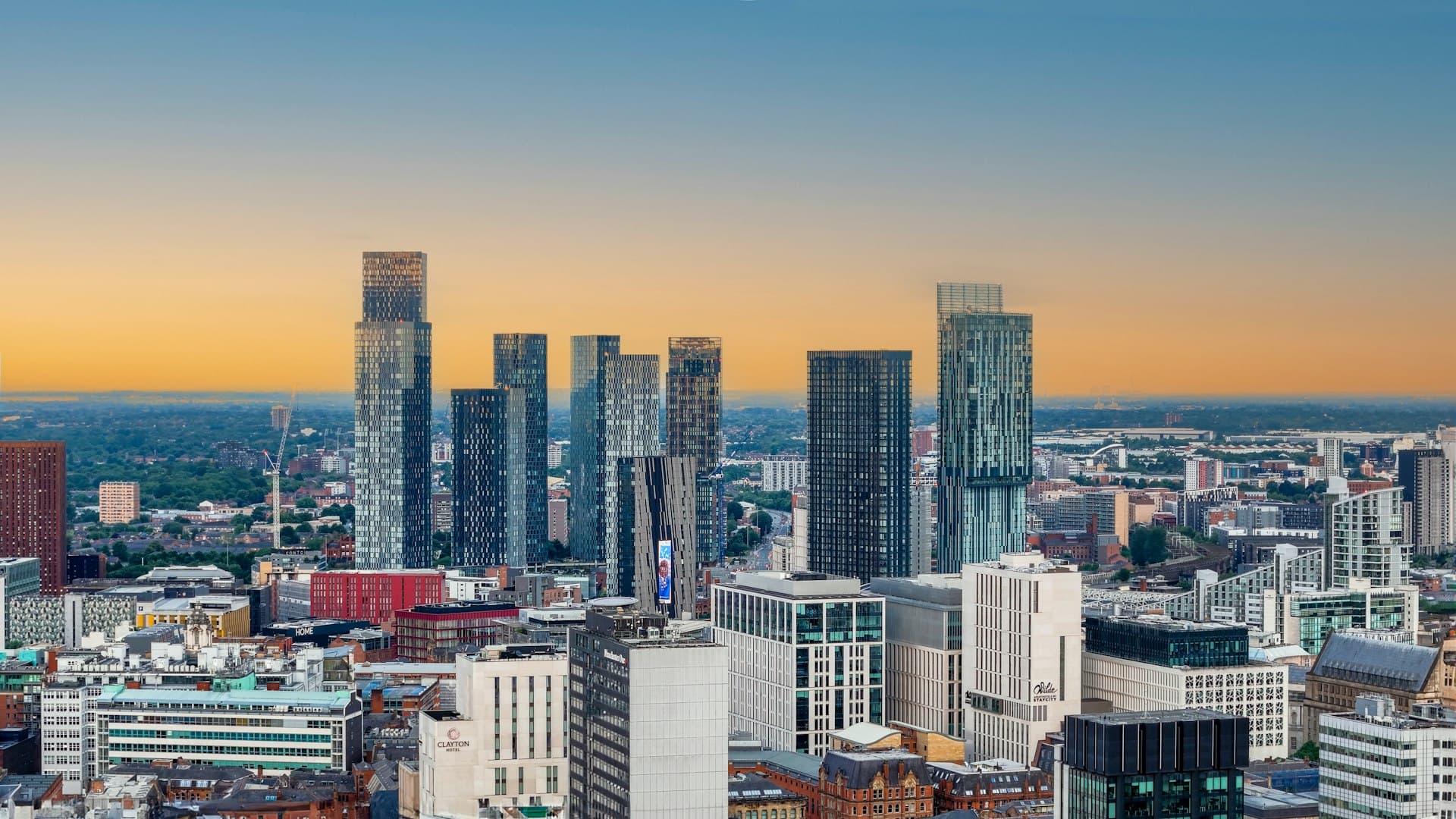 Photo: Mylo Kaye / Unsplash
Self-guided audio walking tour of Madchester — GPS route, offline playback, story-driven narration in 32 languages.
“Feel the pulse of Madchester: Where the music still echoes in the streets.”
Not the postcards. The stories even locals don't know — whispered in your ear, right where they happened.
Before it became luxury flats, this legendary venue hosted Madonna's first UK performance.
The Smiths immortalized this building on an album cover, yet its original purpose was to steer young men away from street life.
This Northern Quarter institution, opened by Factory Records, was conceived as a 'pre-bar' for The Hacienda, and it outlasted its celebrated sibling.
Discover every secret of Madchester
Every address, every reveal in full — in your ear, right where it happened.
You pick your stops. You walk. The voice reveals what the others miss.
Your self-guided audio tour of Madchester is ready — pick your landmarks, choose your language, and start the moment you arrive.
BuyManchester: a name synonymous with a sound that shook the world. This isn't merely a city; it's a living, breathing archive of musical innovation, a place where the echoes of post-punk, Madchester, and Britpop still reverberate through its red-brick streets and repurposed industrial spaces. From the haunting melodies of Joy Division and The Smiths to the euphoric beats of The Hacienda and the anthemic singalongs of Oasis, Manchester has consistently produced artists who defied norms and defined generations.
This self-guided walking tour invites you to step beyond the guidebooks and into the very fabric of Madchester. It's a journey for the dedicated fan, a chance to walk in the footsteps of your musical heroes, to see the unassuming buildings that witnessed history, and to feel the creative energy that continues to pulse through this northern powerhouse. You'll explore the legendary venues, the album cover locations, and the independent havens that collectively forged a sound and a culture unlike any other.
## The Genesis of a Sound Manchester's musical journey didn't begin with Madchester, but the late 1980s and early 1990s saw an explosion of creativity that cemented its global reputation. Before the baggy trousers and ecstasy-fueled raves, the city had already birthed influential bands like Joy Division and The Smiths, whose melancholic yet poetic sounds laid crucial groundwork.
## Factory Records and The Hacienda The catalyst for the Madchester phenomenon was undoubtedly Factory Records, founded by the visionary Tony Wilson. This independent label nurtured bands like New Order and Happy Mondays, and its ethos of artistic freedom became legendary. Central to Factory's empire was The Hacienda nightclub (FAC 51), which opened in 1982 in a former yacht showroom on Whitworth Street West. Designed with an industrial aesthetic by Ben Kelly, it quickly became the epicenter of the burgeoning acid house and rave scene. The club, partially financed by New Order, often lost money, but its cultural impact was immeasurable, fostering a unique blend of indie rock and dance music.
## Madchester Takes Over The term 'Madchester' itself was coined by Factory Records' video directors, the Bailey Brothers, and popularized by Tony Wilson and the British music press. It encapsulated a lively scene that blended indie rock with acid house, psychedelia, and 1960s pop, heavily influenced by the widespread use of MDMA. Bands like The Stone Roses, Happy Mondays, Inspiral Carpets, and The Charlatans became the face of this movement, their music defining an era of hedonism and cultural swagger.
## Beyond the Rave As the Madchester era began to wane in the early 1990s, Manchester continued its musical evolution. The mid-90s saw the rise of Britpop, with Oasis emerging from the city to become one of the biggest bands in the world. Their anthemic rock captured a new national mood, and their early haunts, from record shops to pubs, became part of Manchester's enduring musical mythology. The city's music heritage isn't confined to museums; it's etched into its streets, pubs, and a handful of surviving venues, waiting to be discovered by those who know where to look.
Your Madchester pilgrimage begins where the beats once dropped: the site of The Hacienda on Whitworth Street West. While the legendary club is now residential apartments, the building's distinctive curved frontage and its location next to the Rochdale Canal still evoke its monumental past. Next, head to the Northern Quarter, the undisputed cultural and musical heart of Manchester. Wander through its grid of streets, particularly around Oldham Street and Tib Street, where independent record shops like Piccadilly Records (53 Oldham Street) have been serving music lovers since 1978. Explore Afflecks (52 Church Street), a multi-story indoor market that has been a haven for alternative culture since 1982, selling everything from vintage clothing to records. Don't miss Dry Bar (28-30 Oldham Street), a Factory Records establishment that predated much of the Northern Quarter's bar scene and remains a characterful spot.
Further afield, a short journey to Salford will bring you to Salford Lads Club (St Ignatius Walk), immortalized on the inner sleeve of The Smiths' 'The Queen Is Dead' album. Back in the city center, seek out the site of the Free Trade Hall (Peter Street), where a legendary 1976 Sex Pistols gig ignited Manchester's punk scene. For Oasis fans, a trip to 8 Stratford Avenue in Withington reveals the unassuming house featured on the 'Definitely Maybe' album cover. Also look for the site of The Boardwalk on Little Peter Street, where Oasis played their first proper gig. Many of these locations are marked by plaques or are easily recognizable, offering tangible connections to Manchester's unparalleled music history.
Manchester offers a compelling experience year-round, but for a walking tour focused on music history, the shoulder seasons of late spring (April to May) and early autumn (September) are ideal. Temperatures are mild, typically ranging from 8°C to 15°C (46°F to 59°F) in spring and 10°C to 15°C (50°F to 59°F) in autumn, making it comfortable for exploring on foot. These periods also generally see fewer crowds than the peak summer months, allowing for a more relaxed experience at popular sites. While rain showers are common throughout the year in Manchester, they tend to be light and drizzly rather than torrential, so come prepared with a light waterproof layer. Summer (June to August) is also pleasant with warmer temperatures and longer daylight hours, but expect higher prices and larger crowds.
Manchester is a very walkable city, especially the city center and Northern Quarter, where many of these music landmarks are located. Wear comfortable shoes, as you'll be covering a fair bit of ground. While the core of the tour can be done on foot, some locations like Salford Lads Club and the 'Definitely Maybe' house are a bit further out. Consider utilizing Manchester's efficient public transport system, including buses and the Metrolink tram, for these longer distances. A day rider ticket can be a cost-effective option. The weather in Manchester can be unpredictable, so it's wise to pack layers and a waterproof jacket, even in warmer months. Many venues and shops in the Northern Quarter offer opportunities for refreshments and breaks. Keep an eye out for blue plaques, which often mark historically significant sites. For those interested in a deeper dive, guided music tours are also available, often led by local experts.
Madchester in Korean, in Chinese or in Hebrew — and 29 more languages, every stop narrated by a native voice. The widest language range of any self-guided audio tour.
Available in: