Bahrain Fort
This UNESCO World Heritage site holds more than just ancient stones.
Full story unlocks in the tour
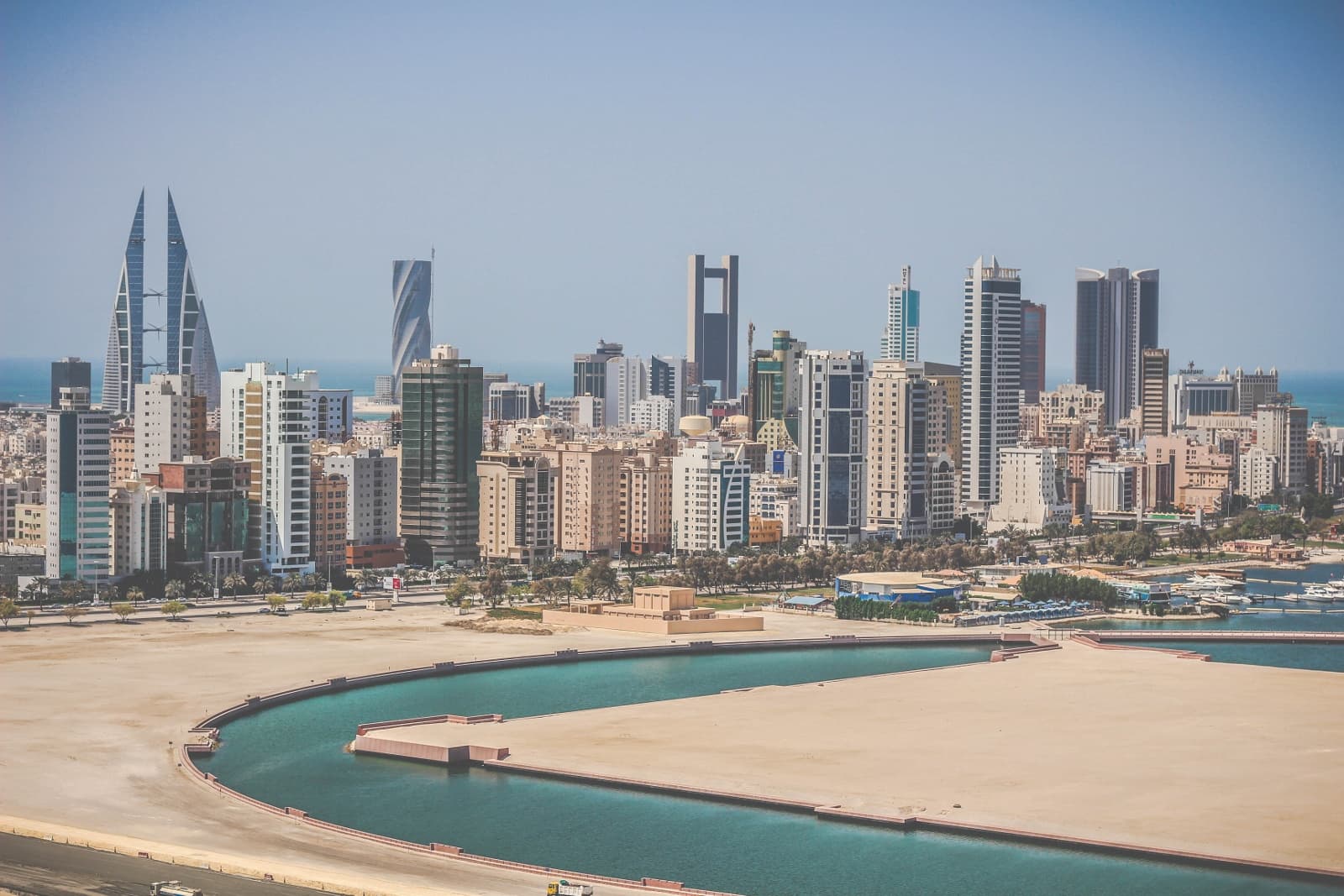 Wadiia / CC BY-SA 4.0, via Wikimedia Commons
Self-guided audio walking tour of Manama — GPS route, offline playback, story-driven narration in 32 languages.
“Where ancient trade routes meet futuristic skylines.”
Not the postcards. The stories even locals don't know — whispered in your ear, right where they happened.
This UNESCO World Heritage site holds more than just ancient stones.
Amidst the active stalls, a different kind of commerce once thrived.
These twin towers are more than just striking architecture.
Discover every secret of Manama
Every address, every reveal in full — in your ear, right where it happened.
You pick your stops. You walk. The voice reveals what the others miss.

Your self-guided audio tour of Manama is ready — pick your landmarks, choose your language, and start the moment you arrive.
BuyLume has a built-in augmented-reality guide. Hold your phone up and its camera shows the street ahead of you, with a glowing arrow laid over the real view that always points to your next stop — no map to puzzle over, no wrong turns. Like everything in Lume, it works fully offline.
Manama, the capital and largest city of Bahrain, is a metropolis where ancient traditions and modern aspirations intertwine. Situated on the northeastern tip of Bahrain Island along the Persian Gulf, it has long been a pivotal trading center. The city presents a striking blend of historic souks and contemporary skyscrapers, reflecting its deep past and its evolution into a significant financial hub in the Middle East.
Beyond its commercial pulse, Manama offers a diverse cultural landscape, influenced by Arabic, Persian, and expatriate communities. It's a city that invites exploration, from delving into millennia of history at its museums and forts to experiencing its active arts, dining, and entertainment scenes. Manama was designated the 'Capital of Arab Culture' by the Arab League in 2012, underscoring its cultural significance in the region.
Manama's history stretches back centuries, with its first mention in Islamic texts around 1345 AD. Archaeological findings, particularly at the Qal'at al-Bahrain site, indicate that developed settlements existed in this territory as early as the 3rd millennium BC, during the era of the Dilmun civilization, a vital trading hub between Mesopotamia and the Indus Valley.
In the early 16th century, the city came under Portuguese control in 1521, who sought to command the Arabian Gulf's trade routes. However, the Safavid Persians expelled the Portuguese in 1602, and Manama became a regional center for commerce and pearling. The Al Khalifa dynasty has largely governed Bahrain since 1783, with Manama evolving into a focal point of political and economic activity.
While Manama and the nearby city of Muharraq were founded around the same time in the 1800s, Muharraq initially held prominence as the capital until 1923 due to its defensive location. Manama, however, became the mercantile capital and the primary gateway to Bahrain Island. The discovery of oil in Bahrain in 1932 marked a transformative era, leading to significant economic growth and modernization. In 1958, Manama was designated a free port, further enhancing its trade opportunities, and in 1971, when Bahrain gained independence from British protection, Manama was declared the official capital. Since then, it has diversified beyond oil to become an important financial hub in the Persian Gulf.
Manama offers a compelling array of sights, blending its historical roots with modern marvels. The Al-Fateh Grand Mosque is a prominent landmark, one of the largest mosques globally, capable of accommodating over 7,000 worshippers. Its impressive fiberglass dome, Italian marble floors, and Indian teak wood doors showcase exquisite Islamic architecture.
For a journey through Bahrain's extensive past, the Bahrain National Museum is a rewarding destination. It houses artifacts spanning 5,000 years of history, including relics from the ancient Dilmun civilization. Nearby, the Qal'at al-Bahrain (Bahrain Fort), a UNESCO World Heritage Site, provides a tangible link to ancient civilizations that once thrived here.
The active Manama Souq, accessible through Bab Al Bahrain, offers a sensory experience with its narrow alleyways filled with spices, gold jewelry, textiles, and handicrafts. For a taste of modern Manama, the iconic Bahrain World Trade Center stands out with its twin sail-shaped towers and integrated wind turbines. Stroll along Bahrain Bay for waterfront views and a glimpse of the city's contemporary skyline.
The most pleasant time to visit Manama is during the winter months, from December to February. Temperatures during this period range between 14°C (57°F) and 20°C (68°F), providing ideal conditions for outdoor activities and exploration. This season also sees fewer rain showers. Autumn (September to November) and spring (March to May) offer moderate temperatures, though summers (June to August) can be extremely hot, with temperatures soaring above 40°C (104°F) and high humidity. If visiting in summer, focus on air-conditioned indoor attractions.
Manama is well-prepared to welcome visitors, offering a range of hotels, resorts, and facilities. The local currency is the Bahraini Dinar (BHD), and currency exchange centers are readily available. Credit cards are widely accepted in malls, restaurants, and hotels, though carrying some cash for smaller purchases at souks is advisable.
Public transportation, including buses and taxis, is available for getting around the city. Many visitors opt for taxis or rental cars for convenience. Manama is generally considered safe for visitors, but it's always wise to be aware of your surroundings. Respecting local customs, such as dressing modestly in public places and maintaining a polite demeanor, is appreciated and enhances the visitor experience.
Manama in Korean, in Chinese or in Hebrew — and 29 more languages, every stop narrated by a native voice. The widest language range of any self-guided audio tour.
Available in: