Teatro Amazonas
The opulent opera house in the heart of the Amazon wasn't always just for high culture.
Full story unlocks in the tour
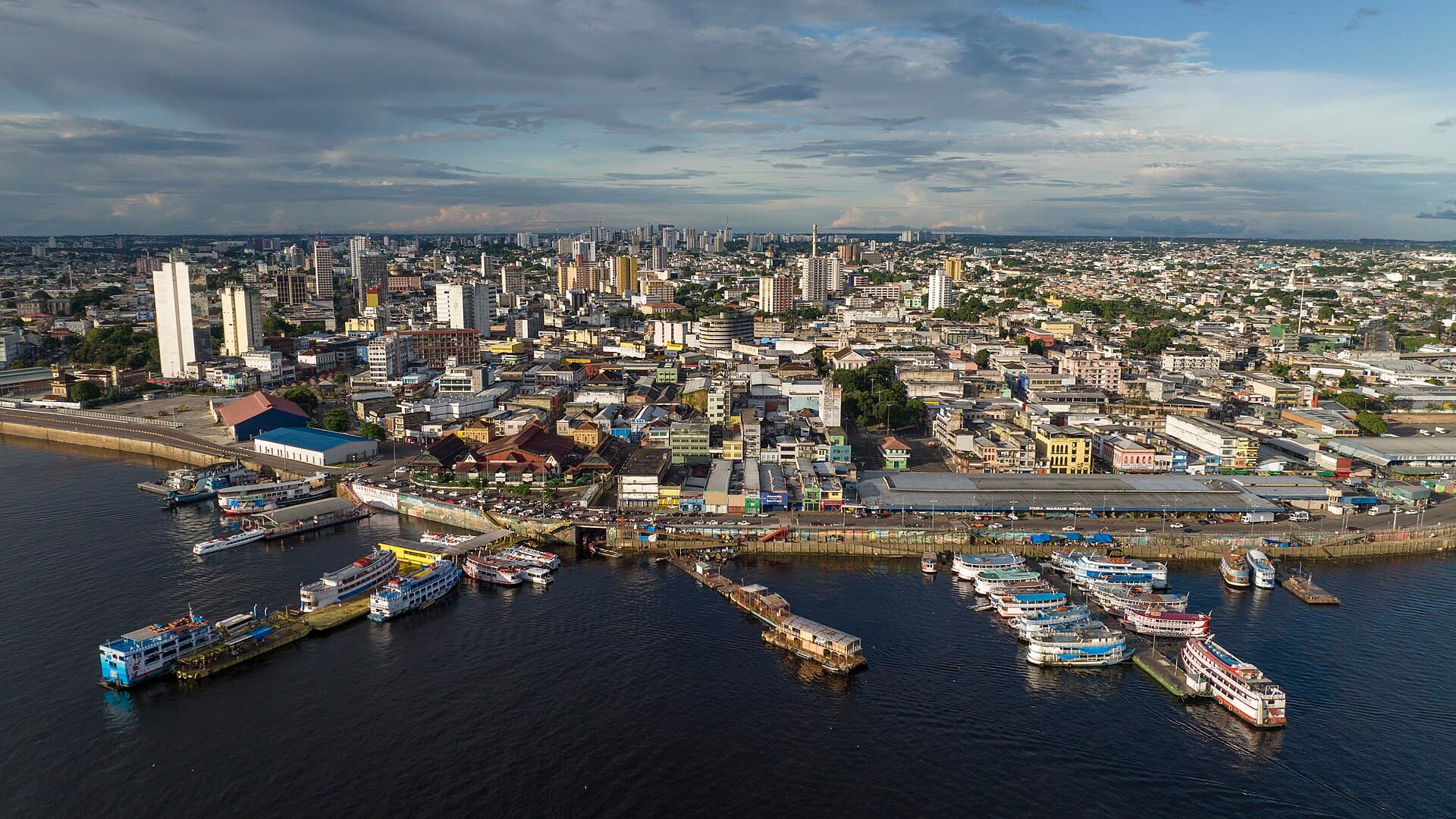 Arne Müseler / CC BY-SA 3.0 de, via Wikimedia Commons
Self-guided audio walking tour of Manaus — GPS route, offline playback, story-driven narration in 32 languages.
“Where the Amazon's pulse beats in a city of grand theaters and flowing rivers.”
Not the postcards. The stories even locals don't know — whispered in your ear, right where they happened.
The opulent opera house in the heart of the Amazon wasn't always just for high culture.
Two mighty rivers converge, yet maintain their distinct identities for miles.
A port engineered to adapt to the Amazon's dramatic water level changes.
Discover every secret of Manaus
Every address, every reveal in full — in your ear, right where it happened.
You pick your stops. You walk. The voice reveals what the others miss.


Your self-guided audio tour of Manaus is ready — pick your landmarks, choose your language, and start the moment you arrive.
BuyLume has a built-in augmented-reality guide. Hold your phone up and its camera shows the street ahead of you, with a glowing arrow laid over the real view that always points to your next stop — no map to puzzle over, no wrong turns. Like everything in Lume, it works fully offline.
Manaus, the capital of Brazil's Amazonas state, sits at the very heart of the Amazon rainforest, a lively urban center surrounded by unparalleled biodiversity. Established in 1669 as the Fort of São José do Rio Negro, it grew into a prominent city during the late 19th and early 20th centuries due to the rubber boom, earning it the nickname 'Paris of the Tropics.' Today, it functions as a major inland port for oceangoing vessels and a crucial center for scientific studies on the Amazon, drawing visitors eager to explore both its historical splendor and the surrounding natural wonders.
The city's unique position at the confluence of the Rio Negro and the Amazon River (known as the Solimões River upstream) offers a distinctive starting point for Amazonian adventures. Manaus is a city of striking contrasts, where ornate European-inspired architecture stands against the backdrop of the world's largest rainforest. It's a place where the echoes of a prosperous past meet the constant, humid breath of the jungle, inviting exploration beyond the ordinary.
The history of Manaus began in 1669 with the construction of the Fort of São José da Barra do Rio Negro by the Portuguese. This fortification held strategic importance, ensuring Portuguese influence in the region and protecting against potential invasions, particularly from the Dutch. A small village, Villa de Barra, developed around the fort, and in 1832, it was granted town status and officially named Manaus, an altered spelling honoring the indigenous Manaós people, meaning 'Mother of the Gods.'
The mid-19th century saw Manaus become the capital of the Amazonas province, solidifying its administrative significance. However, it was the late 19th and early 20th centuries that truly transformed the city. The global demand for natural rubber, sourced from the Hevea brasiliensis tree abundant in the Amazon, ignited an economic explosion known as the Rubber Boom (approximately 1890-1920).
This era brought immense prosperity to Manaus, attracting European families and investments that reshaped its urban landscape. The city became a display of European sophistication, with grand buildings like the Teatro Amazonas opera house, constructed with materials imported from Europe, and the sophisticated Manaus Floating Port, an engineering marvel designed to cope with the river's fluctuating levels. Manaus was even among the first cities in Brazil to have electricity. The city's prosperity, however, was fleeting. The collapse of the rubber monopoly in the 1920s, largely due to the export of rubber tree seeds to Asia, led Manaus into economic decline.
Decades of stagnation followed until 1967, when Manaus was declared a duty-free zone. This initiative revitalized the city's economy through manufacturing, commerce, and a growing tourism sector, leading to its modern-day status as a significant economic and logistical center in the Amazon basin.
Begin your exploration at the iconic Teatro Amazonas, a lavish opera house from the rubber boom era. You can take a guided tour to admire its European-inspired architecture and the dome adorned with 36,000 tiles in the colors of the Brazilian flag. Nearby, the Palace of Justice (Palácio de Justiça) and the Rio Negro Palace (Palácio Rio Negro) offer further glimpses into the city's opulent past.
A boat trip to the Meeting of Waters (Encontro das Águas) is essential. This natural phenomenon, where the dark Rio Negro and the sandy-colored Solimões River flow side-by-side without mixing for several kilometers, is a truly mesmerizing sight.
For a taste of local life and Amazonian produce, visit the Adolpho Lisboa Municipal Market. Inspired by Paris's Les Halles, it's a bustling hub for fruits, herbs, fish, and handicrafts. To delve deeper into the rainforest ecosystem, head to the Museu da Amazônia (MUSA), located within the Adolpho Ducke Forest Reserve. It features immersive trails, exhibits on biodiversity, and a 42-meter observation tower offering expansive views over the canopy.
Consider also a visit to a recreated rubber plantation to understand the industry that shaped Manaus. The Ponta Negra Beach area, with its riverside ambiance, is a popular spot to relax and watch the sunset.
Manaus experiences a tropical monsoon climate, meaning it's consistently hot and humid year-round, with average temperatures around 27.4 °C (81.3 °F). The year is divided into a relatively dry season (June to November) and a rainy season (December to May). The dry season, particularly from July to September, is often considered ideal for visiting as it offers lower precipitation and better access for hiking and wildlife viewing in the Amazon. However, the wet season brings higher river levels, allowing for canoe trips into otherwise inaccessible flooded forest areas. Both seasons offer unique Amazonian experiences, so the best time depends on your preferred activities.
Manaus is primarily accessible by air, with Eduardo Gomes International Airport (MAO) offering flights from major Brazilian cities and some international destinations. River travel is also a popular way to arrive, especially from other Amazonian cities like Belém, though these journeys can be lengthy. Within the city, taxis and ride-sharing services like Uber are convenient options. Public buses cover most areas, but routes and signs are mainly in Portuguese.
While Manaus is generally considered safe for tourists, it's wise to take standard precautions. Avoid walking alone at night in less-populated areas, keep valuables secure, and be discreet with your phone and expensive items. It's recommended to book tours through reputable operators. The local currency is the Brazilian Real (BRL); carrying a mix of cash and cards is advisable, as some smaller establishments may not accept cards. Tap water is not safe for drinking, so stick to bottled or filtered water. Learning some basic Brazilian Portuguese phrases will enhance your experience, as not everyone speaks English.
Manaus in Korean, in Chinese or in Hebrew — and 29 more languages, every stop narrated by a native voice. The widest language range of any self-guided audio tour.
Available in: