Jhunjhunwala Haveli's 'Gouden Kamer'
Stel je een kamer voor waar de oppervlakken glanzen met een onmiskenbare weelde, ver voorbij louter pigment.
Volledig verhaal ontgrendeld in de tour
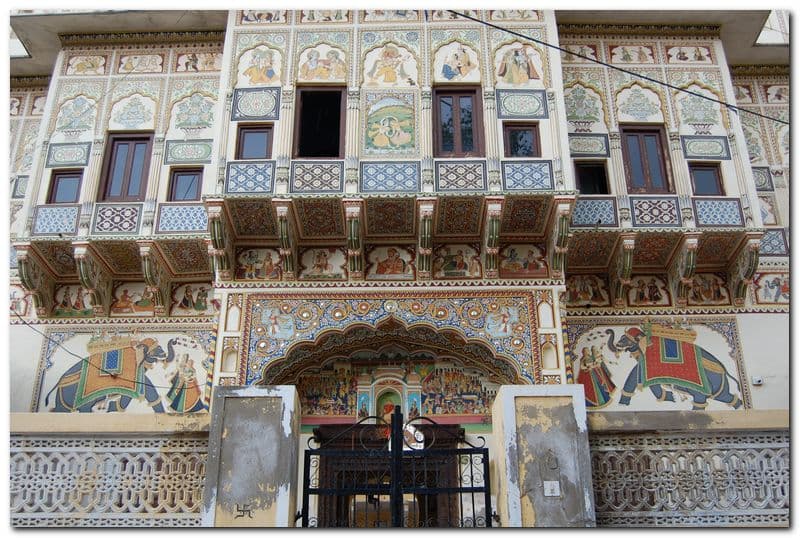 Dhirad / CC BY-SA 2.5, via Wikimedia Commons
Zelfgeleide audiowandeling door Mandawa — GPS-route, offline afspelen, meeslepende vertelling in 32 talen.
“Mandawa: Waar elke muur een verhaal vertelt, een uitgestrekte openluchtgalerie in Rajasthan.”
Niet de ansichtkaarten. De verhalen die zelfs locals niet kennen — gefluisterd in je oor, precies waar ze gebeurden.
Stel je een kamer voor waar de oppervlakken glanzen met een onmiskenbare weelde, ver voorbij louter pigment.
Te midden van de traditionele muurschilderingen van Mandawa presenteert één bijzondere haveli verrassend eigentijdse en westerse beelden.
De buitenmuren van één haveli bieden een fascinerende kijk op de technologische vooruitgang van het begin van de 20e eeuw.
Ontdek elk geheim van Mandawa
Elk adres, elke onthulling volledig — in je oor, precies waar het gebeurde.
Jij kiest je stops. Jij wandelt. De stem onthult wat de anderen missen.


Lume heeft een ingebouwde augmented-reality-gids. Houd je telefoon omhoog: de camera toont de straat voor je, met een oplichtende pijl over het echte beeld die altijd naar je volgende stop wijst — geen kaart om uit te puzzelen, geen verkeerde afslagen. Zoals alles in Lume werkt het volledig offline.
Mandawa, een stad in de Shekhawati-regio van Rajasthan, wordt algemeen erkend als de 'Open Kunstgalerie' van de staat. Deze benaming komt voort uit de vele havelis, of traditionele herenhuizen, die rijkelijk versierd zijn met ingewikkelde fresco's en muurschilderingen. Deze historische woningen, waarvan vele dateren uit de 18e en 19e eeuw, bieden een visuele kroniek van het verleden, met schilderijen die mythologische thema's, dagelijkse routines en zelfs Europese artistieke stijlen illustreren.
De rustieke charme en serene sfeer van Mandawa bieden een rustige ontsnapping aan meer bruisende stedelijke centra. Het trekt liefhebbers van geschiedenis, fotografen en kunstliefhebbers aan die op zoek zijn naar de minder bereisde culturele wonderen van India. De compacte afmetingen van de stad maken het ideaal om te voet te verkennen, waardoor bezoekers de gedetailleerde kunstwerken op de muren van de havelis in zich kunnen opnemen.
De oorsprong van Mandawa dateert uit de 18e eeuw, toen de Shekhawati Rajputs het stichtten. Thakur Nawal Singh, een afstammeling van de heersers van Shekhawati, bouwde in 1755 Mandawa Fort om een handelspost te beschermen. De strategische ligging van de stad aan oude karavaanroutes, die China en het Midden-Oosten verbonden, zorgde ervoor dat het floreerde als een belangrijk commercieel centrum.
Welvarende Marwari-kooplieden, die profiteerden van de handel in goederen zoals zijde, specerijen, opium en hasjiesj, vestigden zich in Mandawa en bouwden magnifieke havelis. Deze grandioze huizen dienden als emblemen van hun welvaart en waren rijkelijk versierd met fresco's, waardoor de stad veranderde in een uitgestrekte openlucht kunstgalerie. De fresco's beeldden vaak religieuze verhalen, lokale folklore, portretten van de eigenaren en scènes uit het dagelijks leven af. Na verloop van tijd begon de kunst Europese elementen te integreren, met afbeeldingen van Britse soldaten, auto's en treinen, die de evoluerende tijdperken weerspiegelden.
In het begin van de 20e eeuw, toen handelsroutes verschoven, verhuisden veel koopmansfamilies naar grotere steden zoals Bombay en Calcutta, en verlieten geleidelijk hun havelis. Ondanks hun verlatenheid en af en toe verval, blijven deze havelis de belangrijkste trekpleister van de stad en bewaren ze een uniek artistiek en architectonisch erfgoed. Sommige zijn omgebouwd tot heritage hotels, waardoor bezoekers de weelderige levensstijl van een vervlogen tijdperk kunnen ervaren.
De belangrijkste attractie van Mandawa is de collectie rijkelijk beschilderde havelis. Begin uw verkenning bij Mandawa Fort, een 18e-eeuwse structuur die nu fungeert als een heritage hotel. De beschilderde boogingang, versierd met afbeeldingen van Heer Krishna en zijn koeien, zet de artistieke toon voor de stad. Binnen toont de Darbar Hall Rajputana-antiek en koninklijke portretten.
Ontdek de Havelis van Mandawa, elk met een uniek artistiek perspectief. De Hanuman Prasad Goenka Haveli is opmerkelijk vanwege zijn fresco's van Heer Indra op zijn olifant en Heer Shiva op Nandi. De Murmuria Haveli onderscheidt zich door zijn fusie van oosterse en westerse invloeden, met schilderijen van treinen, auto's en figuren als Jawaharlal Nehru en Koning George V. De Goenka Double Haveli onderscheidt zich met een façade versierd met olifanten en paarden, naast ingewikkelde patronen. De Jhunjhunwala Haveli staat bekend om zijn 'Gouden Kamer', waar fresco's werden gemaakt met echt bladgoud. De Binsidhar Newatia Haveli biedt een kijkje in de vroege moderniteit met zijn illustraties van telefoons en Europese auto's. Naast de havelis biedt een bezoek aan de Harlalka Well een vleugje rustieke charme.
De ideale tijd om Mandawa te ervaren is tijdens de koelere maanden, van oktober tot maart. In deze periode is het weer aangenaam mild, met dagtemperaturen variërend van 15°C tot 25°C, wat perfecte omstandigheden creëert om de bezienswaardigheden in de buitenlucht van de stad te verkennen en door de smalle passages te wandelen. De zomers, van april tot juni, zijn extreem heet, met temperaturen die vaak boven de 40°C uitkomen, terwijl het moessonseizoen, van juli tot september, vochtigheid en af en toe regen brengt.
Mandawa is goed bereikbaar over de weg, met regelmatige busservices vanuit grote steden zoals Jaipur en Delhi. Jaipur, ongeveer 168-180 kilometer verderop, is het dichtstbijzijnde grote stedelijke centrum. Het dichtstbijzijnde treinstation is Jhunjhunu, ongeveer 30 kilometer van Mandawa, met verbindingen naar Delhi en andere steden in Rajasthan. Jaipur International Airport (JAI) is de dichtstbijzijnde luchthaven, ongeveer 180 kilometer verderop, vanwaar u een taxi kunt regelen of een bus naar Mandawa kunt nemen.
Eenmaal in Mandawa is de meest effectieve manier om te verkennen te voet, per fiets of per riksja, gezien de compacte indeling van de stad. Overweeg het inhuren van een privégids om de onvertelde verhalen achter de fresco's te ontdekken. Draag altijd water, vooral in de warmere maanden, en een camera om de artistieke achtergronden van de stad vast te leggen.
Mandawa — Koreaans, Chinees, Hebreeuws en nog 29 talen, elke stop verteld door een moedertaalspreker. Het grootste taalaanbod van alle zelfgeleide audiotours.
Beschikbaar in: