Among the Hellenistic coins and Roman artifacts, a singular discovery unveils a deeply personal story of ancient literacy in Romania.
Barbugeorgemarian / CC BY-SA 4.0, via Wikimedia CommonsMangalia
“Where ancient echoes meet the Black Sea's embrace.”
Mangalia, as no one tells it.
Not the postcards. The stories even locals don't know — whispered in your ear, right where they happened.
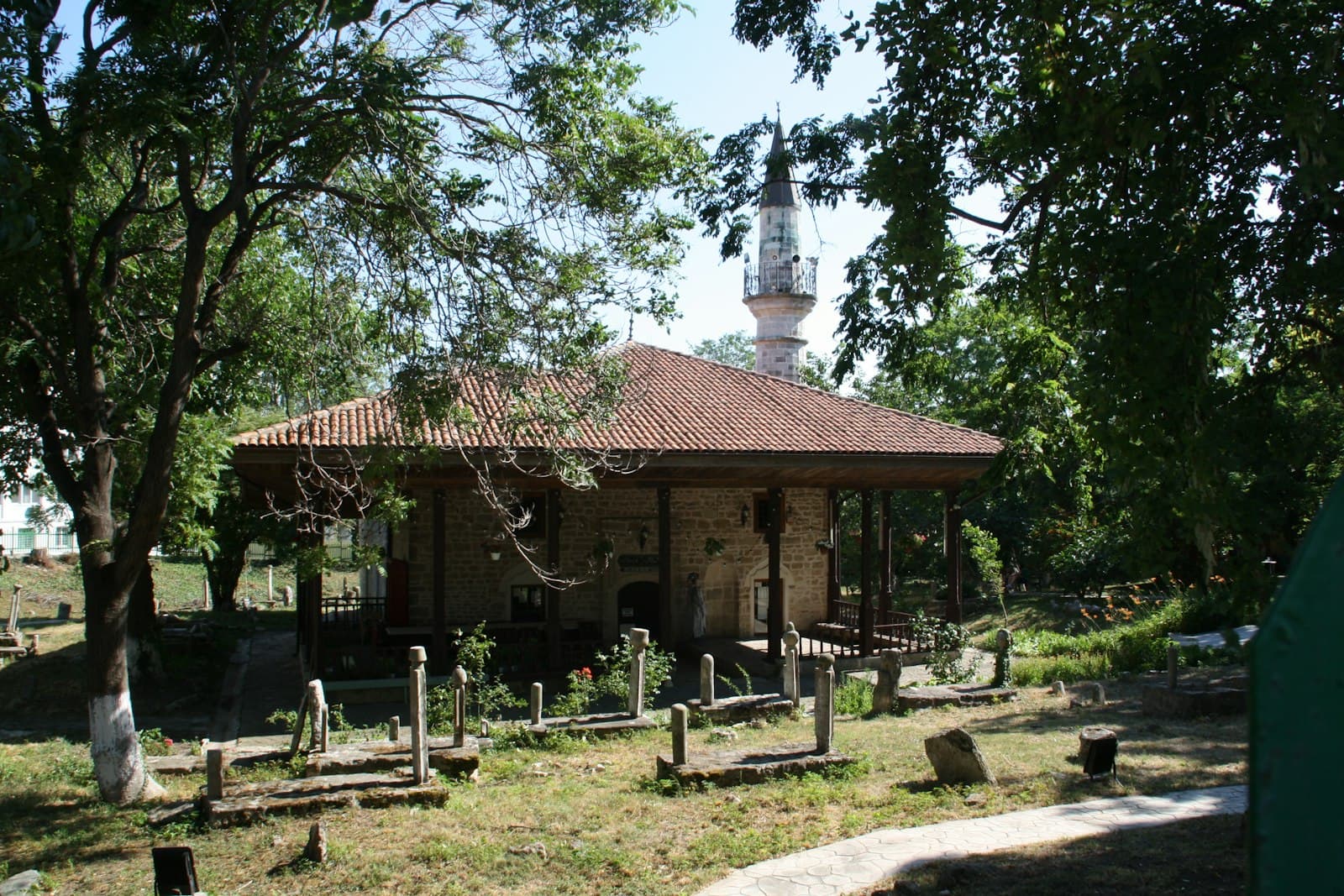
This 16th-century mosque carries a secret about its construction, directly linking it to the venerable city it surveys.
Beyond its considerable length, local stories suggest this cave system stretches far beyond Romania's borders.
Discover every secret of Mangalia
Every address, every reveal in full — in your ear, right where it happened.
You pick your stops. You walk. The voice reveals what the others miss.
How long do you have in Mangalia?
No tours available yet. Check back soon — we're preparing them.
The story of Mangalia
Mangalia, a scenic city on Romania's Black Sea coast, offers a distinct convergence of ancient narratives and contemporary seaside allure. As Romania's most enduringly settled city, its origins reach back to the 6th century BC, when it was established as the Greek colony of Callatis. Today, Mangalia draws visitors with its soft, sandy shores, restorative mineral springs, and an unhurried atmosphere that distinguishes it from more bustling coastal towns.
Sharing a latitude with Nice, France, Mangalia benefits from a temperate maritime climate, recording one of Romania's highest average annual temperatures. The city's identity is intimately connected to its Black Sea location, providing both a commercial port and a sequence of popular summer resorts like Neptun, Jupiter, and Venus. Whether you are a history enthusiast eager to uncover ancient foundations or a beachgoer seeking sun and repose, Mangalia delivers an authentic Romanian coastal experience.
From Ancient Callatis to Modern Mangalia
Mangalia's narrative commences in the 6th century BC with the founding of Callatis, a Greek colony established by settlers from Heraclea Pontica. This advantageous location, featuring a natural harbor and fertile lands, swiftly transformed Callatis into a prominent Black Sea trading hub and an independent city-state. The city even minted its own silver coinage around 350 BC.
In 339 BC, the Macedonians encroached upon the area, leading to a siege of Callatis between 313-311 BC by Lysimachus. The Romans eventually subdued Callatis in 72 BC, incorporating it into the Roman province of Moesia Inferior. During this era, the Romans constructed baths and temples, vestiges of which can still be explored today. The city endured multiple invasions in the 3rd century but recovered in the 4th century, reclaiming its standing as an important center for trade.
Callatis continued under its Greek designation until the mid-7th century, after which it was deserted. Life in the region resumed from the 10th century, and by the 13th century, the city was recognized as Pangalia. The Vlachs referred to it as Tomisovara, and the Greeks, Panglicara. The name Mangalia, thought to be of Turkish origin, signifying 'beautiful path' or derived from 'Mankalia' due to pronunciation, was adopted from the 16th century onward. The medieval period also saw Ottoman governance, leaving behind architectural legacies like the Esmahan Sultan Mosque. In contemporary times, particularly during the communist era, Mangalia developed into a resort destination, with its mineral springs gaining national recognition for their curative properties. Today, Mangalia embraces its multifaceted past, displaying distinct cultural imprints from each epoch.
Begin your journey at the Callatis Archaeological Museum, which preserves and exhibits artifacts from the Neolithic, Greek, Roman, and Byzantine periods, including Hellenistic coins, sculptures, and pottery. Adjacent to the museum, you can wander through the unearthed thoroughfares of the ancient city of Callatis, where remnants of the Greek colony and a Roman-Byzantine structure with a limestone-tiled street are discernible.
Seek out the Esmahan Sultan Mosque, dating from 1573. It stands as one of Romania's oldest mosques and the sole medieval monument in Mangalia, still actively utilized by the local Muslim community. The mosque is situated within an expansive garden that also contains Ottoman gravestones. For a singular natural wonder, explore Limanu Cave, an extensive network of galleries resembling a subterranean metropolis, located a short distance from the ancient Callatis site.
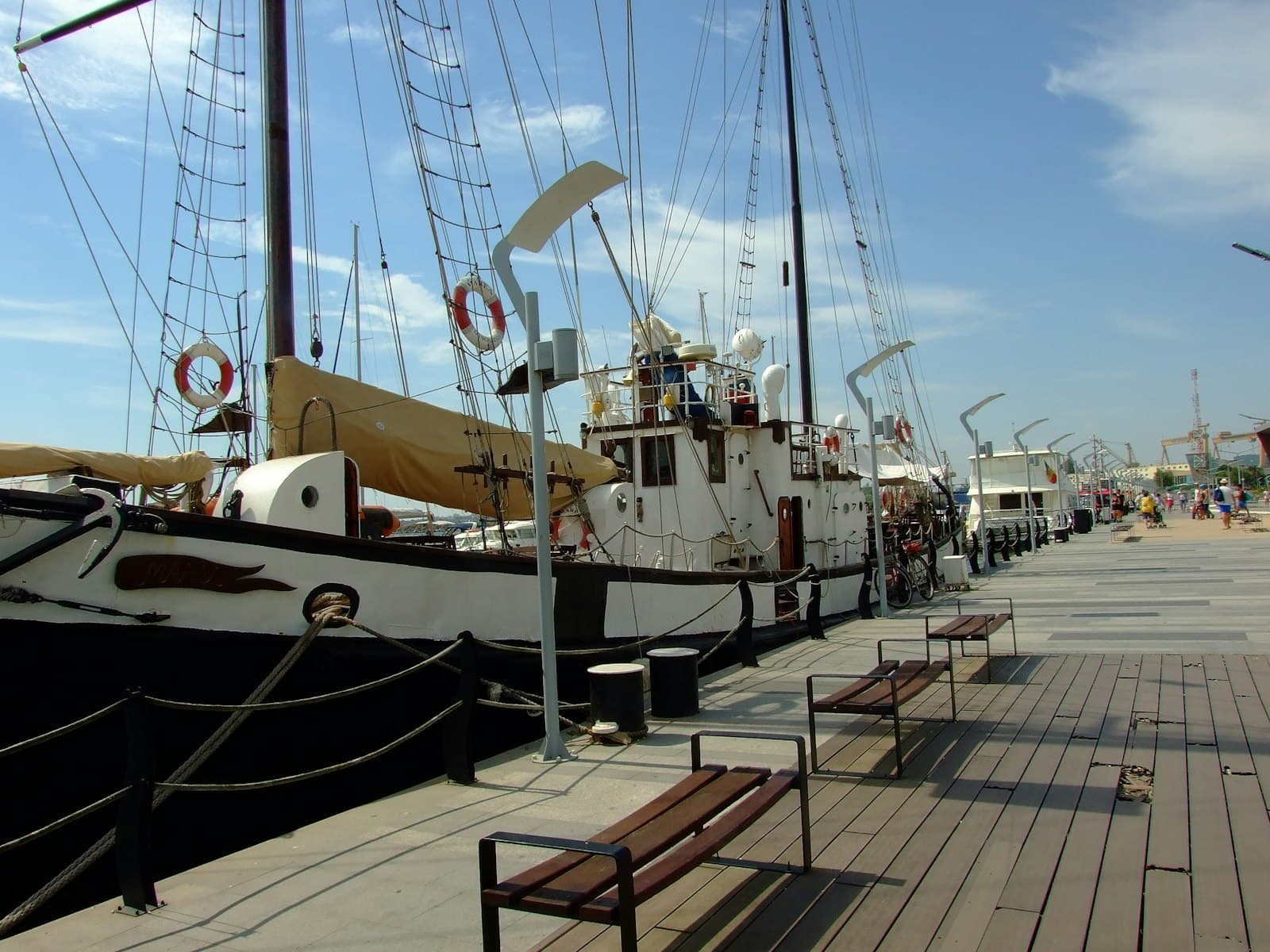
Mangalia also offers a 600-meter long beach with fine sand and shallow waters, well-suited for families. The Mangalia Marina provides a scenic setting with fishing boats and a seafront promenade. For those interested in therapeutic treatments, the city functions as a balneoclimateric resort, recognized for its natural sulfurous springs and mud baths, which are employed to alleviate rheumatic conditions.
Mangalia enjoys a moderate maritime climate, with an annual average temperature of 11°C (52°F), positioning it among Romania's warmer locales. Summers are warm, with July averages exceeding 21°C (70°F), and winters are mild. The optimal period for warm-weather pursuits, including beach and pool enjoyment, spans from early July to late August. Spring (April-June) and autumn (September-November) present mild weather, fewer crowds, and are ideal for exploring historical sites.
Mangalia is a compact city, with many of its points of interest accessible on foot. To reach the northern seaside resorts like Olimp, Neptun, and Venus, or locations such as the hippodrome and caves, local buses and minibuses are available. Frequent minibuses and buses connect Mangalia with Constanța, particularly during summer, with a journey duration of approximately 45 minutes. Seven daily trains also operate between Mangalia and Constanța, taking about 1 hour and 8 minutes. For those arriving by air, the nearest airport is Mihail Kogălniceanu International Airport (CND), situated roughly 63-70 km north of Mangalia. Car rentals are obtainable from Bucharest, which lies about 210 km away. The local currency is the Romanian Leu (RON).
- What is Mangalia particularly known for?
- Mangalia is recognized for its historical significance as the ancient Greek colony of Callatis, its therapeutic mineral springs and mud baths, and its fine sandy shores along the Black Sea coast.
- Are there pleasant beaches in Mangalia?
- Yes, Mangalia features a 600-meter long beach with very fine sand and shallow waters, making it suitable for children and families.
- What historical places can I explore in Mangalia?
- You can explore the Callatis Archaeological Museum, the excavated foundations of the ancient city of Callatis, the 16th-century Esmahan Sultan Mosque, and the Roman-Byzantine Edifice.
- Is Mangalia a suitable location for wellness and spa treatments?
- Yes, Mangalia is a balneoclimateric resort celebrated for its natural sulfurous springs and therapeutic mud baths, which are utilized to address various conditions, particularly rheumatic ailments.
- How can I navigate Mangalia and reach nearby resorts?
- Most attractions within Mangalia are walkable. Buses and minibuses offer connections to the northern resorts (Olimp, Neptun, Jupiter, Cap Aurora, Venus, Saturn) and to the city of Constanța.
- What is the most favorable time of year to visit Mangalia?
- The most favorable time to visit for warm weather and beach activities is from early July to late August. For exploring historical sites with milder temperatures and fewer crowds, spring (April-June) and autumn (September-November) are ideal.