Temple de Mangaladevi
Le nom même de la ville murmure une histoire de transformation royale et de dévotion divine.
L'histoire complète se débloque dans le tour
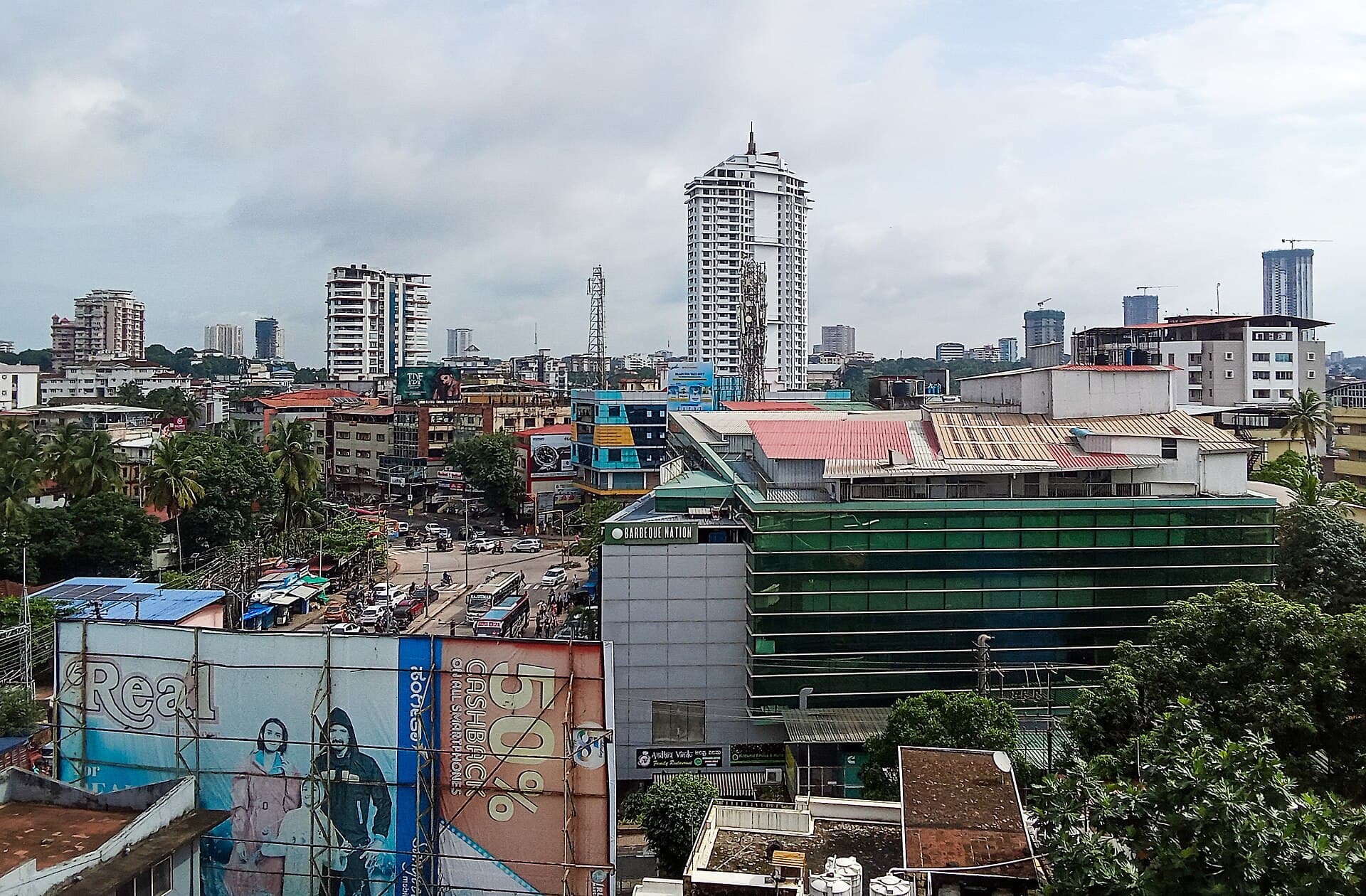 Znyk / CC BY-SA 4.0, via Wikimedia Commons
Visite audio autoguidée de Mangalore — parcours GPS à pied, lecture hors ligne, narration en 32 langues.
“Là où la Netravati et la Gurupura enlacent la mer d'Oman.”
Pas les cartes postales. Les histoires que même les habitants ignorent — soufflées à l'oreille, là où elles se sont passées.
Le nom même de la ville murmure une histoire de transformation royale et de dévotion divine.
Levez les yeux vers les toits rouges de la ville, et vous verrez l'héritage d'une révolution industrielle inattendue.
Avant que les banques nationales ne soient un concept répandu, cette ville côtière devenait discrètement le berceau financier de l'Inde.
Découvrez tous les secrets de Mangalore
Chaque adresse, chaque révélation en entier — dans ton oreille, là où elle s'est passée.
Tu choisis tes lieux. Tu marches. La voix te révèle ce que les autres ignorent.

Votre visite audioguidée de Mangalore vous attend — choisissez vos lieux, votre langue, et lancez-vous dès votre arrivée.
AcheterLume intègre un guide en réalité augmentée. Levez votre téléphone : sa caméra montre la rue devant vous, avec une flèche lumineuse posée sur l'image réelle qui pointe toujours vers votre prochain arrêt — aucune carte à déchiffrer, aucun mauvais virage. Comme tout dans Lume, ça fonctionne entièrement hors-ligne.
Mangalore, officiellement Mangaluru, est une importante ville portuaire de la côte sud-ouest de l'Inde, située entre la mer d'Oman et les chaînes de montagnes des Ghâts occidentaux dans le Karnataka. Reconnue pour ses plages propres et ses larges routes, elle a été désignée comme l'une des villes les plus propres de l'Inde. Le nom de la ville est dérivé de la divinité hindoue Mangaladevi, dont le temple témoigne d'une légende locale d'une princesse transformée. Mangalore est également connue sous le nom de Kuḍla en Tulu, signifiant «jonction», un clin d'œil à son emplacement au confluent des rivières Netravati et Gurupura.
Ce carrefour côtier est le siège administratif du district de Dakshina Kannada et se trouve à environ 371 kilomètres à l'ouest de Bangalore, la capitale de l'État. Sa position stratégique en a historiquement fait un centre vital pour le commerce maritime, attirant des marchands d'Arabie, de Perse et d'Europe. Aujourd'hui, Mangalore continue d'être une puissance commerciale, notamment pour l'exportation de café, d'épices et de noix de cajou. La ville offre un mélange unique de richesse culturelle, de beauté naturelle et d'attrait côtier, ce qui en fait une destination fascinante pour les voyageurs en quête de tradition et de progrès.
L'histoire de Mangalore remonte à l'Antiquité, avec des références apparaissant dès le premier siècle de notre ère. L'historien romain Pline l'Ancien et l'historien grec Ptolémée ont probablement fait référence à la région de la rivière Netravati, qui traverse Mangalore, sous les noms de «Nitrias» et «Nitra» respectivement. La ville était également connue sous le nom de Mangalapuram par le roi Pandyan Chettian en 715 de notre ère. Au cours du 3e siècle avant notre ère, la région faisait partie de l'Empire Maurya sous l'empereur Ashoka. Du 3e au 6e siècle de notre ère, la dynastie Kadamba a régné sur toute la région de Canara. Les Alupas, dont le règne dynastique de 567 à 1325 après J.-C. est l'un des plus longs de l'histoire indienne, ont également exercé leur influence sur Mangalore, la désignant sous le nom de Mangalapura.
Le voyageur marocain Ibn Battuta a visité Mangalore en 1342, la nommant Manjarur et notant son grand estuaire. En 1345, les souverains de Vijayanagara ont placé la région sous leur contrôle, divisant le South Canara en provinces de Mangalore et Barkur. Le voyageur italien Ludovico di Varthema a observé environ soixante navires chargés de riz prêts à appareiller dans le port de Mangalore en 1506. L'influence européenne a commencé en 1498 avec le débarquement de Vasco de Gama près de Mangalore. Les Portugais ont pris le contrôle en 1526, établissant des usines et dominant le commerce de la mer d'Oman depuis le port de Mangalore tout au long des 16e et 17e siècles. En 1695, les commerçants arabes ont riposté aux restrictions portugaises en incendiant la ville.
En 1763, Hyder Ali, le souverain du Royaume de Mysore, a conquis Mangalore, la plaçant sous son administration. La ville a ensuite été dirigée par la Compagnie britannique des Indes orientales de 1767 à 1783, avant d'être reprise par le fils de Hyder Ali, Tipu Sultan, qui l'a renommée Jalalabad. La deuxième guerre anglo-mysorienne s'est conclue par le traité de Mangalore, signé entre Tipu Sultan et la Compagnie britannique des Indes orientales en 1784. Après la défaite de Tipu Sultan en 1799, Mangalore est passée sous contrôle britannique continu, devenant le siège administratif du district de South Canara sous la Présidence de Madras. Les Britanniques ont anglicisé le nom en «Mangalore», qui est devenu l'appellation officielle.
Les 19e et 20e siècles ont été marqués par des développements significatifs. La Mission de Bâle, arrivée en 1834, a introduit des industries comme la fabrication de tuiles, qui est devenue une exportation majeure. La ligne de chemin de fer reliant Mangalore au reste de l'Inde du Sud a été achevée en 1907, renforçant son statut de plaque tournante commerciale. En 1956, la loi de réorganisation des États a incorporé Mangalore dans le nouvel État de Mysore, rebaptisé plus tard Karnataka. L'ouverture du nouveau port de Mangalore en 1974 et la mise en service de Mangalore Chemicals & Fertilizers Limited en 1976 ont marqué une croissance significative pour la ville.
Mangalore offre un éventail diversifié d'attractions, des plages paisibles aux temples anciens et aux monuments historiques. La plage de Panambur est un endroit populaire pour les promenades tranquilles, les sports nautiques et la jouissance du littoral, et est reconnue comme l'une des plages les plus propres de l'Inde. D'autres plages notables incluent la plage de Tannirbhavi et la plage de Someshwara, connue pour ses grandes formations rocheuses appelées Rudra Shile. Pour une touche d'histoire, visitez Sultan Battery, une tour de guet du XVIIIe siècle construite par Tipu Sultan, offrant de vastes vues sur la mer d'Oman.
Les sites religieux sont au cœur de l'identité de Mangalore. Le temple de Kadri Manjunath, datant du Xe siècle, présente des sculptures complexes et une ambiance paisible. Le temple de Kudroli Gokarnath, dédié à Lord Shiva, met en valeur un style architectural dravidien distinctif. Le temple de Mangaladevi, d'où la ville tire son nom, est un site spirituel important. La chapelle Saint-Aloysius est un autre monument proéminent, orné de fresques exquises. Pour les amoureux de la nature, Pilikula Nisargadhama est un parc à thème éducatif avec un parc biologique, un centre scientifique, un lac pour la navigation de plaisance et un parcours de golf. Les chutes d'Adyar, situées à la périphérie de la ville, offrent une évasion naturelle rafraîchissante, particulièrement agréable jusqu'en octobre-novembre.
La période idéale pour visiter Mangalore est pendant les mois d'hiver, de septembre à avril. Pendant cette période, le temps est agréable, avec des températures ne dépassant généralement pas 30 degrés Celsius et une humidité minimale, ce qui rend l'exploration des attractions et des plages de la ville confortable. D'octobre à février est considérée comme la haute saison touristique, offrant des conditions fraîches et sèches, parfaites pour les activités de plein air et les événements culturels. Des festivals comme Dussehra, Ganesh Puja et Diwali sont célébrés avec enthousiasme en octobre et novembre.
Inversement, les étés (de mars à mai) sont chauds et humides, avec des températures pouvant atteindre 39 degrés Celsius. La saison de la mousson, de juin à septembre, apporte de fortes pluies, ce qui la rend moins propice aux visites de plages et aux visites touristiques en raison de l'humidité élevée et des averses fréquentes.
Se déplacer à Mangalore est facilité par diverses options de transport local. Les auto-rickshaws sont largement disponibles et sont un choix privilégié pour les courtes distances, avec une structure tarifaire standard. Pour les trajets plus longs ou plus de confort, des taxis privés et des services de location de voitures sont facilement disponibles. La ville dispose également d'un vaste réseau de bus publics, avec des services exploités par des compagnies privées et la Karnataka State Road Transport Corporation (KSRTC), couvrant les itinéraires urbains et reliant les villes environnantes.
Pour les femmes voyageant seules, Mangalore est généralement considérée comme sûre, avec un taux de criminalité relativement faible. Cependant, il est toujours conseillé de rester vigilante, surtout dans les zones isolées ou mal éclairées après la tombée de la nuit, y compris les plages. Optez pour des taxis via application ou convenez des tarifs à l'avance avec les auto-rickshaws pour éviter d'éventuels surcharges. S'habiller modestement peut aider à s'intégrer et à respecter la culture locale. Il est également recommandé de planifier les voyages et l'hébergement à l'avance, en choisissant des hôtels bien notés dans des zones sécurisées avec une réception ouverte 24h/24 et 7j/7.
Les principales langues parlées à Mangalore sont le Tulu, le Kannada, le Konkani et le Beary, le hindi et l'anglais étant également largement compris. Apprendre quelques phrases de base en Kannada peut être utile pour interagir avec les habitants.
Mangalore en coréen, en chinois ou en hébreu — et dans 29 autres langues, chaque étape narrée par une voix native. La plus large gamme de langues de tous les audioguides autoguidés.
Disponible en :