A dramatic shipwreck off this coast inspired a tale of unlikely heroism that became a local legend.
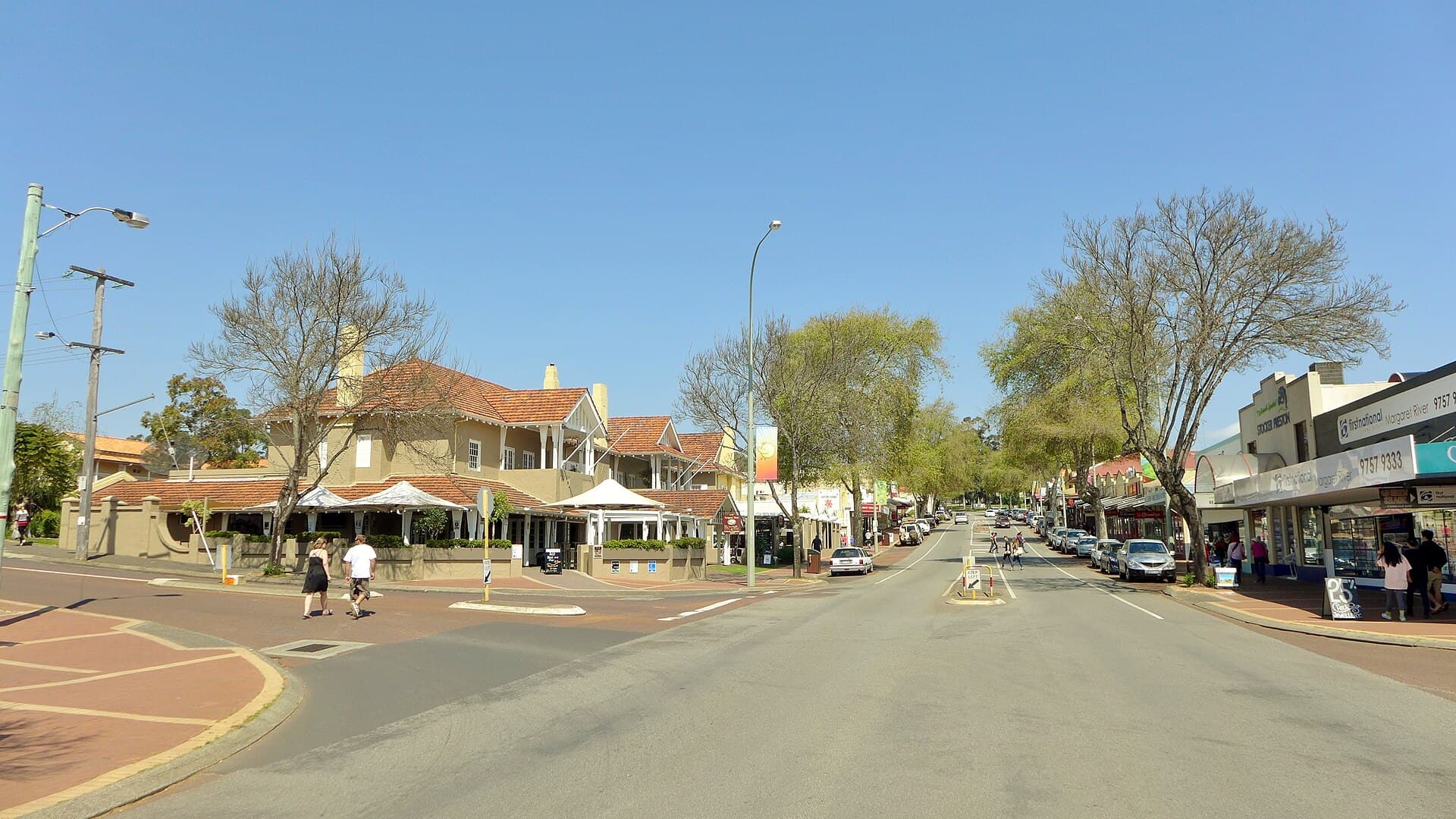
Bahnfrend / CC BY-SA 4.0, via Wikimedia CommonsMargaret River
“Where ancient land meets a wild ocean, and vines tell tales of discovery.”
Margaret River, as no one tells it.
Not the postcards. The stories even locals don't know — whispered in your ear, right where they happened.
The name of Margaret River's founding winery hints at a dramatic, almost cinematic, origin story for its winemaking.
Beyond the famous surf and vineyards, a secluded inland waterhole offers a different kind of immersion, known mostly to locals.
Discover every secret of Margaret River
Every address, every reveal in full — in your ear, right where it happened.
You pick your stops. You walk. The voice reveals what the others miss.
How long do you have in Margaret River?
No tours available yet. Check back soon — we're preparing them.
The story of Margaret River
The Margaret River region in Western Australia is a place where the raw power of the Indian Ocean meets ancient forests and fertile valleys, creating a landscape of striking contrasts. Located approximately 277 kilometers (172 miles) south of Perth, the state capital, this area is celebrated globally for its premium wines, dramatic coastline, and a relaxed, yet adventurous, spirit. It's a destination that seamlessly blends world-class culinary experiences with opportunities for outdoor exploration, from surfing iconic breaks to delving into subterranean cave systems.
The region stretches roughly 100 kilometers (60 miles) from Cape Naturaliste in the north to Cape Leeuwin in the south, bounded by the Leeuwin-Naturaliste Ridge to the east and the Indian Ocean to the west. This unique geography, coupled with a Mediterranean climate, provides ideal conditions for viticulture, drawing an estimated 500,000 visitors annually. Beyond the vineyards, the area is the traditional land of the Wadandi (Saltwater) People, who have been custodians for over 60,000 years, imbuing the landscape with a deep cultural heritage.
Ancient Origins and Early Encounters
The history of the Margaret River region stretches back an astonishing 60,000 years, with the Wadandi (Saltwater) People being the traditional custodians of this land, which they call Wadandi Boodja. Archaeological evidence from sites like Devil's Lair, south of Witchcliffe, indicates some of the earliest human occupation in Australia, with tools and cultural artifacts dating back millennia. The Wadandi people lived through the last ice age, developing an intricate knowledge of their environment, adapting and thriving through intrinsic understanding of the land's abundance.
European contact began in 1620 with the sighting of Western Australia by the Dutch ship 'Leeuwin,' though detailed records of this voyage are lost. The river itself was named in the late 1830s by John Garrett Bussell, after his step-second-cousin, Margaret Whicher. The name first appeared on a map in 1839. Early British settlers arrived around 1850, initially focusing on timber logging, which commenced around 1870. By 1910, a hotel in the nascent town also served as a post office, and the townsite was officially gazetted on February 7, 1913.
Group Settlement and the Rise of Wine
Following World War I, the Western Australian government's Group Settlement Scheme brought thousands of migrants to the region between 1920 and 1930, aiming to establish farms. This period saw the development of communities like Cowaramup. The Busselton to Margaret River Railway was completed in the early 1920s, extending to Flinders Bay by 1925, though the last train ran in 1957. The dairy industry also began to flourish during this time.
The region's modern fame, however, largely stems from its relatively recent emergence as a world-class wine region. While early commercial vineyards were planted in the 1850s, and an Italian immigrant, Giacomo 'Jimmy' Meleri, sold wine under the name 'Red Dynamite' in the mid-20th century, the serious viticultural development began in the 1960s. Scientific research, particularly a 1965 report by Dr. John Gladstones, likened Margaret River's climate to that of Bordeaux, highlighting its potential for producing high-quality wines. This led to the establishment of the first wave of significant wineries, including Vasse Felix in 1967. By the 1970s, there were 20 new vineyards, and the region gained international recognition in the 1980s with accolades for its Chardonnay and Cabernet Sauvignon.
Margaret River offers a diverse array of experiences, from its renowned vineyards to its dramatic coastline and ancient natural wonders. Explore the Margaret River Wine Region, home to over 200 wineries, many offering cellar door tastings and fine dining experiences. The region is particularly known for its Cabernet Sauvignon and Chardonnay.
For outdoor enthusiasts, the Cape to Cape Track stretches 135 kilometers (84 miles) along the coastline between Cape Naturaliste and Cape Leeuwin, offering spectacular views, diverse flora, and opportunities for hiking or biking. The coastline itself is a major draw, with world-class surf breaks like 'Main Break' and 'The Box' attracting surfers globally. Beyond surfing, beaches like Redgate Beach and Injidup offer pristine sands and rugged beauty. Do not miss the Injidup Natural Spa, a rock pool where crashing waves create natural spa jets.
Journey underground to discover the region's extensive limestone cave systems. Over 100 caves lie beneath the Leeuwin-Naturaliste Ridge, with several open for exploration, including Landmark Cave (Western Australia's largest show cave), Lake Cave (known for its 'Suspended Table' formation), Mammoth Cave (with ancient megafauna fossils), and Ngilgi Cave, which offers cultural tours with Wadandi custodians. Drive through the Boranup Karri Forest, where towering karri trees create a majestic canopy, and keep an eye out for diverse wildlife. For panoramic views, visit the Cape Naturaliste Lighthouse or the Cape Leeuwin Lighthouse, where the Indian and Southern Oceans meet.
Margaret River enjoys a Mediterranean climate with warm, dry summers and mild, wet winters, making it a year-round destination. The best time for warm-weather activities, including beach visits and outdoor wine tasting, is from mid-December to late March, which is also peak tourist season. For hiking the Cape to Cape Track and enjoying wildflowers, spring (September to November) and autumn (March to May) offer comfortable temperatures. Whale watching season runs from June to December, with peak sightings of humpbacks between September and November.
Margaret River is located approximately 277 kilometers (172 miles) south of Perth, a scenic 3.5-hour drive. The closest major airport is in Perth. While local public transport exists, renting a car is highly recommended to fully explore the sprawling region and its attractions, which are spread out between Busselton in the north and Augusta in the south. Several recommended drive trail maps are available to help navigate the different areas. Accommodation options range from cozy cottages to luxurious retreats, but booking in advance, especially during peak season (December-January and October for wildflowers), is advisable. Be prepared for warm, dry summers with high UV indexes, requiring liberal application of SPF 50.
- What is Margaret River best known for?
- Margaret River is renowned globally for its premium wines, particularly Cabernet Sauvignon and Chardonnay, as well as its world-class surfing beaches and striking natural landscapes, including ancient forests and limestone caves.
- How far is Margaret River from Perth?
- Margaret River is approximately 277 kilometers (172 miles) south of Perth, a drive that typically takes around 3.5 hours.
- What kind of climate does Margaret River have?
- Margaret River experiences a Mediterranean climate, characterized by warm to hot, dry summers and mild, wet winters.
- Are there good surfing spots in Margaret River?
- Yes, Margaret River is internationally recognized for its excellent surf breaks, with over 40 top spots along its coastline, including famous locations like 'Main Break' and 'The Box.'
- Can I visit caves in Margaret River?
- Absolutely. The region is home to over 100 limestone caves, with several open to the public for guided or self-guided tours, such as Landmark Cave, Lake Cave, Mammoth Cave, and Ngilgi Cave.
- What is the indigenous history of Margaret River?
- The Margaret River region is the traditional land of the Wadandi (Saltwater) People, who have inhabited the area for over 60,000 years, making it one of the world's longest unbroken human occupations.