Château de Marmaris
Cette forteresse imposante a connu bien plus que des batailles ; elle a autrefois abrité une communauté entière.
L'histoire complète se débloque dans le tour
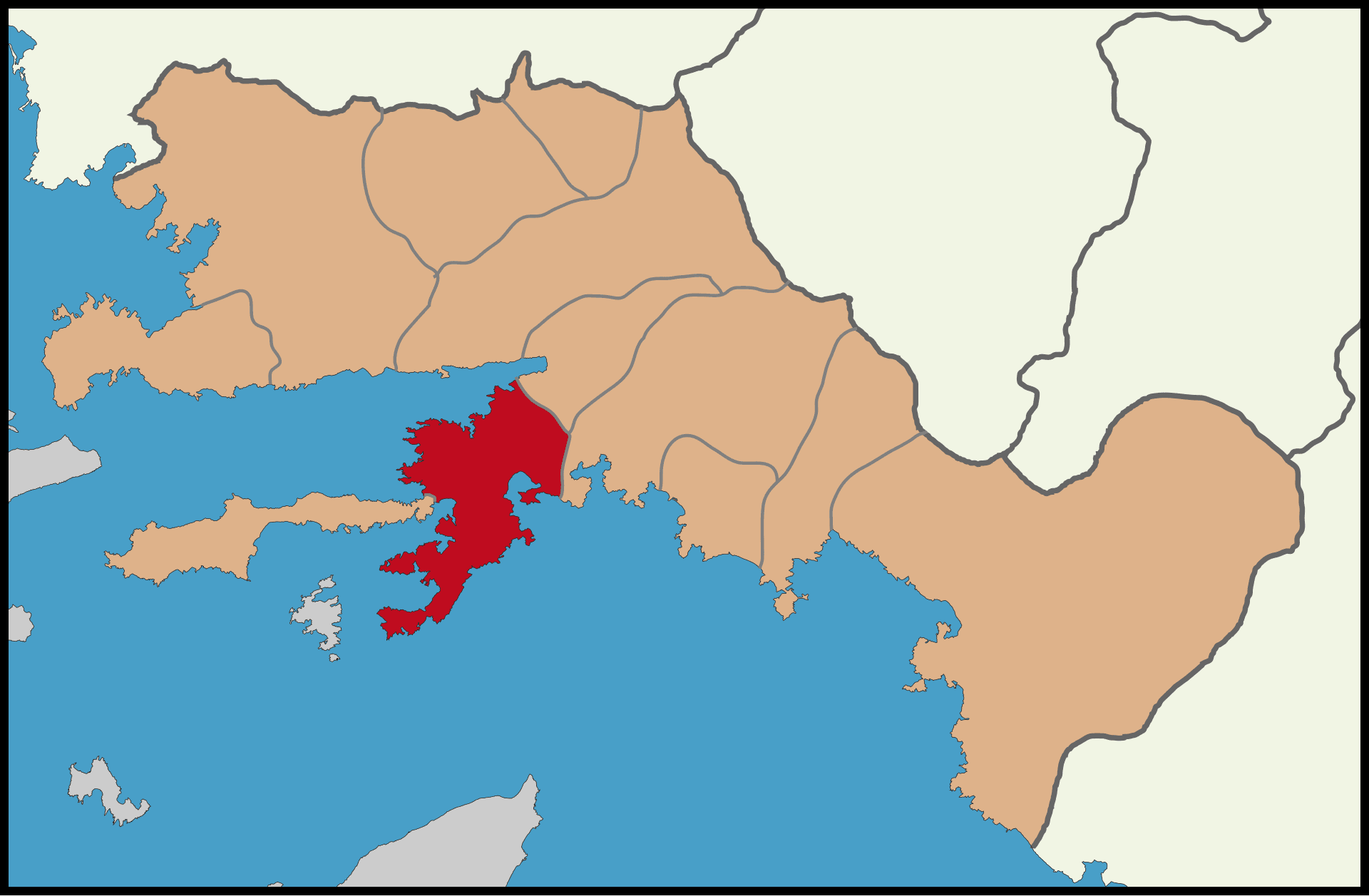 The Emirr / CC BY 3.0, via Wikimedia Commons
Visite audio autoguidée de Marmaris — parcours GPS à pied, lecture hors ligne, narration en 32 langues.
“Là où la mer Égée rencontre la Méditerranée, les échos antiques saluent les plaisirs modernes.”
Pas les cartes postales. Les histoires que même les habitants ignorent — soufflées à l'oreille, là où elles se sont passées.
Cette forteresse imposante a connu bien plus que des batailles ; elle a autrefois abrité une communauté entière.
Le Grand Bazar animé a une origine secrète qui remonte à l'époque des voyageurs fatigués et des routes commerciales.
Le nom même de cette ville balnéaire animée aurait une origine plutôt dramatique, voire colérique.
Découvrez tous les secrets de Marmaris
Chaque adresse, chaque révélation en entier — dans ton oreille, là où elle s'est passée.
Tu choisis tes lieux. Tu marches. La voix te révèle ce que les autres ignorent.


Votre visite audioguidée de Marmaris vous attend — choisissez vos lieux, votre langue, et lancez-vous dès votre arrivée.
AcheterLume intègre un guide en réalité augmentée. Levez votre téléphone : sa caméra montre la rue devant vous, avec une flèche lumineuse posée sur l'image réelle qui pointe toujours vers votre prochain arrêt — aucune carte à déchiffrer, aucun mauvais virage. Comme tout dans Lume, ça fonctionne entièrement hors-ligne.
Marmaris, un district de la province de Muğla en Turquie, occupe une position captivante où les mers Égée et Méditerranée convergent. Autrefois un paisible village de pêcheurs et un port crucial pour le commerce du marbre, il s'est transformé de manière spectaculaire dans les années 1980 pour devenir une ville balnéaire animée. Entourée de collines couvertes de pins et d'un littoral parsemé de baies et de criques, Marmaris offre un mélange de beauté naturelle et d'atmosphère énergique. C'est un centre majeur pour le tourisme de yacht, avec deux grandes marinas et plusieurs plus petites, et un lieu d'hivernage populaire pour les plaisanciers.
L'attrait de la ville s'étend au-delà de ses rives, avec une vie nocturne animée, des sites historiques et des opportunités d'aventures en plein air. Des soirées énergiques le long de Bar Street aux excursions en bateau sereines explorant des criques isolées, Marmaris répond à des intérêts divers. Sa situation stratégique en fait également une base pratique pour explorer les sites antiques voisins et la Riviera turque plus large.
L'histoire de Marmaris remonte à l'Antiquité, avec des preuves d'un établissement et de fortifications existant dès 3000 av. J.-C. Au 6ème siècle av. J.-C., le site était connu sous le nom de Physkos, un nom grec que certains suggèrent signifierait « Ville Nature » dans la langue carienne, reflétant ses magnifiques environs. Physkos était un port important dans la région de Carie, qui appartenait à Rhodes, et comportait un magnifique port et un bosquet dédié à la déesse Léto. La position stratégique de la ville en a fait un prix pour divers empires, y compris les Perses.
En 334 av. J.-C., les forces d'Alexandre le Grand envahirent la Carie, assiégeant le château de Physkos. On dit que les habitants ont largement détruit la ville plutôt que de la rendre intacte à Alexandre. Après une période de déclin, Physkos fut cédée aux Romains en 138 av. J.-C. Pendant près de 650 ans, l'Empire byzantin a exercé son contrôle jusqu'à ce que les tribus turkmènes, puis les Seldjoukides anatoliens, revendiquent la ville.
Marmaris est devenue une partie de l'Empire ottoman au milieu du 15ème siècle. C'est sous le règne de Soliman le Magnifique que Marmaris a acquis une importance significative. En 1522, alors que Soliman préparait sa campagne pour conquérir Rhodes, Marmaris a servi de base cruciale pour la marine ottomane. Le château existant fut reconstruit de fond en comble pour accueillir une garnison de l'armée ottomane. C'est également pendant cette période que le nom de la ville est passé de Physkos à Mimaras, puis finalement à Marmaris. Le nom Marmaris est censé dériver du mot grec « màrmaron » (marbre), faisant référence aux abondants gisements de marbre de la région et au rôle de la ville dans le commerce du marbre. Le caravansérail de Hafsa Sultan, un bâtiment historique près du château de Marmaris, a été construit en 1545 et a servi d'auberge pour les voyageurs, soulignant le rôle de la ville en tant que centre commercial.
Il ne reste que peu de choses du paisible village de pêcheurs qu'était Marmaris autrefois, car un boom de la construction dans les années 1980 l'a transformé en une destination touristique majeure. Malgré cette modernisation, le château de Marmaris, avec son musée, et le quartier de la vieille ville avec ses rues étroites, offrent des aperçus du passé stratifié de la ville.
Commencez votre exploration au Château de Marmaris, un repère proéminent surplombant le port et la marina. Le château, reconstruit en 1522 par Soliman le Magnifique, abrite aujourd'hui un musée avec des expositions archéologiques et offre de larges vues sur la ville. Autour du château se trouve la Vieille Ville, un labyrinthe de rues étroites et sinueuses avec des maisons traditionnelles et de petites boutiques, offrant un aperçu du passé de Marmaris.
Pour une expérience de shopping animée, visitez le Grand Bazar de Marmaris. Ce marché actif, à l'origine un caravansérail, propose de tout, des tapis et céramiques turcs traditionnels aux articles en cuir, bijoux et épices. Bien qu'il soit connu pour son atmosphère énergique, soyez prêt pour des commerçants désireux et l'art du marchandage.
Le littoral de Marmaris est un attrait majeur, avec de nombreuses baies, criques et plages. Les options populaires incluent la plage de Marmaris, la plage d'Icmeler et la plage de Turunc, chacune offrant une ambiance distincte. Les excursions en bateau quotidiennes sont un moyen populaire d'explorer le littoral, atteignant des baies isolées et des lieux de baignade paisibles inaccessibles par voie terrestre. Au-delà des plages, Marmaris est entourée de collines couvertes de pins et de zones de parcs nationaux, offrant des opportunités de randonnée, de cyclisme et de safaris en jeep.
Marmaris connaît des étés chauds et secs et des hivers doux et plus humides, caractéristiques d'un climat méditerranéen. La meilleure période pour la plupart des voyageurs est de mai à octobre. Mai offre des températures confortables entre 22 et 26 degrés Celsius, une affluence modérée et des températures de mer agréables. Juin voit les températures monter à 28-32 degrés Celsius, parfait pour les activités de plage et les sports nautiques, avec une atmosphère animée avant l'affluence maximale. Juillet et août sont les mois les plus chauds, dépassant souvent les 35 degrés Celsius, idéal pour ceux qui aiment la chaleur intense et la vie nocturne énergique. Pour des températures de mer chaudes et moins de monde, septembre est un excellent choix. Même en automne, les températures restent confortables, diminuant de 30 à 20 degrés Celsius, ce qui le rend propice aux visites touristiques.
La monnaie locale à Marmaris, et dans toute la Turquie, est la Lire turque (TRY). Bien que les Euros et les Livres Sterling soient parfois acceptés dans les zones touristiques, il est généralement préférable d'utiliser des Lires turques pour de meilleurs taux de change. Vous pouvez changer de l'argent dans les banques locales, les bureaux de change, ou retirer des Lires aux distributeurs automatiques de billets avec votre carte de débit ou de crédit. Il est conseillé d'avoir de l'argent liquide pour les petits achats.
Marmaris est généralement une destination sûre pour les touristes, avec des taux de criminalité faibles et une présence policière visible, surtout dans les zones animées pendant l'été. Cependant, comme toute destination touristique, il est sage de prendre les précautions standard telles que la sécurisation des objets de valeur dans les lieux très fréquentés comme les marchés et les rues nocturnes. L'eau du robinet est potable, mais l'eau en bouteille est largement disponible si vous préférez. L'anglais est largement parlé dans les établissements touristiques, et les habitants sont généralement amicaux et serviables.
Les transports en commun à Marmaris sont efficaces, les dolmuş locaux (minibus) étant un moyen courant et abordable de se déplacer. Les taxis sont également disponibles, mais il est recommandé de convenir du tarif à l'avance ou de s'assurer que le compteur est utilisé. L'aéroport le plus proche est l'aéroport de Dalaman, à environ 90 kilomètres, avec des navettes, des taxis et des voitures de location disponibles pour le transfert vers Marmaris. Des ferries relient également Marmaris à l'île grecque de Rhodes.
Le Wi-Fi gratuit est disponible dans de nombreux cafés, restaurants, hôtels et parcs publics. La municipalité de Marmaris offre également un accès Internet gratuit sur la place de la Jeunesse du 19 Mai, nécessitant une inscription avec un numéro de téléphone portable pour une allocation hebdomadaire de 5 Go. Pour un accès Internet illimité partout, la location de boîtiers Wi-Fi est également une option.
Marmaris en coréen, en chinois ou en hébreu — et dans 29 autres langues, chaque étape narrée par une voix native. La plus large gamme de langues de tous les audioguides autoguidés.
Disponible en :