Palazzo Ducale
Het grandioze Palazzo Ducale, met zijn 300 kamers, werd ooit op nog ambitieuzere schaal bedacht. Welk geheim schuilt er binnen zijn muren, een hint naar een vergeten visie?
Volledig verhaal ontgrendeld in de tour
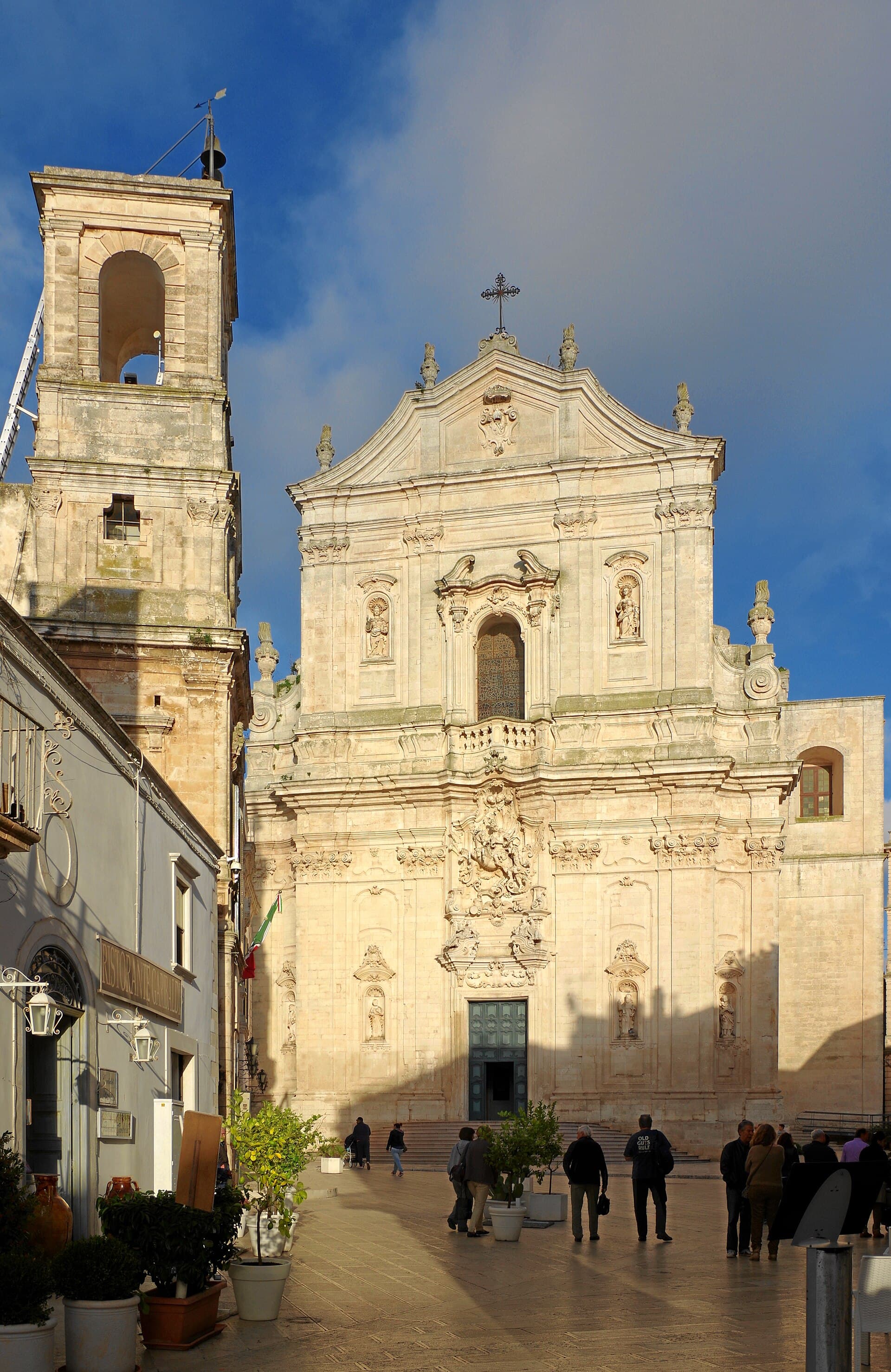 Berthold Werner / CC BY-SA 3.0, via Wikimedia Commons
Zelfgeleide audiowandeling door Martina Franca — GPS-route, offline afspelen, meeslepende vertelling in 32 talen.
“Barokke elegantie en culinaire fluisteringen in het hart van Puglia.”
Niet de ansichtkaarten. De verhalen die zelfs locals niet kennen — gefluisterd in je oor, precies waar ze gebeurden.
Het grandioze Palazzo Ducale, met zijn 300 kamers, werd ooit op nog ambitieuzere schaal bedacht. Welk geheim schuilt er binnen zijn muren, een hint naar een vergeten visie?
Voorbij de barokke gevels en witgekalkte steegjes definieert een specifieke bouwstijl Martina Franca, een stijl die je nergens anders precies hetzelfde zult vinden.
Sommige statige herenhuizen langs de Via Montedoro, met hun smeedijzeren balkons, herbergen een verrassend geheim onder hun fundamenten, een bewijs van een langdurige lokale traditie.
Ontdek elk geheim van Martina Franca
Elk adres, elke onthulling volledig — in je oor, precies waar het gebeurde.
Jij kiest je stops. Jij wandelt. De stem onthult wat de anderen missen.
Je zelfgeleide audiotour van Martina Franca is klaar — kies je bezienswaardigheden, kies je taal en start zodra je aankomt.
KopenLume heeft een ingebouwde augmented-reality-gids. Houd je telefoon omhoog: de camera toont de straat voor je, met een oplichtende pijl over het echte beeld die altijd naar je volgende stop wijst — geen kaart om uit te puzzelen, geen verkeerde afslagen. Zoals alles in Lume werkt het volledig offline.
Martina Franca, een boeiende stad in Puglia's Valle d'Itria, biedt een mix van barokke grandeur en authentiek Italiaans karakter. Het elegante historische centrum vestigt het als een van de meest architectonisch verfijnde steden in de regio. De witgekalkte steegjes, ingewikkelde palazzo's en levendige pleinen creëren een meeslepende ervaring, die bezoekers uitnodigt om te dwalen en de unieke geest te ontdekken.
Gelegen op een karstplateau 400 meter boven zeeniveau, biedt Martina Franca een iets koeler toevluchtsoord tijdens warmere maanden vanwege de hoogte. Het dient als een uitstekende uitvalsbasis voor het verkennen van de omliggende Valle d'Itria, met zijn iconische trulli-huizen en schilderachtige platteland. Hoewel het een bruisende stad is, voelt Martina Franca vaak minder druk aan dan sommige van zijn meer gevierde buren, en biedt het een rustigere verkenning van het leven in Puglia.
De oorsprong van Martina Franca gaat terug tot de 10e eeuw, toen vluchtelingen uit Taranto hun toevlucht zochten op de berg San Martino om aan Saraceense invallen te ontsnappen. De naam van de stad zelf weerspiegelt deze geschiedenis: 'Martina' eert Sint Maarten, de beschermheilige, en 'Franca' (wat 'vrij' betekent) verwijst naar de belastingvrijstellingen en privileges die haar inwoners in het begin van de 14e eeuw door Filips I van Anjou, Prins van Tarente, werden verleend.
Filips I van Anjou stichtte de versterkte stad officieel in 1310 en moedigde vestiging in de regio aan. Martina Franca was ooit een ommuurde stad, met 24 torens en vier poorten, waarvan de overblijfselen vandaag de dag nog steeds het historische centrum bepalen. De stad bloeide in de Normandische periode en later onder het Koninkrijk Napels.
De 18e eeuw markeerde het gouden tijdperk van Martina Franca, een periode van aanzienlijke artistieke en architecturale ontwikkeling. Rijke families, aangetrokken door de belastingvoordelen van de stad, gaven opdracht tot de bouw van elegante villa's, paleizen en kerken in de heersende barokke stijl. Dit tijdperk zag de creatie van veel van de grandioze palazzo's en sierlijke kerken die het historische centrum kenmerken, waaronder de Basiliek van San Martino en de Chiesa del Carmine. Het monumentale Palazzo Ducale, begonnen in 1668 door Petracone V Caracciolo op de fundamenten van een middeleeuws kasteel uit 1338, werd een symbool van de macht en rijkdom van de feodale elite, en vormde de barokke transformatie van de stad. Tegenwoordig wordt Martina Franca erkend als een cultureel centrum, met name voor haar jaarlijkse operafestival.
Het hart van Martina Franca ligt in het centro storico, een labyrint van smalle, witgekalkte straten en barokke architectuur. Begin uw verkenning bij Porta di Santo Stefano, een triomfboog uit 1764 die dient als een grandioze ingang tot de oude stad. Vlak daarachter opent Piazza Roma zich, gedomineerd door het imposante 17e-eeuwse Palazzo Ducale. Dit voormalige hertogelijk paleis, dat nu het stadhuis en een museum herbergt, beschikt over fresco's en antieke meubels, en biedt een kijkje in het aristocratische verleden.
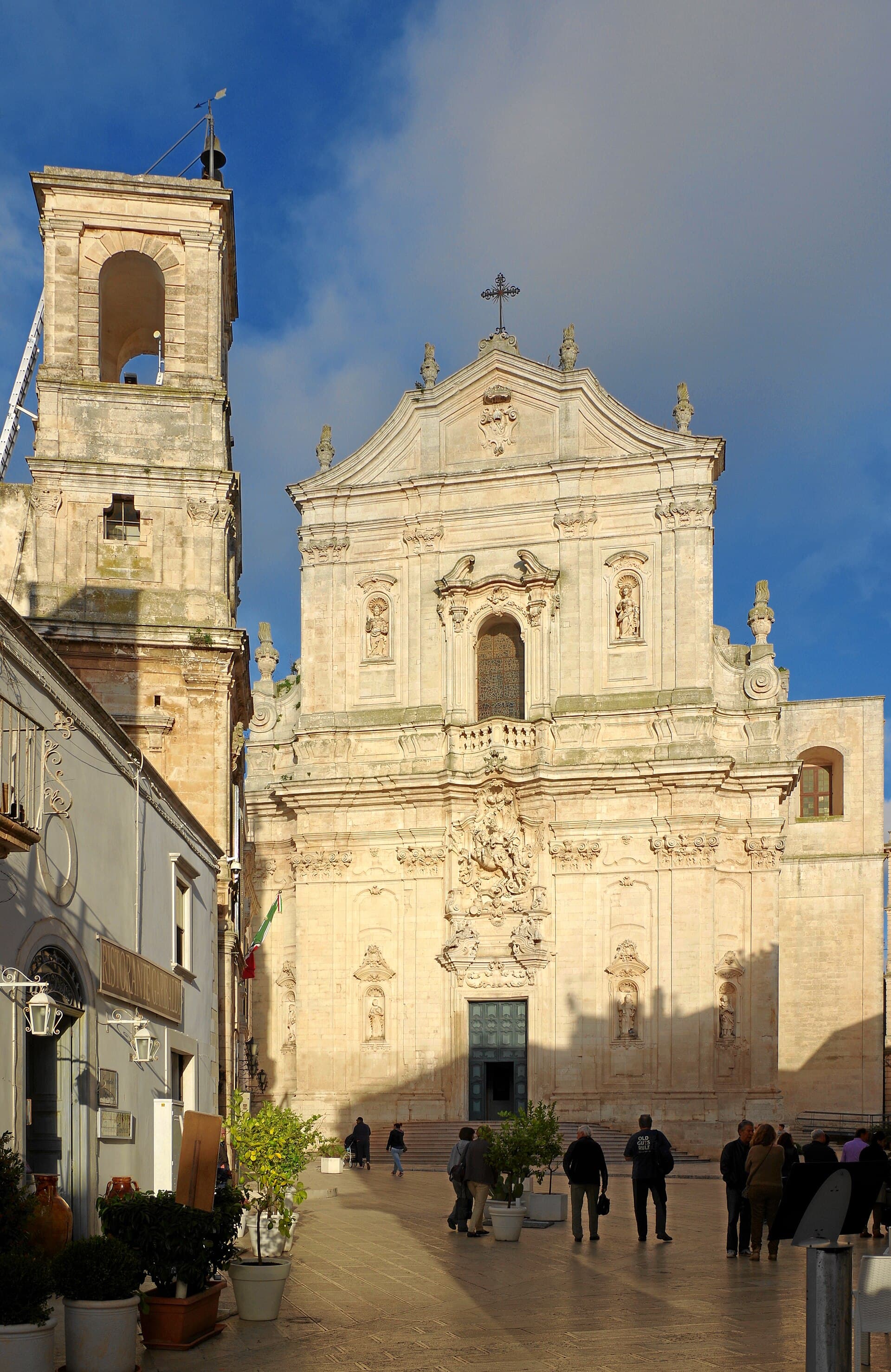
Een korte wandeling leidt naar Piazza Plebiscito, de thuisbasis van de Basiliek van San Martino. Dit rococomeesterwerk, gewijd aan de beschermheilige van de stad, heeft een ingewikkeld gebeeldhouwde façade die vooral opvallend is in het avondlicht. Mis Piazza Maria Immacolata niet, een prachtig semi-cirkelvormig plein met schaduwrijke portieken, cafés en restaurants, ideaal om mensen te kijken. Waag u in de wijk 'La Lama', een heerlijk gebied met witgekalkte gebouwen en privé-patio's, perfect voor een ontspannen wandeling. Martina Franca staat ook bekend om zijn capocollo, een gepekeld varkensnek, en bombette, kleine vleesrolletjes, die u kunt proeven bij lokale eetgelegenheden.
De ideale periodes om Martina Franca te bezoeken zijn in de late lente (april tot juni) of vroege herfst (september tot oktober). Deze maanden bieden mild en aangenaam weer, minder drukte en een volledig aanbod van geopende restaurants en attracties. Juli is een speciale tijd als u geïnteresseerd bent in het Festival della Valle d'Itria, een internationaal erkend operafestival dat wordt gehouden in de binnenplaats van het Palazzo Ducale. Hoewel de zomer warm kan zijn, biedt de hoogte van Martina Franca een verfrissende bries, waardoor het merkbaar koeler is dan kustplaatsen.
Martina Franca ligt in de provincie Taranto, Puglia. De gemakkelijkste manier om de stad te bereiken en de bredere Valle d'Itria te verkennen, is met een huurauto. Parkeren is mogelijk net buiten de stadsmuren, met opties zoals Parcheggio Orti del Duca. Houd rekening met ZTL (Beperkte Verkeerszones) binnen het historische centrum om boetes te voorkomen. Eenmaal in Martina Franca is het historische centrum volledig autovrij en het beste te voet te verkennen. Openbaar vervoerverbindingen vanuit grote steden zoals Bari zijn beschikbaar via de Ferrovie del Sud Est (FSE) spoorlijn, hoewel de reizen langzaam kunnen zijn. De centrale ligging van Martina Franca maakt het een handige uitvalsbasis voor dagtochten naar nabijgelegen steden zoals Alberobello, Locorotondo, Cisternino en Ostuni.
Martina Franca — Koreaans, Chinees, Hebreeuws en nog 29 talen, elke stop verteld door een moedertaalspreker. Het grootste taalaanbod van alle zelfgeleide audiotours.
Beschikbaar in: