Sultan Qaboos Grand Mosque
The Grand Mosque stands as a testament to contemporary Islamic architecture, yet a particular detail in its construction reveals a more intimate tribute.
Full story unlocks in the tour
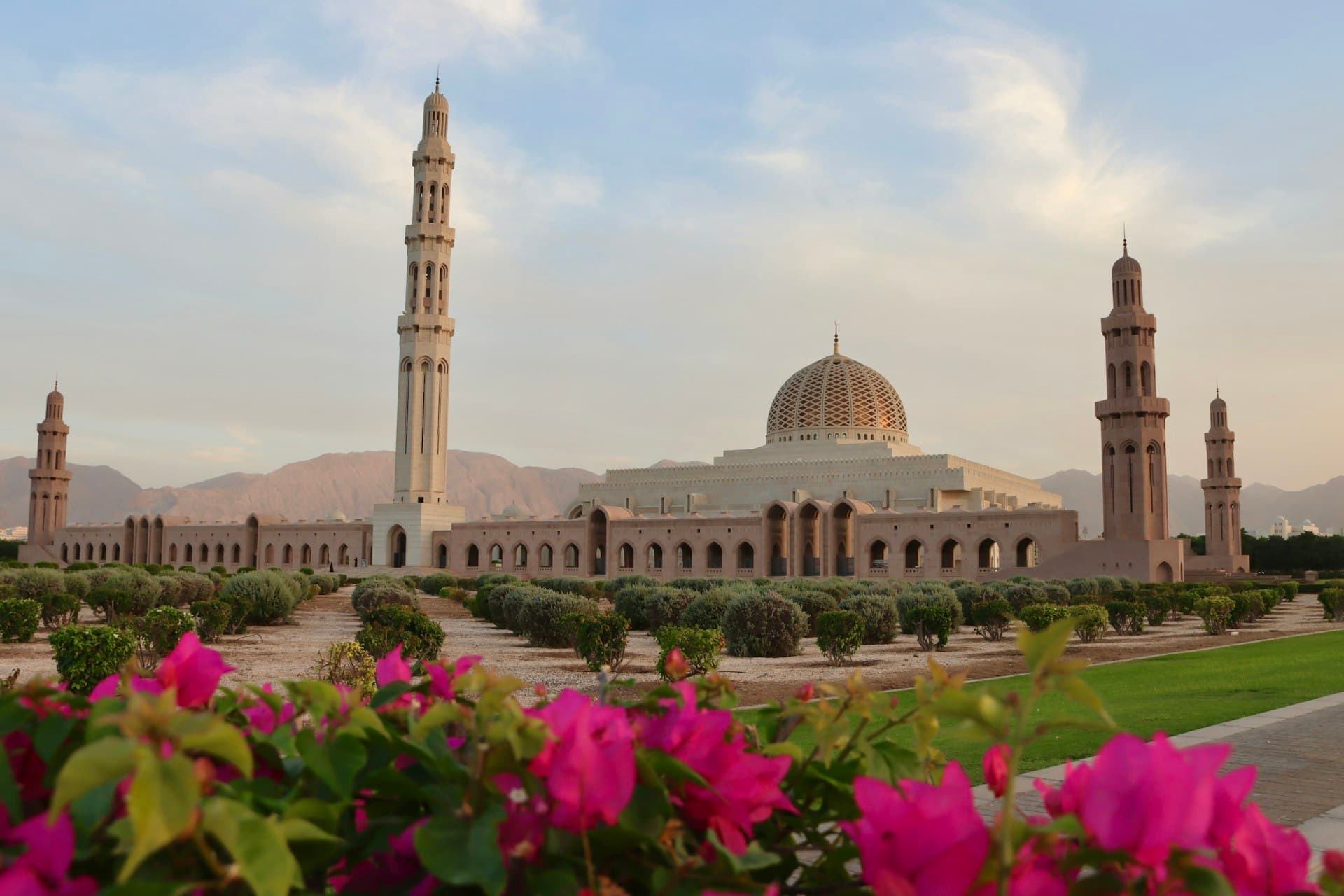 Photo: Hongbin / Unsplash
“Where ancient frankincense trails converge with modern grandeur.”
Not the postcards. The stories even locals don't know — whispered in your ear, right where they happened.
The Grand Mosque stands as a testament to contemporary Islamic architecture, yet a particular detail in its construction reveals a more intimate tribute.
The Sultan's ceremonial palace captivates with its striking blue and gold facade, but its daily operations hint at a distinctive royal custom.
This venerable market offers a labyrinth of aromas and sounds, yet one of its most enduring exports holds a surprising link to ancient rituals.
Discover every secret of Mascate
Every address, every reveal in full — in your ear, right where it happened.
You pick your stops. You walk. The voice reveals what the others miss.
No tours available yet. Check back soon — we're preparing them.
Muscat, the capital of Oman, extends along the southeastern edge of the Arabian Peninsula, where the rugged Hajar Mountains meet the serene Gulf of Oman. This city weaves together traditional Omani architecture with contemporary development, evolving from a modest port into a thriving metropolitan expanse. Its distinctive geography means Muscat lacks a singular city center; instead, it comprises individual districts linked by highways, each possessing its own character—from the historic Mutrah, with its bustling souq, to the coastal cafes of Qurum.
Muscat has long served as a significant hub of power and commerce in the region, its profound history reaching back to the first or second century CE. The city offers a tranquil and orderly ambiance, marked by a low crime rate, making it a secure destination for visitors. Its cultural practices are deeply rooted in Ibadhi Islam, yet the city extends a warm welcome to non-Muslim communities, fostering a diverse population of Omani nationals and expatriates.
## From Ancient Port to Modern Capital Muscat's documented history traces back to the 1st or 2nd century CE, finding mention in the writings of the ancient Greek geographer Ptolemy. Initially a modest port, its natural harbor and strategic placement along the Gulf of Oman and the Arabian Sea made it an ideal maritime nexus, overseeing trade routes connecting Arabia, India, and East Africa.
By the 7th century CE, Muscat embraced Islam, and by the 9th century, it had matured into a vital trading center. The establishment of the First Imamate in the 9th century marked a step toward unifying Omani tribal factions under an Ibadi state. However, tribal conflicts allowed the Abbasids of Baghdad to briefly conquer Oman.
The 16th century witnessed the arrival of the Portuguese Empire, led by Vasco da Gama, who undertook extensive forays into the Middle East to broaden their influence. The Portuguese governed Muscat for over a century, employing it as a base for maritime operations. In 1650, Omani forces successfully expelled the Portuguese, a pivotal triumph that initiated Oman's ascent as a maritime power.
During the 18th century, Muscat emerged as a regional military force, its influence stretching to East Africa and Zanzibar. The city's natural harbor, protection afforded by the mountains, and maritime importance solidified its role as the political capital under the Al Said dynasty, which continues its rule today. Muscat flourished as a diplomatic center, maintaining relationships with various global powers.
The 19th century saw the Omani Empire divide into the Sultanate of Muscat and Oman and the Sultanate of Zanzibar in 1856, following the passing of Said bin Sultan. The Sultanate of Muscat and Oman continued under the Al Busaid dynasty. A significant transformation commenced in 1970 with the accession of Sultan Qaboos bin Said. Muscat underwent rapid infrastructural development, fostering a thriving economy and a multi-ethnic society.
Muscat presents a variety of sights, harmonizing cultural heritage with contemporary design. The Sultan Qaboos Grand Mosque stands as a prominent landmark, welcoming non-Muslim visitors from Saturday to Thursday, 8:00 AM to 11:00 AM. Modest attire is requested, with women needing to cover their wrists, ankles, and hair. The mosque features five minarets, an immense hand-woven Persian carpet, and a grand Swarovski crystal chandelier.
In Old Muscat, the Al Alam Palace distinguishes itself with its striking blue and gold facade. While the palace is not open to the public, visitors may take photographs from outside. Nearby, the 16th-century Portuguese forts of Al Jalali and Al Mirani flank the palace, offering historical context and dramatic vistas.
The Muttrah Souq is a traditional Arab market with a maze of narrow passages, offering Omani daggers, traditional clothing, silver crafts, pottery, and frankincense. The Royal Opera House Muscat displays contemporary Omani architecture with Islamic influences, providing a cultural market, restaurants, and an art center. For a glimpse into Omani heritage, the Bait Al Zubair Museum houses a private collection of artifacts, including traditional weaponry, jewelry, costumes, and historical maps.
For repose, Qurum Beach is a favored sandy expanse ideal for swimming, sunbathing, and watersports such as kayaking and jet skiing. The National Museum of Oman offers a comprehensive overview of the country's history and culture through its various exhibitions.
The most favorable time to visit Muscat extends from October to March, when temperatures are agreeable, ranging from 20°C to 30°C. This period is ideal for exploring the city's landmarks and enjoying outdoor pursuits without the intense heat of summer. December and January offer the coolest temperatures, around 21°C to 25°C. While accommodation rates may be higher during this peak season, the comfortable weather makes it a worthwhile journey. The summer months, from April to September, are very warm, with temperatures often surpassing 40°C, making outdoor exploration less comfortable.
Muscat is generally a very secure city for visitors, experiencing low rates of violent crime and petty theft. The primary considerations for travelers involve adhering to conservative social norms and managing the summer warmth. A modest dress code is expected in public spaces for both men and women, meaning shoulders and knees should be covered. Loose-fitting, breathable clothing crafted from natural fabrics is recommended, particularly given the warm climate. For visits to mosques, women must cover their hair with a scarf, and clothing must extend to cover arms to the wrists and legs to the ankles.
While public transportation is available, Muscat is expansive, and many visitors opt for taxis or rental cars for ease of movement. English is commonly understood in tourist areas and hotels. The local currency is the Omani Rial (OMR). Tipping is appreciated but not obligatory. Alcohol is typically served only in licensed restaurants and hotels.