Complexo do Templo Krishna Janmabhoomi
O local mais sagrado em Mathura acredita-se ser onde o Senhor Krishna nasceu, mas o local de nascimento real não é o que a maioria dos visitantes espera.
História completa desbloqueada no tour
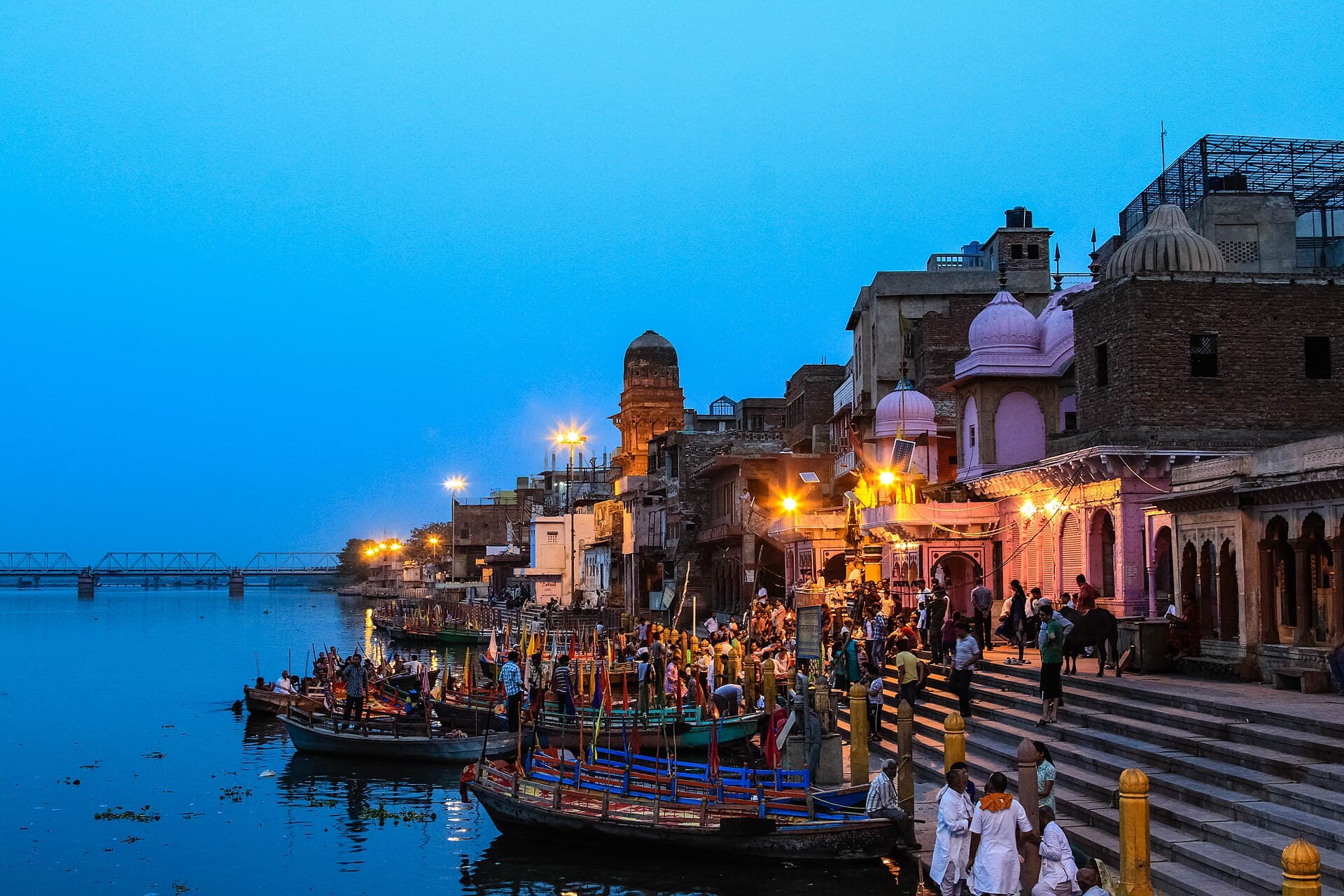 Umang108 / CC BY-SA 4.0, via Wikimedia Commons
Tour de áudio autoguiado por Mathura — rota GPS a pé, reprodução offline, narração envolvente em 32 idiomas.
“Onde a devoção colore as ruas antigas e lendas respiram em cada canto.”
Não os postais. As histórias que nem os locais conhecem — sussurradas ao seu ouvido, exatamente onde aconteceram.
O local mais sagrado em Mathura acredita-se ser onde o Senhor Krishna nasceu, mas o local de nascimento real não é o que a maioria dos visitantes espera.
Ao longo do rio Yamuna, um ghat em particular tem um significado único para os peregrinos que vai além de um simples mergulho.
Entre os muitos templos dedicados ao Senhor Krishna, um se destaca por seu foco único na devoção.
Descubra cada segredo de Mathura
Cada endereço, cada revelação na íntegra — no seu ouvido, exatamente onde aconteceu.
Você escolhe as suas paragens. Você caminha. A voz revela o que os outros perdem.


O seu tour áudio autoguiado de Mathura está pronto — escolha os seus pontos de interesse, selecione o seu idioma e comece no momento em que chegar.
ComprarA Lume inclui um guia de realidade aumentada. Levante o telemóvel: a câmara mostra a rua à sua frente, com uma seta luminosa sobreposta à imagem real que aponta sempre para a sua próxima paragem — sem mapa para decifrar, sem voltas erradas. Como tudo na Lume, funciona totalmente offline.
Mathura, uma cidade no estado indiano de Uttar Pradesh, no norte, é um testemunho vivo do patrimônio espiritual da Índia. Situada às margens do rio Yamuna, é reverenciada como o local de nascimento do Senhor Krishna, uma das divindades mais queridas do Hinduísmo. Esta sagrada extensão urbana, juntamente com sua cidade vizinha Vrindavan — onde Krishna passou sua infância — forma o coração de Braj Bhoomi, um destino de peregrinação para devotos de todo o mundo.
Ao entrar em Mathura, depara-se com um charme de tempos antigos que permeia suas ruelas estreitas, estruturas antigas e portas intrincadamente esculpidas. A atmosfera da cidade ressoa com os suaves cânticos dos devotos e o suave tilintar dos sinos dos templos, criando um profundo senso do divino. Mathura não é meramente um local histórico ou religioso; é um lugar onde tradições antigas continuam a moldar a vida diária e a cultura local.
A história de Mathura remonta a mais de 3.000 anos, com evidências arqueológicas ilustrando sua evolução de uma vila para uma cidade importante durante a era védica. A cidade é mencionada no antigo épico indiano, o Ramayana, onde era inicialmente conhecida como Madhuvan, uma área densamente arborizada. Mais tarde, transformou-se de Madhupura para se tornar a Mathura conhecida hoje. A localização estratégica de Mathura na interseção de importantes rotas de caravanas estabeleceu-a como um importante centro econômico na antiguidade, conectando a Planície Indo-Gangética com a Índia central e ocidental. Caravanas frequentemente paravam aqui, contribuindo para a atividade econômica da cidade e o desenvolvimento de edifícios e templos elegantes.
Mathura prosperou sob vários impérios, incluindo as dinastias Maurya (séculos IV a II a.C.) e Kushan (século I d.C.). Durante o período Kushan, Mathura tornou-se um centro proeminente de aprendizado e arte budista, reconhecida por seu estilo escultural distinto que produziu ícones devocionais para o Budismo, Jainismo e Hinduísmo, demonstrando notável tolerância e intercâmbio artístico. Embora o Budismo tenha tido proeminência até o século VI d.C., ele havia em grande parte recuado até o século VII d.C. Mathura também tem significado para os Jains como o local de nascimento do 23º Tirthankara, Neminath, e foi visitada pelo Senhor Mahavira.
Apesar de sua importância espiritual e cultural, Mathura suportou períodos de destruição. Foi saqueada por Mahmud de Ghazni em 1018 d.C. e novamente por Sikandar Lodhi entre 1500 e 1517 d.C. No entanto, a cidade reconstruiu-se consistentemente, recuperando-se muitas vezes mais rapidamente do que foi danificada, preservando assim seu legado. O movimento Bhakti, enfatizando a devoção ao Senhor Krishna, solidificou ainda mais a posição espiritual de Mathura, garantindo sua importância contínua como local de peregrinação. A cidade passou para o domínio britânico em 1804.
Comece sua exploração no Complexo do Templo Shri Krishna Janmabhoomi, o núcleo espiritual de Mathura, acreditado ser o exato local de nascimento do Senhor Krishna. O complexo inclui o Templo Keshav Deva, o santuário Garbha Griha (a cela da prisão onde Krishna nasceu) e o Bhagavata Bhavan. A segurança é rigorosa aqui, e as multidões são frequentes, especialmente durante os festivais.
Em seguida, visite o Templo Dwarkadhish, construído em 1814, reconhecido por sua atmosfera animada, ídolo de mármore preto do Senhor Krishna e intrincadas esculturas que refletem os estilos Rajput e Mughal. A Aarti Mangala pela manhã e a Aarti Sandhya à noite atraem muitos visitantes.
Os Ghats do Rio Yamuna, especialmente Vishram Ghat, oferecem uma experiência serena. Acredita-se que Krishna descansou aqui após derrotar Kansa, e serve como ponto de início e fim para a tradicional parikrama de Mathura. A Aarti Yamuna à noite, por volta das 19h, é um ritual poderoso com lamparinas a óleo e cânticos rítmicos.
Considere uma visita ao Gita Mandir, também conhecido como Birla Mandir, onde toda a Bhagavad Gita está inscrita em suas paredes. Para uma perspectiva filosófica única, o Templo Radha Vallabh foca na importância espiritual de Radha. O Kans Qila (Forte de Kansa) oferece um vislumbre do passado histórico de Mathura.
A apenas 12 quilômetros de distância, Vrindavan apresenta inúmeros templos associados à infância de Krishna, incluindo o Templo Banke Bihari e o Templo ISKCON. A Colina Govardhan, a aproximadamente 25 km de Mathura, é outro importante local de peregrinação onde se acredita que Krishna ergueu a colina para proteger as pessoas.
A época mais favorável para visitar Mathura é de outubro a março, quando o clima é agradável e confortável para explorar. As temperaturas durante esses meses geralmente variam entre 10°C e 25°C. Este período evita o calor intenso do verão (abril a junho), quando as temperaturas podem exceder 40°C, e a umidade da estação das monções (julho a setembro), que pode limitar as atividades ao ar livre.
Embora festivais como Janmashtami (agosto/setembro) e Holi (fevereiro/março) ofereçam experiências culturais vívidas, eles também atraem multidões consideráveis, levando a hotéis lotados e filas extensas. Para uma experiência mais tranquila, considere visitar durante a semana ou na baixa temporada, embora alguns planos ao ar livre possam ser limitados pela chuva durante as monções.
Mathura é bem conectada por estrada e ferrovia. A Estação Ferroviária de Mathura Junction é uma estação importante com trens frequentes de cidades como Delhi, Agra, Jaipur, Mumbai e Calcutá. O aeroporto mais próximo é o Aeroporto de Agra (aproximadamente 50-60 km de distância) para voos domésticos, enquanto o Aeroporto Internacional Indira Gandhi em Delhi (cerca de 145-170 km de distância) serve como o principal hub internacional mais próximo. De qualquer um dos aeroportos, você pode pegar um ônibus ou táxi para Mathura.
Dentro de Mathura, auto-riquixás e riquixás de bicicleta estão prontamente disponíveis para transporte local. Para uma experiência mais confortável, especialmente ao visitar vários templos ou viajar com a família, considere reservar um serviço de táxi. Vista-se modestamente, cobrindo ombros e joelhos, especialmente ao visitar templos, e esteja preparado para remover seus sapatos. Mathura é geralmente segura para turistas, mas é aconselhável estar atento em áreas lotadas para evitar furtos. Leve um chip local ou Wi-Fi portátil e mantenha objetos de valor seguros.
Mathura — coreano, chinês, hebraico e mais 29 idiomas, cada parada narrada por uma voz nativa. A maior variedade de idiomas entre os passeios de áudio autoguiados.
Disponível em: