Templo Gessho-ji
Un pilar de piedra sustancial descansa sobre la espalda de una estatua de tortuga en el Templo Gessho-ji, presentando una vista inusual.
La historia completa se desbloquea en el tour
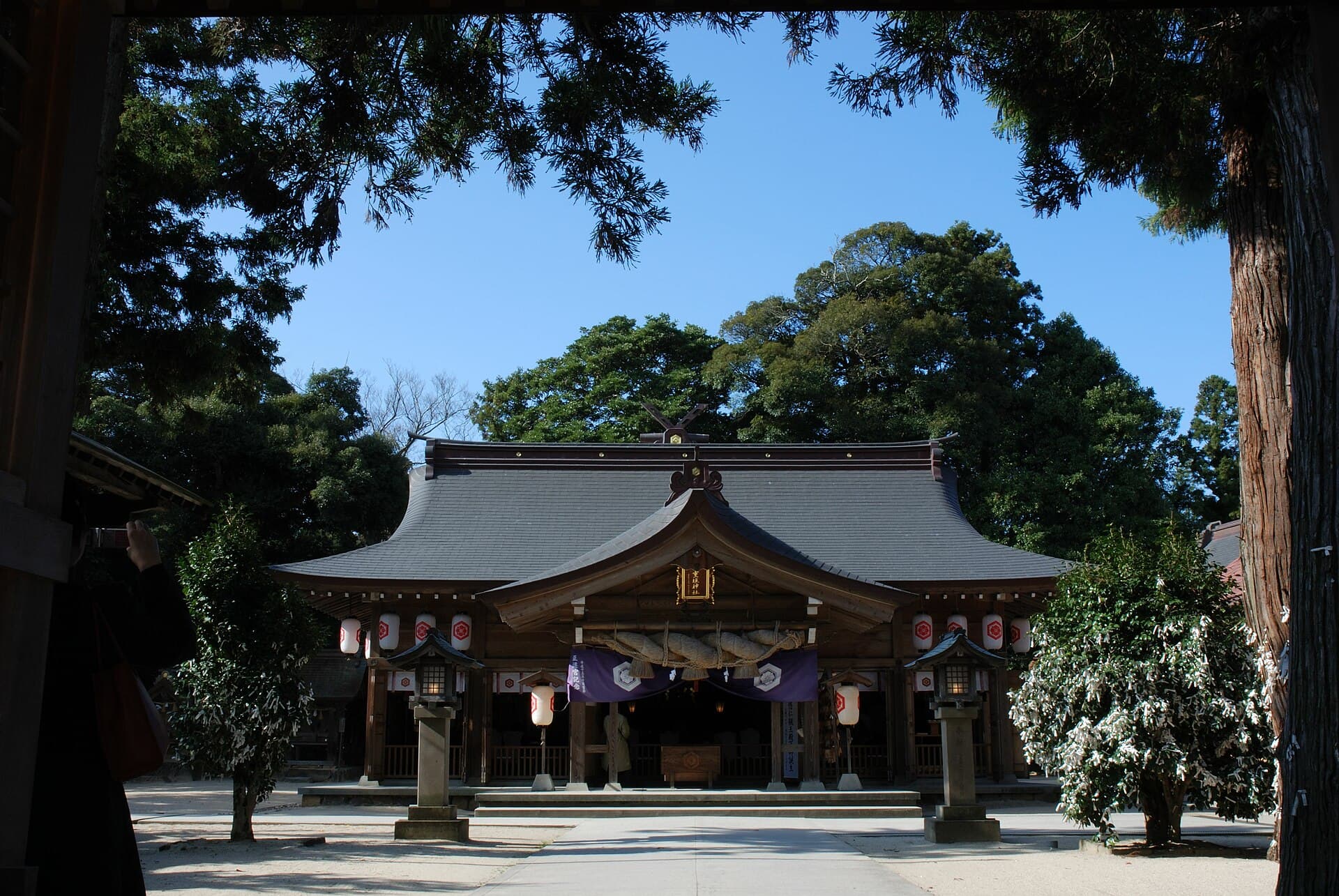 by Monado / CC BY-SA 2.5, via Wikimedia Commons
Tour de audio autoguiado de Matsue — ruta GPS a pie, reproducción offline, narración en 32 idiomas.
“Donde los mitos ancestrales se encuentran con aguas serenas y ecos del valor samurái.”
No las postales. Las historias que ni los locales conocen — al oído, justo donde ocurrieron.
Un pilar de piedra sustancial descansa sobre la espalda de una estatua de tortuga en el Templo Gessho-ji, presentando una vista inusual.
La torre principal del Castillo de Matsue, un Tesoro Nacional, guardó un secreto durante siglos.
El célebre escritor Lafcadio Hearn descubrió una profunda inspiración en su jardín de Matsue.
Descubre todos los secretos de Matsue
Cada dirección, cada revelación al completo — a tu oído, justo donde ocurrió.
Eliges tus paradas. Caminas. La voz te revela lo que los demás ignoran.


Tu tour de audioguía por Matsue te espera — elige tus lugares, tu idioma y empieza al llegar.
ComprarLume incluye una guía de realidad aumentada. Levanta el móvil y su cámara muestra la calle que tienes delante, con una flecha luminosa sobre la imagen real que siempre apunta a tu próxima parada — sin mapas que descifrar, sin giros equivocados. Como todo en Lume, funciona completamente sin conexión.
Matsue, la capital de la Prefectura de Shimane, es una ciudad donde la historia, la naturaleza y la cultura convergen. Conocida como la "Ciudad del Agua" por su intrincada red de fosos, ríos y el extenso Lago Shinji, Matsue ofrece un tranquilo refugio en un Japón de épocas pasadas. Es una ciudad entrelazada con mitos y leyendas ancestrales, un lugar donde, según el folclore, los dioses se reúnen antes de su asamblea anual en el Gran Santuario de Izumo.
En su corazón se alza el Castillo de Matsue, uno de los pocos castillos originales de Japón, cuyo exterior oscuro le ha valido el apodo de "Castillo Negro". Más allá del castillo, la ciudad se despliega con distritos samurái conservados, casas de té tradicionales y la tranquila belleza del Lago Shinji, famoso por sus espectáculos de color al atardecer. Matsue ofrece una experiencia pacífica y culturalmente rica, invitando a los visitantes a explorar su encanto histórico y sus pintorescos alrededores.
Esta relajada ciudad-castillo combina su herencia feudal con el esplendor natural, ofreciendo experiencias desde la exploración de antiguas residencias hasta cruceros por sus históricos canales. Ya sea que busque un vistazo a la vida samurái, una probadita de la cultura tradicional del té, o simplemente la tranquila contemplación de una puesta de sol junto al lago, Matsue presenta un viaje japonés único y auténtico.
El área que hoy es Matsue posee un pasado profundo y antiguo. Durante la civilización Yayoi (300 a.C. a 300 d.C.) e incluso antes, en el período Jomon, gran parte de la región yacía bajo un vasto mar interior. En consecuencia, muchos sitios arqueológicos conectados con la antigua tribu Izumo y los orígenes de la civilización japonesa se encuentran en terrenos más altos, a lo largo del borde sur de la ciudad.
La historia más reciente de Matsue como ciudad comenzó en 1607 con el inicio de la construcción del Castillo de Matsue. El castillo fue construido durante cinco años, de 1607 a 1611, por Horio Yoshiharu, el primer señor feudal del Dominio de Matsue y fundador de la ciudad. Horio Yoshiharu, un estratega hábil, hizo reconstruir la ciudad alrededor del castillo, incorporando canales para crear una fortaleza inexpugnable. A pesar de su formidable diseño, erigido después de los principales conflictos feudales de finales del siglo XVI, el Castillo de Matsue nunca vio batalla.
La propiedad del castillo pasó al clan Kyōgoku en 1633, específicamente a la rama de Izumo, y luego al clan Matsudaira, una rama menor de la familia gobernante Tokugawa, en 1637. El clan Matsudaira gobernó Matsue durante diez generaciones a lo largo de 234 años, manteniendo el castillo en su estado original mientras modernizaban la ciudad.
En 1875, durante el período temprano Meiji, muchos de los edificios del castillo fueron desmantelados debido a políticas antifeudales. Sin embargo, la torre principal y una torreta adjunta fueron preservadas debido a la presión pública. Importantes renovaciones en la década de 1950 contribuyeron aún más a su preservación. En 1927, la familia Matsudaira donó el Castillo de Matsue a la ciudad. La torre del castillo, inicialmente registrada como Tesoro Nacional en 1935, vio su designación cambiada a Propiedad Cultural Importante en 1950 debido a un cambio en la ley. Sin embargo, después de que una investigación en 2012 descubriera talismanes que databan su finalización en 1611, el Castillo de Matsue fue redesignado como Tesoro Nacional en 2015, reconociendo sus técnicas de construcción superiores y la fecha de finalización confirmada. Hoy, Matsue se erige como una de las tres Ciudades de Cultura y Turismo Internacional designadas en Japón, junto con Kioto y Nara.
Matsue ofrece una variedad de atracciones históricas y escénicas. El Castillo de Matsue, un Tesoro Nacional, es un sitio significativo. Su llamativo exterior negro le ha valido el apodo de "Castillo Negro" o "Castillo del Chorlito" (Chidori-jo), una referencia a los elegantes tejados que se asemejan a las alas de un chorlito. Los visitantes pueden explorar los terrenos del castillo, las exhibiciones históricas y las muestras de armaduras samurái dentro de la torre, que ofrece vistas expansivas de la ciudad y el Lago Shinji desde su piso superior.
Más allá del castillo, el Distrito Samurái de Matsue, también conocido como Calle Shiomi Nawate, conserva la atmósfera del período Edo. Esta calle de 500 metros presenta residencias tradicionales, caminos empedrados y casas de té históricas. El Matsue Bukeyashiki, una antigua residencia samurái, está abierto al público, ofreciendo una visión de la vida diaria de un samurái de rango medio. Cerca se encuentra la antigua residencia de Lafcadio Hearn, un escritor greco-irlandés que se naturalizó como Koizumi Yakumo y presentó la cultura japonesa al mundo occidental. Su sencilla pero hermosa casa samurái, con su admirado jardín, está abierta al público, junto con un museo conmemorativo dedicado a sus obras.
Un relajado crucero en el Barco Turístico Horikawa alrededor de los fosos del castillo ofrece una perspectiva distinta de Matsue. El recorrido de 50 minutos pasa por debajo de 17 puentes, algunos tan bajos que el techo del barco se baja, requiriendo que los pasajeros se agachen. Los barqueros a menudo comparten la historia y la cultura local, a veces incluso cantando canciones populares. Para probar la fuerte cultura del té de Matsue, influenciada por el señor feudal Harusato Matsudaira, la Casa de Té Meimei-an ofrece un entorno tranquilo para una ceremonia tradicional de matcha con vistas a un jardín japonés.
Matsue experimenta un clima subtropical húmedo con cuatro estaciones distintas. Las épocas más agradables para visitar son primavera (marzo a mayo) y otoño (septiembre a noviembre), cuando las temperaturas son suaves y el paisaje es particularmente hermoso con los cerezos en flor o el follaje otoñal. El verano (junio a agosto) es cálido y húmedo, con máximas diarias promedio que alcanzan los 27-29°C (80-84°F) en agosto. El invierno (diciembre a febrero) es fresco, con temperaturas diurnas promedio alrededor de 6-9°C (43-48°F) en enero y febrero. La precipitación es frecuente durante todo el año, siendo julio el mes más húmedo. Sin embargo, el invierno ofrece una experiencia más tranquila, con oportunidades para paseos en barco kotatsu cálidos y la observación de aves migratorias en el Lago Shinji.
Matsue está bien conectada y es relativamente fácil de navegar. Desde Tokio, un vuelo doméstico al aeropuerto de Izumo toma aproximadamente 1.5 horas, seguido de un autobús lanzadera de 30 minutos a Matsue. Alternativamente, el Shinkansen a la estación de Okayama (3 horas) conecta con la Línea Yakumo, que llega a Matsue en otras 2.5 horas. El Japan Rail Pass cubre el Shinkansen (si se usan trenes Hikari) y las líneas JR. Dentro de Matsue, el centro de la ciudad es transitable a pie, especialmente alrededor del Castillo de Matsue y el distrito samurái. El Lakeline Bus es un conveniente circuito turístico que conecta las principales atracciones, operando cada 20-30 minutos. Un solo viaje cuesta ¥250 para adultos, o un pase de un día cuesta ¥700. También hay taxis y bicicletas de alquiler disponibles. La Oficina de Información Turística Internacional de Matsue, ubicada fuera de la salida norte de la estación JR de Matsue, proporciona mapas, folletos, Wi-Fi gratuito y asistencia en varios idiomas. También ofrecen un sistema de préstamo gratuito de paraguas.
Matsue en coreano, en chino o en hebreo — y 29 idiomas más, cada parada narrada por una voz nativa. La mayor variedad de idiomas de cualquier audioguía autoguiada.
Disponible en: