Dōgo Onsen Honkan
Dit eerbiedwaardige badhuis, een aangewezen Belangrijk Cultureel Bezit, herbergt een geheim dat u misschien naar een geliefde geanimeerde wereld zou kunnen brengen.
Volledig verhaal ontgrendeld in de tour
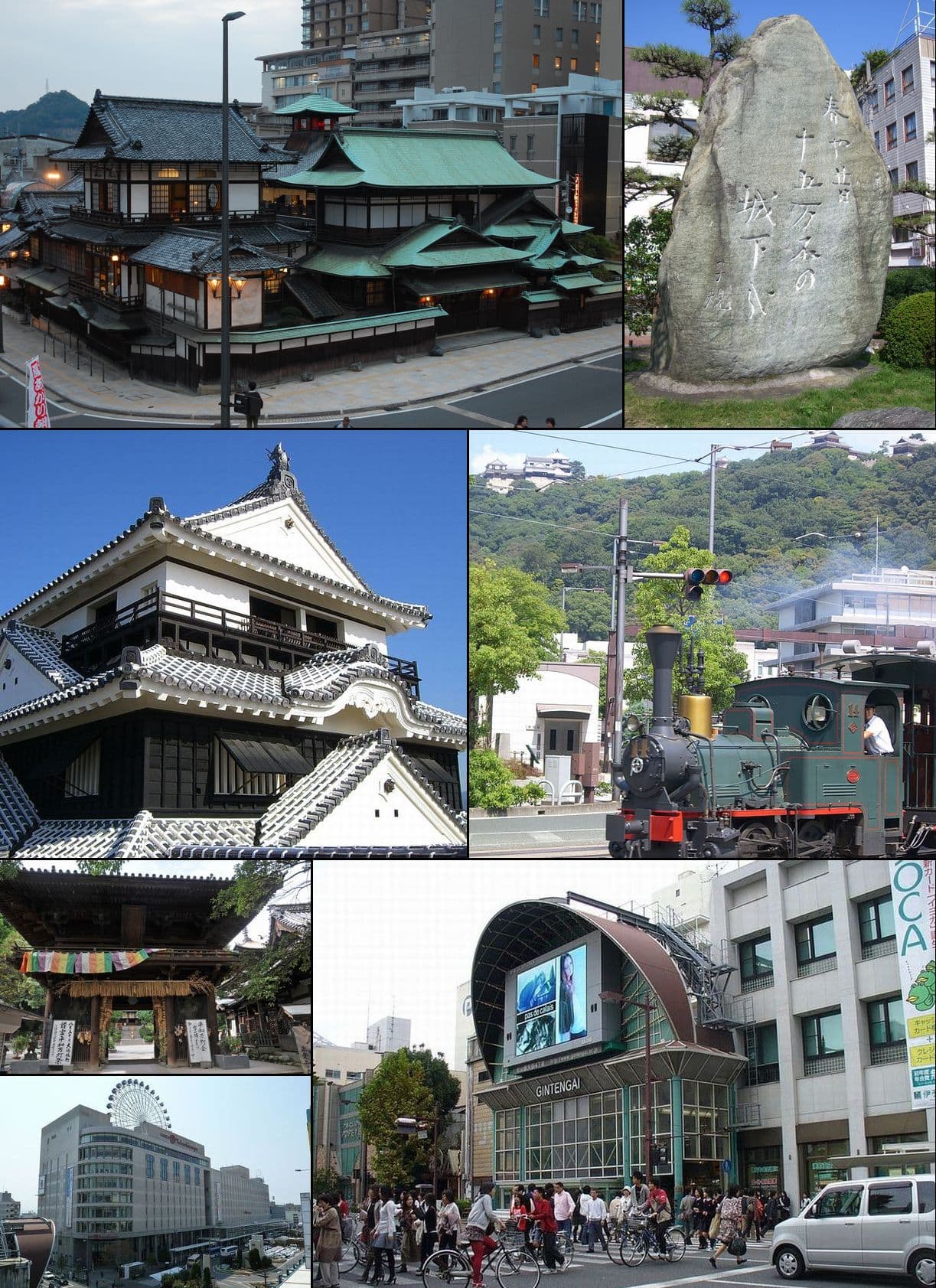 File:Dōgo Onsen Honkan.jpg by Simon, Uploaded by User:トトト File:Shiki Masaoka stone monument is recognized as one of the symbols of Matsuyama-City.JPG by User:Jyo81 File:Matsuyama Castle Tower(Iyo) JAPAN.JPG by User:Jyo81 File:Matsuyama castle(Iyo)8.JPG by User:Jyo81 File:Ishiteji 04.JPG by User:Reggaeman File:Iyotetsu takashimaya.JPG by User:ぺ有家音 File:Gintengai-Street (MatuyamaCity).JPG by ja:利用者:Taiyaki(Japanese Wikipedia), Uploaded by User:Fjkelfeimvvn Composition by User:Fjkelfeimvvn / cc by-sa 3.0, via Wikimedia Commons
Zelfgeleide audiowandeling door Matsuyama — GPS-route, offline afspelen, meeslepende vertelling in 32 talen.
“Waar oude warmwaterbronnen samuraibolwerken en literaire echo's ontmoeten.”
Niet de ansichtkaarten. De verhalen die zelfs locals niet kennen — gefluisterd in je oor, precies waar ze gebeurden.
Dit eerbiedwaardige badhuis, een aangewezen Belangrijk Cultureel Bezit, herbergt een geheim dat u misschien naar een geliefde geanimeerde wereld zou kunnen brengen.
Onder de weinige overgebleven originele kastelen van Japan, bezit Matsuyama Castle een onderscheidend architectonisch detail dat het verbindt met een van de meest formidabele historische families van Japan.
Deze tempel, een belangrijke halte op de Shikoku Bedevaart, bevat een schemerig verlichte grot die een onverwachte, kronkelende reis biedt naar een innerlijke heiligdom.
Ontdek elk geheim van Matsuyama
Elk adres, elke onthulling volledig — in je oor, precies waar het gebeurde.
Jij kiest je stops. Jij wandelt. De stem onthult wat de anderen missen.


Je zelfgeleide audiotour van Matsuyama is klaar — kies je bezienswaardigheden, kies je taal en start zodra je aankomt.
KopenLume heeft een ingebouwde augmented-reality-gids. Houd je telefoon omhoog: de camera toont de straat voor je, met een oplichtende pijl over het echte beeld die altijd naar je volgende stop wijst — geen kaart om uit te puzzelen, geen verkeerde afslagen. Zoals alles in Lume werkt het volledig offline.
Matsuyama, de hoofdstad van de prefectuur Ehime op het eiland Shikoku, is een stad waar geschiedenis, literatuur en rust samenkomen. Met een geschatte bevolking van meer dan 500.000 inwoners is het het grootste stedelijke centrum van Shikoku. De stad biedt een boeiende mix van stedelijk gemak en natuurlijke pracht, gelegen tussen de Seto Binnenzee en de Shikoku Bergen. Matsuyama staat bekend om zijn oude warmwaterbronnen, een goed bewaard gebleven samoerai kasteel, en zijn diepe banden met de Japanse literatuur, met name als decor voor Natsume Sōseki's invloedrijke roman, Botchan.
Bezoekers van Matsuyama kunnen een reis door de tijd maken, van het baden in de therapeutische wateren van Dōgo Onsen, een van de oudste warmwaterbronnen van Japan met een geschiedenis van meer dan 1.000 jaar, tot het verkennen van de strategische verdedigingswerken van Matsuyama Castle, een van de slechts twaalf Japanse kastelen die zijn originele donjon behouden hebben. De culturele diepgang van de stad wordt verder verrijkt door de associatie met haiku-poëzie en diverse musea. Het milde klimaat van Matsuyama gedurende het hele jaar maakt het een uitnodigende bestemming, die een vredige ontsnapping biedt terwijl het toch de voorzieningen van een moderne stad biedt.
Het gebied dat nu bekend staat als Matsuyama heeft een geschiedenis die duizenden jaren teruggaat, met de warmwaterbronnen van Dōgo Onsen die worden genoemd in de Man'yōshū, de oudste dichtverzameling van Japan, samengesteld rond 759 CE. De meer gedefinieerde oorsprong van de stad als kasteelstad begon in 1602 toen Katō Yoshiaki, een feodale heer die Tokugawa Ieyasu steunde, begon met de bouw van Matsuyama Castle op Mount Katsuyama. Het kasteel, een 'vlakte-berg'-stijl fort, duurde ongeveer 25 jaar om te voltooien, hoewel Katō Yoshiaki werd overgeplaatst voordat het volledig gerealiseerd was. De familie Matsudaira, verwanten van de Tokugawa-clan, bestuurde het Matsuyama-domein vervolgens meer dan twee eeuwen tijdens de Edo-periode.
Hoewel delen van Matsuyama Castle schade opliepen door brand en tijdens de Tweede Wereldoorlog, zijn de hoofd donjon en verschillende structuren bewaard gebleven of zorgvuldig herbouwd, waardoor het de status van Nationaal Historisch Monument heeft gekregen. De stad zelf werd formeel opgericht op 15 december 1889. In de 20e eeuw breidde Matsuyama uit door fusies met naburige steden zoals Dōgo en Mitsuhama, wat bijdroeg aan de groei als de grootste stad van Shikoku. Naast zijn militaire verleden, kreeg Matsuyama literaire bekendheid als decor voor Natsume Sōseki's roman Botchan uit 1906, een semi-autobiografisch werk dat de stad en zijn Dōgo Onsen levendig portretteert. Deze literaire connectie wordt gevierd in heel Matsuyama, met verschillende locaties en zelfs een retro trein vernoemd naar het hoofdpersonage van de roman. De stad werd op 26 juli 1945 gebombardeerd, in de laatste stadia van de Tweede Wereldoorlog, wat resulteerde in burgerslachtoffers en de vernietiging van meer dan 55% van het stadsgebied.
Begin uw verkenning bij Matsuyama Castle, een prachtig fort op een heuveltop dat een weids uitzicht biedt over de stad, de vlakte van Matsuyama en de Seto Binnenzee. Bereik de kasteeltop via de kabelbaan of stoeltjeslift voor een boeiende klim. Daal daarna af naar de Ninomaru Historical Garden, die de indeling van een voormalig paleis toont.
Dompel u vervolgens onder in de therapeutische wateren van Dōgo Onsen Honkan, het oudste warmwaterbronnenbadhuis van Japan, bekend om zijn alkalische wateren die de huid zouden verzachten en verfraaien. Dwaal door het omliggende Dōgo Onsen-gebied, een heerlijk kuuroord met winkelstraten en voetbaden. Bezoek in de buurt Ishite-ji Temple, de 51e tempel op de Shikoku 88 Tempel Bedevaart, bekend om zijn architectuur uit de Kamakura-periode, waaronder een Nationale Schat-poort en een mysterieuze grot die leidt naar een binnenste tempel.
Voor een vleugje Europese elegantie bezoekt u Bansuiso Villa, een kasteel in Franse renaissancestijl, gebouwd in 1922 als een tweede residentie voor Graaf Sadakoto Hisamatsu. Dit architectonische meesterwerk dient nu als cultureel centrum, waar tentoonstellingen worden gehouden en een kijkje wordt geboden in het aristocratische leven van het begin van de 20e eeuw. Mis een ritje met de Botchan Ressha trein niet, een antieke trein die rijdt op het tramnetwerk van de stad en een nostalgische reis biedt die de belangrijkste toeristische plekken met elkaar verbindt.
Matsuyama heeft een gematigd vochtig klimaat met milde winters en warme, vochtige zomers. De gemiddelde temperatuur in januari, de koudste maand, is ongeveer 43,5°F (6,4°C), terwijl augustus, de warmste maand, gemiddelde hoge temperaturen van 86°F (30°C) en lage temperaturen van 76°F (24°C) kent. Lente (maart tot mei) en herfst (september tot november) bieden aangename temperaturen, waardoor ze ideaal zijn voor sightseeing. Het kersenbloesemseizoen in de lente en het levendige herfstblad rond Matsuyama Castle zijn bijzonder schilderachtig. Hoewel de zomers warm zijn, is de Seto Binnenzee geschikt om te zwemmen van juli tot oktober. De neerslag is het hoogst in juni en juli en het laagst in januari en december.
Matsuyama heeft twee belangrijke treinstations: JR Matsuyama Station voor langeafstandstreinen en Matsuyama-shi Station, het centrale punt voor de lokale Iyotetsu Railway. De handigste manier om de belangrijkste bezienswaardigheden van de stad te doorkruisen, is met het Iyotetsu-tramnetwerk, dat JR Matsuyama Station, Matsuyama-shi Station en het Dōgo Onsen-gebied verbindt. Een vast tarief is van toepassing op tramritten (210 yen met een IC-kaart, 230 yen contant). Iyotetsu exploiteert ook een uitgebreid busnetwerk, inclusief limousinesbussen van Matsuyama Airport naar Dōgo Onsen en JR Matsuyama Station. Dagkaarten voor transport zijn beschikbaar voor onbeperkt gebruik van trams en geselecteerde busroutes. Matsuyama is goed verbonden per vliegtuig vanuit Tokyo Haneda Airport, en per veerboot vanuit Hiroshima naar Matsuyama Port.
Matsuyama — Koreaans, Chinees, Hebreeuws en nog 29 talen, elke stop verteld door een moedertaalspreker. Het grootste taalaanbod van alle zelfgeleide audiotours.
Beschikbaar in: