Torre de los Trompetistas
Esta torre inclinada una vez tuvo una sombría consecuencia para quienes daban una falsa alarma.
La historia completa se desbloquea en el tour
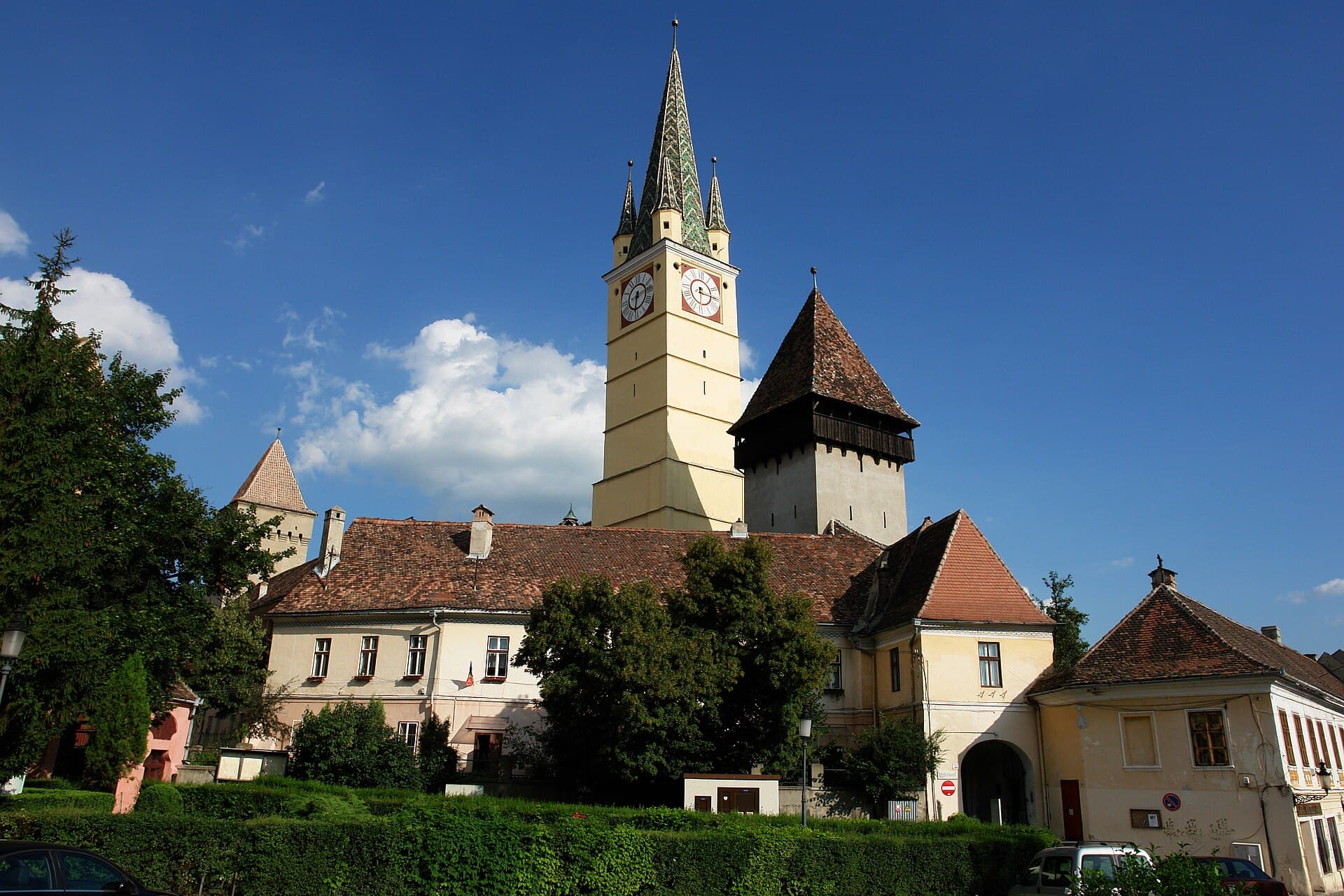 Thaler Tamas / CC BY-SA 3.0 ro, via Wikimedia Commons
Tour de audio autoguiado de Mediaș — ruta GPS a pie, reproducción offline, narración en 32 idiomas.
“Donde los muros antiguos guardan historias perdurables.”
No las postales. Las historias que ni los locales conocen — al oído, justo donde ocurrieron.
Esta torre inclinada una vez tuvo una sombría consecuencia para quienes daban una falsa alarma.
Incluso el formidable Vlad el Empalador fue un residente temporal dentro de las defensas de Mediaș.
Detrás de una puerta oculta en una torre de iglesia fortificada, una biblioteca olvidada permaneció intacta durante siglos.
Descubre todos los secretos de Mediaș
Cada dirección, cada revelación al completo — a tu oído, justo donde ocurrió.
Eliges tus paradas. Caminas. La voz te revela lo que los demás ignoran.
Tu tour de audioguía por Mediaș te espera — elige tus lugares, tu idioma y empieza al llegar.
ComprarLume incluye una guía de realidad aumentada. Levanta el móvil y su cámara muestra la calle que tienes delante, con una flecha luminosa sobre la imagen real que siempre apunta a tu próxima parada — sin mapas que descifrar, sin giros equivocados. Como todo en Lume, funciona completamente sin conexión.
Mediaș, una ciudad en el corazón de Transilvania, Rumanía, ofrece una conexión tangible con un pasado histórico. Situada en la cuenca media del río Târnava Mare, es un lugar donde convergen las influencias sajonas, húngaras y rumanas, evidentes en su arquitectura y tradiciones. La ubicación estratégica de la ciudad, aproximadamente a 55 kilómetros al norte de Sibiu y a 40 kilómetros de Sighișoara, la convierte en una excelente base para explorar la región más amplia de Transilvania.
Entrar en Mediaș es como adentrarse en un museo viviente, con sus fortificaciones medievales bien conservadas, sus estrechas calles empedradas y una plaza central enmarcada por fachadas coloridas. Más allá de su carácter histórico, Mediaș también es reconocida por su tradición vitivinícola, formando parte de la región del 'País del Vino'. La mezcla de profundidad histórica y carácter local de la ciudad ofrece una visión tranquila pero perspicaz del patrimonio perdurable de Transilvania.
## De Puesto Avanzado Romano a Fortaleza Sajona La historia de Mediaș se remonta al período Neolítico medio, con evidencia de presencia humana en la zona. Durante la ocupación romana, fue conocida como Per Medias, que significa 'la ciudad en el cruce de caminos', y los artefactos confirman la presencia de la Legio XIII Gemina. La ciudad fue documentada oficialmente por primera vez en 1267 como 'Mediesy', y para 1359, había alcanzado el estatus de 'civitas'.
La llegada de los sajones de Transilvania en el siglo XIII moldeó profundamente Mediaș. Fortificaron el asentamiento, construyendo un robusto sistema defensivo en respuesta a las incursiones otomanas en el siglo XV. Entre 1440 y 1534, se construyeron tres murallas defensivas concéntricas, un testimonio del ingenio y la importancia estratégica de la comunidad. Este sistema de fortificación incluía numerosas torres especializadas, cada una mantenida por un gremio artesanal diferente, como la Torre de los Sastres y la Torre de los Orfebres.
## Gremios, Cultura y Figuras Notables Mediaș floreció como centro de artesanía y comercio, con los gremios más antiguos registrados para sastres y comerciantes de telas apareciendo a mediados del siglo XV. A finales del siglo XVII, la ciudad albergaba 33 gremios, contribuyendo a su vitalidad económica y cultural. La Iglesia Evangélica fortificada de Santa Margarita, que data del siglo XV, se convirtió en el núcleo alrededor del cual se desarrolló la ciudadela. Esta iglesia gótica presenta impresionantes retablos, frescos y una colección de alfombras orientales de los siglos XIV y XV.
Más allá de sus logros arquitectónicos y económicos, Mediaș ha sido el hogar de figuras históricas notables. Christian Schesaeus y Stephan Ludwig Roth, autores de importantes libros de historia de Transilvania, vivieron y trabajaron en Mediaș. Stephan Ludwig Roth, un héroe nacional tanto para los sajones de Transilvania como para los rumanos, fue conocido por sus ideas progresistas y su oposición a la unión forzada de Transilvania con Hungría en 1848. Su defensa del rumano como idioma oficial, dada la demografía de la población, finalmente llevó a su asesinato en 1849.
## Desarrollos Modernos A principios del siglo XX, Mediaș desarrolló una importante base manufacturera, que abarcaba desde la fabricación de metales y la producción de alimentos hasta la confección y la fabricación de cristales. El fabricante de cristales Vitrometan, con sede en Mediaș, incluso produjo las 3.500 toneladas de cristal para los 15.000 candelabros del Palacio del Parlamento de Rumanía a mediados de la década de 1980. Hoy en día, Mediaș mantiene su carácter histórico al mismo tiempo que es un importante centro industrial, utilizando los depósitos de gas natural cercanos.
Comience su exploración en Piața Regele Ferdinand I, la plaza central, que conserva una atmósfera medieval con sus fachadas coloridas y edificios históricos. Un punto de referencia prominente es la Iglesia Evangélica de Santa Margarita, una estructura gótica del siglo XV rodeada de murallas defensivas. En su interior, admire los retablos góticos, los frescos del siglo XV y una colección de alfombras orientales. No se pierda la Torre de los Trompetistas, una estructura notablemente inclinada que ofrece amplias vistas del casco antiguo.
Más allá de la plaza principal, pasee por las estrechas y sinuosas calles para descubrir otras torres medievales y casas bien conservadas con arquitectura sajona tradicional. La Iglesia y Monasterio Franciscano, construido en estilo gótico en 1444 y luego renovado en estilo barroco, es otro monumento religioso significativo. Para profundizar en la historia y las artesanías locales, visite el Museo Municipal de Mediaș, que alberga colecciones de artefactos gremiales, libros antiguos, pinturas y trajes tradicionales. Considere una visita al Museo del Gas Natural, que documenta los inicios de la extracción de gas natural en Rumanía, una industria importante para la región.
Fuera de la ciudad, la región circundante de Târnave es famosa por sus vinos blancos, y las bodegas locales a menudo ofrecen catas guiadas. La zona también está salpicada de iglesias fortificadas, incluidos los Sitios del Patrimonio Mundial de la UNESCO de Biertan y Valea Viilor, ambos fácilmente accesibles desde Mediaș.
La época más agradable para visitar Mediaș es a finales de primavera (mayo-junio) y principios de otoño (septiembre-octubre). Durante estos meses, las temperaturas son agradables, oscilando entre 15 y 25 °C (59-77 °F) a finales de primavera, y el campo está animado con flores silvestres o follaje otoñal. Julio y agosto también son adecuados para actividades de clima cálido, con máximas diarias promedio de alrededor de 26-28 °C (79-82 °F), aunque estos meses pueden ser más concurridos y calurosos. Los inviernos son fríos y nevados, con mínimas promedio de alrededor de -5 °C (23 °F) en enero, lo que lo hace ideal para deportes de invierno y explorar ciudades medievales con menos multitudes.
La moneda oficial en Mediaș, y en toda Rumanía, es el Leu rumano (RON). Aunque Rumanía forma parte de la UE, no ha adoptado el Euro, por lo que es esencial tener moneda local para las transacciones diarias. Hay cajeros automáticos disponibles, y es aconsejable elegir que se le cobre en Lei rumanos al usar tarjetas para asegurar un tipo de cambio más justo. Se pueden encontrar oficinas de cambio de moneda en Mediaș.
Mediaș está bien conectada por tren, con servicios diarios a las principales ciudades rumanas como Bucarest, Sibiu, Sighișoara y Cluj-Napoca. Los servicios de autobús también conectan Mediaș con otras ciudades de Rumanía y pueblos cercanos. Para moverse por el compacto centro de la ciudad, caminar suele ser la opción más conveniente, ya que las atracciones están cerca unas de otras. Los autobuses locales, operados por Meditur, cubren varios barrios, y los billetes se pueden comprar en quioscos o máquinas de autoservicio. Los taxis también están fácilmente disponibles y ofrecen una forma asequible de viajar.
Las opciones de alojamiento en Mediaș incluyen hoteles y casas de huéspedes, con opciones como Mercure Medias Binderbubi Hotel And Spa, Hotel Traube y Hotel Edelweiss. Para una estancia más independiente, también hay disponibles alquileres vacacionales y apartamentos.
Mediaș en coreano, en chino o en hebreo — y 29 idiomas más, cada parada narrada por una voz nativa. La mayor variedad de idiomas de cualquier audioguía autoguiada.
Disponible en: