Der saisonale See Dayet Srij
Die meisten Besucher erwarten eine endlose Sandfläche, doch manchmal spiegelt die Wüste auf erstaunliche Weise den Himmel wider.
Die ganze Geschichte wird in der Tour freigeschaltet
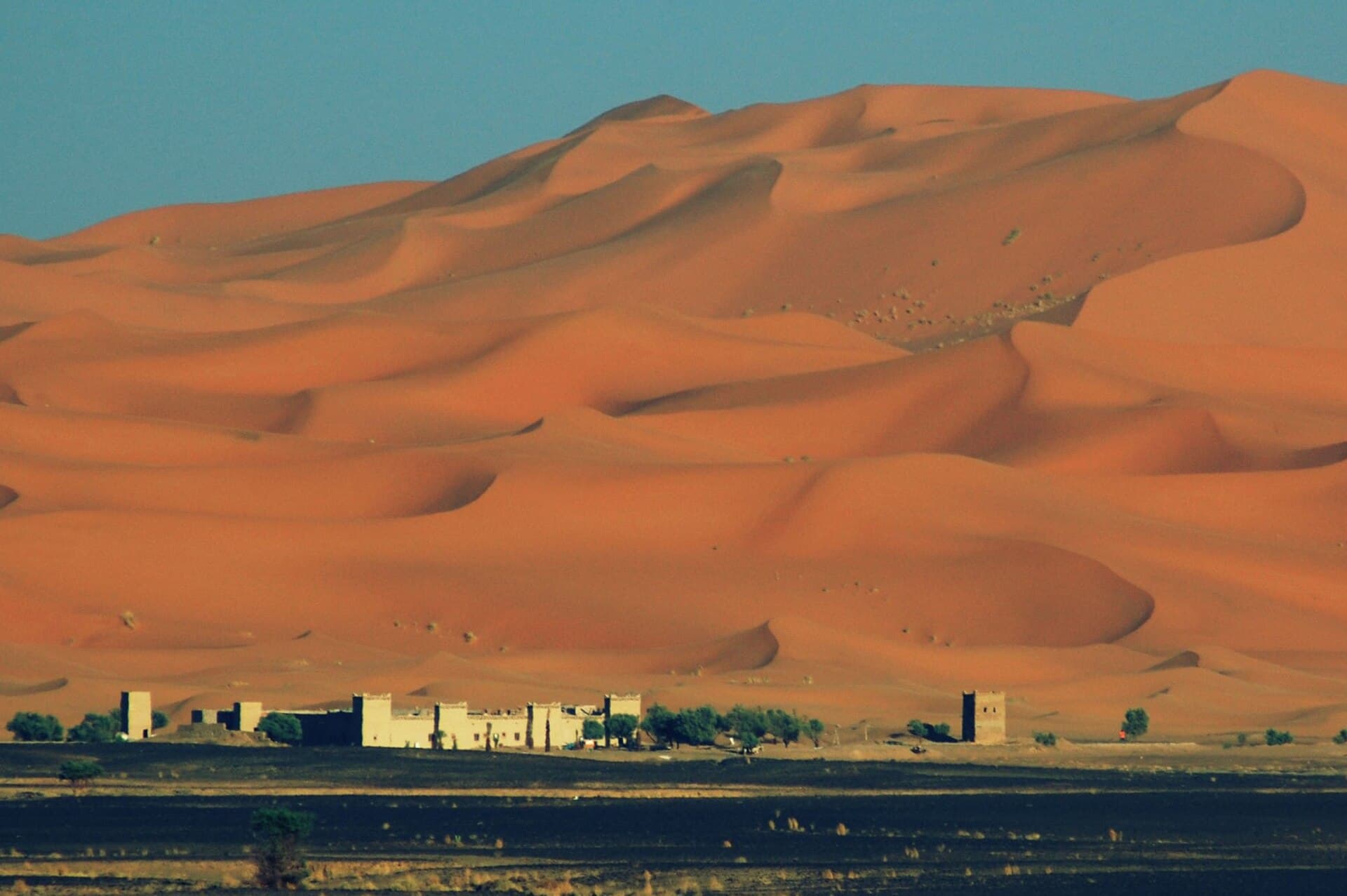 bachmont / CC BY 2.0, via Wikimedia Commons
Selbstgeführte Audio-Walking-Tour durch Merzouga — GPS-Route, Offline-Wiedergabe, erzählerische Narration in 32 Sprachen.
“Wo die goldene Weite der Sahara auf alte Echos und eine lebendige Lebensweise trifft.”
Nicht die Postkarten. Die Geschichten, die selbst Einheimische nicht kennen – dir ins Ohr geflüstert, genau dort, wo sie geschahen.
Die meisten Besucher erwarten eine endlose Sandfläche, doch manchmal spiegelt die Wüste auf erstaunliche Weise den Himmel wider.
Diese hoch aufragenden Sandformationen werden für ihre Erhabenheit gefeiert, doch ihre Entstehung ist in eine dramatische, alte Erzählung verwoben.
Unter dem scheinbar kargen Wüstensand liegt ein urzeitliches Meer, das Geheimnisse birgt, die älter sind als jede menschliche Siedlung.
Entdecke jedes Geheimnis von Merzouga
Jede Adresse, jede Enthüllung vollständig – in deinem Ohr, genau dort, wo es geschah.
Du wählst deine Stationen. Du gehst. Die Stimme enthüllt, was andere übersehen.


Deine selbstgeführte Audio-Tour durch Merzouga ist bereit – wähle deine Sehenswürdigkeiten, deine Sprache und starte, sobald du ankommst.
KaufenLume enthält einen integrierten Augmented-Reality-Guide. Halten Sie Ihr Handy hoch: Die Kamera zeigt die Straße vor Ihnen, mit einem leuchtenden Pfeil über dem echten Bild, der immer auf Ihren nächsten Stopp zeigt — keine Karte zum Rätseln, keine falschen Abzweigungen. Wie alles bei Lume funktioniert es komplett offline.
Merzouga, ein kleines Dorf im Südosten Marokkos, ist das klassische Tor zu den majestätischen Erg Chebbi-Dünen, einigen der höchsten und bekanntesten Sandformationen der Sahara. Mit Dünen, die bis zu 150 Meter hoch sind, bietet es ein immersives Wüstenerlebnis, das Abenteurer, Fotografen und Kulturinteressierte anzieht. Neben den dramatischen Landschaften aus wandernden Sanden bietet Merzouga einzigartige Einblicke in die traditionelle Berberkultur.
Das Dorf selbst, das etwa 1.500 bis 1.700 Einwohner zählt, bewahrt einen ruhigen, authentischen Charme mit lokalen Cafés und Restaurants, die von den Einheimischen frequentiert werden. Während viele Reisende Merzouga als Basis für Wüstenausflüge nutzen, offenbart die Widmung von Zeit zur Erkundung des Dorfes ein langsameres Lebenstempo und echte marokkanische Gastfreundschaft. Es ist ein Ort, an dem sich die Erhabenheit der Sahara mit den intimen Rhythmen der lokalen Kultur verbindet und ein tiefes Gefühl der Ruhe und Verbundenheit mit einem alten Land vermittelt.
Merzougas Ursprünge reichen in eine Zeit zurück, als die Sahara eine gänzlich andere Landschaft war. Vor etwa 9.000 bis 10.000 Jahren war die Region wahrscheinlich ein tropischer Dschungel mit üppiger Vegetation und Seen. Lange bevor es ein Reiseziel für Reisende wurde, war Merzouga eine unbewohnte Oase, die sich zu einem wichtigen Transitpunkt für transsaharische Händler entwickelte. Diese Händler transportierten Gold, Salz und Gewürze zwischen Timbuktu und dem Mittelmeer und nutzten Merzouga als wichtigen Wasserhalt zur Wiederversorgung, bevor sie ihre beschwerlichen Reisen durch die Wüste fortsetzten.
Im Laufe der Zeit wurde Merzouga auch zu einem Wallfahrtsort für die nomadischen Ait Atta-Stämme. Die Fundamente des modernen Dorfes wurden größtenteils während der französischen Kolonialzeit gelegt. Nach den Schlachten von Tafilalet zwischen 1916 und 1932 errichteten Truppen der französischen Fremdenlegion Befestigungsanlagen um Merzouga, um nomadische Stämme zu kontrollieren und ihre Präsenz in der Region zu festigen.
Im späten 20. Jahrhundert begann der Tourismus, den Handel als Haupteinnahmequelle Merzougas abzulösen. Gepflasterte Straßen, die Merzouga mit größeren Städten wie Rissani und Erfoud verbanden, brachten einen stetigen Strom internationaler Besucher, was zur Entwicklung von Lehmhotels und Wüstencamps entlang der Dünenlinie führte. Die Region war jedoch auch mit Umweltproblemen konfrontiert, darunter schwere Sturzfluten im Mai 2006, die traditionelle Lehmhäuser zerstörten und die Gemeinde zwangen, weiter von den Überschwemmungsgebieten entfernt neu zu bauen. In jüngerer Zeit, im Oktober 2024, führte unerwarteter starker Regen zur seltenen Bildung temporärer Seen in normalerweise trockenen Gebieten, ein Phänomen, das seit Jahrzehnten nicht mehr beobachtet wurde. Diese Ereignisse unterstreichen den dynamischen Charakter der Wüste und die Widerstandsfähigkeit der lokalen Gemeinschaft.
Die Hauptattraktion in Merzouga sind zweifellos die Erg Chebbi-Dünen. Diese beeindruckenden goldenen Sandformationen, von denen einige bis zu 150 Meter hoch sind, bieten eine Vielzahl von Aktivitäten. Kamelreiten ist eine klassische Art, die Wüste zu erleben, besonders bei Sonnenaufgang oder Sonnenuntergang, was eine friedliche Verbindung zur Landschaft fördert. Viele Touren beinhalten eine Übernachtung in einem Wüstencamp, wo Sie traditionelle Berbermusik am Lagerfeuer genießen und den außergewöhnlich klaren Nachthimmel bestaunen können.
Für Abenteuerlustige sind Sandboarding die Dünen hinunter, Quadfahren oder 4x4-Wüstentouren beliebte Optionen. Diese Ausflüge beinhalten oft Besuche bei Nomadenfamilien, Fossilienfundstätten und Oasen in der Wüste. Eine kurze Fahrt von Merzouga entfernt liegt das Dorf Khamlia, bekannt als das 'schwarze Dorf', wo Sie in die traditionelle Gnawa-Musik eintauchen können, eine spirituelle und rhythmische Kunstform mit Ursprüngen in Subsahara-Afrika. Der nahe gelegene saisonale Salzsee Dayet Srij wird, wenn er mit Wasser gefüllt ist, zu einem Zufluchtsort für Zugvögel, darunter Flamingos, und bietet einen überraschenden Kontrast zur trockenen Umgebung. Man kann auch die alten Fossilienbetten in der Region erkunden, insbesondere in der Nähe von Erfoud, wo Überreste prähistorischen Meereslebens wie Trilobiten und Ammoniten zu finden sind.
Die beste Reisezeit für Merzouga ist von Oktober bis April. In diesen Monaten sind die Tagestemperaturen kühler und angenehmer, typischerweise zwischen 15-25°C, was Outdoor-Aktivitäten wie Kamelreiten und Erkundung der Dünen angenehm macht. Die Nächte können kühl sein und auf 5-15°C fallen, ideal für Lagerfeuer und Sternenbeobachtung. Die Sommermonate von Juni bis September sind extrem heiß, mit Temperaturen, die oft 45°C übersteigen und sogar bis zu 50°C erreichen, was Tagesausflüge in die Wüste gefährlich macht. März kann eine höhere Wahrscheinlichkeit für Sandstürme mit sich bringen, daher ist Flexibilität bei Reiseplänen ratsam, wenn Sie zu dieser Zeit reisen.
Merzouga ist ein kleines Dorf, und obwohl es zu Fuß leicht zu erkunden ist, wird das Spazierengehen am Mittag während der heißeren Monate aufgrund des Wüstenklimas nicht empfohlen. Die lokale Währung ist der marokkanische Dirham (MAD), und obwohl es in Merzouga Geldautomaten gibt, wird Bargeld für kleinere Einkäufe bevorzugt, wobei Kreditkarten in den meisten Hotels und Camps akzeptiert werden. Arabisch und Tamazight sind die Amtssprachen, Französisch ist weit verbreitet und in Touristengebieten wird etwas Englisch gesprochen.
Die Anreise nach Merzouga ist oft mit einer erheblichen Reise verbunden. Von Marrakesch oder Fes aus kann man einen Supratours-Bus nehmen, wobei die Fahrt von Marrakesch einen ganzen Tag und von Fes eine Nacht dauert. Die Kosten für ein Busticket in eine Richtung liegen bei etwa 15-18 EUR. Alternativ können Sie nach Errachidia mit Royal Air Maroc fliegen und dann ein Sammeltaxi nach Rissani und weiter nach Merzouga nehmen. Privattaxis in klimatisierten 4x4-Fahrzeugen sind ebenfalls von größeren Städten wie Marrakesch, Fes und Erfoud verfügbar. Es ist ratsam, Rückfahrkarten während der Hochsaison (Oktober-April) bei der Ankunft zu buchen, da diese schnell ausgebucht sein können. Trinken Sie in der Wüste immer Flaschenwasser und verwenden Sie Sonnenschutz.
Merzouga — Koreanisch, Chinesisch, Hebräisch und 29 weitere Sprachen, jede Station von einer muttersprachlichen Stimme erzählt. Die größte Sprachauswahl aller selbstgeführten Audiotouren.
Verfügbar auf: