Museo de Historia y Etnografía de Svaneti
El Museo de Historia y Etnografía de Svaneti resguarda un venerado icono de San Jorge del siglo IX.
La historia completa se desbloquea en el tour
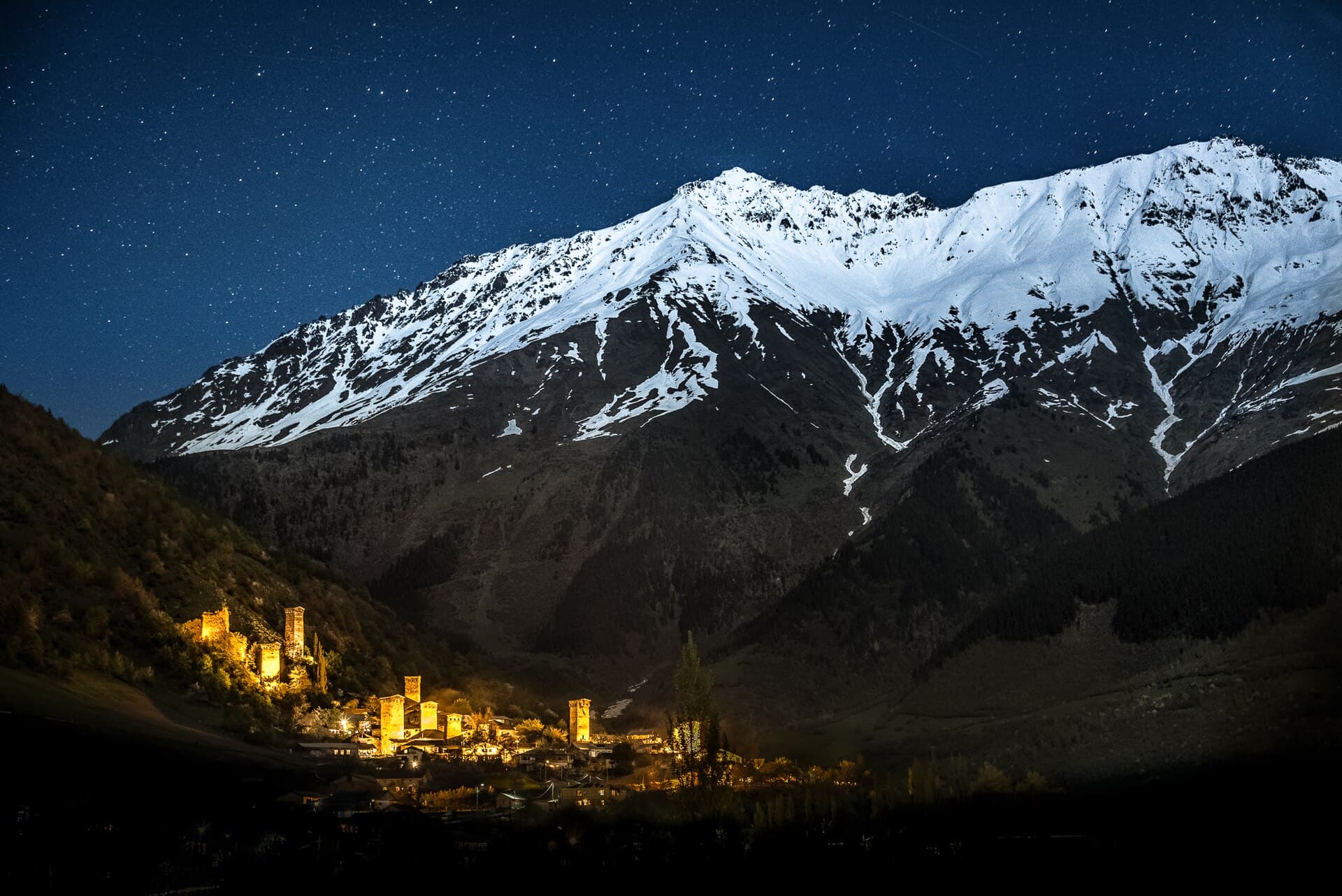 Q-lieb-in / CC BY-SA 4.0, via Wikimedia Commons
Tour de audio autoguiado de Mestia — ruta GPS a pie, reproducción offline, narración en 32 idiomas.
“Donde las antiguas torres custodian los secretos de la montaña.”
No las postales. Las historias que ni los locales conocen — al oído, justo donde ocurrieron.
El Museo de Historia y Etnografía de Svaneti resguarda un venerado icono de San Jorge del siglo IX.
Las distintivas torres Svan, algunas con más de 1.000 años de antigüedad, servían para propósitos más allá de la mera defensa.
El tradicional gorro de lana Svan ofrece más que solo protección contra los elementos.
Descubre todos los secretos de Mestia
Cada dirección, cada revelación al completo — a tu oído, justo donde ocurrió.
Eliges tus paradas. Caminas. La voz te revela lo que los demás ignoran.


Tu tour de audioguía por Mestia te espera — elige tus lugares, tu idioma y empieza al llegar.
ComprarLume incluye una guía de realidad aumentada. Levanta el móvil y su cámara muestra la calle que tienes delante, con una flecha luminosa sobre la imagen real que siempre apunta a tu próxima parada — sin mapas que descifrar, sin giros equivocados. Como todo en Lume, funciona completamente sin conexión.
Mestia, un pequeño pueblo de montaña en la provincia de Samegrelo-Zemo Svaneti, Georgia, se encuentra a una altitud de 1.500 metros (4.921 pies) dentro de las montañas del Cáucaso. Funciona como el corazón cultural de la región de Svaneti, hogar de los svanos, un subgrupo cultural y lingüístico distinto de los georgianos. El pueblo es reconocido por sus torres defensivas de piedra medievales, conocidas como "koshki", que forman parte de un sitio declarado Patrimonio de la Humanidad por la UNESCO.
Rodeada de picos dramáticos, valles verdes y prados alpinos, Mestia es un punto central para los entusiastas del aire libre, ofreciendo amplias oportunidades para caminar, recorrer y experimentar el paisaje natural. La arquitectura singular del pueblo, definida por sus antiguas torres Svan, evoca una sensación de viajar en el tiempo, incluso en medio de la creciente modernización y la infraestructura turística.
Mestia, históricamente conocida como Seti, ha sido considerada la comunidad principal de la provincia de Alta Svaneti durante siglos. El pueblo svan, un subgrupo étnico de los georgianos, ha habitado esta remota región, desarrollando su propio idioma, cultura y tradiciones distintivas debido a su aislamiento geográfico. Su idioma, también llamado svan, es uno de los cuatro idiomas que se originaron de la antigua familia lingüística kartveliana, habiéndose divergido ya en el siglo II a. C. y conservando características más arcaicas que el georgiano, el megruli o el laz.
La característica arquitectónica más llamativa de Mestia son sus distintivas torres Svan. Estas torres defensivas de piedra, que suman alrededor de 45 solo en Mestia, fueron construidas principalmente entre los siglos IX y XIII, y algunas datan de hace más de 1.000 años. Una vivienda fortificada Svan típica incluía una torre, una casa adyacente (machubi) y otras estructuras domésticas, todo ello encerrado por un muro defensivo. Estas torres ofrecían refugio a personas, ganado y posesiones valiosas en tiempos de conflicto y servían como emblemas de la prosperidad y el estatus de una familia.
Durante las invasiones mongolas que asolaron gran parte de Europa, la ubicación aislada de Svaneti en las montañas del Cáucaso la convirtió en un refugio seguro para la cultura y la religión georgianas. Debido a sus fortificaciones naturales, Mestia también se convirtió en guardiana del tesoro del país, protegiendo valiosos artefactos cuando otras regiones estaban amenazadas por invasores extranjeros. La cultura de la región floreció durante la "edad de oro" de Georgia bajo la reina Tamar (1184-1213), quien era muy venerada por la población local. El Museo de Historia y Etnografía de Svaneti ahora alberga muchos de estos artefactos históricos, incluidos manuscritos antiguos, armamento, joyas e iconos únicos.
Mestia ofrece una mezcla de inmersión cultural y aventura al aire libre. Comience explorando las distintivas torres Svan, que definen el horizonte del pueblo; dos están abiertas al público, incluyendo el Museo Casa de Mikhail Khergiani y el Museo Casa de Margiani, ofreciendo una visión de la vida tradicional Svan. Profundice en el patrimonio de la región en el Museo de Historia y Etnografía de Svaneti, hogar de una vasta colección de artefactos arqueológicos, objetos religiosos y manuscritos antiguos.
Para vistas panorámicas, tome el teleférico de Hatsvali hasta la estación de esquí de Hatsvali, incluso fuera de la temporada de esquí, para disfrutar de amplias vistas de la cordillera de Svaneti y el monte Ushba. Caminar es un atractivo principal, con senderos que van desde excursiones fáciles de un día hasta desafiantes caminatas de varios días. Las opciones populares incluyen el glaciar Chalaadi, los lagos Koruldi y la caminata de varios días a Ushguli, un sitio del Patrimonio Mundial de la UNESCO y uno de los asentamientos habitados continuamente más altos de Europa. Experimente la cocina local Svan, conocida por sus sabores contundentes y la distintiva sal Svan, y considere una clase magistral de gorros Svan para una experiencia cultural única.
La mejor época para visitar Mestia para actividades al aire libre como caminar y recorrer es de junio a septiembre. Durante estos meses, las temperaturas son suaves a cálidas, oscilando entre 10°C y 25°C, y los senderos suelen estar libres de nieve. Julio y agosto son temporada alta, ofreciendo el mejor clima y las horas de luz más largas, aunque con más multitudes y precios más altos. Para menos turistas y potencialmente un mejor valor, considere los meses de junio y septiembre, cuando el follaje de otoño comienza a emerger. El invierno, de diciembre a febrero, transforma Mestia en un destino para deportes de invierno, con esquí y snowboard disponibles en las estaciones de Hatsvali y Tetnuldi. Sin embargo, algunas atracciones pueden estar cerradas y el acceso por carretera puede ser más desafiante debido a la nieve y el hielo.
Mestia se encuentra aproximadamente a 400 km de Tiflis, con tiempos de viaje en coche o minibús de unas 8-9 horas. Una opción más rápida es un vuelo de una hora desde Tiflis a través de la aerolínea Vanilla Sky, aunque los vuelos están sujetos a las condiciones meteorológicas. Desde Zugdidi, las marshrutkas (minibuses) son una opción conveniente, tardando unas 4-5 horas. Si bien Mestia tiene un buen número de hoteles, hostales y casas de huéspedes, es recomendable reservar con antelación, especialmente durante la temporada alta. Hay cajeros automáticos disponibles en Mestia, pero se recomienda llevar efectivo para pueblos más pequeños y caminatas, ya que es posible que no se acepten tarjetas de crédito. El centro de información turística de Mestia, ubicado en N7 Seti Square, ofrece asistencia con tours y mapas. Se recomienda encarecidamente un vehículo 4x4 para conducir en la región, especialmente durante el invierno.
Mestia en coreano, en chino o en hebreo — y 29 idiomas más, cada parada narrada por una voz nativa. La mayor variedad de idiomas de cualquier audioguía autoguiada.
Disponible en: